

 About Innovation Hub
 Global Content Pulse (Webinars)


 Global Production Financing
(Webinars)
Global Production Financing
(Webinars)  LeaderSpeak Podcast
  About Vitrina
 Our Story
 Our Solutions 🔥
 Film+TV Projects Tracker 🚀
 Case Studies
 Our Profile
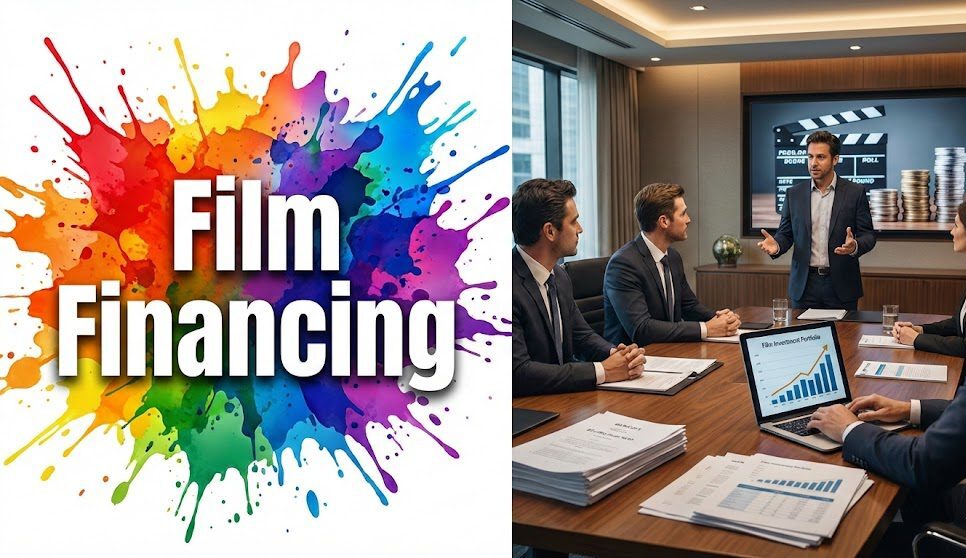
Film financing in 2026 is the strategic process of raising production capital through a combination of equity, debt, and soft money—optimized for a market where streamers no longer provide the “all-in” checks of the past decade.
The 2026 landscape is defined by data-driven discovery and highly technical debt structures, where 70% of independent films now rely on debt facilities and supply chain intelligence rather than traditional pre-sales.
The old “Hollywood” model has effectively collapsed. In its place, a more disciplined, fragmented, and globally-distributed system has emerged. Whether you’re an independent producer navigating a $2 million thriller or a studio executive structuring a $20 million slate, understanding the mechanics of the 2026 capital stack isn’t just an advantage—it’s a survival requirement. Now, let’s look at how the money actually flows.
In This Guide:
Stop Guessing Who’s Financing. Get Targeted Outreach.
Stop searching and start getting funded. We identify the exact decision-makers currently backing projects like yours, turning raw data into risk-aligned capital partnerships.
Major Studios
Scouting early stage projects, IP, and Regional partners for global studio pipelines.
IP Owners & Leads
Connecting creative leads with qualified financiers and major streaming platforms.
Streamers
Securing high-value pre-buy content and discovering early-stage global IP for platforms.
Indie Producers
Bridging the gap for indie filmmakers to reach executive production partners and capital.
Global Financing Ecosystems
Mapping complex markets and pairing projects with disciplined, risk-aligned capital across global territories worldwide.
The Vitrina Capital Stack Risk Ladder™
Behind closed doors, the real conversation isn’t about the script—it’s about the “stack.” In 2026, capital is layered based on its position in the recoupment waterfall. If you don’t understand who gets paid first, you don’t have a deal.
Framework: The Vitrina Capital Stack Risk Ladder™
| Position | Capital Type | Priority |
|---|---|---|
| Senior | Hard Money / Bank Debt | 1st Out |
| Mezzanine | Gap & Super-Gap Lending | 2nd Out |
| Junior | Equity / Private Capital | 3rd Out |
| Foundation | Incentives (Soft Money) | Non-Recoupable |
Producers who master this ladder can weaponize their capital efficiency, using soft money to reduce the “hard money” burden. In 2026, the market signals are clear: discipline is the new currency. (And it’s about time, isn’t it?)
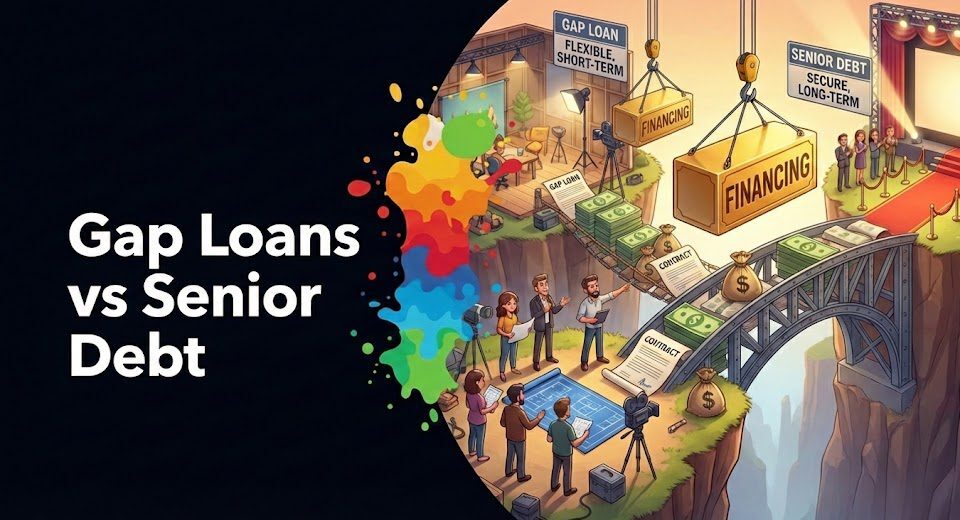
Debt Financing: Senior Debt & Gap Lending
Banks aren’t in the business of watching movies—they’re in the business of verifying signatures. In the film financing 2026 landscape, senior debt is typically capped at 80% of the value of hard collateral. This includes verified tax credit certificates and executed distribution contracts.
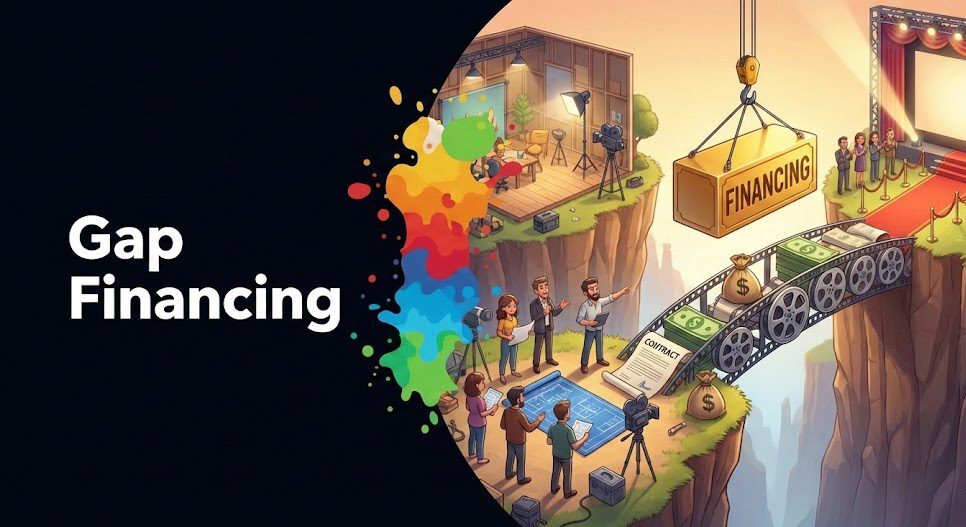
How Gap Financing Works Today
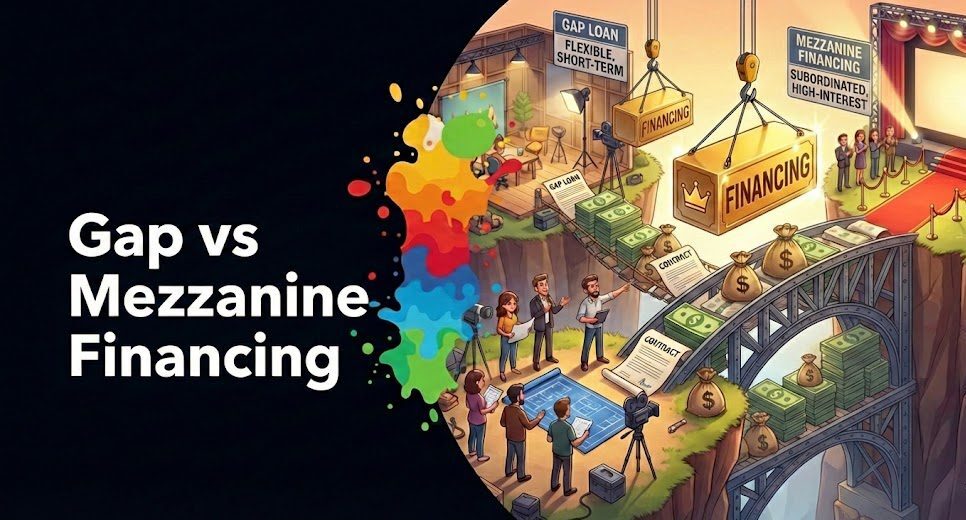
Gap financing is a debt facility that covers the difference between secured financing and the total budget—typically 10-25%. Lenders advance money against 50-70% of the “low” sales estimates provided by a reputable sales agent for unsold territories.
Phil Hunt, CEO of Head Gear Films, explains the shift in debt mechanics:
Wait, what’s the catch? The legal fees. Closing a debt facility often costs $25,000 to $50,000 in legal and admin fees alone. If you’re looking to ask VIQI about current debt rates, you’ll find most senior debt is sitting at SOFR + 2-4%.
Soft Money: The Global Incentive Race
“Soft money” refers to non-recoupable government support: tax credits, cash rebates, and grants. In 2026, these aren’t just perks; they are the foundation. Saudi Arabia’s 40% cash rebate and the UK’s new Independent Film Tax Credit (up to 40% for budgets under £15M) have fundamentally reset production economics.
“Every CFO knows that a project’s viability starts with the rebate percentage. If you’re not shooting for at least a 30% cost offset, you’re building a house on sand.”
However, soft money requires upfront cash flow. You don’t get the check until the audit is complete, which can take 6-12 months post-wrap. This is where tax credit lending comes in—borrowing against the future rebate to pay your crew today.
Find the Financiers Backing Your Genre
Stop searching and start getting funded. We identify the exact decision-makers currently backing projects like yours, turning raw data into risk-aligned capital partnerships.
Equity Investment & The 120/50 Model
Equity remains the rarest and most expensive form of capital. In 2026, the industry benchmark is the “120 and 50” model. Under this structure, equity investors recoup 100% of their principal plus a 20% hurdle (preferred return) before any other profit participation begins.
Once that 120% is paid, the remaining profits are typically split 50/50 between the equity investors and the production team. If you’re navigating production financing negotiations, keep your documents clean. Investors in 2026 want transparency, not “Hollywood accounting.”
How Vitrina Helps with Film Financing in 2026
Finding the right financier isn’t about luck—it’s about matching your project’s DNA to the right capital source. Vitrina provides the supply chain intelligence needed to identify active partners 5x faster than traditional networking.
- Vetted Database: Explore 140+ active debt and gap lenders filtered by budget and territory.
- VIQI Research: Use our AI assistant to analyze competitor capital stacks and identify tax incentive shifts.
- Concierge Service: For active deals, our team provides hands-on matchmaking with qualified financiers.
Frequently Asked Questions
What is a debt facility in film financing?
In 2026, a debt facility is a contractual loan that must be repaid with interest, regardless of the film’s success. It sits in the first-recoupment position, ahead of equity.
How much gap financing can I realistically raise?
Typically, gap lenders cover 10-25% of your total budget. They advance against 50-70% of the conservative sales estimates for unsold territories.
Do I need a completion bond for senior debt?
Yes. Almost every bank and mezzanine lender in 2026 requires a completion bond to ensure the film is delivered and the recoupment waterfall is triggered.
The Bottom Line
The 2026 film financing market rewards those who treat production as a financial engineering project, not just a creative one. By layering incentives, senior debt, and disciplined equity, producers can close budgets that would have stalled five years ago.
Ready to structure your next project? Connect with Vitrina Concierge today to match your slate with active capital.
Find Film+TV Projects, Partners, and Deals – Fast.
VIQI matches you with the right financiers, producers, streamers, and buyers – globally.
Producers Seeking Financing & Partnerships?
Book Your Free Concierge Outreach Consultation
(To know more about Vitrina Concierge Outreach Solutions click here)
Producers Seeking Financing, Co-Pros, or Pre-Buys?
Vitrina Concierge helps producers reach the right financiers, commissioners, distributors, and co-production partners — with precision outreach, not cold pitching.
Join Industry Briefings Trusted by Leaders

Deep dive into Co-Pros
Ambitious co-productions are key to global hits, but most deals collapse. This deep-dive briefing is the strategic playbook. We’ll break down the financing models, partnership structures, and market insights behind today’s successful deals.

Film & TV Financing: Tax Credits & Incentives
A focused look at how 2025 tax credits and incentives are reshaping Film & TV financing decisions — and where the real value now sits.

Film & TV Financing: Pre-Buys
Learn how pre-buys work in current Film and TV financing, how they differ from pre-sales, and how they are used to close real finance plans.
Streamers – Netflix vs. Amazon – The 2026 Strategy
How Netflix and Amazon’s content and revenue strategies are diverging ahead of 2026.