About Innovation Hub
 Global Content Pulse (Webinars)


 Global Production Financing
(Webinars)
Global Production Financing
(Webinars)  LeaderSpeak Podcast
  Global Entertainment Digest (Newsletter)
  About Vitrina
 About VIQI
 Our Story
 Our Solutions 🔥
 Film+TV Projects Tracker 🚀
 Case Studies
 Our Profile

A Minimum Guarantee (MG) is a non-refundable advance paid by a distributor to a producer for the right to exploit a film in a specific territory.
It’s the bedrock of independent film finance, acting as collateral that producers use to secure production loans. Essentially, it’s a “floor” on your earnings—you get paid this amount regardless of how the film performs at the box office.
In the current landscape, where streamers are moving away from “cost-plus” global buyouts and back toward traditional licensing, understanding MG mechanics isn’t just helpful—it’s survival. Whether you’re a first-time producer or an established studio executive, the way you structure these guarantees determines your project’s bankability and your ultimate ROI.
Table of Contents
Stop Guessing Who’s Financing. Get Targeted Outreach.
Stop searching and start getting funded. We identify the exact decision-makers currently backing projects like yours, turning raw data into risk-aligned capital partnerships.
Major Studios
Scouting early stage projects, IP, and Regional partners for global studio pipelines.
IP Owners & Leads
Connecting creative leads with qualified financiers and major streaming platforms.
Streamers
Securing high-value pre-buy content and discovering early-stage global IP for platforms.
Indie Producers
Bridging the gap for indie filmmakers to reach executive production partners and capital.
Global Financing Ecosystems
Mapping complex markets and pairing projects with disciplined, risk-aligned capital across global territories worldwide.
What is a Minimum Guarantee (MG)?
Let’s be direct: an MG is the distributor’s skin in the game. It represents their commitment to your project before it’s even finished. For a producer, it’s a de-risking tool. For a distributor, it’s a calculated gamble on your cast, genre, and director.
Most independent production financing models rely on MGs from “anchor territories”—like the UK, Germany, and France—to cover up to 40% of the total budget. Without these firm commitments, gap lenders and banks won’t even look at your capital stack.
Phil Hunt, CEO of Head Gear Films, discusses the current financing climate:

How Minimum Guarantees Work in Pre-Sales
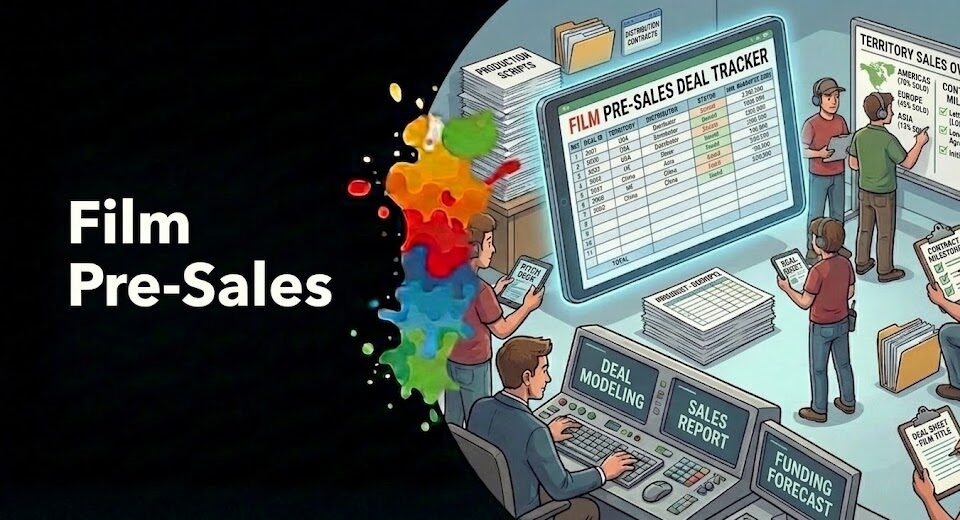
The process usually follows a specific rhythm. Your sales agent takes your “package” (script + cast + director) to markets like Cannes, AFM, or EFM. They’re looking for distributors to sign a deal memo promising an MG upon delivery of the film.
But don’t expect the cash upfront. Usually, only 5-10% of the MG is paid as a deposit upon signing. The remaining 90-95% is paid when the film is delivered and meets the technical specifications. Producers use the signed contract as collateral to get a bank loan—this is what we call “discounting” the paper.
Producers looking to benchmark their MG expectations can ask VIQI for latest territory rates based on specific cast tiers.
Negotiating the Deal: Key Variables
Negotiating Minimum Guarantees isn’t just about the dollar amount. Smart players recognize that the terms around the MG are often more important than the headline number. If you’re sitting across from a distributor, you need to navigate these four pillars:
- The Recoupment Waterfall: How quickly does the distributor get their MG back? Do they take their commission first, or is it a “pro-rata” split?
- P&A Commitment: An MG is useless if the distributor doesn’t spend on Prints & Advertising. You should negotiate a minimum P&A spend to ensure your film actually reaches an audience.
- Territory Rights: Are you giving away all media (Theatrical, VOD, TV) or just specific windows?
- Cross-Collateralization: Never let a distributor cross-collateralize your MG against other films in their slate. Each film should stand on its own economics.
Behind closed doors, the real dynamic is often about “overages.” Once the distributor recoups their MG and P&A, how is the remaining profit split? A typical split is 50/50, but if you have a high-demand project, you can push that to 60/40 in favor of the producer.
Find the Financiers Backing Your Genre
Stop searching and start getting funded. We identify the exact decision-makers currently backing projects like yours, turning raw data into risk-aligned capital partnerships.
The Vitrina MG Valuation Matrix™
To help producers understand how lenders value MGs, we’ve developed the Vitrina MG Valuation Matrix™. Lenders don’t value every dollar of an MG at 1:1. They apply a “haircut” based on the distributor’s creditworthiness.
| Distributor Tier | Typical MG Advance Rate | Lender Risk Profile |
|---|---|---|
| Tier 1 (Major/Mini-Major) | 90-95% | Low – Bankable paper |
| Tier 2 (Established Indie) | 80-85% | Medium – Requires vetting |
| Tier 3 (Emerging/Regional) | 60-70% | High – May need completion bond |
Strategic players understand that a smaller MG from a Tier 1 distributor is often more valuable than a larger one from a Tier 3 player because it’s easier (and cheaper) to finance. Capital efficiency matters as much as the headline revenue.
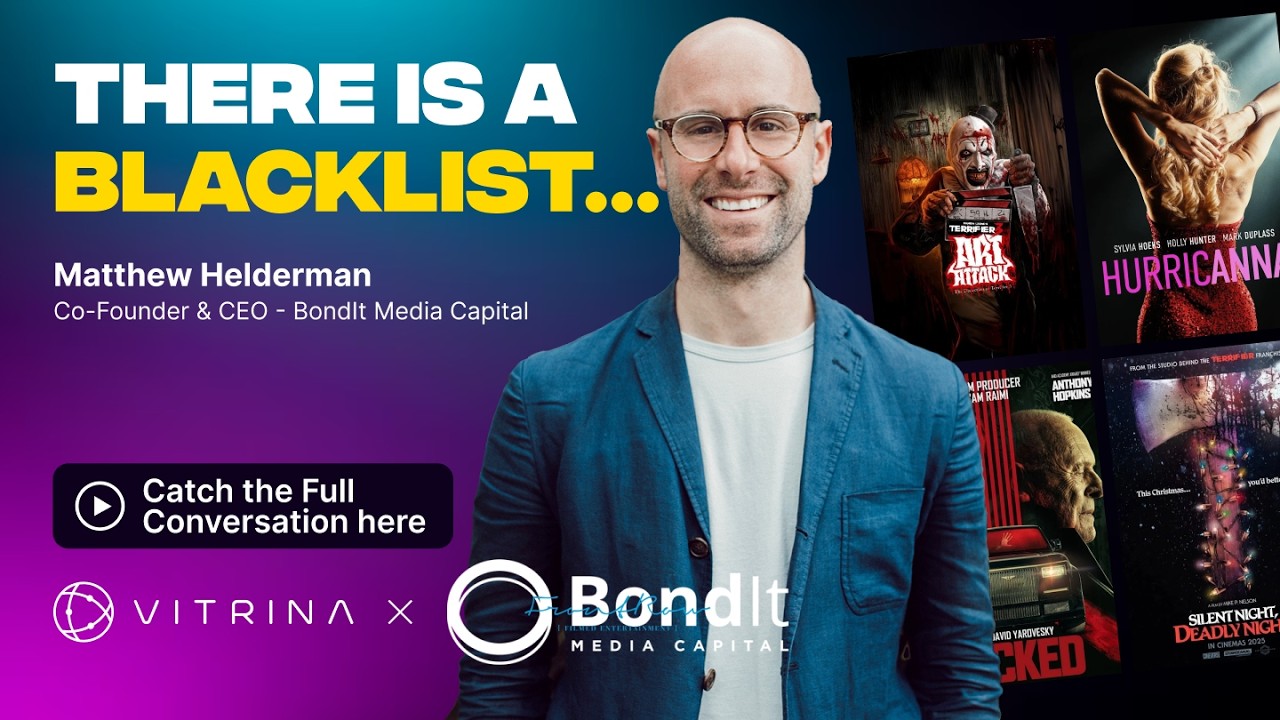
Matthew Helderman, CEO of BondIt Media Capital, on media financing:
How Vitrina Helps with Pre-Sales
Securing the right Minimum Guarantees requires access to the right distributors. Vitrina’s supply chain intelligence maps the entire global distribution landscape, allowing you to filter by territory, genre, and acquisition history.
- Explore 12,000+ distributors and their recent acquisition patterns.
- Ask VIQI to analyze territory values for your specific cast package.
- Contact Vitrina Concierge for hands-on support in finding the right sales agent to drive your pre-sales strategy.
Frequently Asked Questions
Can I get Minimum Guarantees for a TV series?
Yes, though it’s structured differently. For TV, you’re usually looking at “pre-buys” or co-production commitments that function like MGs. Regional broadcasters often provide these in exchange for local rights, which you can then use to bridge your production budget.
What happens if the film doesn’t make back the MG?
That’s the distributor’s loss. An MG is non-refundable. If the film flops, the distributor eats the difference. This is why they’re so selective about what they guarantee—they’re taking a real financial risk on your creative vision.
Are streamers paying MGs now?
We’re seeing a shift. While global buyouts (no MG, just a flat fee) were the norm, streamers like Netflix and Amazon are increasingly open to territorial licensing in certain regions. This allows producers to retain some rights while securing MGs in key markets.
The Bottom Line
Minimum Guarantees are more than just a payment; they’re the validation your project needs to unlock professional financing. By focusing on Tier 1 distributors, negotiating fair P&A commitments, and understanding the “haircut” lenders apply to your paper, you’ll put your production on a much stronger financial footing.
Ready to map your pre-sales strategy? Connect with Vitrina’s financing experts today.
Find Film+TV Projects, Partners, and Deals – Fast.
VIQI matches you with the right financiers, producers, streamers, and buyers – globally.
Producers Seeking Financing, Co-Pros, or Pre-Buys?
Vitrina Concierge helps producers reach the right financiers, commissioners, distributors, and co-production partners — with precision outreach, not cold pitching.
Join Industry Briefings Trusted by Leaders

The New Deal Room: A 2026 Playbook for Global Content Licensing
How global content licensing is shifting beyond flat fees to flexible, deal-driven models.
Film & TV Production Financing: 2026 Trends
Production financing conditions are changing quickly. Understanding where money is moving and what buyers are backing is key to getting projects approved and funded in 2026.
Unreleased Film+TV Projects: Opportunities & Showcase
A curated view of unreleased Film and TV projects open for financing and collaboration