About Innovation Hub
 Global Content Pulse (Webinars)


 Global Production Financing
(Webinars)
Global Production Financing
(Webinars)  LeaderSpeak Podcast
  Global Entertainment Digest (Newsletter)
  About Vitrina
 About VIQI
 Our Story
 Our Solutions 🔥
 Film+TV Projects Tracker 🚀
 Case Studies
 Our Profile

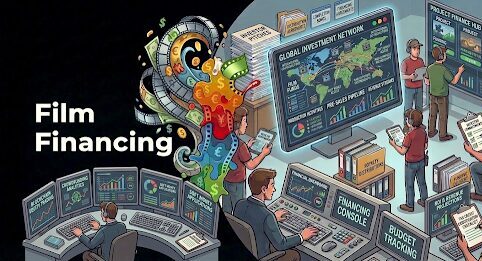
Film investors don’t just buy scripts; they buy de-risked financial models. If you’re pitching film investment questions to a high-net-worth individual or a private equity fund, you’ve got to move past creative passion.
They’re looking for seniority in the capital stack, validated sales estimates, and a clear path to recoupment. It’s about weaponizing your data to prove that their capital is protected before it’s ever deployed.
Based on Vitrina’s analysis of 62 expert interviews—including veterans like Phil Hunt and Andrea Scarso—we’ve mapped the exact questions that separate professional pitches from amateur dreams. Don’t get caught off guard when the conversation shifts from the “hero’s journey” to the “investor corridor.”
Stop Guessing Who’s Financing. Get Targeted Outreach.
Stop searching and start getting funded. We identify the exact decision-makers currently backing projects like yours, turning raw data into risk-aligned capital partnerships.
Major Studios
Scouting early stage projects, IP, and Regional partners for global studio pipelines.
IP Owners & Leads
Connecting creative leads with qualified financiers and major streaming platforms.
Streamers
Securing high-value pre-buy content and discovering early-stage global IP for platforms.
Indie Producers
Bridging the gap for indie filmmakers to reach executive production partners and capital.
Global Financing Ecosystems
Mapping complex markets and pairing projects with disciplined, risk-aligned capital across global territories worldwide.
Table of Contents
1. Where do I sit in the capital stack?
This is usually the first real question after the creative fluff. Investors understand that in production financing, not all money is equal. They want to know if they’re “Last In, First Out” (LIFO) or if they’re buried under senior debt.
Behind closed doors, professional investors recognize that gap lenders and banks sit senior to equity. If you’ve got 30% gap financing, that lender gets paid back 100% of their principal plus interest before the equity investor sees a single cent of profit. The real dynamic? You need to explain how the “Soft Money”—like tax incentives—reduces the overall risk for the equity layer.
“The capital stack isn’t just a list of funds; it’s a hierarchy of survival. If you can’t tell an investor exactly who stands in front of them at the bank, you’ve already lost the room.”
2. What does the ‘Waterfall’ actually look like?
The “Waterfall” is the legal sequence of how revenue flows from the box office or streamer into various pockets. It’s often where first-time producers trip up. You can’t just promise “50/50 profits.” That’s not how it works.
A typical waterfall starts with the Sales Agent taking their 10-25% commission off the top. Then come the “Expenses”—and those can be a black hole if not capped. Next is the recoupment of P&A (Prints and Advertising) and senior debt. Only then does the equity investor start recouping their 100%. If you’re smart, you’ll mention the “Investor Corridor,” which ensures they get a small percentage of gross receipts even before the debt is fully cleared. It’s a massive trust-builder.
Phil Hunt, CEO of Head Gear Films, explains the shift in market mechanics:

Producers who want to de-risk their pitch can ask VIQI about current waterfall standards to ensure their model isn’t laughed out of the room.
Find the Financiers Backing Your Genre
Stop searching and start getting funded. We identify the exact decision-makers currently backing projects like yours, turning raw data into risk-aligned capital partnerships.
3. How are your sales estimates validated?
Investors don’t care what *you* think the movie will make. They care what a reputable sales agent *guarantees* the movie could make. In today’s market, “Blue Sky” numbers are essentially fiction. You need “Low/High” estimates from an agent who has a track record in your specific genre.
When answering, mention that your estimates are grounded in recent distribution licensing comps. If you’re pitching a $10M actioner, don’t show them *John Wick* numbers. Show them what the last three independent action films with similar cast sold for in Germany, Japan, and the UK. Specificity is your best weapon against skepticism.
4. What is the risk of overage?
“What if you go over budget?” is the investor’s version of a nightmare. The answer should be one word: **Completion Bond.** If you don’t have a bond in place, you’re asking the investor to take on “unlimited liability”—and no sane investor does that.
The bond company guarantees that the film will be finished and delivered. If it goes over budget, they write the check. Mentioning this early signals that you understand the operational risks of production. It shows you’ve de-risked the physical side of the investment, leaving them only with the market risk (which is what they’re paid to take).
5. Who is the core audience?
Investors recognize that “everyone” is not an audience. They want to see a defined demographic. Are you targeting the 18-34 male quadrant for an action thriller, or the “grey pound” for a prestige drama? The real question? How are we reaching them without a $50M studio P&A spend?
This is where you discuss “Weaponized Distribution™.” Are you licensing to competitors (the WBD/Netflix model) to gain visibility? Or are you banking on a Sovereign Content Hub™ like Saudi Arabia to provide massive cost offsets that allow more budget for marketing? Be precise about the path to the viewer.
The Vitrina Investor De-Risking Matrix™
The Vitrina Investor De-Risking Matrix™
| Quadrant | High Risk (Red Flag) | Low Risk (Vitrina Approved) |
|---|---|---|
| Collateral | 0% Soft Money | 35%+ Tax Incentives |
| Distribution | “Festival Hope” | MGs or Output Deals |
| Talent | No LOIs | Bondable Lead Cast |
How Vitrina Helps with Film Investment Questions
Answering these film investment questions is easier when you have the data to back it up. Vitrina isn’t just a directory; it’s a strategic intelligence platform that connects you with the partners you need to de-risk your project before you even hit the pitch room.
- Sign up to Vitrina to discover 140+ gap lenders and equity funds.
- Ask VIQI for specific territory value data to validate your sales agent’s estimates.
- Contact Concierge for a strategic audit of your capital stack before meeting investors.
Frequently Asked Questions
What is the typical ROI for a film investor?
It’s a wide range. Most equity investors are looking for a 20-25% preferred return before the back-end profit split kicks in. However, the real ROI is often measured in risk reduction—how much of their principal is covered by pre-sales and tax credits before a single ticket is sold?
Should I show investors my “Blue Sky” sales estimates?
Don’t do it. Professional investors see Blue Sky numbers as a red flag for amateurism. Stick to the “Low” and “Medium” estimates. If you can show a path to recoupment based on the “Low” numbers, you’ve got a deal. The “High” is just the cherry on top.
How do I handle the “Skin in the Game” question?
Investors want to see that you’re hurting if they’re hurting. If you’re not putting in cash, you need to show “sweat equity”—deferred fees, invested development capital, or personal guarantees on the bridge loan. If you’re taking a full salary while they take all the risk, it won’t fly.
The Bottom Line
Preparation beats passion every time in film finance. When you’re asked film investment questions, lead with data, protect the principal, and be brutally honest about the waterfall. Ready to structure your next deal? Vitrina’s Concierge team can help you refine your pitch for high-level investment.
Find Film+TV Projects, Partners, and Deals – Fast.
VIQI matches you with the right financiers, producers, streamers, and buyers – globally.
Producers Seeking Financing, Co-Pros, or Pre-Buys?
Vitrina Concierge helps producers reach the right financiers, commissioners, distributors, and co-production partners — with precision outreach, not cold pitching.
Join Industry Briefings Trusted by Leaders

Micro-Dramas & Mobile-First Storytelling
Micro-dramas are building real audiences and revenue. Understand the platforms, buyers, and economics behind the growth.

Navigating Global Content Licensing Trends
How global content licensing is shifting beyond flat fees to flexible, deal-driven models.
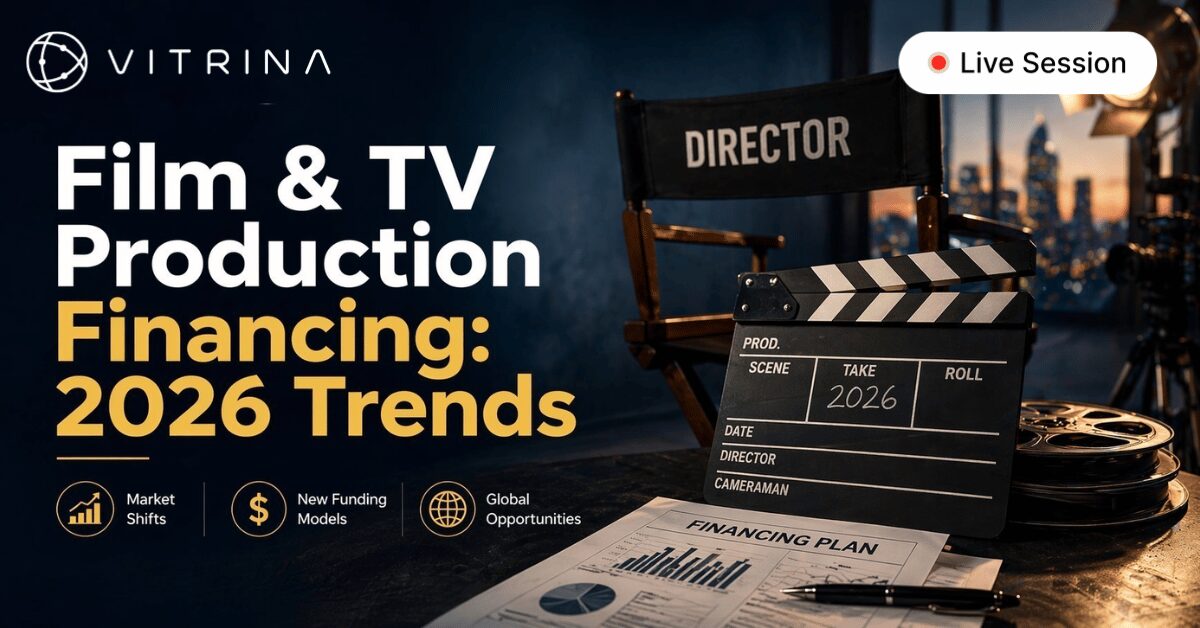
Film & TV Production Financing: 2026 Trends
Production financing conditions are changing quickly. Understanding where money is moving and what buyers are backing is key to getting projects approved and funded in 2026.
Unreleased Film+TV Projects: Opportunities & Showcase
A curated view of unreleased Film and TV projects open for financing and collaboration