About Innovation Hub
 Global Content Pulse (Webinars)


 Global Production Financing
(Webinars)
Global Production Financing
(Webinars)  LeaderSpeak Podcast
  About Vitrina
 Our Story
 Our Solutions 🔥
 Film+TV Projects Tracker 🚀
 Case Studies
 Our Profile
Equity vs Debt Financing for Film is the fundamental choice that determines who owns your movie and who gets paid first. Equity involves selling profit shares to investors who take the “last out” risk, while debt is borrowed capital—like gap loans or senior debt—that requires fixed interest and sits “first in line” for repayment. Most independent films use a hybrid capital stack to optimize IRR and minimize cost.
The reality? There’s no single “best” structure. It’s about matching the financial instrument to the risk profile of your assets. If you’ve got strong pre-sales, debt is cheaper. If you’re betting on a breakout festival hit with no guaranteed buyers yet, you’re going to need equity. Understanding these mechanics isn’t just about accounting—it’s about survival in a market where traditional pre-sales are shrinking.
Phil Hunt, CEO of Head Gear Films, recently noted that the financing landscape has shifted toward complexity. You can’t just rely on one source anymore.

The Capital Stack: Where Everyone Sits
Think of your film’s budget as a ladder. The people at the top (Senior Debt) get off first when the money starts flowing back. The people at the bottom (Equity) have to wait until the ladder is clear. That’s the “waterfall.”
In a typical production financing scenario, the stack looks like this:
- Senior Debt: Banks or specialized lenders secured against tax credits or firm pre-sales. (8-10% interest)
- Gap/Mezzanine Debt: Loans secured against unsold territories. (12-15% interest)
- Equity: Private investors or funds. (They take 100% of the risk for a share of 100% of the upside)
Strategic players understand that using debt to cover 70% of the budget “weaponizes” the remaining equity. Why? Because you’re giving away less of the back-end. But here’s the catch: debt comes with hard deadlines and interest that eats your margin every single month.
The Vitrina Capital Efficiency Matrix™
Use this to determine your optimal mix of Equity vs Debt Financing for Film:
| Asset Strength | Recommended Structure | Focus |
|---|---|---|
| High (A-List, Pre-Sold) | 80% Debt / 20% Equity | Protect Margin |
| Medium (Solid Genre, No Pre-sales) | 40% Debt / 60% Equity | De-Risking |
| Low (Art-house, First-timer) | 10% Debt / 90% Equity | Securing Capital |
*Scoring based on Vitrina’s analysis of current 2025 lending appetites.
Stop Guessing Who’s Financing. Get Targeted Outreach.
Stop searching and start getting funded. We identify the exact decision-makers currently backing projects like yours, turning raw data into risk-aligned capital partnerships.
Major Studios
Scouting early stage projects, IP, and Regional partners for global studio pipelines.
IP Owners & Leads
Connecting creative leads with qualified financiers and major streaming platforms.
Streamers
Securing high-value pre-buy content and discovering early-stage global IP for platforms.
Indie Producers
Bridging the gap for indie filmmakers to reach executive production partners and capital.
Global Financing Ecosystems
Mapping complex markets and pairing projects with disciplined, risk-aligned capital across global territories worldwide.
Debt Financing: The Cost of Certainty
Debt financing is predictable. You know the interest rate (8-15%), you know the fees (1-2% origination), and you know the repayment date. Most importantly, the lender doesn’t own your movie—they just have a lien on the assets until they’re paid back.
For producers, debt is often the most capital-efficient way to close a gap financing hole. If you’ve got a $5M budget and you’re short $1M, taking a loan for that million at 12% is significantly cheaper in the long run than giving up 20% of your global profits forever.
Producers can explore 140+ lenders on Vitrina to compare current debt rates for their specific territory.
Equity Financing: The Price of Ownership
Equity is “patient capital.” Unlike debt, equity investors don’t send you an invoice if the movie doesn’t sell. They share the risk. But in exchange, they want a piece of the pie—and often a “preferred” position that pays them back with a 20% premium before the producer sees a dime.
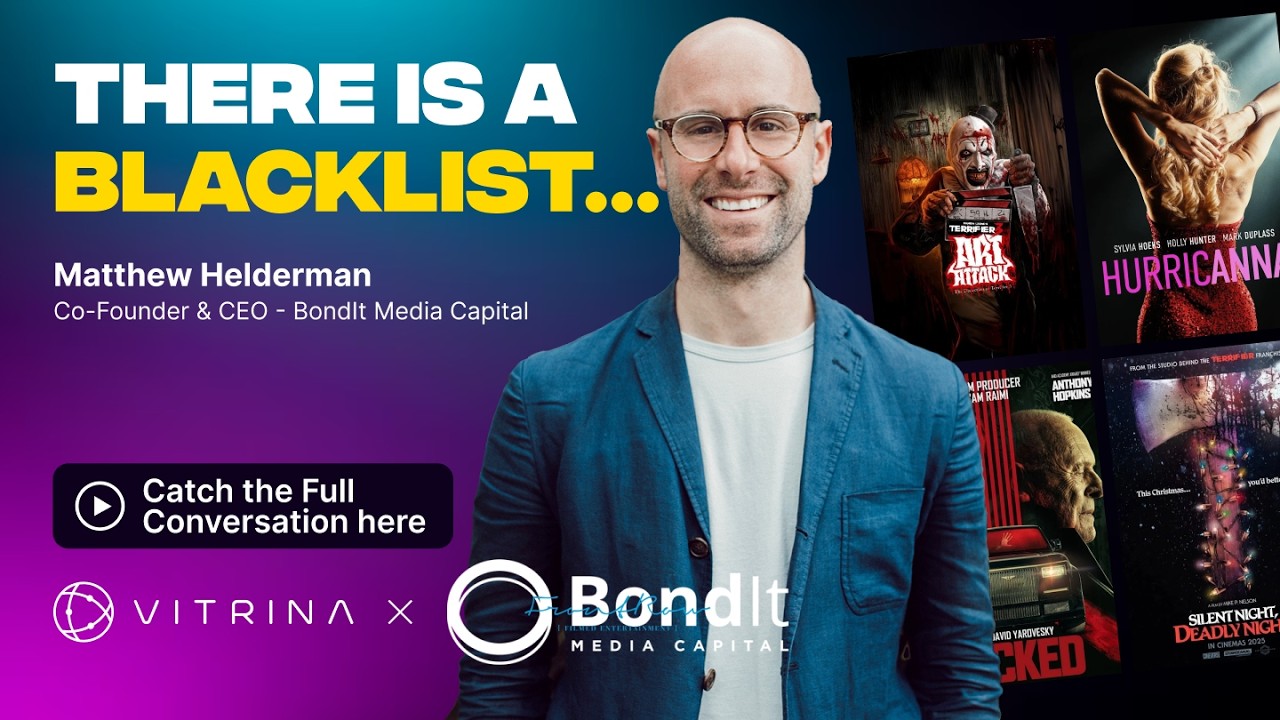
In a “Post-Streamer World,” as Matthew Helderman calls it, equity is the fuel for projects that don’t fit the rigid boxes of bank lending.
Strategic Audit: Which Fits Your Film?
Ask yourself these three questions before deciding on your Equity vs Debt Financing for Film strategy:
- Do I have hard collateral? If you have an executed tax credit certificate or MGs (Minimum Guarantees) from a distributor, go for debt. It’s cheaper.
- What’s the upside potential? If you’re producing a “four-quadrant” movie with massive breakout potential, protect your equity at all costs. Use debt to leverage the budget.
- How long is the recoupment cycle? If your movie won’t be ready for 24 months, interest on debt will kill you. Equity might be more expensive on paper, but it doesn’t have a ticking clock.
Need a second opinion on your capital stack? Ask VIQI to analyze your project’s bankability based on current market trends.
Find the Financiers Backing Your Genre
Stop searching and start getting funded. We identify the exact decision-makers currently backing projects like yours, turning raw data into risk-aligned capital partnerships.
Frequently Asked Questions
What is the main difference between equity and debt in film?
Equity is ownership; debt is a loan. Equity investors share in the profits but are the last to be repaid. Debt lenders get paid first (Senior Position) and receive a fixed interest rate, but they don’t own any of the movie’s upside after the loan is cleared.
Which is better for indie films: equity or debt?
It depends on your stage. Early-stage development usually requires equity because there’s no collateral for a bank to lend against. Once you have a cast, a budget, and a tax credit, you should transition to debt to protect your profit participation.
How Vitrina Optimizes Your Financing Strategy
Navigating the Equity vs Debt Financing for Film landscape shouldn’t be a guessing game. Vitrina provides the data-driven intelligence you need to de-risk your production and close your budget faster.
- Verified Database: Access 140+ debt lenders and hundreds of equity funds filtered by territory.
- Expert Matching: Connect with lenders who have a proven track record in your specific genre.
- Strategic Analysis: Use VIQI to simulate different capital stack scenarios.
The Bottom Line
The most successful films don’t choose between equity or debt—they use both strategically. Use debt to leverage your “sure thing” assets (tax credits, pre-sales) and use equity to fund the “blue sky” potential of your creative vision. Balance is the key to capital efficiency.
Ready to lock your budget? Connect with Vitrina’s Concierge team to match your project with the right financial structure in 48 hours.
Find Film+TV Projects, Partners, and Deals – Fast.
VIQI matches you with the right financiers, producers, streamers, and buyers – globally.
Producers Seeking Financing, Co-Pros, or Pre-Buys?
Vitrina Concierge helps producers reach the right financiers, commissioners, distributors, and co-production partners — with precision outreach, not cold pitching.
Join Industry Briefings Trusted by Leaders

Format Adaptations: Global Trends
Where formats are traveling, which adaptations are breaking out, and how streamers are backing remakes in 2025–2026.

Books, Novels & Comics Adaptations: Global Trends
Books, webtoons, and manga driving the next global screen hits. Discover how in this webinar.

Micro-Dramas & Mobile-First Storytelling
Micro-dramas are building real audiences and revenue. Understand the platforms, buyers, and economics behind the growth.

Navigating Global Content Licensing Trends
How global content licensing is shifting beyond flat fees to flexible, deal-driven models.