About Innovation Hub
 Global Content Pulse (Webinars)


 Global Production Financing
(Webinars)
Global Production Financing
(Webinars)  LeaderSpeak Podcast
  About Vitrina
 Our Story
 Our Solutions 🔥
 Film+TV Projects Tracker 🚀
 Case Studies
 Our Profile
The five core film finance pillars are hard money (debt), soft money (incentives), gap/bridge financing, equity, and pre-sales. Successfully funding an independent project requires balancing these elements into a “capital stack” where each layer de-risks the next.
In the current 2025 market, relying on a single source isn’t just risky—it’s usually a deal-breaker for completion guarantors and senior lenders.
Look, the “Big Crunch” in film financing isn’t coming; it’s already here. Streamers have shifted from “cost-plus” models to selective licensing, and traditional bank lenders have tightened their belts. As a producer, your job has pivoted from creative shepherd to financial architect. You’ve got to understand how these pillars lock together before you ever step onto a set.
Table of Contents
Stop Guessing Who’s Financing. Get Targeted Outreach.
Stop searching and start getting funded. We identify the exact decision-makers currently backing projects like yours, turning raw data into risk-aligned capital partnerships.
Major Studios
Scouting early stage projects, IP, and Regional partners for global studio pipelines.
IP Owners & Leads
Connecting creative leads with qualified financiers and major streaming platforms.
Streamers
Securing high-value pre-buy content and discovering early-stage global IP for platforms.
Indie Producers
Bridging the gap for indie filmmakers to reach executive production partners and capital.
Global Financing Ecosystems
Mapping complex markets and pairing projects with disciplined, risk-aligned capital across global territories worldwide.
The Vitrina Capital Stack Risk Ladder™
Before we dive into the specific pillars, you need a way to visualize the waterfall. In the industry, we call this the capital stack. The Vitrina Capital Stack Risk Ladder™ categorizes funding by its priority in the recoupment cycle and its overall cost to the production.
The Vitrina Capital Stack Risk Ladder™
| Position | Pillar Type | Recoupment Priority |
|---|---|---|
| Senior | Hard Money / Bank Debt | First Out (1st) |
| Mezzanine | Gap / Bridge Financing | Second Out (2nd) |
| Junior | Equity / Private Capital | Third Out (3rd) |
| Foundation | Soft Money (Incentives) | Non-Recoupable / Offset |
Understanding where your money sits on this ladder is vital. If your equity investors think they’re “first out,” you’ve got a legal nightmare waiting to happen. The reality? Debt always eats first.
Pillar 1: Hard Money & Senior Debt
Hard money refers to traditional bank loans or high-interest debt secured by collateral. In independent film funding, senior debt is usually backed by two things: tax credit certificates and executed distribution contracts. Banks aren’t in the business of watching movies; they’re in the business of verifying signatures.
Senior debt typically carries interest rates of SOFR + 2-4% for established producers, though “hard money” private lenders may charge 12-18% for riskier positions.
Producers can explore 140+ vetted lenders on Vitrina to compare current senior debt rates and collateral requirements.
Pillar 2: Soft Money & Global Incentives
Soft money is the “magic” pillar because it doesn’t need to be repaid in the traditional sense. These are government-backed incentives—tax credits, cash rebates, and grants. Behind closed doors, every CFO will tell you that a project’s viability often starts and ends with the rebate percentage.
Take Saudi Arabia’s 40% cash rebate or the UK’s newly minted Independent Film Tax Credit. These aren’t just perks; they’re the bedrock of the film financing framework. If you can offset 40% of your spend, your equity requirement drops, and your ROI projections skyrocket.
Phil Hunt, CEO of Head Gear Films, explains the current financing crunch:

Pillar 3: Gap and Bridge Financing
Gap financing is a mezzanine loan secured against unsold territory rights. If you’ve sold the UK and Germany but still have Japan and Latin America available, a gap lender advances capital against the estimated value of those “open” markets.
Bridge financing is even more tactical—it’s short-term capital used to “bridge” the time between a greenlight and the actual closing of the bank loan. It’s expensive, but when you’re 48 hours from losing a lead actor’s window, it’s a lifesaver. (And yes, the legal fees will make you wince.)
Need to know exactly what a lender will require for your project? Ask VIQI, Vitrina’s AI research assistant, for a project-specific gap requirement checklist.
Pillar 4: Equity Investment
Equity is “patient capital.” It sits at the bottom of the waterfall, meaning it’s the last money out but has the highest potential upside. In 2025, pure equity is harder to find. Most investors are looking for “hybrid” deals where their equity is paired with a percentage of the tax rebate to mitigate the downside.
The real dynamic? Equity investors aren’t just buying into a movie; they’re buying into a production financing strategy. They want to see that the other four pillars are already leaning in. If you’re 100% equity-reliant, you aren’t producing; you’re gambling.
Find the Financiers Backing Your Genre
Stop searching and start getting funded. We identify the exact decision-makers currently backing projects like yours, turning raw data into risk-aligned capital partnerships.
Pillar 5: Pre-sales & Distribution Guarantees
Pre-sales used to be the dominant pillar. You’d go to Cannes, sell the world, and take those contracts to a bank. Today, pre-sales are tougher. Distributors are more conservative, and territory values have compressed. However, a “Distribution Guarantee” from a major studio or a reputable streamer remains the “Golden Ticket” of film finance pillars.
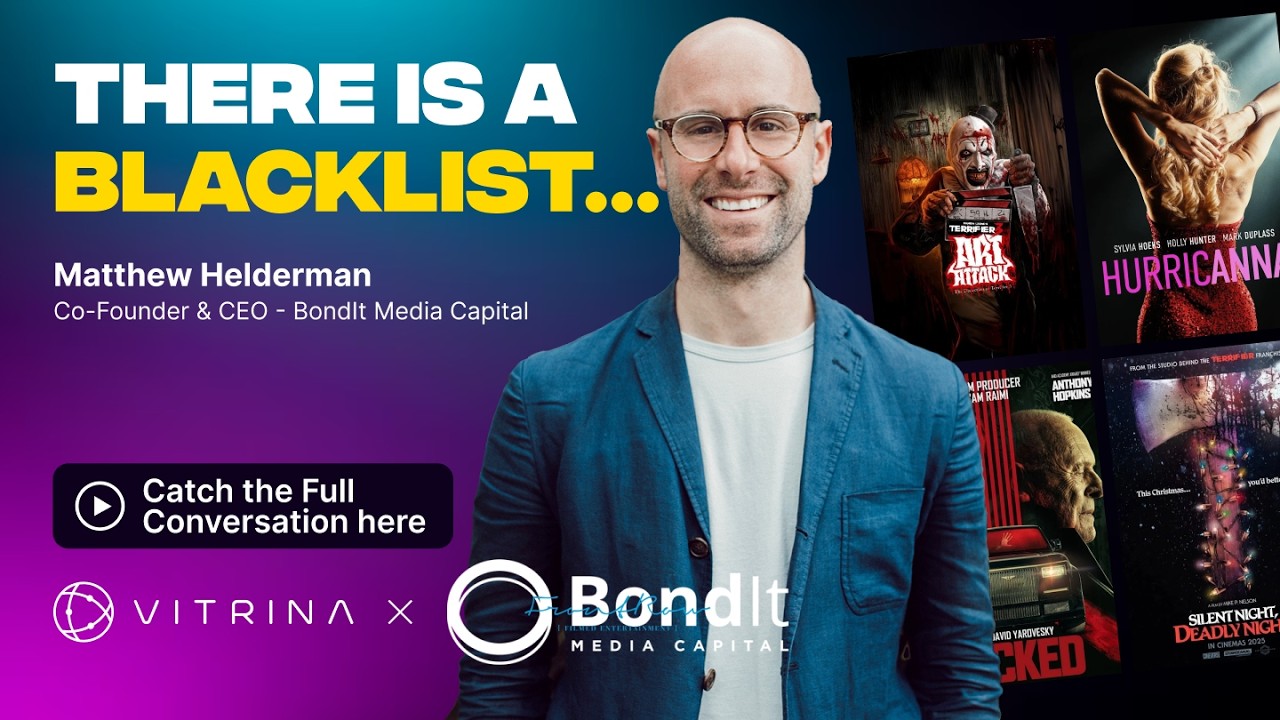
Matthew Helderman of BondIt Media Capital on the evolution of capital:
How Vitrina Streamlines the 5 Pillars of Film Finance
Mapping out your capital stack is only half the battle; finding the partners to fill it is where most projects stall. Vitrina acts as the “Intelligence Layer” for global production, connecting you with the specific lenders, sales agents, and co-production partners who specialize in these pillars.
- Verified Database: Access 140+ gap and senior debt lenders filterable by budget and territory.
- AI Insights: Use VIQI to analyze regional incentive shifts and requirement changes in real-time.
- Concierge Support: For active slates, our team provides hands-on matching to qualified capital providers.
Frequently Asked Questions
What is the most important film finance pillar?
There isn’t one. The strength of your project lies in the “interlocking” of the pillars. However, in today’s market, Pillar 2 (Soft Money/Incentives) is often the starting point because it de-risks every other layer of the stack.
How much gap financing can I realistically get?
Typically, gap lenders will cover 10-25% of your total budget. They advance against 50-70% of the “low” sales estimates provided by a reputable sales agent. If your agent says Japan is worth $1M, expect a $500k–$700k advance.
Do I need a completion bond for all debt financing?
Yes. Almost every Pillar 1 (Senior Debt) and Pillar 3 (Gap) lender will require a completion bond. They need to know that if you go over budget or the director goes rogue, a third party will step in to deliver the film and trigger the recoupment waterfall.
Can I use equity to pay for bridge financing?
It’s a common strategy. You use “early” equity or a specialized bridge loan to fund pre-production while waiting for the main bank loan to close. Just remember that bridge financing is often the most expensive money in the stack on an annualized basis.
The Bottom Line
Structuring an independent film funding stack is as much about relationship management as it is about mathematics. By balancing these five pillars, you protect your margin and increase your project’s bankability. Ready to find the right partners for your next slate? Vitrina’s Concierge team is ready to help you navigate the complexity.
Find Film+TV Projects, Partners, and Deals – Fast.
VIQI matches you with the right financiers, producers, streamers, and buyers – globally.
Producers Seeking Financing, Co-Pros, or Pre-Buys?
Vitrina Concierge helps producers reach the right financiers, commissioners, distributors, and co-production partners — with precision outreach, not cold pitching.
Join Industry Briefings Trusted by Leaders

Format Adaptations: Global Trends
Where formats are traveling, which adaptations are breaking out, and how streamers are backing remakes in 2025–2026.

Books, Novels & Comics Adaptations: Global Trends
Books, webtoons, and manga driving the next global screen hits. Discover how in this webinar.

Micro-Dramas & Mobile-First Storytelling
Micro-dramas are building real audiences and revenue. Understand the platforms, buyers, and economics behind the growth.

Navigating Global Content Licensing Trends
How global content licensing is shifting beyond flat fees to flexible, deal-driven models.