IHUB
IHUB
 Private Briefings (Webinars)


 LeaderSpeak Podcast
  Global Entertainment Digest (Newsletter)
  Premium Lists
 Membership Benefits
 About Vitrina
 Our Story
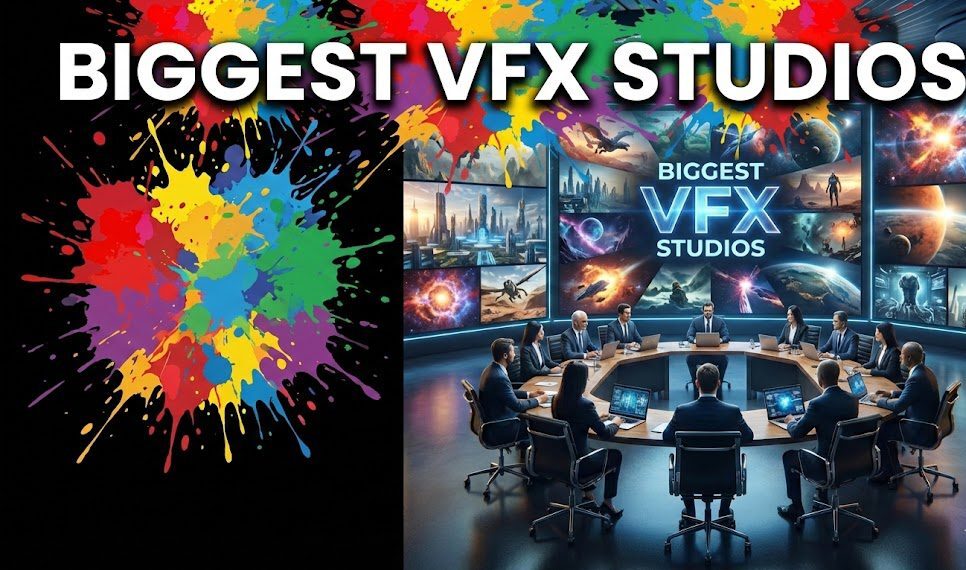
The biggest VFX studios such as ILM, Weta FX, Framestore, and DNEG represent the pinnacle of visual storytelling, characterized by massive artist headcounts and proprietary technical pipelines.
Selecting a partner from these giants requires evaluating specialized technical capabilities, pipeline interoperability, and territorial tax incentives rather than just visual credits.
In 2025, the global VFX market is valued at over $18 billion, with demand shifting toward real-time integration and cloud-native production workflows.
This guide provides the framework for conducting technical due diligence and matching project requirements to the unique strengths of global VFX powerhouses.

Your AI Assistant, Agent, and Analyst for the Business of Entertainment
VIQI AI helps you plan content acquisitions, raise production financing, and find and connect with the right partners worldwide.
- List the top commissioners at the BBC
- List the post-production and VFX decision-makers at Netflix
- List the development leaders at Sony Pictures
- List the scripted programming heads at HBO
- Find active co-producers and financiers for scripted projects
- Find equity and gap financing companies in North America
- Find top film financiers in Europe
- Find production houses that can co-produce or finance unscripted series
- Who is backing animation projects in Europe right now
- Who is Netflix’s top production partners for Sports Docs
- Who is Commissioning factual content in the NORDICS
- Who is acquiring unscripted formats for the North American market
- Show me recent drama projects available for pre-buy
- Show me Japanese Anime Distributors
- Show me true-crime buyers from Asia
- Show me documentary pre-buyers
- I am looking for production partners for a YA drama set in Brazil
- I am looking for producers with proven track record in mid-budget features
- I am looking for Turkish distributors with successful international sales
- I am looking for OTT platforms actively acquiring finished series for the LATAM region
- I am seeking localization companies offer subtitling services in multiple Asian languages
- I am seeking partners in animation production for children's content
- I am seeking USA based post-production companies with sound facilities
- I am seeking VFX partners to composite background images and AI generated content
Table of Contents
Key Sourcing Insights
-
✓
Look Beyond Listicles: The largest studios by headcount may not be the most efficient for niche tasks like liquid simulations or environment extensions.
-
✓
Technical Interoperability: Ensure your partner uses industry-standard pipelines (like USD) to prevent data bottlenecks in multi-vendor projects.
-
✓
Incentive Mapping: Regional hubs in Canada, the UK, and Australia offer significant financial advantages that must be factored into vendor selection.
Defining the Scale of Today’s Biggest VFX Studios
The biggest VFX studios are defined by their ability to manage thousands of complex shots simultaneously across global locations. Companies like Industrial Light & Magic (ILM), Framestore, and DNEG have built infrastructures capable of supporting multi-billion-dollar franchises. Their scale is not just about the number of artists, but the massive computing power and proprietary software they maintain to push visual boundaries.
As the industry moves toward high-end episodic content, these giants are increasingly specializing their offerings. For instance, Weta FX remains the leader in complex creature work, while MPC dominates the high-volume asset market for major studios. This shift means that being “the biggest” now requires a combination of massive scale and deep technical specialization.
Identify which of the biggest VFX studios have the most available capacity for Q3 2025:
Technical Due Diligence: Evaluating Pipelines and Proprietary Stacks
Technical due diligence is the most overlooked phase of the sourcing process. To properly vet the biggest VFX studios, creators must look beyond the showreel and evaluate their technical infrastructure. This includes assessing their support for Universal Scene Description (USD) and their ability to integrate real-time engines like Unreal for virtual production.
A studio’s proprietary software stack can be a double-edged sword. While custom tools often provide superior results for specific tasks, they can create interoperability issues if you are using multiple vendors. The industry’s elite houses are those that balance proprietary R&D with open-source pipeline standards to ensure seamless collaboration in the modern entertainment supply chain.
Compare the technical stacks of top-tier VFX vendors:
Industry Perspective: Collaborating with Global VFX Giants
Framestore Creative Director John Kilshaw discusses the evolution of episodic VFX and the technical management required to lead global teams on massive franchises for platforms like Netflix.
Indie vs. Major Studios: Tailoring Your Sourcing Strategy
The biggest studios are not always the right fit for every project. Major studios like Warner Bros. Discovery or Disney require vendors with proven scale and high-security certifications (like TPN). They prioritize studios that can absorb large numbers of shots and provide standardized delivery formats across multi-vendor pipelines.
In contrast, independent filmmakers often benefit from “high-tier boutique” studios. These smaller shops may employ fewer artists but offer the same high-end toolsets as the giants. Indie creators should focus on boutiques that offer more personalized attention and flexible creative collaboration, often found in emerging regional hubs where cost-efficiency meets high quality.
Discover specialized boutique VFX houses for independent projects:
Navigating Global Incentives and Regional Hubs
Territorial tax incentives remain one of the most critical factors in selecting among the biggest VFX studios. Hubs like Vancouver, London, and Sydney have grown precisely because of their aggressive tax credits. These incentives can reduce net VFX costs by up to 40%, making them indispensable for large-scale episodic and feature productions.
However, the landscape is shifting toward emerging hubs in regions like India, Thailand, and Brazil. These locations are no longer just for rotoscoping and paint-outs; they are now home to full-service houses delivering high-end assets and complex simulations. Sourcing from these regions requires a data-driven approach to qualify partners based on verified credits and reputation scores.
Map global VFX tax incentives against major studio locations:
Moving Forward
The biggest VFX studios continue to evolve from service providers into strategic technical partners. Success in 2025 depends on your ability to conduct deep technical due diligence and leverage global supply chain intelligence to find the perfect production match.
By prioritizing pipeline interoperability and territorial incentives, you can maximize your visual ROI while maintaining the highest cinematic standards.
Frequently Asked Questions
Quick answers to complex VFX sourcing queries.
Which are the biggest VFX studios by headcount?
Companies like DNEG, Framestore, and MPC typically maintain the largest global artist workforces, often exceeding 5,000 employees each.
Why is technical depth more important than headcount?
Technical depth refers to proprietary R&D and pipeline efficiency. A smaller studio with better automation can often deliver complex shots faster than a larger, less automated vendor.
How do I find a VFX studio for an independent project?
Indie producers should look for “high-tier boutique” studios that offer senior talent attention and flexible pricing models, often specializing in specific genres like horror or drama.
What are the benefits of virtual production?
Virtual production allows directors to see visual effects in real-time on LED walls during shooting, reducing post-production timelines and enabling better creative decision-making on set.
Which regions offer the best VFX tax incentives?
The UK, Canada (Vancouver/Montreal), Australia, and New Zealand currently offer the most established and reliable VFX tax credits globally.
What is a pipeline in VFX?
A pipeline is the sequence of software and workflows used to move digital assets from concept to final render, ensuring data consistency and collaborative efficiency.
How does Vitrina AI help in sourcing VFX vendors?
Vitrina uses vertical AI to map 300,000+ companies, allowing users to qualify vendors based on verified project history, specialization, and current capacity.
What is the TPN security standard?
The Trusted Partner Network (TPN) is a global industry-led content protection initiative that sets security benchmarks for studios to prevent piracy and data leaks.
Can a small studio handle major blockbuster shots?
Yes, many small studios are awarded specific “hero” sequences for blockbusters based on their specialized technical mastery in areas like water or digital doubles.
What is real-time VFX?
Real-time VFX refers to visual effects generated instantly within game engines, used for virtual production sets and live previz during shooting.
“The biggest mistake in VFX sourcing is choosing the largest studio for a project that requires niche creativity. Data intelligence allows us to find the specific specialized expertise required to elevate a script beyond its budget.”
About the Author
The Vitrina Content Team specializes in mapping the global entertainment supply chain. Leveraging proprietary data on 300,000+ companies, we provide the intelligence needed for strategic partner discovery.