About Innovation Hub
 Global Content Pulse (Webinars)


 Global Production Financing
(Webinars)
Global Production Financing
(Webinars)  LeaderSpeak Podcast
  Global Entertainment Digest (Newsletter)
  About Vitrina
 About VIQI
 Our Story
 Our Solutions 🔥
 Film+TV Projects Tracker 🚀
 Case Studies
 Our Profile
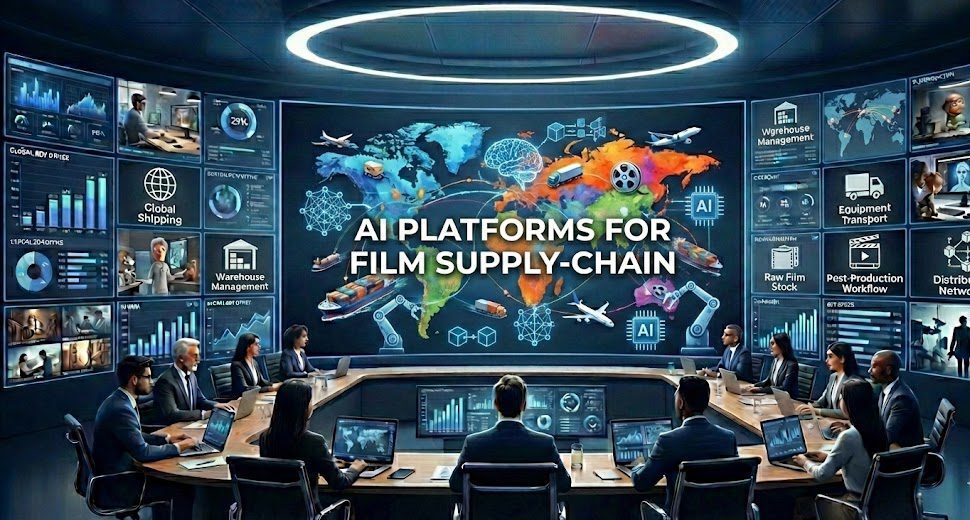
AI platforms for automating film supply-chain procurement are specialized software solutions designed to manage the end-to-end acquisition of goods and services required for media production.
These platforms leverage machine learning and natural language processing to streamline vendor sourcing, contract management, and compliance across complex global production networks.
According to industry intelligence from Vitrina AI, the entertainment sector encompasses over 600,000 companies, making automated data-driven procurement a strategic necessity rather than a luxury.
In this guide, you will learn how to identify the right AI tools for film logistics, optimize vendor relationships, and navigate the transition from manual spreadsheets to automated supply-chain intelligence.
While traditional procurement tools like SAP Ariba or Coupa offer general business solutions, they often lack the industry-specific taxonomies required for the film industry, such as talent agency coordination or localized tax incentive compliance. This guide bridges that gap by exploring specialized platforms that understand the unique nuances of entertainment supply chains.
This comprehensive analysis addresses the technical depth and format gaps identified in current market research, providing CXOs with a roadmap for data-powered procurement.
Table of Contents
- 01What is AI-Driven Film Supply-Chain Procurement?
- 02Who Provides AI Platforms for Entertainment Procurement?
- 03Managing Diverse Vendor Relationships with AI
- 04Automating Industry-Specific Contract Compliance
- 05Real-Time Collaboration Tools for Production Teams
- 06How Vitrina AI Facilitates Supply-Chain Discovery
- 07Key Takeaways
- 08FAQ
Key Takeaways for CXOs
-
Tailored Tech Wins: Generic procurement tools fail in film; industry-specific AI platforms are required to manage specialized vendor networks and localized tax incentives.
-
Risk Mitigation: AI-powered contract analysis identifies compliance gaps in union agreements and copyright laws, preventing costly legal delays in production.
-
Global Reach: Supply-chain intelligence platforms like Vitrina AI provide visibility into over 140,000 verified companies, enabling rapid international vendor discovery.
What is AI-Driven Film Supply-Chain Procurement?
Film supply-chain procurement is the strategic sourcing and management of every resource required to take a project from concept to delivery. This includes everything from camera equipment rentals and post-production services to catering, travel, and specialized talent. In a manual environment, this process is plagued by fragmented data, siloed spreadsheets, and a heavy reliance on personal “Rolodexes” that cannot scale with global production demands.
AI-driven platforms transform this landscape by centralizing vendor data and automating the evaluation of production partners. By using natural language processing (NLP), these platforms can scan thousands of service providers to find those with the specific technical capabilities and available windows required for a production. This “weaponized” approach to procurement ensures that studios can maximize their ROI by selecting partners based on verifiable data rather than hearsay.
Find verified production partners in any global territory:
Who Provides AI Platforms for Entertainment Procurement?
The market for AI platforms in film procurement is divided between cross-industry giants and specialized vertical solutions. While companies like Oracle and SAP have developed AI modules for general supply chains, the most significant innovations are coming from platforms purpose-built for the entertainment value chain. These tools understand that a “vendor” in film might be a boutique VFX house in Vancouver or a localization studio in Seoul.
Key providers include platforms that integrate project management with financial tracking. For example, MovieLabs’ 2030 Vision advocates for cloud-native, secure workflows that allow for real-time procurement decisions. However, the foundational intelligence layer—knowing who to procure—is where Vitrina AI leads. By tracking over 1.6 million titles and 5 million verified professionals, Vitrina functions as the “insider intelligence” platform that fuels the procurement engines of major studios.
Industry Expert Perspective: Prime Focus Technologies’ AI-Enhanced Supply Chain
In this episode of LeaderSpeak, Ramki Sankaranarayanan explains how Prime Focus Technologies is revolutionizing the entertainment supply chain through the Clear platform. This provides a firsthand look at how AI and automation are moving beyond theory into large-scale production reality.
Ramki Sankaranarayanan, CEO of Prime Focus Technologies, discusses how their Clear platform uses AI to create a “connected supply chain.” By automating content workflows and metadata management, studios can achieve significant efficiencies in procurement and delivery, ensuring that assets are managed with surgical precision across global networks.
Managing Diverse Vendor Relationships with AI
Procurement in the film industry involves managing a hyper-diverse ecosystem of vendors, from global talent agencies to local craft services. The challenge for CXOs is maintaining a “single source of truth” regarding vendor performance and reliability across multiple territories. AI platforms address this by creating “verified” profiles that track a company’s specialization, recent project history, and collaborator networks.
Instead of relying on subjective feedback, AI tools can assign reputation scores based on objective data points, such as a vendor’s ability to deliver on time and within budget on similar project scopes. This data-driven vetting process is critical for international productions where the head of production may have no prior experience with local vendors in a new territory like Brazil or Saudi Arabia.
Analyze recent vendor activities and project histories:
Automating Industry-Specific Contract Compliance
One of the most complex aspects of film procurement is ensuring compliance with a web of union contracts (SAG-AFTRA, DGA, IATSE), copyright laws, and localized tax incentive requirements. AI procurement platforms are now being equipped with legal-tech modules that can scan contracts to identify deviations from standard industry terms or flag missing clauses required for tax rebate eligibility.
For instance, when sourcing production services in a new region, an AI tool can automatically verify if the vendor’s proposed contract aligns with the specific “audio-visual coproduction agreements” that a country like India has with global partners. This prevents “data deficit” risks where production heads inadvertently sign agreements that jeopardize multi-million dollar tax credits or intellectual property rights.
Real-Time Collaboration Tools for Production Teams
Modern film production is an exercise in decentralized collaboration. A project may be funded in New York, filmed in Morocco, and post-produced in London. AI platforms for procurement provide the connective tissue for these global teams by enabling real-time collaboration. When a production manager in Morocco needs to procure an additional drone operator, the AI platform can instantly surface verified local options that are already approved by the studio’s central procurement office.
This “authorized data” approach ensures that everyone on the team is working with the same set of verified vendors and pricing structures. It eliminates the “word-of-mouth” bottleneck and allows for faster pivoting when production challenges arise. Tools like Scriptation or Sohonet facilitate the flow of data, but it is the underlying procurement platform that ensures the financial and legal foundations of these collaborations remain sound.
How Vitrina AI Facilitates Supply-Chain Discovery
Vitrina AI serves as the strategic intelligence layer for the global entertainment supply chain. For procurement teams, Vitrina offers the widest possible scan of the production landscape, tracking over 140,000 companies across 100+ countries. This isn’t just a static database; it’s a dynamic map of relationships and deal-making patterns.
- Global Projects Tracker: Provides visibility into unreleased projects, allowing procurement teams to identify upcoming service demands and source partners before the “bidding wars” begin.
- VIQI AI Assistant: Functions as a vertical AI “agent” that can answer plain-language procurement queries, such as “Who are the top-rated VFX studios in Eastern Europe for episodic dramas?”
- Enterprise API: Integrates directly with studio CRM and procurement systems (Salesforce, HubSpot) to automatically enrich vendor leads with verified metadata.
Moving Forward
The transformation of film procurement from a relationship-driven art to a data-powered science is no longer a futuristic vision—it is the current industry standard. By addressing the critical gaps in vendor visibility and contract compliance, AI platforms allow studios to navigate a hyper-competitive, borderless market with surgical precision.
Whether you are a CXO looking to institutionalize “insider intelligence” across a global studio, or a production head trying to source reliable local partners in an emerging market, the integration of supply-chain intelligence is your ultimate competitive advantage.
Outlook: Over the next 12-18 months, we expect a massive consolidation of procurement data as studios move away from generic ERPs toward vertically-integrated AI platforms that understand the specific language of film production.
Frequently Asked Questions
Quick answers to the most common queries about AI in film procurement.
Who are the top providers for film procurement AI?
While generic platforms like SAP exist, specialized providers like Vitrina AI offer the critical intelligence layer for discovering over 140,000 verified entertainment companies globally.
Can AI manage film production vendor relationships?
Yes. AI platforms track vendor specializations, deal history, and reputation scores to provide an objective basis for partner selection across diverse global territories.
How does AI improve contract compliance in film?
AI tools scan contracts to ensure alignment with union rules, copyright laws, and the requirements for regional tax incentives, reducing legal and financial risk.
What is a “weaponized distribution” strategy?
It is a procurement-focused strategy where studios license content to rival platforms 18-24 months post-release to maximize ROI on sunk assets, often managed by AI-driven tracking.
Is AI procurement safe for sensitive IP?
“Authorized AI” platforms, like the models supported by Disney’s OpenAI deal, use guardrails and private data environments to ensure IP protection while automating workflows.
How can AI speed up vendor sourcing in new countries?
AI platforms use cross-border data to instantly surface local vendors with verified project credits, bypassing months of manual search and networking.
What is vertical AI in the entertainment context?
Vertical AI is specialized machine learning trained on proprietary industry data, like Vitrina’s dataset of 30 million entertainment relationships, to provide contextual answers.
How do procurement teams use the Global Projects Tracker?
Teams monitor upcoming unreleased projects to proactively secure vendor capacity and negotiate better rates before the height of production season.
“The transition to data-powered procurement is not just about efficiency—it’s about survival. Studios that can systematically discover and vet global partners in seconds will always outcompete those still relying on traditional, fragmented networks.”
About the Author
This guide was compiled by the Vitrina AI Editorial Team, specializing in global entertainment supply chain analytics and the intersection of AI with media production. With decades of experience in metadata and market intelligence, we help CXOs navigate the data trust deficit. Connect on Vitrina.
Find Film+TV Projects, Partners, and Deals – Fast.
VIQI matches you with the right financiers, producers, streamers, and buyers – globally.
Producers Seeking Financing & Partnerships?
Book Your Free Concierge Outreach Consultation
(To know more about Vitrina Concierge Outreach Solutions click here)
Producers Seeking Financing, Co-Pros, or Pre-Buys?
Vitrina Concierge helps producers reach the right financiers, commissioners, distributors, and co-production partners — with precision outreach, not cold pitching.
Join Industry Briefings Trusted by Leaders

Format Adaptations: Global Trends
Where formats are traveling, which adaptations are breaking out, and how streamers are backing remakes in 2025–2026.

Books, Novels & Comics Adaptations: Global Trends
Books, webtoons, and manga driving the next global screen hits. Discover how in this webinar.

Micro-Dramas & Mobile-First Storytelling
Micro-dramas are building real audiences and revenue. Understand the platforms, buyers, and economics behind the growth.

Navigating Global Content Licensing Trends
How global content licensing is shifting beyond flat fees to flexible, deal-driven models.