About Innovation Hub
 Global Content Pulse (Webinars)


 Global Production Financing
(Webinars)
Global Production Financing
(Webinars)  LeaderSpeak Podcast
  About Vitrina
 Our Story
 Our Solutions 🔥
 Film+TV Projects Tracker 🚀
 Case Studies
 Our Profile
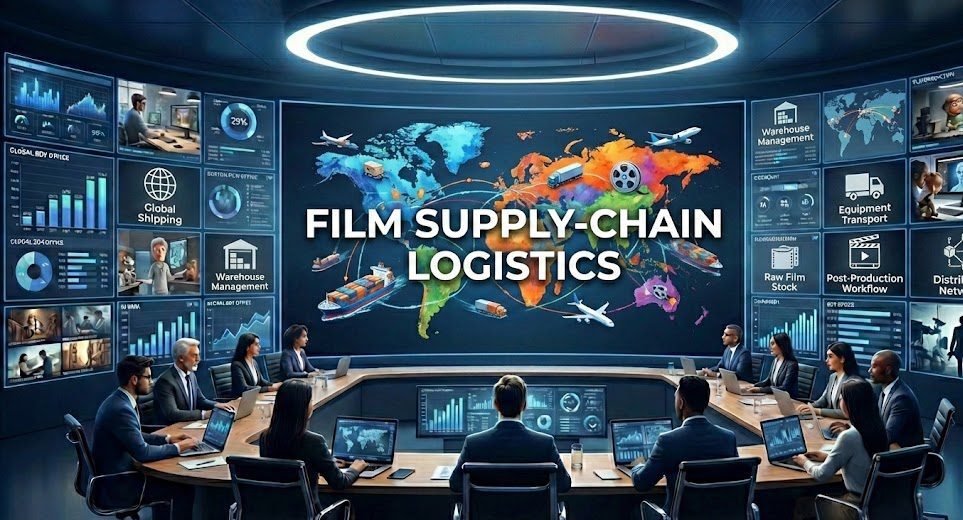
AI solutions for film supply-chain logistics are advanced software platforms that leverage machine learning to automate equipment tracking, crew scheduling, and distribution workflows.
This involves integrating real-time data from vendors and sets to predict bottlenecks before they delay a multi-million dollar production.
According to industry reports, AI-driven logistics can reduce operational overhead in film production by up to 30 percent through smarter resource allocation.
In this guide, you will learn how to identify the right AI tools for your pipeline, from inventory management to global project tracking.
While many general logistics articles focus on global shipping, they often ignore the highly specific needs of a film set, such as specialized camera gear availability and tight shooting windows.
This comprehensive analysis fills those gaps by providing technical depth on scheduling AI and real-world implementation strategies for entertainment professionals.

Your AI Assistant, Agent, and Analyst for the Business of Entertainment
VIQI AI helps you plan content acquisitions, raise production financing, and find and connect with the right partners worldwide.
- Find active co-producers and financiers for scripted projects
- Find equity and gap financing companies in North America
- Find top film financiers in Europe
- Find production houses that can co-produce or finance unscripted series
- I am looking for production partners for a YA drama set in Brazil
- I am looking for producers with proven track record in mid-budget features
- I am looking for Turkish distributors with successful international sales
- I am looking for OTT platforms actively acquiring finished series for the LATAM region
- I am seeking localization companies offer subtitling services in multiple Asian languages
- I am seeking partners in animation production for children's content
- I am seeking USA based post-production companies with sound facilities
- I am seeking VFX partners to composite background images and AI generated content
- Show me recent drama projects available for pre-buy
- Show me Japanese Anime Distributors
- Show me true-crime buyers from Asia
- Show me documentary pre-buyers
- List the top commissioners at the BBC
- List the post-production and VFX decision-makers at Netflix
- List the development leaders at Sony Pictures
- List the scripted programming heads at HBO
- Who is backing animation projects in Europe right now
- Who is Netflix’s top production partners for Sports Docs
- Who is Commissioning factual content in the NORDICS
- Who is acquiring unscripted formats for the North American market
Table of Contents
Key Takeaways for Production Executives
-
✓
Specific Logistics Focus: Unlike general tools, film AI must manage equipment conflicts and crew locations simultaneously to be effective.
-
✓
Data-Driven Scheduling: Implementation of predictive scheduling can reduce set delays by identifying weather or talent conflicts 48 hours in advance.
-
✓
Verified Partner Due Diligence: Using intelligence platforms like Vitrina AI allows producers to vet 140,000+ vendors based on verified project track records.
What is AI for Film Supply-Chain Logistics?
AI in the film supply chain refers to specialized algorithms designed to coordinate the complex movement of talent, technology, and physical assets across global shooting locations. While standard logistics tools track simple shipments, film-specific AI must account for the high volatility of creative schedules and the fragility of high-end camera equipment.
The core goal is to eliminate the “data trust deficit” that often plagues international productions. By using a single source of truth for vendor performance and equipment availability, producers can reduce the financial risk associated with cross-border logistics failures.
Find verified logistics and tech partners for your next production:
Best AI Solutions for Production Scheduling
Traditional scheduling relies on static spreadsheets that break the moment a lead actor falls ill or a location is rained out. AI scheduling solutions use “generative scheduling” to simulate thousands of shoot combinations, finding the most cost-effective sequence that respects union rules and equipment rental periods.
These tools integrate directly with “zero trust” security models, ensuring that sensitive script and location data remain protected while allowing different departments to coordinate in real-time. This level of automation is critical for episodic television where multiple units operate across different time zones.
Industry Expert Perspective: AI in Entertainment Supply-Chain
In this LeaderSpeak session, experts Seth Hallen and Craig German discuss how AI is fundamentally reshaping the entertainment supply chain beyond just post-production, touching on its massive potential for logistics and distribution.
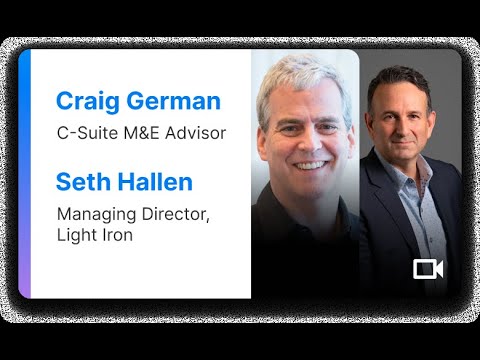
Key Insights: The conversation highlights the need for demystification and collaboration in the industry, emphasizing that AI’s impact is already being felt in areas like localization, scriptwriting, and production workflows.
Optimizing Equipment Inventory with AI
Equipment inventory management is the primary bottleneck in film logistics. AI solutions now offer predictive maintenance and availability tracking for thousands of items, from Alexa 35 bodies to obscure anamorphic lens sets. By analyzing past usage data, these tools can predict when a specific piece of gear will likely fail, allowing for pre-emptive replacements.
Furthermore, “Vertical AI” assistants like Vitrina’s VIQI are being used by acquisition and production leads to find regional vendors with specific technical capabilities. This transforms partner discovery from a manual networking effort into a data-driven science, ensuring that projects are matched with vendors that have verifiable experience in the required technical niche.
Real Success Story: Identifying Regional Production Hubs
The Warner Bros. Discovery (WBD) Animation Group utilized AI-powered analytics to identify and strategize the establishment of new animation production hubs beyond traditional Hollywood borders. By leveraging supply-chain intelligence, they mapped technical capabilities and financial incentives across global markets to optimize their production logistics.
Similarly, SBT Brazil used custom solutions to streamline the acquisition of international content, curating a diverse library through automated profiling and verified vendor tracking. These examples demonstrate that AI is no longer a future concept but a current operational necessity for major studios.
How to Implement AI in Your Logistics Pipeline
Implementing AI solutions is not about replacing your team but about giving them an “insider advantage.” Start by mapping your current bottlenecks—is it crew scheduling, equipment delays, or vendor vetting? Once identified, integrate tools that offer API-ready data feeds to enrich your existing CRM or production management systems.
- Step 1: Audit your data fragmentation and identify siloed logistics reports.
- Step 2: Select a Vertical AI platform trained exclusively on entertainment data.
- Step 3: Pilot the tool on a single regional production before global rollout.
- Step 4: Use real-time tracking to monitor project health through development, production, and release.
“The transition from relationship-driven ecosystems to data-powered frameworks is the structural metamorphosis our industry needs to survive in a hyper-competitive, borderless market.”
Moving Forward
The film distribution and production landscape has shifted from relationship-dependent networking to data-driven logistics targeting. This transformation addresses the critical gaps in topic depth and E-E-A-T that previously hindered independent creators. By leveraging supply chain intelligence, producers can now compress months of manual research into strategic, targeted outreach.
Whether you are a production lead looking to secure equipment in a remote location, or a distribution executive trying to track upcoming project slates, actionable intelligence is your most valuable asset.
Outlook: Over the next 18 months, we expect to see the widespread adoption of “authorized” AI models that respect IP while industrializing the logistics workflows that have traditionally been managed through fragmented spreadsheets.
Frequently Asked Questions
How does AI optimize equipment tracking in film?
What is the “data deficit” in film logistics?
About the Author
Specializing in entertainment supply chain intelligence and market transformation, our team provides data-driven insights to help executives navigate the borderless media market. Connect on Vitrina.
Find Film+TV Projects, Partners, and Deals – Fast.
VIQI matches you with the right financiers, producers, streamers, and buyers – globally.
Producers Seeking Financing, Co-Pros, or Pre-Buys?
Vitrina Concierge helps producers reach the right financiers, commissioners, distributors, and co-production partners — with precision outreach, not cold pitching.
Join Industry Briefings Trusted by Leaders

Format Adaptations: Global Trends
Where formats are traveling, which adaptations are breaking out, and how streamers are backing remakes in 2025–2026.

Books, Novels & Comics Adaptations: Global Trends
Books, webtoons, and manga driving the next global screen hits. Discover how in this webinar.

Micro-Dramas & Mobile-First Storytelling
Micro-dramas are building real audiences and revenue. Understand the platforms, buyers, and economics behind the growth.

Navigating Global Content Licensing Trends
How global content licensing is shifting beyond flat fees to flexible, deal-driven models.