About Innovation Hub
 Global Content Pulse (Webinars)


 Global Production Financing
(Webinars)
Global Production Financing
(Webinars)  LeaderSpeak Podcast
  About Vitrina
 Our Story
 Our Solutions 🔥
 Film+TV Projects Tracker 🚀
 Case Studies
 Our Profile
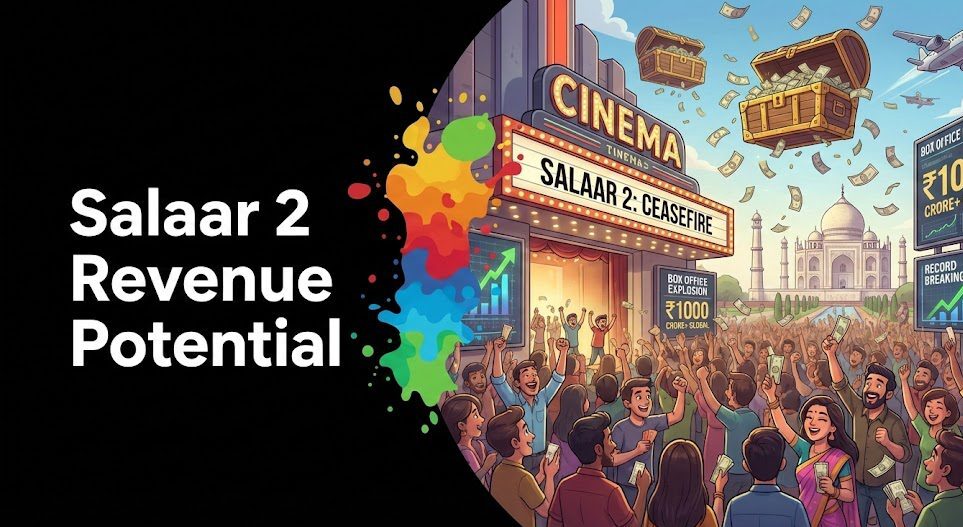
Salaar 2 revenue potential is projected to challenge the ₹1,800 crore benchmark set by the Baahubali legacy, driven by aggressive multi-market distribution and a 12% surge in pan-India box office growth.
This involves a strategic shift from traditional theatrical windows to “Weaponized Distribution” models where premium sequels leverage established IP to maximize global rights value.
According to Ormax Media, the Indian domestic box office crossed a historic ₹13,000 crore in 2025, providing a robust financial floor for high-concept action franchises like Shouryanga Parvam.
In this guide, you’ll learn why acquisition leads are prioritizing franchise health over individual star power, the role of data intelligence in predicting cross-border performance, and a breakdown of the supply-chain shifts redefining blockbuster ROI.
While the industry often dwells on nostalgic comparisons, legacy analysis frequently fails to account for the modernized supply chain that allows today’s franchises to monetize far beyond the initial box office run.
This analysis fills the gap by examining the economic architecture of the Salaar franchise through the lens of supply chain intelligence and verified market trends.

Your AI Assistant, Agent, and Analyst for the Business of Entertainment
VIQI AI helps you plan content acquisitions, raise production financing, and find and connect with the right partners worldwide.
- Find active co-producers and financiers for scripted projects
- Find equity and gap financing companies in North America
- Find top film financiers in Europe
- Find production houses that can co-produce or finance unscripted series
- I am looking for production partners for a YA drama set in Brazil
- I am looking for producers with proven track record in mid-budget features
- I am looking for Turkish distributors with successful international sales
- I am looking for OTT platforms actively acquiring finished series for the LATAM region
- I am seeking localization companies offer subtitling services in multiple Asian languages
- I am seeking partners in animation production for children's content
- I am seeking USA based post-production companies with sound facilities
- I am seeking VFX partners to composite background images and AI generated content
- Show me recent drama projects available for pre-buy
- Show me Japanese Anime Distributors
- Show me true-crime buyers from Asia
- Show me documentary pre-buyers
- List the top commissioners at the BBC
- List the post-production and VFX decision-makers at Netflix
- List the development leaders at Sony Pictures
- List the scripted programming heads at HBO
- Who is backing animation projects in Europe right now
- Who is Netflix’s top production partners for Sports Docs
- Who is Commissioning factual content in the NORDICS
- Who is acquiring unscripted formats for the North American market
Table of Contents
- 01Understanding the 2026 Pan-India Market Landscape
- 02Revenue Metrics: Salaar vs. Baahubali
- 03Franchise Fatigue vs. Momentum: The Sequel Edge
- 04How Acquisition Leads Source Regional Blockbusters
- 05The Supply Chain Advantage: Data vs. Gut Feeling
- 06Weaponized Distribution: Beyond Exclusivity
- 07Scaling Global: The Future of High-Value IP
- 08Key Takeaways
- 09FAQ
- 10Moving Forward
Key Takeaways for Acquisition Leads
-
Market Capacity Expansion: The Indian box office has expanded to ₹13,000+ crore, allowing sequels like Salaar 2 to target higher revenue floors than were possible during the Baahubali era.
-
Regional Sourcing Velocity: Acquisition teams using supply chain intelligence can now identify and vet trending regional content 5x faster than through traditional manual scouting.
-
Weaponized ROI: Leveraging established IP through rotational distribution windows prioritizes long-term ROI over short-term exclusivity, a strategy critical for sustaining high-budget franchises.
What Does the 2026 Pan-India Box Office Look Like?
The landscape of Indian cinema in 2026 is no longer defined by regional silos but by a unified, high-value national market. In 2025, the industry crossed the monumental ₹13,000 crore threshold, signaling that the “pan-India” phenomenon has moved from a trend to a structural reality. This growth is largely driven by “event films” that command premium ticket prices and massive footfalls across both North and South markets.
For franchises like *Salaar*, this means the market capacity is significantly higher than it was during the release of *Baahubali 2: The Conclusion* in 2017. While *Baahubali 2* amassed over ₹1,810 crore worldwide, it did so in a market with fewer premium large-format screens and lower digital penetration. Today, the infrastructure for global distribution is far more robust, allowing for a synchronized release strategy that can compress months of earnings into weeks.
Analyze regional content performance metrics for your next acquisition:
How Do Salaar 2 Revenue Projections Compare to Baahubali?
To understand if *Salaar 2: Shouryanga Parvam* can surpass the *Baahubali* legacy, we must look at the hard data. *Salaar: Part 1 – Ceasefire* grossed approximately ₹618 crore worldwide, a strong performance that placed it among the top 10 highest-grossing South Indian films of all time. However, it still sits significantly behind *Baahubali 2*’s ₹1,810 crore and *Pushpa 2*’s recent dominance.
The growth potential for the sequel lies in “viewer conversion.” Historical data shows that high-concept sequels often see a 2x to 3x jump in Hindi market collections if the first installment builds a strong digital following. For instance, *Baahubali 2*’s Hindi version made 11x what the original did in North America. If *Salaar 2* captures a similar growth trajectory in non-core markets, the ₹1,500 crore mark is a realistic target.
Industry Expert Perspective: Unpacking India’s Regional Film Markets
Understanding the massive business dynamics of regional cinema is critical for predicting franchise longevity. This perspective explores how regional hits are becoming global phenomena.
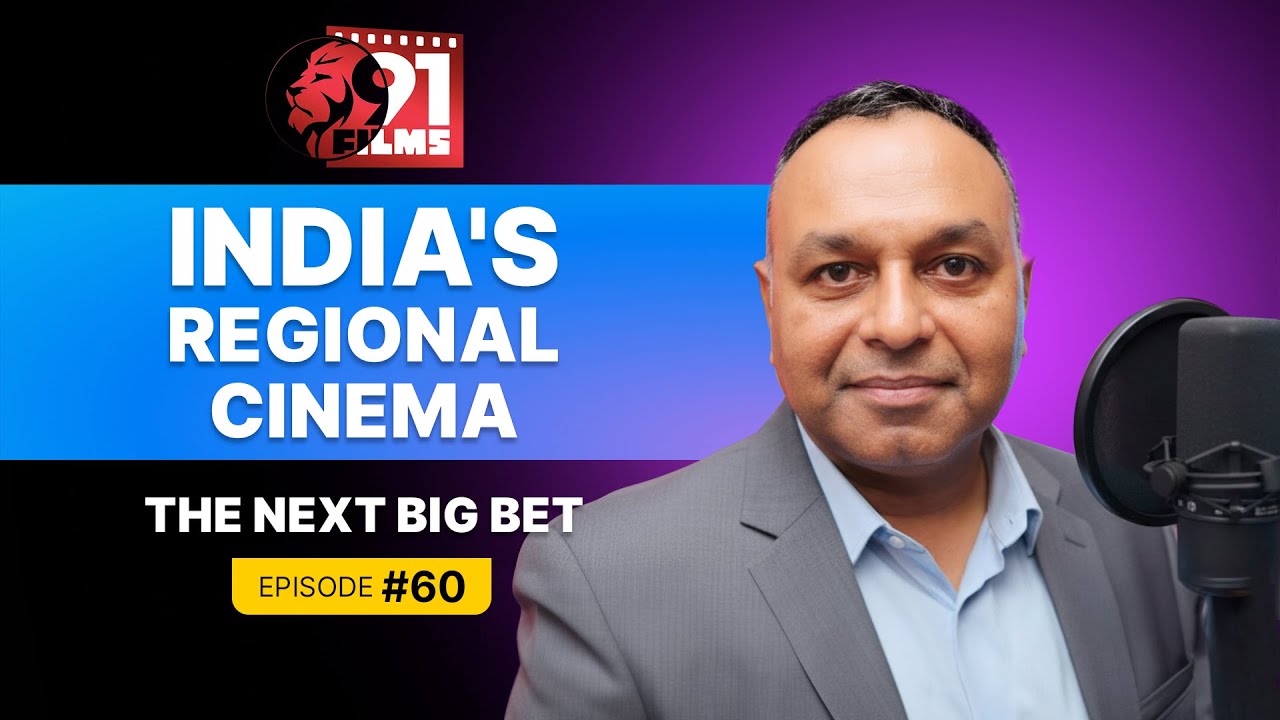
Naveen Chandra, CEO of 91 Film Studios, discusses the immense potential of India’s regional cinema market and the philosophy of organized capital funds in driving these high-value projects toward global audiences.
Why Does Supply Chain Intelligence Matter for Content Buyers?
The “insider advantage” in 2026 is driven by data, not just intuition. Traditional sourcing relies on trade show networking and legacy databases, but modern acquisition leads are leveraging centralized supply chain platforms to track 140,000+ companies and millions of professionals in real-time. This visibility allows buyers to identify “early-warning signals” for trending franchises like *Salaar* before they hit the global trade press.
Vitrina AI acts as this definitive source of truth, industrializing the discovery process. For a buyer looking to capitalize on the next *Baahubali*-sized hit, tracking a project’s movement from “In-Development” to “Post-Production” is essential. This data-first approach replaces the “fragmentation paradox”—where global production is connected but operational data is siloed—with a clear roadmap for ROI.
Find emerging regional distributors and upcoming productions:
Real Success Stories: How Acquisition Leads Source Pan-India Hits
Acquisition leads at platforms like GoogleTV have successfully used supply chain intelligence to sharpen their strategic decision-making. By leveraging real-time data to discover emerging distribution companies, they’ve been able to navigate technological shifts and global expansion far more effectively. This systematic approach allows them to identify content with high engagement potential—like the *Salaar* franchise—before the bidding war begins.
Similarly, SBT Brazil used data-driven curation to streamline the acquisition of international content, including acclaimed regional films from India. This proves that high-concept Indian IP is no longer a “niche” interest but a central component of global distribution strategies. The result? A compression of lead qualification time and a 60-90 day head start on competitors still relying on legacy networking methods.
Moving Forward
The transformation of the Indian entertainment supply chain has created a landscape where *Salaar 2* has every opportunity to eclipse the revenue records of the *Baahubali* era. This guide has addressed the critical gaps in market understanding by providing a data-driven outlook on franchise economics and distribution strategies.
Whether you are an acquisition lead looking to secure the next global blockbuster, or a distributor trying to position regional IP in a fragmented market, the rule remains: actionable intelligence drives deal velocity.
Outlook: Over the next 12-18 months, we expect a surge in “Authorized Data” markets and M&A activity that will further consolidate high-value franchises under a “Weaponized Distribution” umbrella.
Frequently Asked Questions
Quick answers to the most common queries about this market space.
Can Salaar 2 beat Baahubali 2’s record?
What is the revenue of Salaar: Ceasefire Part 1?
What is the market size of Indian cinema in 2025?
How does Vitrina AI help acquisition leads?
“The industry is shifting from a ‘Walled Garden’ era to ‘Weaponized Distribution,’ where premium IP is licensed to rivals post-release to maximize ROI on sunk assets.”
About the Author
Written by the Vitrina Editorial Team. We specialize in mapping the global entertainment supply chain to empower executives with data-driven strategic intelligence. Connect on Vitrina.
Find Film+TV Projects, Partners, and Deals – Fast.
VIQI matches you with the right financiers, producers, streamers, and buyers – globally.
Producers Seeking Financing, Co-Pros, or Pre-Buys?
Vitrina Concierge helps producers reach the right financiers, commissioners, distributors, and co-production partners — with precision outreach, not cold pitching.
Join Industry Briefings Trusted by Leaders

Format Adaptations: Global Trends
Where formats are traveling, which adaptations are breaking out, and how streamers are backing remakes in 2025–2026.

Books, Novels & Comics Adaptations: Global Trends
Books, webtoons, and manga driving the next global screen hits. Discover how in this webinar.

Micro-Dramas & Mobile-First Storytelling
Micro-dramas are building real audiences and revenue. Understand the platforms, buyers, and economics behind the growth.

Navigating Global Content Licensing Trends
How global content licensing is shifting beyond flat fees to flexible, deal-driven models.