About Innovation Hub
 Global Content Pulse (Webinars)


 Global Production Financing
(Webinars)
Global Production Financing
(Webinars)  LeaderSpeak Podcast
  Global Entertainment Digest (Newsletter)
  About Vitrina
 About VIQI
 Our Story
 Our Solutions 🔥
 Film+TV Projects Tracker 🚀
 Case Studies
 Our Profile
A film commission can help with permits for shooting on public property by acting as a liaison between production teams and government agencies to streamline approvals and secure logistical support.
This facilitation involves identifying the correct jurisdictions, providing standardized application templates, and troubleshooting conflicts with local traffic or public services.
According to Vitrina AI intelligence, productions that engage local film offices early in the location scouting phase report a 40% reduction in permit processing timelines compared to direct government applications.
In this guide, you will learn the step-by-step process of leveraging commission expertise to unlock restricted locations and maximize production efficiency.
While many government portals provide basic permit checklists, they often lack the tactical intelligence needed to navigate complex multi-agency approvals or secure financial incentives.
This comprehensive guide addresses those technical gaps by revealing how seasoned producers use film commissions as strategic partners rather than just administrative offices.

Your AI Assistant, Agent, and Analyst for the Business of Entertainment
VIQI AI helps you plan content acquisitions, raise production financing, and find and connect with the right partners worldwide.
- Find active co-producers and financiers for scripted projects
- Find equity and gap financing companies in North America
- Find top film financiers in Europe
- Find production houses that can co-produce or finance unscripted series
- I am looking for production partners for a YA drama set in Brazil
- I am looking for producers with proven track record in mid-budget features
- I am looking for Turkish distributors with successful international sales
- I am looking for OTT platforms actively acquiring finished series for the LATAM region
- I am seeking localization companies offer subtitling services in multiple Asian languages
- I am seeking partners in animation production for children's content
- I am seeking USA based post-production companies with sound facilities
- I am seeking VFX partners to composite background images and AI generated content
- Show me recent drama projects available for pre-buy
- Show me Japanese Anime Distributors
- Show me true-crime buyers from Asia
- Show me documentary pre-buyers
- List the top commissioners at the BBC
- List the post-production and VFX decision-makers at Netflix
- List the development leaders at Sony Pictures
- List the scripted programming heads at HBO
- Who is backing animation projects in Europe right now
- Who is Netflix’s top production partners for Sports Docs
- Who is Commissioning factual content in the NORDICS
- Who is acquiring unscripted formats for the North American market
Table of Contents
- 01The Role of Film Commissions in Permit Facilitation
- 02UnlockingLogistical Support for Public Spaces
- 03How to Use Commissions to Expedite Approval Workflows
- 04Financial Incentives and Fee Waivers for Public Shoots
- 05Expert Case Study: Navigating Multi-Jurisdictional Permits
- 06Leveraging Supply Chain Intel for Site Selection
- 07Key Takeaways
- 08FAQ
Key Takeaways for Producers
-
Bureaucratic Liaison: Commissions resolve permit bottlenecks by acting as the single point of contact between production and city departments.
-
Logistical Optimization: Working with a film office grants access to police escorts, traffic control, and base camp locations often unavailable to independent applicants.
-
Financial Mitigation: Many regional commissions offer fee waivers or production grants that can significantly offset the cost of public property use fees.
How Do Film Commissions Facilitate Public Property Permits?
Film commissions serve as the vital bridge between the creative demands of a production and the regulatory requirements of local government. When shooting on public property—such as city streets, parks, or government buildings—producers often face a labyrinth of departmental approvals. A film office simplifies this by acting as a “one-stop shop” that coordinates with police, fire, transportation, and sanitation departments on your behalf.
By providing standardized permit application templates and pre-negotiated Master Use Agreements, commissions eliminate the technical guesswork of what information is required. This professional mediation ensures that small independent projects receive the same level of logistical attention as major studio tentpoles.
Find local film commissions in your target shooting region:
Unlocking Logistical Support for Public Spaces
A permit is only as good as the logistics backing it up. Film commissions provide essential “on-the-ground” support that individual scouts might struggle to secure independently. This includes managing complex street closures, identifying power drops in public parks, and coordinating “no parking” signage with local transit authorities.
Furthermore, commissions often maintain databases of approved base camp locations and caterers that are familiar with local public property regulations. This pre-vetted infrastructure reduces the risk of operational shutdowns due to non-compliance with noise ordinances or public access laws.
Identify logistical partners for public shoots:
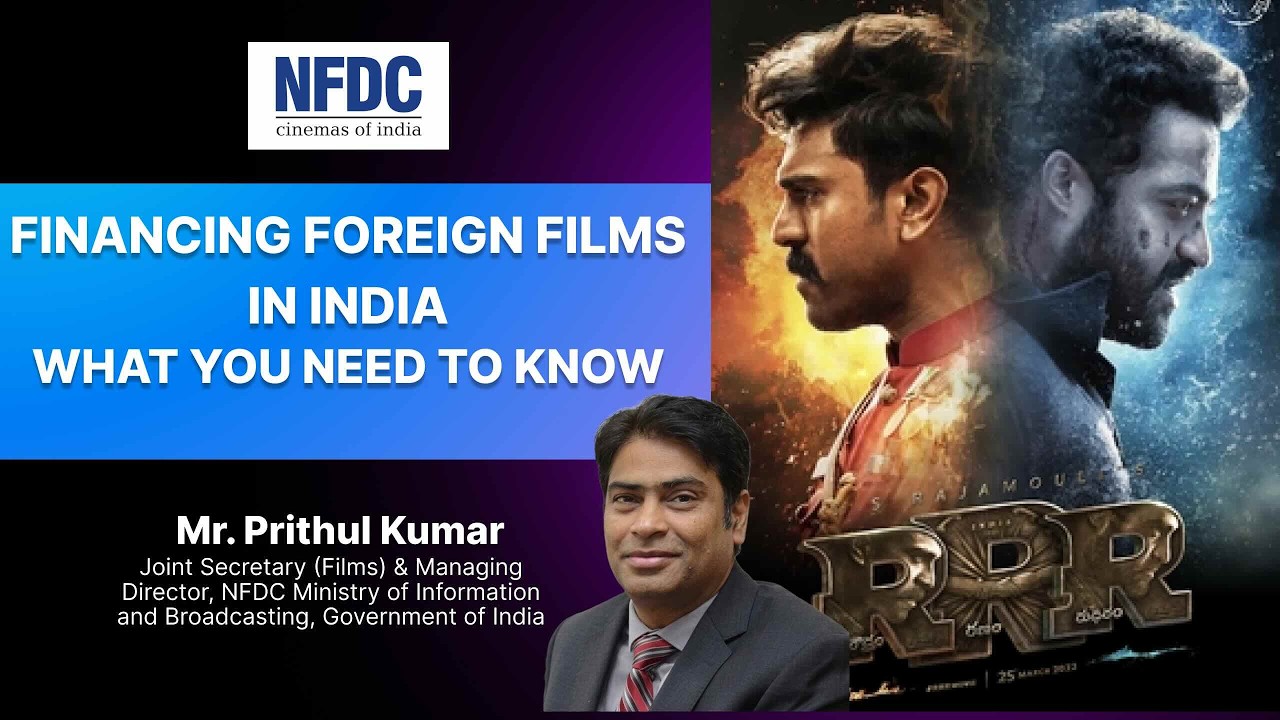
Industry Expert Perspective: Incentive Scheme For Production Of Foreign Films In India
This session explores how national film offices, such as the NFDC in India, are implementing structured initiatives to aid international productions with live shoots, permitting, and co-production agreements.
Key Insights
Mr. Prithul Kumar (Joint Secretary, Films) discusses the ministry’s role in assisting international projects with live shoots and post-production services. The video highlights how official co-production agreements and government incentives create a more transparent, efficient permitting environment for foreign filmmakers.
How to Use Commissions to Expedite Approval Workflows
Timing is everything in production. Traditional government permit queues can be lengthy, especially for high-impact locations. Film commissions often have established “fast-track” protocols for productions that can demonstrate economic impact, such as those hiring local crews or using regional vendors.
To leverage these expedited workflows, producers should provide the commission with a clear production summary, proof of insurance, and a preliminary schedule at least 3-4 weeks before shooting. This proactive engagement allows the film office to clear hurdles before they become production-delaying roadblocks.
Check recent project movements for permit lead times:
Financial Incentives and Fee Waivers for Public Shoots
One of the most overlooked advantages of film commission partnership is financial mitigation. Many municipalities charge significant daily fees for public land use, parking, and security. However, commissions often have the authority to waive these fees for projects that meet specific criteria, such as “educational content” or “small business productions.”
Beyond fee waivers, the film office is usually the gatekeeper to regional tax credits and production grants. In jurisdictions like India or the UK, the national film office provides the certification required to unlock these cash rebates, which can cover 25-40% of qualifying local spend.
Case Study: Navigating Multi-Jurisdictional Permits
The Situation: An independent European thriller project required filming across a public beach, a state-owned pier, and a city-managed boardwalk. This meant coordinating with three different government jurisdictions—each with unique insurance requirements and application fees.
The Solution: By engaging the regional film commission, the production team secured a “Master Permit” that consolidated all three locations. The commission negotiated a single insurance rider acceptable to all agencies and reduced the administrative lead time from six weeks to twelve days.
The Result: The production saved €12,000 in redundant application fees and avoided a scheduled public event conflict that would have forced a three-day shoot delay.
Leveraging Supply Chain Intel for Site Selection
In the modern borderless market, selecting the right location is as much about data as it is about aesthetics. Vitrina AI provides the “insider advantage” by tracking 1.6 million titles and 140,000+ companies across the global supply chain. This data allows producers to identify which regions are “production-friendly” based on real-time project tracking and commission responsiveness.
Instead of manually searching individual government sites, intelligence platforms allow you to query which commissions are currently active and which regions are hosting similar genre projects. This systemic approach replaces anecdotal research with verifiable market intelligence.
Map your next shoot with global supply chain intelligence:
Moving Forward
The transition from manual permit searching to strategic commission partnership marks a shift toward a more industrialized entertainment supply chain. By utilizing film offices as logistical hubs, producers can compress months of bureaucratic research into weeks of targeted production planning.
Whether you are a first-time filmmaker looking to navigate city hall, or a seasoned location manager trying to secure multiple jurisdictions, the principle remains: data-driven facilitation wins.
Outlook: Over the next 18 months, we expect more film commissions to adopt “Authorized Data” portals that integrate directly with supply chain intelligence platforms, making real-time permitting the new industry standard.
Frequently Asked Questions
Quick answers to common queries about film commissions and permitting.
Do film commissions charge for their services?
How early should I contact a film commission?
Can they help with private property permits?
What insurance is usually required for public property?
“The difference between a stalled production and a successful shoot often comes down to the quality of your relationship with the local film commission. They aren’t just permit processors; they are the strategic allies that unlock the city’s logistical engine.”
About the Author
Written by the Vitrina Intelligence Team. Our experts specialize in mapping the global entertainment supply chain, providing producers and executives with the data-driven insights needed to navigate modern production landscapes. Connect on Vitrina.
Find Film+TV Projects, Partners, and Deals – Fast.
VIQI matches you with the right financiers, producers, streamers, and buyers – globally.
Producers Seeking Financing, Co-Pros, or Pre-Buys?
Vitrina Concierge helps producers reach the right financiers, commissioners, distributors, and co-production partners — with precision outreach, not cold pitching.
Join Industry Briefings Trusted by Leaders

The New Deal Room: A 2026 Playbook for Global Content Licensing
How global content licensing is shifting beyond flat fees to flexible, deal-driven models.
Film & TV Production Financing: 2026 Trends
Production financing conditions are changing quickly. Understanding where money is moving and what buyers are backing is key to getting projects approved and funded in 2026.
Unreleased Film+TV Projects: Opportunities & Showcase
A curated view of unreleased Film and TV projects open for financing and collaboration