About Innovation Hub
 Global Content Pulse (Webinars)


 Global Production Financing
(Webinars)
Global Production Financing
(Webinars)  LeaderSpeak Podcast
  About Vitrina
 Our Story
 Our Solutions 🔥
 Film+TV Projects Tracker 🚀
 Case Studies
 Our Profile
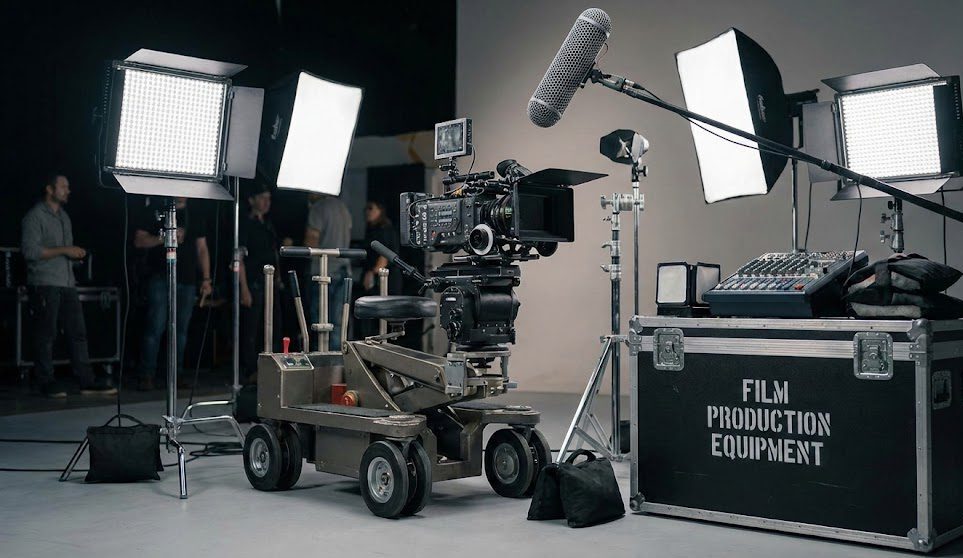
Buying affordable film production equipment involves leveraging secondary markets, regional suppliers, and supply chain intelligence to source professional-grade gear without high-tier retail markups.
This process includes identifying reliable used equipment marketplaces, participating in studio asset liquidations, and utilizing global tracking tools to find rental houses offloading inventory.
According to industry data, independent productions can reduce capital expenditure by up to 40% by sourcing through vetted B2B supply chain platforms rather than traditional consumer retailers.
In this guide, you will learn practical sourcing strategies, budget category breakdowns, and how to utilize data intelligence to build a professional-grade kit on a lean budget.
While most online resources provide generic lists of consumer-grade cameras, they fail to address the complexities of professional supply chains and the practical “how-to” of sourcing reliable, high-end gear at fractional costs.
This comprehensive guide addresses those gaps by providing actionable strategies—from navigating specialized B2B marketplaces to leveraging Vitrina AI’s global network of 140,000+ companies to identify regional vendors.

Your AI Assistant, Agent, and Analyst for the Business of Entertainment
VIQI AI helps you plan content acquisitions, raise production financing, and find and connect with the right partners worldwide.
- Find active co-producers and financiers for scripted projects
- Find equity and gap financing companies in North America
- Find top film financiers in Europe
- Find production houses that can co-produce or finance unscripted series
- I am looking for production partners for a YA drama set in Brazil
- I am looking for producers with proven track record in mid-budget features
- I am looking for Turkish distributors with successful international sales
- I am looking for OTT platforms actively acquiring finished series for the LATAM region
- I am seeking localization companies offer subtitling services in multiple Asian languages
- I am seeking partners in animation production for children's content
- I am seeking USA based post-production companies with sound facilities
- I am seeking VFX partners to composite background images and AI generated content
- Show me recent drama projects available for pre-buy
- Show me Japanese Anime Distributors
- Show me true-crime buyers from Asia
- Show me documentary pre-buyers
- List the top commissioners at the BBC
- List the post-production and VFX decision-makers at Netflix
- List the development leaders at Sony Pictures
- List the scripted programming heads at HBO
- Who is backing animation projects in Europe right now
- Who is Netflix’s top production partners for Sports Docs
- Who is Commissioning factual content in the NORDICS
- Who is acquiring unscripted formats for the North American market
Table of Contents
Key Takeaways for Independent Producers
-
Leverage Secondary B2B Markets: Accessing used professional gear through rental house liquidations can save producers up to 50% compared to new retail prices.
-
Global Supplier Intelligence: Using platforms like Vitrina AI helps identify regional vendors in emerging production hubs that offer highly competitive rates for essential equipment.
-
Target Actionable Pricing: Focus gear investment on “evergreen” categories like lighting and audio, which retain value longer than rapidly evolving camera bodies.
What is Affordable Film Equipment Sourcing?
Affordable film equipment sourcing is the strategic process of acquiring professional-grade production tools—such as cameras, optics, lighting, and grip gear—at prices significantly below standard MSRP. This involves navigating the global entertainment supply chain to find arbitrage opportunities in used markets and regional distributors.
For independent producers, this means moving beyond consumer e-commerce sites like Amazon and B&H toward specialized B2B marketplaces and direct vendor relationships. By understanding the “lifecycle” of production equipment, creators can target assets that are being offloaded by large rental houses or studios to make room for the latest technology iterations.
Find regional equipment vendors in your production hub:
How to Source Reliable Used Production Gear
The “Experience Gap” in filmmaking often leads beginners to buy new, consumer-grade gear that devalues quickly. Seasoned producers know that professional used gear—specifically from reputable rental houses—offers far better performance and reliability. Sourcing used gear requires a “check-and-verify” approach to ensure assets were maintained under professional service contracts.
1. Target Rental House “Refresh” Cycles
The Challenge: Finding professional equipment that hasn’t been “beaten up” on set. Most eBay listings for cinema cameras come from private sellers with unknown maintenance histories, leading to high mechanical risk.
The Approach: Major rental houses typically refresh their inventory every 18-36 months. By tracking these companies on a platform like Vitrina AI, you can identify when they are offloading “legacy” fleets of ARRI or RED bodies to upgrade to newer sensors. These assets usually come with documented service histories.
✓ Action Item: Contact local rental houses directly about their “used sales” list.
Industry Expert Perspective: Goldfinch’s Strategy for Financial Sustainability
Understanding the financial sustainability of a project is critical to gear selection. In this video, Kirsty Bell discusses how a disciplined business model allows independent filmmakers to bridge the gap between creative vision and financial reality.
Kirsty Bell explores how leveraging diverse revenue streams and disciplined financing models transforms the independent film industry. This financial discipline is the foundation of smart equipment procurement strategies.
Budget Breakdowns: Essential Gear Categories Under $500
Building a professional kit doesn’t require a $10,000 investment upfront. By focusing on high-impact, low-cost essentials, independent producers can achieve high production value. Below is a breakdown of where to find the best value for under $500 per category.
- Lighting: COB (Chip-on-Board) LED lights from regional manufacturers often provide the same color accuracy as name brands at 30% of the cost. Look for brands with CRI 95+ ratings.
- Audio: Used XLR microphones and field recorders from retired broadcast professionals are widely available in regional supply chain hubs.
- Optics: Vintage still photo lenses (Canon FD, Nikon AI-S) adapted for cinema use offer a “organic” look that many modern cheap lenses lack, often costing under $200.
Find equipment dealers specializing in independent budgets:
“The most expensive equipment is the gear that sits on your shelf unused. Independent producers should focus their capital on versatile, evergreen assets like lighting and audio, while renting high-depreciation tech like camera bodies until they achieve scale.”
Leveraging Regional Suppliers for Better Rates
One of the biggest gaps in current filmmaking guides is the focus on North American or UK-based retail. However, the global supply chain has shifted. Emerging production hubs in Eastern Europe, the Middle East, and India offer professional-grade equipment through local distributors at significantly lower price points due to different regional tax structures and competition levels.
Vitrina AI tracks over 140,000 companies globally, including thousands of regional vendors that aren’t indexed on Google’s primary search pages. By querying regional markets, producers can discover vendors like Dinamita Post in Mexico or O2 Filmes in Brazil that may provide specialized gear or localized support that Western retailers cannot match.
Moving Forward
The film equipment market has transitioned from a centralized retail model to a fragmented, global supply chain where intelligence drives savings. By focusing on used professional gear and regional vendors, independent producers can overcome the “data deficit” that typically keeps equipment costs prohibitively high.
Whether you are a first-time filmmaker looking to secure your first camera package, or a seasoned producer trying to optimize a multi-city production slate, data-driven sourcing is the key to maintaining financial sustainability.
Outlook: Over the next 12-18 months, we expect a massive influx of professional assets into the used market as studios consolidate inventory following the “Streaming Wars” restructuring.
Frequently Asked Questions
Quick answers to sourcing essential film gear on a budget.
Where is the best place to buy used cinema equipment?
How can I verify used gear quality?
Is it cheaper to buy or rent?
What gear should I buy first?
About the Author
Vitrina Editorial Team specializes in decoding the global entertainment supply chain. With decades of experience in production intelligence and market data, we help professionals navigate the complexities of film and TV business. Connect on Vitrina.
Find Film+TV Projects, Partners, and Deals – Fast.
VIQI matches you with the right financiers, producers, streamers, and buyers – globally.
Producers Seeking Financing & Partnerships?
Book Your Free Concierge Outreach Consultation
(To know more about Vitrina Concierge Outreach Solutions click here)
Producers Seeking Financing, Co-Pros, or Pre-Buys?
Vitrina Concierge helps producers reach the right financiers, commissioners, distributors, and co-production partners — with precision outreach, not cold pitching.
Join Industry Briefings Trusted by Leaders

Film & TV Financing: Pre-Buys
Learn how pre-buys work in current Film and TV financing, how they differ from pre-sales, and how they are used to close real finance plans.
Streamers – Netflix vs. Amazon – The 2026 Strategy
How Netflix and Amazon’s content and revenue strategies are diverging ahead of 2026.
Format Adaptations: Global Trends
Where formats are traveling, which adaptations are breaking out, and how streamers are backing remakes in 2025–2026.