About Innovation Hub
 Global Content Pulse (Webinars)


 Global Production Financing
(Webinars)
Global Production Financing
(Webinars)  LeaderSpeak Podcast
  Global Entertainment Digest (Newsletter)
  About Vitrina
 About VIQI
 Our Story
 Our Solutions 🔥
 Film+TV Projects Tracker 🚀
 Case Studies
 Our Profile
How Acquisition Leads Are Securing Premium Japanese Anime Rights Faster

Author: vitrina
Published: February 17, 2025
A content writer focused on the global entertainment ecosystem, turning complex industry information into meaningful, strategic perspectives.
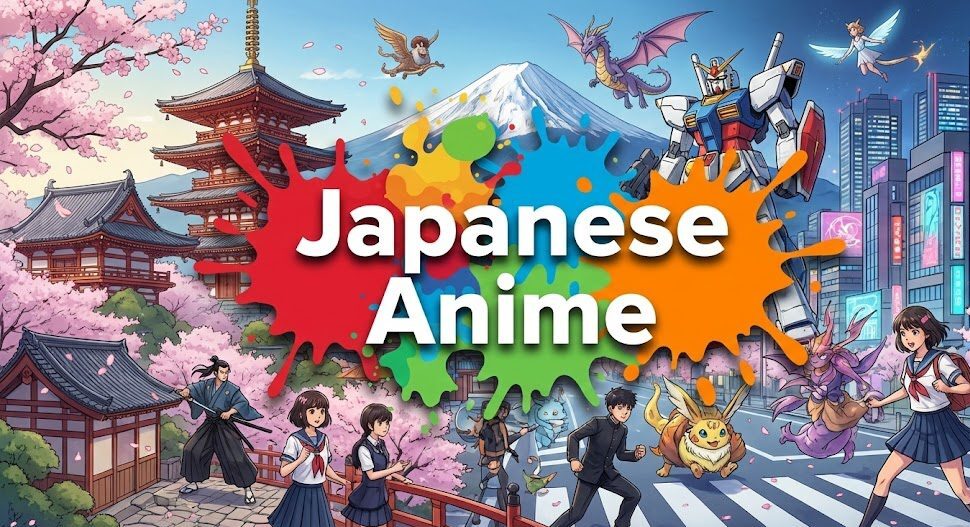
If your Japanese animation acquisition strategy still runs on market trips, intermediary calls, and waiting for titles to trend on social media—you’re already behind. Netflix just struck a landmark partnership with MAPPA, the studio behind Jujutsu Kaisen and Chainsaw Man, giving it exclusive access to future MAPPA originals globally. Crunchyroll raised subscription prices in February 2026 for the first time since 2019, signaling confidence that demand outpaces platform competition. And Disney now operates a dedicated anime acquisitions team in Japan, competing directly for titles that used to land exclusively with specialist buyers.
The window for straightforward, affordable Japanese animation acquisition is closing fast. But the teams who understand exactly how the rights structure works—and how to get in front of decision-makers before a title formally hits the market—are still finding real value. This is how they do it.
Track Japanese Animation Deals Before They Hit the Market
140,000+ companies including Netflix, Warner Bros, and Paramount use Vitrina to identify Japanese animation projects in development, connect with production committees, and close rights deals before competitors know they’re available. Start with 200 free credits.
No credit card required. Track anime acquisitions today.
Table of Contents
- The Market Reality: $34B and Accelerating
- How Japanese Animation Rights Actually Work
- The Platform Wars: Netflix vs. Crunchyroll vs. Everyone Else
- 3 Acquisition Strategies That Still Win in 2026
- Studio Intelligence: Who Controls What You Want
- Timing and Windows: When to Move and When It’s Already Too Late
- Localization, Dubbing, and the Cost Stack Nobody Talks About
- FAQ: Japanese Animation Acquisition
- The Bottom Line: Intelligence Wins the Acquisition Game
The Market Reality: $34B and Accelerating
The global anime market hit $34.25 billion in 2024, according to Grand View Research—and it’s projected to grow at a CAGR of 9.8% through 2030. North America is the fastest-growing regional market at a forecasted 16.3% CAGR. These aren’t projections built on optimism. They’re built on subscription revenue, merchandise attach rates, and licensing deal data from the companies already positioned inside the market.
But here’s what those headline numbers don’t tell you: the cost of getting in is rising sharply. The demand for exclusive anime titles has inflated acquisition costs dramatically. Netflix, Amazon, Crunchyroll, and now Disney are all competing for the same finite pool of premium titles—which means the teams still winning on price are winning because they’re finding titles before the bidding war starts.
The global anime streaming market was valued at $9.5 billion in 2023 and is projected to reach $24.7 billion by 2032. That streaming-specific figure matters if you’re a platform buyer—it tells you that the majority of anime’s $34B total market value is still being captured outside pure streaming revenue, in merchandise, gaming, theatrical, and events. Your streaming acquisition is buying access to an IP ecosystem, not just a content library.
And the engagement metrics justify the premium. Anime viewers are significantly more likely to purchase related merchandise than general entertainment viewers, according to a Dentsu report. Exclusive anime IP becomes a launchpad for merchandising, video games, and live events, creating a revenue stream that diversifies the platform’s dependence solely on subscription revenue. That’s the CFO argument for anime acquisition—it’s not just content spend. It’s IP infrastructure investment.
How Japanese Animation Rights Actually Work
Most acquisition professionals hitting Japan for the first time make the same mistake: they expect anime rights to work like European drama rights or Korean content deals. They don’t. Japan’s production and rights architecture is structurally different—and if you don’t understand it, you’ll either overpay, negotiate with the wrong entity, or get locked out of territories you thought you’d secured.
The production committee system (seisaku iinkai) is where everything starts. Rather than a single studio owning a title, Japanese anime is typically financed by a consortium—the manga publisher, animation studio, TV broadcaster, music label, and merchandise licensors—who share ownership proportionally to their investment. It’s a risk-sharing model that’s served the Japanese industry well for decades. For buyers, it means you’re usually negotiating with multiple parties who each need to approve a deal. Build that into your legal timeline.
Territory rights are extremely granular. A North American deal with Crunchyroll doesn’t touch European rights. LATAM might be held by a separate sub-licensee. MENA, Southeast Asia, and APAC rights often get carved out individually. If you’re building a regional SVOD library, you may be negotiating with three to five different rightsholders for the same title across your footprint. That’s not a bug in the system—it’s the system. Factor in multi-party coordination costs from day one.
Theatrical windows are contractually mandated. Franchise films—Demon Slayer’s Infinity Castle trilogy, One Piece theatrical releases, Jujutsu Kaisen films—carry minimum theatrical windows before streaming rights activate, typically 90 to 180 days in Japan, sometimes longer for international markets. Miss that sequence in your acquisition contract and you’ll face either a legal dispute or a content gap at the worst possible time.
IP ownership versus licensing is the strategic fork in the road. Platforms like Netflix employ the “Hollywood Model,” fully funding productions (Originals) to secure permanent ownership of the IP. This allows them to create sequels, video games, and merchandise without perpetual renewal fees, turning the content into a franchise engine. For acquisition leads at mid-tier platforms, co-production investment—even a minority stake in a production committee—can deliver meaningfully better economics than straight licensing over a 5-year horizon. Run the ROI calculation, not just the acquisition cost.
Get Verified Intelligence on Japanese Animation Studios and Rights Holders
400,000+ projects tracked on Vitrina, including Japanese animation in development and pre-production. VIQI—Vitrina’s vertical AI—identifies which studios are shopping rights, who controls committee decisions, and which titles match your acquisition brief. Netflix UK sourced a key title in 48 hours using Vitrina’s Smart Pairing.
Free access. No commitment required.
The Platform Wars: Netflix vs. Crunchyroll vs. Everyone Else
The streaming landscape for Japanese animation has shifted materially in the past 90 days. Two moves define where the market is heading.
First: MAPPA announced a partnership with Netflix that will give the streaming service exclusive access to its future anime original titles, as well as involve Netflix in marketing and the production pipeline for global releases. MAPPA—the studio behind Jujutsu Kaisen, Attack on Titan: The Final Season, and Chainsaw Man—is the most commercially potent anime production house operating right now. Pulling MAPPA’s originals toward Netflix fundamentally changes the competitive calculus for every other buyer.
Second: Crunchyroll announced it would raise subscription costs across all paid membership tiers for North American subscribers, effective immediately from February 2, 2026—its first increase since 2019. Crunchyroll has more than 17 million subscriptions as of 2025, and raising prices while that subscriber base holds tells you the platform has pricing power. But it also tells you the cost of licensing to Crunchyroll’s standard simulcast model is going up alongside subscriber revenue.
Crunchyroll’s acquisition model centers on simulcasts—episodes available globally within hours of Japan broadcast. The platform’s strategy focuses heavily on simulcasts—releasing episodes globally just hours after they air in Japan—a model that caters directly to the most dedicated fans. And the competitive logic is clear: as one veteran Japanese producer told Anime News Network, “If I wanted an exclusive title to get more eyes from the anime fan base in the Americas, it would go on Crunchyroll. Subscribers there are already anime fans, unlike Netflix and Amazon.”
Netflix’s model prioritizes prestige and breadth over speed. It rarely participates in simulcast windows—instead acquiring completed series or funding full-season productions with staged global rollouts. Its Sakamoto Days co-production, its Ghibli streaming deal outside Japan and the US, and now the MAPPA partnership all follow the same pattern: buy or build the relationship at the production financing level, then control the global window.
Disney/Hulu is the emerging disruptor. Disney has been investing more aggressively in anime for the past couple of years and now operates a dedicated anime acquisitions team in Japan. Its investments in Twisted-Wonderland: THE ANIMATION and Star Wars: Visions signal a franchise-focused anime strategy—using anime aesthetics and production to serve existing Disney IP, while also acquiring standalone originals through Hulu’s US-global integration. That’s a different brief than Crunchyroll’s genre-depth play or Netflix’s prestige ambition—but it competes for the same Japanese studio bandwidth.
For mid-tier regional platforms and broadcasters, this consolidation at the top tier creates a defined opportunity: second-window rights, territory-specific deals, and catalog acquisition at pricing that tier-one streamers aren’t competing for. The question is whether your intelligence infrastructure is good enough to identify those gaps before someone else does.
3 Acquisition Strategies That Still Win in 2026
Let’s be direct. “Buy what’s trending” is not a strategy. By the time Demon Slayer trended globally, the streaming rights were years into their licensing cycles. Here’s what the smart acquisition teams are actually doing.
Strategy 1: Pre-Production Interception. Securing the anime simulcast deals requires extreme speed and intelligence. The platform needs an early warning on upcoming film/TV projects—knowing which studios are producing which titles and their expected broadcast window before the show is heavily marketed. This knowledge drastically improves the negotiation position. The teams winning at pre-production interception are monitoring Japanese studio announcements, production committee filings, and manga publication data—not waiting for MIPCOM floor conversations. Vitrina’s project tracking covers 400,000+ productions globally, with Japanese animation titles flagged from development stage through greenlight. That’s the infrastructure this strategy requires.
Strategy 2: Catalog Monetization in Underserved Territories. The premium simulcast market is locked up by Crunchyroll and Netflix in most major territories. But catalog rights—second, third, and fourth windows for established titles—remain accessible and underpriced in MENA, Sub-Saharan Africa, and select APAC markets. Rolla Karam, SVP of Content Acquisition at OSN, the platform serving 23 countries across MENA and North Africa, has identified anime as a growth category based on the proven success of Turkish and Korean drama on the platform. That’s a documented, active acquisition appetite—and catalog pricing in those territories reflects none of the premium that Crunchyroll pays for North American simulcasts.
Strategy 3: Production Committee Co-Investment. This is the model that Crunchyroll utilizes—investing directly into production committees for near-immediate streaming rights. But it’s not exclusive to Crunchyroll. Any platform with capital and relationships can negotiate committee participation in exchange for territory-specific streaming rights. The economics are better than straight licensing over a multi-year horizon, and you get optionality on sequels and theatrical extensions. The barrier is relationship access to committee members—specifically the manga publishers and studio creative leads who initiate the committee formation process. This is where direct industry intelligence becomes the differentiator.
Studio Intelligence: Who Controls What You Want
You can’t build a Japanese animation acquisition strategy without understanding which studios own which relationships—and which studios are actively seeking international partners versus locked into existing platform deals.
MAPPA is the most commercially active studio of the current cycle. Jujutsu Kaisen, Chainsaw Man, Vinland Saga Season 2, Attack on Titan: The Final Season. The Netflix partnership announced in early 2026 changes the calculus for future MAPPA originals—but existing licensed titles remain in their current distribution arrangements. By 2026, MAPPA has solidified its position as the industry’s most aggressive producer of high-fidelity shōnen content. For content buyers, MAPPA represents a “safe harbor” for blockbuster IP, offering a verified track record in handling complex global distribution.
Ufotable produces Demon Slayer at standards that rival Hollywood theatrical animation. Ufotable remains the benchmark for integrating 3DCG with traditional 2D animation. Their Infinity Castle film trilogy for Demon Slayer serves as a prime example of how they leverage high-fidelity visuals to drive massive theatrical ROI. Rights to the Infinity Castle films are among the most contested acquisition assets of 2026.
Kyoto Animation (KyoAni) operates differently from most major studios. Unlike studios that function solely as work-for-hire entities, KyoAni prioritizes IP retention through their “KA Esuma Bunko” imprint. For acquisition leads, this makes KyoAni a “primary source” partner, often holding significant rights to their own projects. That means you can negotiate directly with KyoAni rather than through a manga publisher’s committee—a rarer arrangement in the Japanese industry that can meaningfully shorten deal timelines.
Toei Animation controls Dragon Ball and One Piece—the two largest anime franchises in commercial history. Toei’s “MEGA 10-year plan” hits its implementation phase in 2026, with a $450 million budget allocated for global expansion, including establishing new regional studios in the Philippines and North America. Toei is actively seeking partners for VR/AR experiences and cross-platform franchise extensions. That’s an open door for co-production conversations that didn’t exist three years ago.
Bones Inc. (My Hero Academia, Fullmetal Alchemist: Brotherhood) and A-1 Pictures (Solo Leveling, Sword Art Online) round out the tier-one studios whose slates command premium positioning. Below them, a second tier—Wit Studio, White Fox, Madhouse, J.C. Staff—produces much of the mid-budget content where acquisition pricing is still rational and second-window deals are available.
Timing and Windows: When to Move and When It’s Already Too Late
The timing question is simple to state and brutal to execute: the best Japanese animation acquisition deals happen 12 to 18 months before a title airs in Japan. By the time a title is in simulcast and trending globally, the premium streaming rights are locked. You’re competing for second-window scraps at that stage—or paying a reactive premium to a rights aggregator who got in early.
Supply chain intelligence advantage: tracking unreleased slates via Vitrina allows acquisition teams to identify production windows 18 to 24 months ahead of competitors. That’s not marketing language—that’s the actual competitive window. Once a key title is identified, the acquisition team must bypass the general contact form and reach the verified executive decision-maker within the production committee, ensuring efficient, high-confidence outreach. Waiting for an anime to premiere is a tactical failure.
And the high-value deals in 2026 reflect this exactly. High-value acquisition deals in 2025 include JUJUTSU KAISEN: Execution with an 85.0 deal score and Digimon Beatbreak at 84.0—both tracked on Vitrina’s deal intelligence database. Those deals were structured months before the broader market knew the titles were available.
For theatrical windows specifically: Japan maintains its theatrical exclusivity windows more strictly than any other major content market. Plan your streaming calendar around confirmed theatrical release dates, not around when you’d prefer to have content available. Missing a theatrical window clause in a rights agreement isn’t a legal technicality—it’s a commercial disaster that will play out publicly.
Localization, Dubbing, and the Cost Stack Nobody Talks About
Rights acquisition is the headline cost. Localization is the hidden multiplier that determines whether your Japanese animation investment actually reaches its audience.
A 12-episode anime series subtitled into English costs materially less than the same series dubbed—but dubbed content consistently outperforms subtitled-only in subscriber acquisition metrics, particularly on mobile-first platforms in markets where split-screen watching is the default viewing behavior. In Southeast Asia and MENA, where Vitrina tracks the fastest-growing anime acquisition demand, dub availability is often the determining factor in catalog performance.
The localization debate has also gotten more complex. Crunchyroll faced controversy in July 2025 when the company allegedly used generative AI for some of its subtitles, drawing backlash from fans and trade press. Company president Rahul Purini previously denied using AI in translations—a spokesperson later acknowledged the subtitles were AI-generated, blaming a third-party vendor. For buyers who’ve negotiated quality standards into their rights agreements, this is a contractual exposure question, not just a PR issue.
Budget your localization costs upfront—not as an afterthought. A full dub into English, with professional voice casting, quality control, and lip-sync passes, runs $2,000 to $4,000 per episode for a mid-tier production. Add French, German, Spanish, and Portuguese and you’re looking at a significant localization line before a single subscriber sees the content. That cost stack needs to sit inside your acquisition ROI model from day one—not get discovered when your CFO sees the post-acquisition invoices.
Connect Directly With Japanese Animation Rights Holders—No Cold Calls Required
Vitrina’s Concierge Service provides direct introductions to Japanese animation studios, production committee members, and rights holders. Google TV, Paramount, and Warner Bros use Vitrina to accelerate their anime acquisition pipelines. Start with 200 free credits. No credit card required.
FAQ: Japanese Animation Acquisition
How much does it cost to acquire Japanese animation rights?
Japanese animation acquisition costs vary enormously by title prestige, territory, window, and exclusivity. A simulcast deal for a mid-tier seasonal series in a single major territory might run $50,000–$150,000 per cour (13 episodes). Premium titles from studios like MAPPA or Ufotable, with global or multi-territory rights, can reach seven figures. Co-production committee participation—which buys streaming rights plus IP equity—requires production investment starting in the low hundreds of thousands for minor titles, scaling to multi-million dollar commitments for franchise titles. Always model localization costs separately: dubbing alone adds $2,000–$4,000 per episode per language.
What is the production committee system in Japanese animation?
The seisaku iinkai (production committee) is Japan’s standard co-financing and IP ownership model for anime. A consortium—typically the manga publisher, animation studio, TV broadcaster, music label, and merchandise partner—co-fund production and share IP ownership proportionally. For rights buyers, this means multiple rightsholders must approve deals. Negotiations are slower than Western distribution deals, timelines are longer, and getting to the right decision-maker inside the committee structure requires verified contacts. Build 6–12 months of lead time into any complex committee negotiation.
What’s the difference between Crunchyroll’s and Netflix’s anime acquisition models?
Crunchyroll specializes in simulcasts—episodes available globally within hours of Japan broadcast. It invests directly in production committees for near-simultaneous streaming rights, serving a dedicated anime fan base. It holds 17+ million paid subscribers as of 2025. Netflix prioritizes co-productions and full-series acquisitions, buying or building relationships at the production financing level to control global premiere windows. Its recent MAPPA partnership—giving Netflix exclusive access to future MAPPA originals—represents Netflix’s most aggressive move into Japanese animation production yet. For acquisition leads building a regional strategy, Crunchyroll delivers faster access to a dedicated fan audience; Netflix delivers broader, casual-viewer reach.
Which Japanese animation studios are actively seeking international acquisition partners?
Toei Animation‘s MEGA 10-year expansion plan—with a $450 million budget—explicitly targets international co-production and franchise extension partnerships. Kyoto Animation holds its own IP through its KA Esuma Bunko imprint, making direct acquisition deals possible without going through a publisher-led committee. Bones Inc. and A-1 Pictures have active international licensing programs for their non-exclusively committed titles. Emerging and mid-tier studios—Wit Studio, White Fox, J.C. Staff—generally have more acquisition-friendly pricing and more available rights windows than the tier-one studios whose premium titles are locked up by the major streamers.
How far in advance should I start a Japanese animation acquisition process?
12 to 18 months minimum before a title airs in Japan for premium first-window rights. Vitrina’s production tracking identifies titles 18–24 months ahead of broadcast—the window where deal negotiation still yields competitive pricing. By the time a title trends on social media, premium streaming rights are typically allocated. Second-window and territory-specific rights remain available post-premiere, but at reactive pricing that reflects market awareness. For theatrical film rights, add the Japanese theatrical window (90–180 days minimum) to your planning timeline before streaming activation.
Is Japanese animation acquisition viable for regional platforms outside North America?
Yes—and it’s arguably more commercially attractive in underserved markets. Crunchyroll and Netflix dominate North American and Western European simulcast rights. But MENA, Southeast Asia, and Sub-Saharan Africa have significant, documented anime audience demand with catalog pricing that doesn’t reflect tier-one streaming competition. Rolla Karam, SVP of Content Acquisition at OSN—covering 23 countries across MENA—has identified anime as an active growth category. Regional platforms that build catalog depth now, before major streamers aggressively expand territory coverage, will hold a defensible content position at acquisition costs that won’t be available in 36 months.
What localization considerations matter for Japanese animation acquisition?
Dubbed content consistently outperforms subtitled-only in subscriber acquisition metrics on mobile-first platforms. Budget $2,000–$4,000 per episode per language for professional dubbing. A full English, French, German, and Spanish dub across a 24-episode series can run $300,000–$400,000 before quality control passes. Include localization cost modeling in your acquisition ROI calculation from the outset—not as a post-deal discovery. Contractually specify quality standards for any third-party localization vendor, given recent industry incidents with AI-generated subtitles that failed quality and audience standards.
The Bottom Line: Intelligence Wins the Acquisition Game
Japanese animation acquisition in 2026 rewards one thing above everything else: getting there first. Netflix understood this and built a MAPPA partnership before the market priced it in. Crunchyroll understood this and built simulcast infrastructure before anyone else saw the subscriber economics. The teams still finding value are the ones with production intelligence—not the ones with bigger budgets.
The Fragmentation Paradox in Japanese animation is real: there are hundreds of viable titles produced annually, with rights split across dozens of studios, publishers, and production committees—and the information about what’s available, when, and at what price is almost entirely invisible to buyers who don’t have direct Japan relationships or dedicated tracking infrastructure. That information asymmetry is the acquisition edge. Build the infrastructure to close it, or accept that you’ll always be buying at reactive pricing from people who did.
Key Takeaways:
- Market Scale: Global anime hit $34.25B in 2024 at 9.8% CAGR; North America is the fastest-growing region at 16.3% CAGR through 2030.
- Rights Complexity: Production committees (seisaku iinkai) require multi-party approval; territory splits are granular; theatrical windows run 90–180 days minimum.
- Platform Shift: Netflix’s MAPPA partnership and Disney’s dedicated Japan acquisition team signal a fundamental reset in competitive dynamics—the middle market is being squeezed.
- Timing Imperative: Best deals close 12–18 months before broadcast; by premiere date, premium rights are already allocated.
- Hidden Costs: Model localization at $2,000–$4,000 per episode per language from day one—not as a post-acquisition line item.
- Regional Opportunity: MENA, Southeast Asia, and African markets offer catalog rights at pre-competition pricing with documented audience demand—the window won’t last.
De-Risk Your Japanese Animation Acquisition Strategy
Join 140,000+ companies including Netflix, Warner Bros, and Google TV using Vitrina to track Japanese studios, identify rights windows, and connect with production committee decision-makers before deals go to market. 200 free credits. No credit card required.
Or explore our Concierge Service for direct introductions to Japanese rights holders.
Related Reading:
Japan’s Most Popular Anime: Timeless & Trending Titles 2026 |
Mastering Anime Licensing and Distribution |
Top 10 Anime Studios in Japan: CXO Guide |
Anime Streaming Acquisition Strategy |
Streaming Platforms Acquiring Exclusive Anime: Strategic Playbook
Sources:
Anime News Network: Anime in 2025 — Is the Crunchyroll Cage Real? (February 2026) |
Screen International: Global Anime Market Analysis