About Innovation Hub
 Global Content Pulse (Webinars)


 Global Production Financing
(Webinars)
Global Production Financing
(Webinars)  LeaderSpeak Podcast
  Global Entertainment Digest (Newsletter)
  About Vitrina
 About VIQI
 Our Story
 Our Solutions 🔥
 Film+TV Projects Tracker 🚀
 Case Studies
 Our Profile
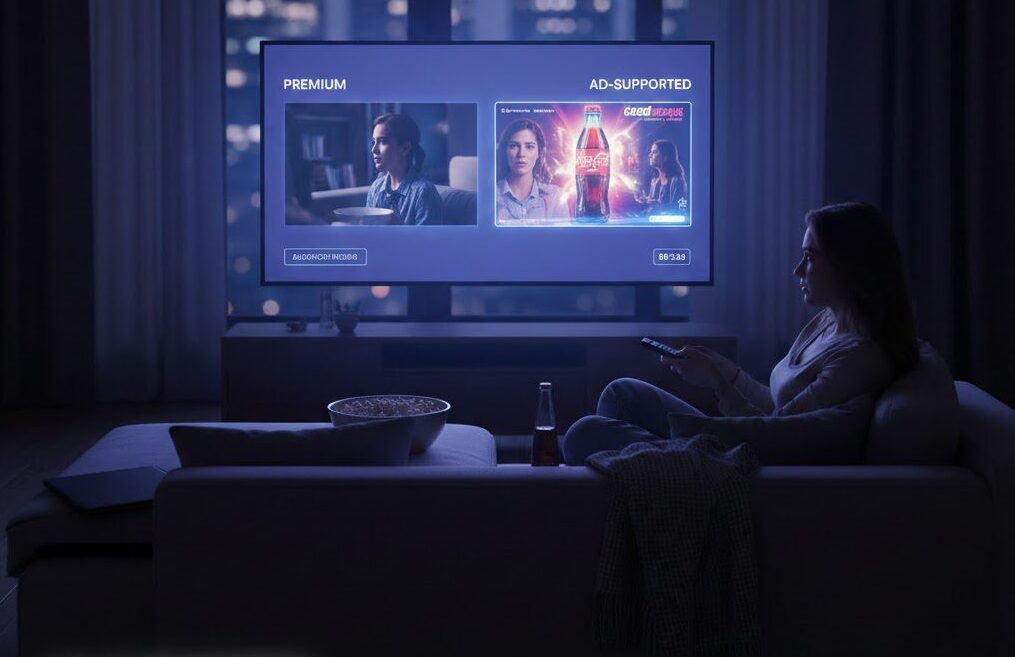
Ad-supported streaming budgets are the recalibrated financial frameworks required to produce content for hybrid SVOD/AVOD tiers, where ROI is driven by a combination of subscription fees and ad-revenue optimization.
This involves a structural metamorphosis in development, requiring producers to account for ad-break pacing, brand safety, and potential product integration at the scripting stage.
According to Vitrina AI intelligence, the industry’s shift toward “Weaponized Distribution” means that content must now be produced with secondary licensing windows in mind to maximize Average Revenue Per User (ARPU).
In this guide, you will learn how to leverage supply chain intelligence to identify financing partners and optimize your production pipeline for the ad-tier era.
While traditional budgets focused on “Walled Garden” exclusivity, the current market demands a more fluid approach that bridges the gap between creative art and disciplined business models.
This analysis fills critical market gaps by providing a roadmap—from identifying FAST channel managers to tracking 1.6 million global projects for competitive benchmarking.

Your AI Assistant, Agent, and Analyst for the Business of Entertainment
VIQI AI helps you plan content acquisitions, raise production financing, and find and connect with the right partners worldwide.
- Find active co-producers and financiers for scripted projects
- Find equity and gap financing companies in North America
- Find top film financiers in Europe
- Find production houses that can co-produce or finance unscripted series
- I am looking for production partners for a YA drama set in Brazil
- I am looking for producers with proven track record in mid-budget features
- I am looking for Turkish distributors with successful international sales
- I am looking for OTT platforms actively acquiring finished series for the LATAM region
- I am seeking localization companies offer subtitling services in multiple Asian languages
- I am seeking partners in animation production for children's content
- I am seeking USA based post-production companies with sound facilities
- I am seeking VFX partners to composite background images and AI generated content
- Show me recent drama projects available for pre-buy
- Show me Japanese Anime Distributors
- Show me true-crime buyers from Asia
- Show me documentary pre-buyers
- List the top commissioners at the BBC
- List the post-production and VFX decision-makers at Netflix
- List the development leaders at Sony Pictures
- List the scripted programming heads at HBO
- Who is backing animation projects in Europe right now
- Who is Netflix’s top production partners for Sports Docs
- Who is Commissioning factual content in the NORDICS
- Who is acquiring unscripted formats for the North American market
Table of Contents
Key Takeaways for Showrunners
-
Recalibrated ROI: Producers using supply chain data identify ad-tier commissioning patterns 70% faster than traditional networking.
-
Revenue Diversification: Successful ad-tier projects bridge art and enterprise by leveraging “curation” and “co-creation” with brand partners early in development.
-
Global Scalability: Monitoring real-time project trackers across 100+ countries reveals emerging FAST channel hubs and regional co-production mandates.
The Magnitude of the Ad-Tier Shift in Content Financing
The global media and entertainment industry is undergoing a structural metamorphosis, moving from opaque subscription models to centralized, ad-powered frameworks. For producers, this shift means that the $17 billion annually committed by platforms like Netflix is increasingly tied to ad-tier performance.
This “weaponized distribution” strategy forces a rethink of the content mandate: how to produce high-value IP that remains brand-safe while driving maximum ARPU.
Find financing and co-production partners for ad-supported series:
How Ad-Breaks Influence Production Costs
The introduction of ad-supported tiers brings the return of act-structure pacing. For showrunners, this means designing “cliffhangers” every 10–12 minutes to retain viewers through commercial breaks.
Technically, this requires additional post-production line items for ad-insertion metadata and specialized delivery specs. Without supply chain intelligence, producers face significant financial risk in underestimating the labor costs associated with localized ad-compliance across different territories.
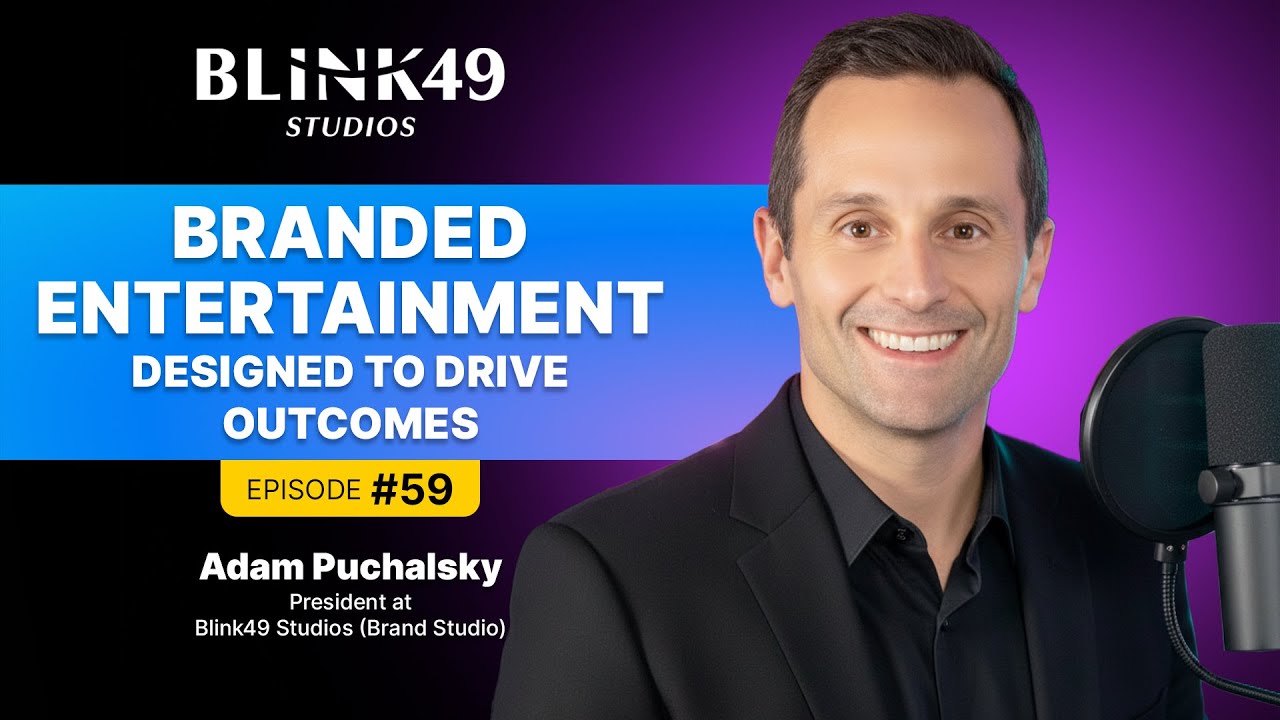
Industry Expert Perspective: Blink49 Studios: The Future of Branded Entertainment
Adam Puchalsky discusses building the Blink49 Brand Studio, which focuses on delivering entertainment and content for brands through “curation” (product integration) and “co-creation” (original brand-funded content).
Key Insights
Adam highlights how “curation” involves integrating brands into existing storylines, while “co-creation” builds brand-funded originals from the ground up. This shift allows producers to drive business outcomes for sponsors while securing additional financing for premium production slates.
The Role of Branded Entertainment in Content Financing
As platforms optimize for ad-revenue, “Branded Entertainment” has transitioned from a fringe tactic to a core business strategy. Producers can now bypass traditional gatekeepers by partnering with brands to fund original work.
By utilizing Vitrina’s Company Intelligence to map 30 million industry relationships, strategy teams can identify brands and agencies that have historically funded similar genres. This data-driven approach replaces speculation with strategy, enabling precision outreach to active financiers.
Access intelligence on active ad-tier commissioning:
Using Supply Chain Intelligence to Mitigate Risk
The “fragmentation paradox” often leaves producers flying blind in international markets. Vitrina AI solves this by providing structured, verified, real-time intelligence on 140,000+ companies. By tracking global production volumes and financing trends through specialized webinars and the Projects Tracker, producers can qualify partners based on specialization and reputation scores. This transforms partner discovery into a data-driven science, ensuring you collaborate with vendors who understand the ad-tier mandate.
Moving Forward
The shift toward ad-supported streaming tiers is not a temporary trend; it is a structural evolution of the entertainment economy. By leveraging supply chain intelligence, producers can fill the “data deficit” and secure the insider advantage needed to navigate this new landscape.
Whether you are a Showrunner looking to design ad-optimized act structures, or a Producer seeking brand-funded co-creation partners, the principle remains: actionable intelligence drives deal velocity.
Outlook: Over the next 12-18 months, “Weaponized Distribution” and authorized AI partnerships will further refine these ad-supported models, rewarding those who control the intelligence layer today.
Frequently Asked Questions
Quick answers to queries about ad-supported streaming and production budgeting.
How do ad-supported tiers change production?
What is branded integration?
How does VIQI AI help showrunners?
“The industry is undergoing a structural metamorphosis, transitioning from an opaque, relationship-driven ecosystem to a centralized, data-powered framework. Those who leverage real-time intelligence will have the ‘insider advantage’ of a Hollywood agent, scaled globally.”
About the Author
Vitrina’s Strategic Content Team. We specialize in mapping the global entertainment supply chain to provide data-driven insights for industry leaders. With over 30 million relationships mapped, we bridge the gap between creative vision and market reality. Connect on Vitrina.
Find Film+TV Projects, Partners, and Deals – Fast.
VIQI matches you with the right financiers, producers, streamers, and buyers – globally.
Producers Seeking Financing, Co-Pros, or Pre-Buys?
Vitrina Concierge helps producers reach the right financiers, commissioners, distributors, and co-production partners — with precision outreach, not cold pitching.
Join Industry Briefings Trusted by Leaders

Micro-Dramas & Mobile-First Storytelling
Micro-dramas are building real audiences and revenue. Understand the platforms, buyers, and economics behind the growth.

Navigating Global Content Licensing Trends
How global content licensing is shifting beyond flat fees to flexible, deal-driven models.
Film & TV Production Financing: 2026 Trends
Production financing conditions are changing quickly. Understanding where money is moving and what buyers are backing is key to getting projects approved and funded in 2026.
Unreleased Film+TV Projects: Opportunities & Showcase
A curated view of unreleased Film and TV projects open for financing and collaboration