About Innovation Hub
 Global Content Pulse (Webinars)


 Global Production Financing
(Webinars)
Global Production Financing
(Webinars)  LeaderSpeak Podcast
  About Vitrina
 Our Story
 Our Solutions 🔥
 Film+TV Projects Tracker 🚀
 Case Studies
 Our Profile
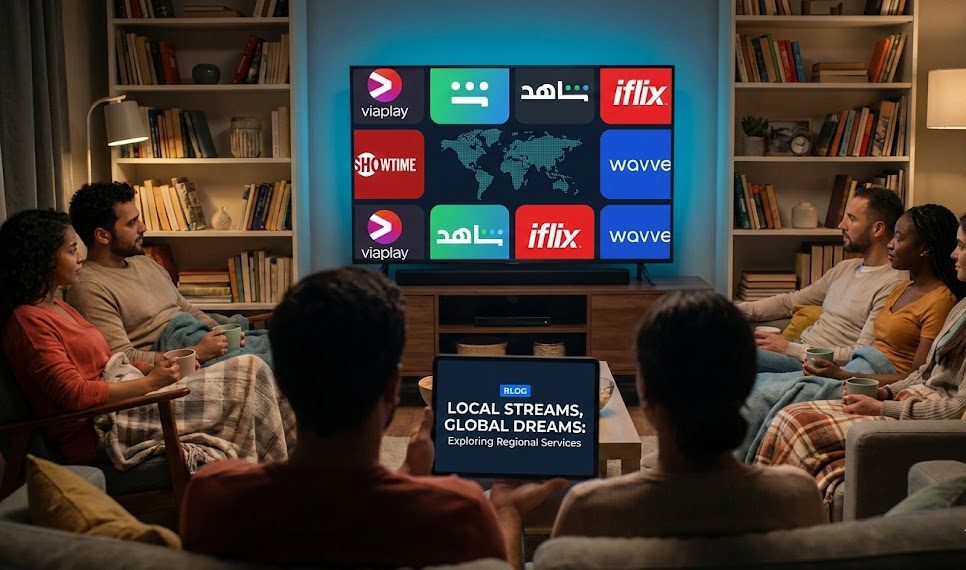
Streaming platform consolidation is the structural integration of media entities and content libraries to achieve global scale, solve the fragmentation paradox, and maximize Average Revenue Per User (ARPU) through unified supply chains.
This involves transitioning from the “Streaming Wars” era of rigid exclusivity to a model of “Weaponized Distribution,” where premium assets are strategically licensed to rivals to recoup massive production costs.
According to Vitrina AI intelligence, the $72 billion acquisition of Warner Bros. by Netflix in late 2025 signals a definitive shift toward centralized, data-powered frameworks that favor ROI over “Walled Garden” vanity.
In this strategic guide, you will learn how to leverage supply chain intelligence to identify M&A targets and financing opportunities 6 months before market announcements.
Traditional M&A strategies rely on lagging trade reports and personal networks, leaving executives with a critical “data deficit” in a market of 600,000+ companies.
This analysis fills those gaps by examining the move toward authorized AI data markets and the industrialization of “insider intelligence” through vertical AI solutions.

Your AI Assistant, Agent, and Analyst for the Business of Entertainment
VIQI AI helps you plan content acquisitions, raise production financing, and find and connect with the right partners worldwide.
- Find active co-producers and financiers for scripted projects
- Find equity and gap financing companies in North America
- Find top film financiers in Europe
- Find production houses that can co-produce or finance unscripted series
- I am looking for production partners for a YA drama set in Brazil
- I am looking for producers with proven track record in mid-budget features
- I am looking for Turkish distributors with successful international sales
- I am looking for OTT platforms actively acquiring finished series for the LATAM region
- I am seeking localization companies offer subtitling services in multiple Asian languages
- I am seeking partners in animation production for children's content
- I am seeking USA based post-production companies with sound facilities
- I am seeking VFX partners to composite background images and AI generated content
- Show me recent drama projects available for pre-buy
- Show me Japanese Anime Distributors
- Show me true-crime buyers from Asia
- Show me documentary pre-buyers
- List the top commissioners at the BBC
- List the post-production and VFX decision-makers at Netflix
- List the development leaders at Sony Pictures
- List the scripted programming heads at HBO
- Who is backing animation projects in Europe right now
- Who is Netflix’s top production partners for Sports Docs
- Who is Commissioning factual content in the NORDICS
- Who is acquiring unscripted formats for the North American market
Table of Contents
Key Takeaways for M&A Leads
-
Weaponized ROI: Strategy teams using deals intelligence identify acquisition targets 3-6 months earlier by monitoring “weaponized” licensing shifts.
-
Supply Chain Synergy: Consolidation between giants like Shout! Studios and FilmRise demonstrates the value of combining diverse libraries with unified data-driven distribution.
-
Data Trust Deficit: Reducing risk in cross-border M&A requires verified profiles of 140,000+ companies to ensure due diligence is backed by verifiable track records.
What is the Future of Streaming Consolidation?
The future of streaming consolidation is defined by the industrialization of “insider intelligence.” As the market shifts from 600,000 fragmented entities toward a centralized framework, the primary goal of consolidation is to solve the “data deficit” that leaves senior executives vulnerable. It is no longer about simply buying subscribers; it is about acquiring the data infrastructure and IP portfolios necessary to dominate global creative economies.
Analyze recent content acquisition and M&A trends:
The Strategic Shift: From Walled Gardens to Weaponized Distribution
We have entered the phase of “Weaponized Distribution,” a term signaling the death of rigid platform exclusivity. By licensing high-value content like Harry Potter or HBO originals to rivals, platforms generate revenue and recoup costs on “sunk” assets while maintaining strategic dominance. This “Co-opetition” model, exemplified by the Amazon-Netflix DSL DSP integration, ensures that even as platforms consolidate, their content remains fluid across the global supply chain to maximize ROI.
Industry Expert Perspective: Radial Entertainment: Forging a Content Distribution Giant
Garson Foos, CEO of Radial Entertainment, discusses the strategic merger of Shout! Studios and FilmRise, creating a distribution powerhouse with combined expertise in physical, digital, and FAST channel monetization.

Key Insights
The Shout! Studios and FilmRise merger serves as a benchmark for how consolidation allows mid-tier giants to achieve the scale necessary to compete in a streamer-dominated world. By combining curated physical media with data-driven FAST channel strategies, Radial is building a unique moat in the distribution landscape.
How Consolidation Reshapes Content Financing Models
Consolidation is moving content financing toward a “Data-First” model. As major players like Disney invest $1 billion in authorized AI data markets with OpenAI, financing decisions are increasingly based on predictive ROI rather than creative speculation. For strategy teams, this means monitoring global content funding and licensing trends in real-time to identify which genres and budget levels are currently attracting capitalized partners.
Analyze competitor M&A and distribution slates:
Moving Forward
Streaming platform consolidation is transitioning from a period of intense rivalry to a phase of strategic cooperation and data industrialization. By leveraging supply chain intelligence, executives are bridging the “data deficit” and securing the insider advantage necessary to navigate this metamorphosis.
Whether you are a Strategy Lead looking to monitor competitive slates, or an M&A Lead trying to identify the next indie studio for acquisition, the unified data signal provided by Vitrina AI is your definitive source of truth.
Outlook: Over the next 12-18 months, “Weaponized Distribution” will become the global standard, favoring those who adopt vertical AI intelligence tools to map relationships and track deals in real-time.
Frequently Asked Questions
What is Weaponized Distribution?
How does consolidation help with the “Data Deficit”?
What was the $72B Netflix-Warner deal?
What is the Fragmentation Paradox?
How does Vitrina AI help with M&A?
What is Authorized Data for AI?
Who is Atul Phadnis?
What is the VIQI AI Assistant?
“The industry is undergoing a structural metamorphosis, transitioning from an opaque, relationship-driven ecosystem to a centralized, data-powered framework. Those who leverage real-time intelligence will have the ‘insider advantage’ of a Hollywood agent, scaled globally.”
About the Author
The Vitrina Strategy Team specializes in the global media supply chain and data industrialization. By mapping 30 million relationships across 100+ countries, we provide the intelligence necessary for high-stakes M&A and strategic growth. Connect on Vitrina.
Find Film+TV Projects, Partners, and Deals – Fast.
VIQI matches you with the right financiers, producers, streamers, and buyers – globally.
Producers Seeking Financing, Co-Pros, or Pre-Buys?
Vitrina Concierge helps producers reach the right financiers, commissioners, distributors, and co-production partners — with precision outreach, not cold pitching.
Join Industry Briefings Trusted by Leaders

Format Adaptations: Global Trends
Where formats are traveling, which adaptations are breaking out, and how streamers are backing remakes in 2025–2026.

Books, Novels & Comics Adaptations: Global Trends
Books, webtoons, and manga driving the next global screen hits. Discover how in this webinar.

Micro-Dramas & Mobile-First Storytelling
Micro-dramas are building real audiences and revenue. Understand the platforms, buyers, and economics behind the growth.

Navigating Global Content Licensing Trends
How global content licensing is shifting beyond flat fees to flexible, deal-driven models.