🎥 Entertainment

Understanding Equity vs. Debt Financing in Film Production

a2b370012d7650927592f5e39b9fc3898432d70920aec7cef02d378c9044c501?s=96&d=mm&r=g

Author: vitrina

Published: December 1, 2025

Hardik, article writer passionate about the entertainment supply chain—from production to distribution—crafting insightful, engaging content on logistics, trends, and strategy

Debt Financing in Film Production

You’re a producer with a compelling script and a talented cast attached, but you need $15 million to bring your vision to life. Two potential financiers sit across from you—one offers to invest $7.5 million for a 50% ownership stake in your film, while another proposes a $10 million loan secured against your pre-sales agreements. This fundamental choice between equity and debt financing represents one of the most critical decisions in film production, shaping not only how your project gets funded but also how profits are shared, risks are distributed, and creative control is maintained.

Fundamentals of Equity vs. Debt Financing

Understanding the core differences between equity and debt financing provides the foundation for making informed decisions about film production funding. These two approaches represent fundamentally different relationships between producers and financiers, each with distinct implications for risk, reward, and control.

Equity Financing Essentials

Equity financing involves selling ownership stakes in a film project or production company to investors in exchange for funding. Recent market analysis shows that major streaming platforms and production companies increasingly favor equity structures, with companies like Netflix (AAA+ reputation score) and Warner Bros. (AAA+ reputation score) leading significant equity investments in original content.

In equity arrangements, investors become partners in the project, sharing both the potential profits and losses. If a film succeeds commercially, equity investors participate in the upside through their ownership percentage. Conversely, if the project fails to recoup its investment, equity investors absorb losses alongside the production team.

Key Characteristics of Equity Financing:

  • Investors receive ownership stakes proportional to their investment
  • No fixed repayment obligations or interest charges
  • Profit sharing based on agreed-upon revenue waterfalls
  • Investors often gain input on major creative and business decisions
  • Risk and reward shared between producers and investors

Debt Financing Fundamentals

Debt financing involves borrowing money that must be repaid with interest, typically secured against specific assets or revenue streams. Recent deal data reveals that gap financing—a form of debt financing—represents one of the most common structures in film production, with 25+ major deals completed in recent years.

Debt financiers act as lenders rather than partners, providing capital in exchange for fixed repayment terms. They typically don’t participate in profits beyond their agreed-upon interest rate, but they also have priority claims on revenue for loan repayment.

Key Characteristics of Debt Financing:

  • Fixed repayment obligations with predetermined interest rates
  • Security interests in specific assets or revenue streams
  • Limited or no participation in project profits beyond interest
  • Minimal involvement in creative decisions
  • Priority claims on revenue for loan repayment

The Risk-Reward Spectrum

The fundamental difference between equity and debt financing lies in how risk and reward are distributed. Equity investors accept higher risk in exchange for unlimited upside potential, while debt investors accept limited returns in exchange for more predictable repayment structures and security interests.

This risk-reward dynamic shapes every aspect of the financing relationship, from due diligence requirements to ongoing reporting obligations and exit strategies.

Equity Financing: Deep Dive and Structures

Equity financing in film production has evolved into sophisticated structures that accommodate the unique needs of creative projects while providing investors with appropriate risk-adjusted returns.

Traditional Equity Investment Models

Classic equity financing involves investors purchasing ownership stakes in individual film projects or production companies. Recent examples include the Elevate Production Finance, Screen Queensland, and Sky collaboration on “Fing!” which demonstrates how multiple equity partners can combine resources and expertise.

Single Project Equity Structures:

  • Investors purchase percentage ownership in specific films
  • Profits distributed according to agreed-upon waterfalls
  • Investment typically ranges from 10-50% of total budget
  • Investors may receive executive producer credits and consultation rights

Production Company Equity:

  • Investors acquire stakes in production companies rather than individual projects
  • Provides diversification across multiple projects and development pipelines
  • Often includes board representation and strategic input
  • May involve multi-year investment commitments and development funding

Streaming Platform Equity Models

Major streaming platforms have revolutionized equity financing by providing substantial upfront investments in exchange for exclusive content rights. Netflix‘s $20 million acquisition of “Hit Man” (deal score: 77) exemplifies how platforms use equity-like structures to secure premium content.

Platform Investment Characteristics:

  • Substantial upfront payments for exclusive content rights
  • Global distribution guarantees reducing market risk
  • Creative collaboration and development support
  • Long-term content library value for platforms

Broadcaster and Network Equity Participation

Traditional broadcasters increasingly participate in equity financing to secure content ownership and control distribution rights. The BBC‘s involvement in various co-production deals demonstrates how broadcasters balance content acquisition with equity investment strategies.

Co-Production Equity Structures:

  • Multiple broadcasters share production costs and ownership
  • Geographic distribution rights often aligned with investment percentages
  • Cultural and regulatory requirements may influence ownership structures
  • Risk diversification across multiple territories and markets

Private Equity and Institutional Investment

Sophisticated private equity funds and institutional investors bring substantial capital and professional management to film financing. These investors typically focus on larger productions or production company investments rather than individual projects.

Institutional Equity Characteristics:

  • Minimum investment thresholds typically $10+ million
  • Professional due diligence and risk management processes
  • Board representation and strategic oversight
  • Portfolio approach to risk management across multiple investments

Revenue Waterfall Structures

Equity financing success depends heavily on well-structured revenue waterfalls that fairly allocate returns among different investor classes and stakeholders.

Typical Waterfall Components:
1. First Position: Recoupment of production costs and financing fees
2. Second Position: Investor returns up to agreed-upon multiples
3. Third Position: Profit sharing between investors and producers
4. Ongoing Participation: Long-term revenue sharing arrangements

Navigate equity financing with comprehensive market intelligence. Vitrina’s platform tracks equity deals, investor preferences, and successful financing structures across the global entertainment industry. Our database helps producers understand current market conditions, identify suitable equity partners, and structure attractive investment opportunities.

Explore Vitrina’s equity financing intelligence to optimize your funding strategy and connect with the right investors.

Debt Financing Mechanisms and Applications

Debt financing in film production encompasses various specialized lending products designed to address the unique cash flow patterns and risk profiles of entertainment projects.

Gap Financing and Bridge Loans

Gap financing represents the most prevalent form of debt financing in film production, with recent market data showing 25+ major deals utilizing this structure. Companies like CAA Media Finance have become dominant players in arranging gap financing for productions ranging from independent films to major studio projects.

Gap Financing Applications:

  • Bridging timing gaps between production needs and confirmed funding
  • Accessing tax credit value before government payments arrive
  • Leveraging distribution commitments for immediate cash flow
  • Covering cost overruns or unexpected production expenses

Typical Gap Financing Terms:

  • Interest rates ranging from 8-18% annually depending on collateral quality
  • Advance rates of 70-90% against confirmed revenue commitments
  • Terms of 6-24 months aligned with expected revenue timing
  • Security interests in distribution agreements and revenue streams

Pre-Sales and Distribution Advance Financing

Pre-sales financing allows producers to monetize international distribution commitments before films are completed or delivered. This debt structure has become increasingly sophisticated, with specialized lenders like Comerica Entertainment Group and City National Bank offering competitive terms for well-structured deals.

Pre-Sales Financing Characteristics:

  • Loans secured against confirmed international sales agreements
  • Advance rates typically 70-85% of contracted sales values
  • Currency hedging often required for international commitments
  • Due diligence focuses on buyer creditworthiness and contract enforceability

Distribution Advance Structures:

  • Immediate access to committed distribution payments
  • Secured against specific platform or distributor agreements
  • Terms aligned with distribution payment schedules
  • Higher advance rates (80-95%) for major platform commitments

Tax Credit and Incentive Bridge Loans

Tax incentive bridge loans have become essential financing tools as jurisdictions worldwide offer competitive production incentives. Recent deals involving productions in Georgia, Louisiana, the UK, and other incentive-rich territories demonstrate the importance of these financing mechanisms.

Tax Credit Bridge Loan Features:

  • Secured against confirmed tax credit qualifications
  • Advance rates of 80-90% of expected credit values
  • Terms of 12-18 months aligned with credit payment schedules
  • Specialized lenders with jurisdiction-specific expertise

Popular Tax Credit Programs:

  • Georgia: 30% transferable tax credit with strong payment history
  • Louisiana: Up to 40% tax credit with additional incentives
  • UK: 25% tax relief with established payment procedures
  • Canada: Federal and provincial credits varying by territory

Bank and Traditional Lending

Traditional banks maintain specialized entertainment lending divisions that provide various debt products for film production. These institutions typically focus on larger productions with established production companies and strong collateral packages.

Bank Lending Products:

  • Production loans secured against multiple revenue streams
  • Working capital facilities for ongoing production operations
  • Equipment financing for cameras, technology, and production assets
  • Letters of credit for international transactions and guarantees

Bank Lending Requirements:

  • Established production company relationships
  • Comprehensive completion bonds and insurance coverage
  • Detailed financial projections and cash flow analysis
  • Strong management teams with proven track records

Completion Bond Integration

Completion bonds often work in conjunction with debt financing to provide comprehensive risk management for lenders and investors. Bond companies like Film Finances and International Film Guarantors have developed sophisticated products that integrate with various debt structures.

Completion Bond Functions:

  • Guarantee project completion within approved budgets
  • Provide lender security against production overruns
  • Enable higher advance rates and better lending terms
  • Offer takeover provisions if productions encounter difficulties

Bond-Debt Integration Benefits:

  • Reduced lender risk enabling more favorable terms
  • Higher advance rates against secured revenue streams
  • Streamlined approval processes for experienced production teams
  • Comprehensive risk management across production lifecycle

Alternative and Specialty Lenders

The film financing market includes various alternative lenders who provide specialized debt products for unique situations or underserved market segments.

Alternative Lending Categories:

  • Private credit funds focusing on entertainment investments
  • Specialty finance companies with entertainment expertise
  • International lenders for cross-border productions
  • Technology-enabled platforms offering streamlined processes

Specialty Lending Applications:

  • Post-production financing for VFX and technical work
  • Marketing and distribution loans for completed films
  • Development financing for script and pre-production costs
  • Equipment and technology financing for production companies

Hybrid and Mezzanine Financing Models

The evolution of film financing has produced sophisticated hybrid structures that combine elements of both equity and debt financing, offering flexibility and risk management benefits for both producers and investors.

Mezzanine Financing Fundamentals

Mezzanine financing represents a hybrid approach that provides debt-like security with equity-like upside participation. This structure has gained popularity among institutional investors seeking entertainment exposure with managed risk profiles.

Mezzanine Structure Characteristics:

  • Fixed interest payments combined with profit participation
  • Convertible features allowing debt-to-equity conversion
  • Subordinated debt positions with enhanced returns
  • Flexible repayment terms accommodating production cash flows

Typical Mezzanine Terms:

  • Interest rates of 10-15% plus profit participation
  • Conversion options at predetermined valuations
  • Terms of 3-7 years allowing for revenue development
  • Security interests junior to senior debt but senior to equity

Revenue-Based Financing

Revenue-based financing has emerged as an innovative approach that aligns investor returns with project performance while maintaining producer control and ownership.

Revenue-Based Structure Benefits:

  • No fixed repayment schedules reducing cash flow pressure
  • Investor returns tied directly to project success
  • Producers maintain ownership and creative control
  • Flexible terms accommodating various revenue patterns

Implementation Considerations:

  • Revenue sharing percentages typically 15-25% of gross receipts
  • Caps on total investor returns (often 2-3x investment)
  • Minimum payment guarantees in some structures
  • Clear definitions of revenue streams and calculation methods

Convertible Debt Instruments

Convertible debt provides initial debt financing with options to convert to equity based on project performance or predetermined triggers.

Convertible Debt Advantages:

  • Initial debt structure provides security and predictable returns
  • Conversion options allow participation in exceptional performance
  • Flexible terms can accommodate various conversion scenarios
  • Risk management through debt structure with upside potential

Conversion Trigger Examples:

  • Project performance exceeding predetermined thresholds
  • Successful completion and delivery milestones
  • Secondary financing rounds at higher valuations
  • Distribution deals exceeding minimum guarantee levels

Profit Participation and Backend Deals

Sophisticated profit participation structures allow investors to receive both fixed returns and ongoing revenue sharing, creating alignment between all stakeholders.

Profit Participation Models:

  • Fixed preferred returns before profit sharing begins
  • Graduated participation rates based on performance levels
  • Recoupment priorities favoring different investor classes
  • Long-term participation in ancillary and sequel revenues

Backend Deal Structures:

  • Deferred compensation arrangements for key talent
  • Producer profit participation after investor recoupment
  • Escalating participation rates for exceptional performance
  • Cross-collateralization across multiple projects

Optimize your financing structure with hybrid solutions. Vitrina’s comprehensive database tracks innovative financing structures, hybrid deals, and emerging funding models across the global entertainment industry. Our platform helps producers understand complex financing options and identify investors who specialize in flexible, hybrid arrangements.

Access Vitrina’s hybrid financing intelligence to explore creative funding solutions that balance risk and reward effectively.

Risk and Return Profiles Comparison

Understanding the risk and return characteristics of different financing structures enables producers and investors to make informed decisions that align with their objectives and risk tolerance.

Equity Financing Risk-Return Analysis

Equity investors in film production face the highest risk but also have access to unlimited upside potential. Recent market performance data reveals significant variation in equity returns, with successful projects generating substantial multiples while unsuccessful projects result in total losses.

Equity Risk Factors:

  • Market Risk: Commercial performance uncertainty affecting all revenue streams
  • Completion Risk: Production challenges that could prevent project completion
  • Creative Risk: Subjective creative elements affecting audience appeal
  • Distribution Risk: Challenges in securing effective distribution arrangements
  • Competitive Risk: Market saturation and competitive content affecting performance

Equity Return Potential:

  • Successful films can generate 3-10x returns or higher for equity investors
  • Participation in all revenue streams including theatrical, streaming, and ancillary
  • Long-term value from library content and potential franchise development
  • International revenue upside from global distribution success

Debt Financing Risk-Return Characteristics

Debt investors accept limited return potential in exchange for more predictable repayment structures and priority claims on revenue streams.

Debt Risk Mitigation:

  • Security Interests: Collateral in specific revenue streams or assets
  • Priority Claims: First position for repayment before equity distributions
  • Completion Bonds: Third-party guarantees ensuring project completion
  • Insurance Coverage: Comprehensive protection against various production risks
  • Experienced Teams: Due diligence focusing on proven production capabilities

Debt Return Expectations:

  • Fixed interest rates typically ranging from 8-18% annually
  • Limited participation in project upside beyond agreed interest
  • Shorter investment periods (6-24 months) compared to equity
  • More predictable cash flows and repayment schedules

Risk-Adjusted Return Comparisons

Sophisticated investors evaluate financing options using risk-adjusted return metrics that account for the probability of different outcomes.

Expected Value Analysis:

  • Equity investments: Higher expected returns but greater variance
  • Debt investments: Lower expected returns but more consistent outcomes
  • Hybrid structures: Balanced risk-return profiles with managed downside

Portfolio Considerations:

  • Diversification benefits across different financing structures
  • Risk management through varied investment approaches
  • Correlation patterns between different types of entertainment investments

Market Cycle Impact on Risk-Return Profiles

Entertainment industry cycles significantly affect the risk-return characteristics of different financing structures, with streaming platform competition and changing consumer preferences creating new dynamics.

Bull Market Characteristics:

  • Increased competition for content driving up valuations
  • Higher success rates for equity investments due to platform demand
  • Compressed debt spreads as lenders compete for quality deals
  • Greater availability of capital across all financing structures

Bear Market Dynamics:

  • Flight to quality favoring established production companies
  • Increased focus on debt financing with stronger security packages
  • Higher risk premiums for equity investments
  • More selective investor criteria and enhanced due diligence

Streaming Platform Impact:

  • Guaranteed distribution reducing market risk for certain projects
  • Platform exclusivity affecting traditional revenue streams
  • Global reach creating new revenue opportunities
  • Content volume demands creating financing opportunities

Creative Control and Decision-Making Impact

The choice between equity and debt financing significantly impacts creative control, decision-making authority, and the overall producer experience throughout production and distribution.

Equity Financing Control Implications

Equity investors typically seek meaningful input on major creative and business decisions proportional to their ownership stakes. Recent deals involving major streaming platforms demonstrate how equity structures can enhance creative collaboration while potentially limiting producer autonomy.

Creative Input Areas:

  • Script Development: Investor feedback on story elements, character development, and commercial appeal
  • Casting Decisions: Input on lead actors, supporting cast, and talent budget allocation
  • Director Selection: Approval rights for key creative personnel and department heads
  • Budget Allocation: Oversight of spending priorities and resource allocation decisions
  • Post-Production: Input on editing, music, and final creative elements

Decision-Making Structures:

  • Board representation proportional to investment levels
  • Approval requirements for major creative and financial decisions
  • Consultation rights on key personnel changes
  • Veto powers over significant budget modifications

Producer Benefits from Equity Partnership:

  • Access to investor expertise and industry relationships
  • Enhanced credibility with distributors and other stakeholders
  • Shared risk reducing personal financial exposure
  • Potential for long-term partnership development

Debt Financing Creative Independence

Debt financing typically preserves greater creative control for producers, with lenders focusing primarily on financial security rather than creative input.

Limited Lender Involvement:

  • Financial Oversight: Monitoring of budget compliance and cash flow management
  • Delivery Requirements: Ensuring projects meet technical and contractual specifications
  • Insurance Compliance: Maintaining required coverage and risk management protocols
  • Reporting Obligations: Regular financial and production progress updates

Producer Creative Freedom:

  • Minimal interference in creative decisions and artistic vision
  • Independence in casting, script development, and production choices
  • Flexibility in post-production and final creative elements
  • Control over marketing and distribution strategies (subject to security interests)

Completion Bond Considerations:

  • Bond companies may require specific personnel or budget modifications
  • Takeover provisions if productions encounter significant difficulties
  • Balance between creative freedom and financial responsibility

Hybrid Structure Control Dynamics

Mezzanine and hybrid financing structures create nuanced control arrangements that balance investor protection with producer autonomy.

Graduated Control Mechanisms:

  • Performance-based decision-making authority
  • Milestone-triggered approval requirements
  • Convertible structures affecting control over time
  • Revenue-based participation with limited operational input

Negotiated Control Provisions:

  • Creative approval rights limited to major decisions
  • Financial oversight with creative independence
  • Consultation requirements without veto powers
  • Shared decision-making on distribution strategies

Strategic Partnership Benefits

Well-structured financing relationships can enhance creative outcomes through strategic collaboration rather than limiting creative freedom.

Value-Added Investor Contributions:

  • Industry expertise and market intelligence
  • Access to talent, distributors, and other key relationships
  • Technical resources and production support
  • Marketing and distribution capabilities

Collaborative Creative Development:

  • Constructive feedback improving commercial appeal
  • Market insights informing creative decisions
  • Resource optimization enhancing production values
  • Risk management enabling more ambitious creative choices

Balance creative control with financing needs effectively. Vitrina’s platform tracks how different financing structures impact creative control across thousands of entertainment projects. Our database helps producers understand the trade-offs between various funding approaches and identify investors who support creative vision while providing necessary capital.

Explore Vitrina’s creative control intelligence to structure financing arrangements that protect your artistic vision.

The entertainment financing landscape continues to evolve rapidly, driven by streaming platform competition, changing consumer preferences, and new technology applications that create both opportunities and challenges for producers and investors.

Streaming Platform Financing Evolution

Major streaming platforms have fundamentally altered film financing by providing substantial upfront investments for exclusive content. Netflix’s recent $20 million acquisition of “Hit Man” exemplifies how platforms use equity-like structures to secure premium content while providing producers with guaranteed distribution and substantial upfront payments.

Platform Investment Characteristics:

  • Guaranteed global distribution reducing market risk
  • Substantial upfront payments enabling higher production values
  • Creative collaboration and development support
  • Long-term content library value for platforms
  • Exclusive arrangements affecting traditional revenue streams

Recent Platform Deal Examples:

  • Netflix’s continued investment in original content across multiple territories
  • Amazon Prime Video’s focus on tentpole productions and franchise development
  • Disney+’s emphasis on branded content and franchise extensions
  • Apple TV+’s premium content strategy with substantial per-project investments

International Co-Production Growth

Cross-border financing has become increasingly sophisticated, with recent deals involving multiple territories and complex financing structures. The collaboration between Elevate Production Finance, Screen Queensland, and Sky on “Fing!” demonstrates how international partnerships can combine resources, expertise, and market access.

Co-Production Benefits:

  • Risk diversification across multiple markets and currencies
  • Access to various tax incentive programs and rebates
  • Cultural authenticity and local market expertise
  • Enhanced distribution opportunities in partner territories

Co-Production Challenges:

  • Complex regulatory requirements and compliance obligations
  • Currency risk management and hedging strategies
  • Cultural and creative coordination across different markets
  • Legal and tax implications of multi-territory structures

Private Equity and Institutional Investment

Sophisticated institutional investors continue to increase their entertainment industry exposure, bringing professional management and substantial capital to film financing.

Institutional Investment Trends:

  • Focus on production companies rather than individual projects
  • Portfolio approaches to risk management and diversification
  • Professional due diligence and risk management processes
  • Long-term strategic partnerships with established producers

Private Equity Characteristics:

  • Minimum investment thresholds typically $25+ million
  • Board representation and strategic oversight requirements
  • Multi-year investment commitments and development funding
  • Exit strategies through sales, public offerings, or strategic acquisitions

Technology-Enabled Financing Innovation

Emerging technologies are creating new financing opportunities and changing how projects are evaluated, funded, and managed.

Blockchain and Digital Assets:

  • Smart contracts for automated revenue distribution
  • Tokenization of film rights and revenue streams
  • Transparent tracking of revenue and profit participation
  • Reduced transaction costs and administrative overhead

AI and Data Analytics:

  • Predictive modeling for commercial performance assessment
  • Automated due diligence and risk evaluation processes
  • Real-time project monitoring and risk management
  • Market analysis and audience prediction capabilities

Crowdfunding and Alternative Platforms:

  • Direct fan engagement and community building
  • Smaller-scale financing for independent projects
  • Pre-sales and merchandise integration
  • Social media marketing and audience development

ESG and Impact Investing

Environmental, Social, and Governance (ESG) considerations are increasingly influencing entertainment financing decisions.

ESG Investment Criteria:

  • Environmental sustainability in production practices
  • Diversity and inclusion in cast, crew, and creative teams
  • Social impact and community engagement initiatives
  • Transparent governance and ethical business practices

Impact Investing Applications:

  • Content addressing social issues and positive messaging
  • Production practices supporting local communities
  • Workforce development and training programs
  • Environmental conservation and sustainable production methods

Choosing the Right Financing Structure

Selecting the optimal financing structure requires careful analysis of project characteristics, producer objectives, market conditions, and investor requirements. Different projects and circumstances favor different approaches.

Project-Specific Considerations

The nature of the project significantly influences the most appropriate financing structure.

Budget and Scale Factors:

  • Large Budget Productions ($25+ million): Often require multiple financing sources combining equity, debt, and hybrid structures
  • Mid-Budget Projects ($5-25 million): May benefit from streaming platform equity or specialized gap financing
  • Independent Films ($1-5 million): Often rely on private equity, crowdfunding, or revenue-based financing
  • Documentary Projects: Typically favor grant funding, pre-sales, or platform equity arrangements

Genre and Commercial Appeal:

  • Commercial Genres (action, comedy, horror): Attract both equity and debt financing due to predictable audience appeal
  • Prestige Projects (drama, art house): May require equity partners who value awards potential and critical recognition
  • Franchise Content: Commands premium valuations and diverse financing options due to proven commercial appeal and sequel potential

Content Format Considerations:

  • Theatrical Releases: Traditional financing structures with theatrical revenue emphasis
  • Streaming Originals: Platform equity arrangements with guaranteed distribution
  • Limited Series: Hybrid structures accommodating episodic production and revenue patterns
  • Documentary Features: Grant funding, pre-sales, and platform partnerships

Producer Objectives and Priorities

Understanding producer goals helps determine the most suitable financing approach.

Creative Control Priorities:

  • Producers prioritizing creative independence may favor debt financing despite higher costs
  • Collaborative producers may welcome equity partners who provide valuable creative input
  • First-time producers may benefit from experienced equity partners’ guidance and industry relationships

Financial Objectives:

  • Maximum Profit Potential: Equity structures offer unlimited upside but require sharing ownership
  • Predictable Returns: Debt structures provide fixed costs but limit profit participation
  • Risk Management: Hybrid structures can balance upside potential with downside protection

Career Development Goals:

  • Building long-term investor relationships may favor equity partnerships
  • Establishing track records may benefit from completion bond and debt financing success
  • Developing production company value may require equity investment and strategic partnerships

Market Timing and Conditions

Current market conditions significantly influence financing structure selection and terms.

Favorable Market Conditions:

  • High content demand enables more favorable equity terms and valuations
  • Competitive lending markets reduce debt costs and improve terms
  • Platform competition creates opportunities for guaranteed distribution deals

Challenging Market Conditions:

  • Risk-averse investors may prefer debt structures with stronger security
  • Reduced content budgets may favor cost-effective financing approaches
  • Economic uncertainty may require more conservative financing structures

Investor Landscape Assessment:

  • Availability of different investor types affects structure selection
  • Investor preferences and requirements influence deal terms
  • Market capacity for different financing structures varies over time

Due Diligence and Preparation Requirements

Different financing structures require varying levels of preparation and due diligence.

Equity Financing Preparation:

  • Comprehensive business plans and financial projections
  • Detailed creative materials and market analysis
  • Legal documentation and rights clearance
  • Management team credentials and track records

Debt Financing Requirements:

  • Collateral documentation and security interests
  • Cash flow projections and repayment analysis
  • Insurance and completion bond arrangements
  • Borrower financial strength and guarantees

Hybrid Structure Complexity:

  • Combined equity and debt documentation requirements
  • Complex waterfall and participation structures
  • Multiple investor coordination and management
  • Sophisticated legal and tax planning

Professional Advisory Team Assembly

Successful financing requires experienced professional advisors who understand entertainment industry nuances.

Essential Advisory Roles:

  • Entertainment Attorneys: Specialized legal expertise in film financing structures
  • Financial Advisors: Industry-specific financial modeling and investor relations
  • Tax Specialists: Optimization of tax incentives and structure efficiency
  • Insurance Brokers: Comprehensive risk management and coverage coordination

Advisor Selection Criteria:

  • Entertainment industry experience and track records
  • Relationships with relevant investors and lenders
  • Understanding of current market conditions and trends
  • Ability to coordinate complex multi-party transactions

Make informed financing decisions with comprehensive market intelligence. Vitrina’s platform provides detailed analysis of financing structures, market trends, and investor preferences across the global entertainment industry. Our database helps producers evaluate different financing options and identify the most suitable approaches for their specific projects and objectives.

Access Vitrina’s financing strategy intelligence to optimize your funding approach and improve your success rate.

Conclusion

The choice between equity and debt financing in film production represents one of the most critical decisions producers face, with implications extending far beyond simple capital acquisition.

As the entertainment industry continues to evolve with streaming platform dominance, international co-production growth, and technological innovation, understanding the nuances of different financing structures becomes increasingly essential for success.

Equity financing offers unlimited upside potential and strategic partnerships but requires sharing ownership and creative control. Debt financing preserves producer independence and provides predictable costs but limits profit participation and requires strong collateral. Hybrid structures attempt to balance these trade-offs but introduce additional complexity that requires sophisticated management and professional guidance.

Key Takeaways

 Financing structure choice fundamentally impacts project economics, creative control, and long-term producer relationships, requiring careful analysis of trade-offs between risk, reward, and autonomy.

 Equity financing provides unlimited upside potential and strategic partnerships but requires sharing ownership and decision-making authority with investors who become project partners.

 Debt financing preserves producer independence and offers predictable costs but limits profit participation and requires strong collateral or revenue commitments for security.

 Hybrid and mezzanine structures can balance equity and debt benefits but introduce complexity requiring sophisticated legal and financial management throughout the project lifecycle.

 Market conditions and technology evolution continue to create new financing opportunities, with streaming platforms, international co-productions, and blockchain applications reshaping traditional structures.

Frequently Asked Questions

The optimal choice depends on several factors: your budget size, risk tolerance, desire for creative control, and profit expectations. Projects under $5 million often benefit from equity partnerships that provide expertise and relationships, while larger productions may use debt financing to preserve ownership. Consider your long-term goals—if you’re building a production company, equity partners can provide valuable strategic support, while debt financing preserves more upside for successful producers.

Equity investors typically seek 15-50% ownership stakes depending on their investment level and risk assessment. Debt financing costs range from 8-18% annually depending on collateral quality, with gap financing against tax credits or distribution deals at the lower end. Mezzanine financing combines 10-15% interest rates with profit participation, while revenue-based financing typically involves 15-25% of gross receipts until investors receive 2-3x their investment.

Completion bonds are often required for debt financing to protect lenders against production overruns, typically costing 2-6% of budget. Equity investors may also require bonds for larger productions. Bonds can actually improve financing terms by reducing perceived risk, enabling higher advance rates for debt financing and more favorable equity valuations. However, bond companies may require specific personnel or impose production constraints that affect creative control.

Yes, most larger productions use multiple financing sources combining equity investment, debt financing, tax credits, and distribution advances. This diversification can reduce overall costs and risks while optimizing terms for different capital sources. However, complex structures require sophisticated legal documentation and coordination between different investor classes with varying rights and priorities. Professional guidance is essential for managing multiple financing relationships effectively.

Not a Vitrina Member? Apply Now!

Vitrina tracks global Film & TV projects, partners, and deals—used to find vendors, financiers, commissioners, licensors, and licensees

Vitrina tracks global Film & TV projects, partners, and deals—used to find vendors, financiers, commissioners, licensors, and licensees

Not a Vitrina Member? Apply Now!

Real-Time Intelligence for the Global Film & TV Ecosystem

Vitrina helps studios, streamers, vendors, and financiers track projects, deals, people, and partners—worldwide.

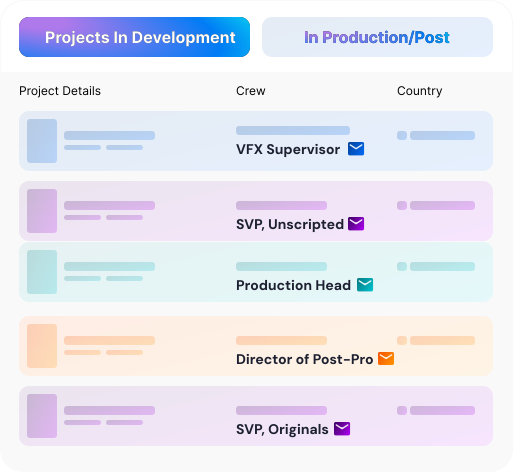
  • Spot in-development and in-production projects early
  • Assess companies with verified profiles and past work
  • Track trends in content, co-pros, and licensing
  • Find key execs, dealmakers, and decision-makers

Who’s Using Vitrina — and How

From studios and streamers to distributors and vendors, see how the industry’s smartest teams use Vitrina to stay ahead.

Find Projects. Secure Partners. Pitch Smart.

  • Track early-stage film & TV projects globally
  • Identify co-producers, financiers, and distributors
  • Use People Intel to outreach decision-makers

Target the Right Projects—Before the Market Does!

  • Spot pre- and post-stage productions across 100+ countries
  • Filter by genre and territory to find relevant leads
  • Outreach to producers, post heads, and studio teams

Uncover Earliest Slate Intel for Competition.

  • Monitor competitor slates, deals, and alliances in real time
  • Track who’s developing what, where, and with whom
  • Receive monthly briefings on trends and strategic shifts