South Korea’s top entertainment and talent agencies aren’t just managing pop stars anymore. They’re vertically integrated content machines—financing original IP, producing K-dramas, executing global licensing deals, building fantech platforms, and plugging Korean talent directly into Hollywood and streaming co-productions. If you’re a content buyer, IP licensing executive, or international co-production lead, understanding who controls Korean creative output in 2026 is non-negotiable intelligence.
The Hallyu Wave didn’t just crack open global markets—it rewired the economics of how talent agencies monetize creative IP. South Korea has moved from the “Big Four” oligopoly of ten years ago to a more complex, contested landscape: spin-offs, hostile takeovers, artist departures, new labels launching at pace, and global streamers committing billions to Korean-originals pipelines.
Netflix alone committed $2.5 billion to Korean content. Disney, Amazon, and Apple are all competing for access to the same premium talent pool these agencies control. What that means for any international producer, distributor, or platform executive is simple: the agencies in this ranking are your gatekeepers to one of the world’s most commercially explosive content ecosystems.
In This Report
- What Defines a Top Korean Entertainment Agency in 2026?
- HYBE
- SM Entertainment
- JYP Entertainment
- YG Entertainment
- CJ ENM / Studio Dragon
- Kakao Entertainment
- SOOP
- KeyEast / Goldmedalist
- FNC Entertainment
- United Artists Agency Korea
- How to Access Korean Talent & IP for Global Co-Productions
- FAQ
- Key Takeaways
Track Every K-Content Deal Before It Hits the Trades
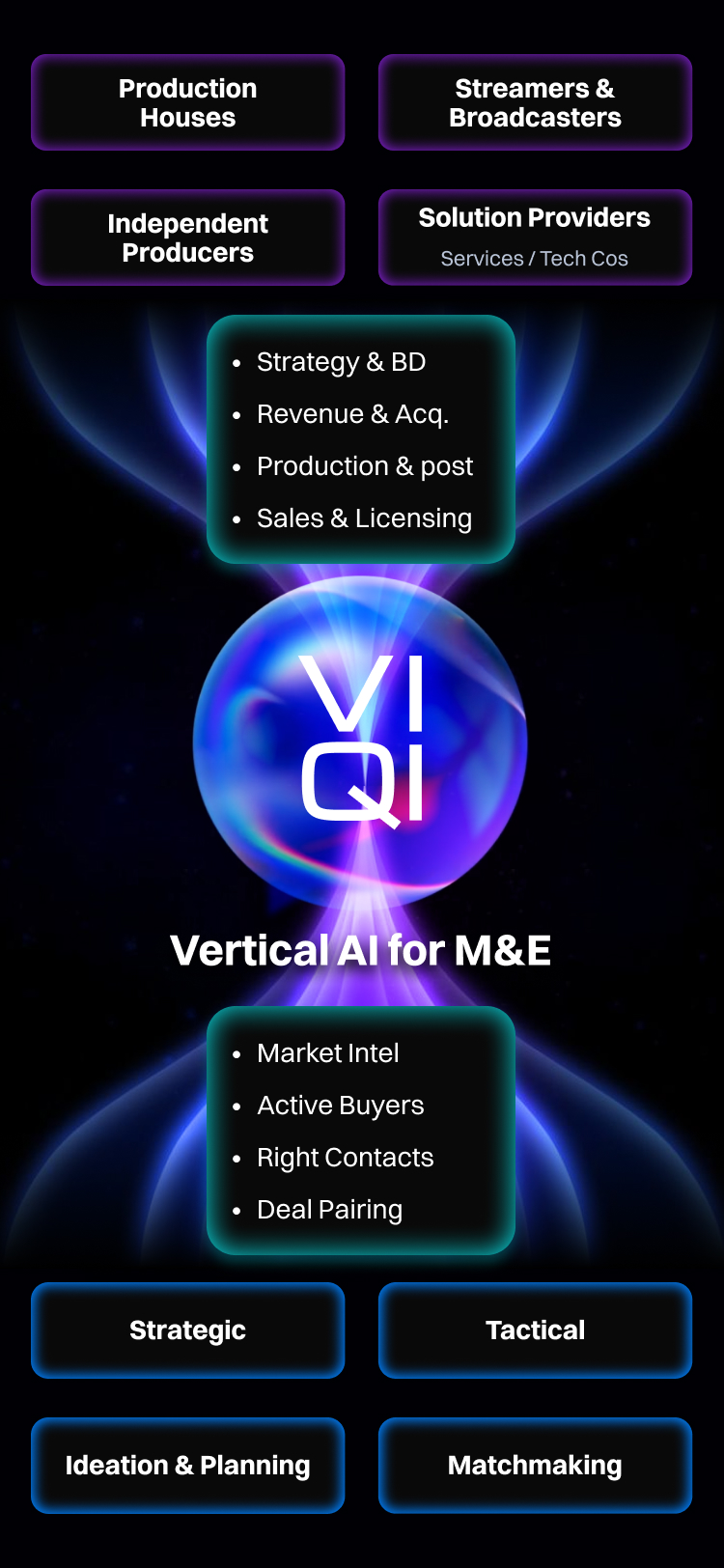
Vitrina’s VIQI intelligence engine monitors active projects, licensing deals, and co-production agreements across 140,000+ companies globally—including every major Korean entertainment agency in this ranking. Find out which K-drama IPs are currently available, which studios are actively packaging Korean talent, and where the next global deal is forming.
Trusted by Netflix, Warner Bros, Paramount, and leading global studios.
What Defines a Top Korean Entertainment Agency in 2026?
A decade ago, ranking Korean entertainment agencies was relatively straightforward: artist roster depth, album sales, concert revenue. That formula is obsolete. In 2026, the agencies that matter most to international buyers and co-production executives are those that have successfully migrated from pure talent management into content IP factories—controlling not just the artist, but the universe of content, merchandise, webtoon adaptations, drama spinoffs, fantech platforms, and global licensing rights that radiate from that talent.
South Korea represents one of the most fully operational Sovereign Content Hubs in the world—a territory where government support via KOFIC (Korean Film Council), world-class production infrastructure, deep streaming platform investment, and a proven global export track record have created a vertically integrated ecosystem that exports premium content across every format. The agencies in this ranking are the talent access layer of that ecosystem. Understand them, and you understand where K-content deals actually originate. Our South Korea executive sourcing guide covers the full production infrastructure landscape if you want the technical supply chain picture alongside this talent agency map.
The five metrics that actually define power in this market right now: market capitalization and revenue scale, global licensing reach, streaming platform relationships, IP diversification beyond music, and talent roster depth across K-pop and K-drama. Every agency in this ranking earns its position on all five—not just one or two.
Your AI Assistant, Agent, and Analyst for the Business of Entertainment
VIQI AI helps you plan content acquisitions, raise production financing, and find and connect with the right partners worldwide.
- Find active co-producers and financiers for scripted projects
- Find equity and gap financing companies in North America
- Find top film financiers in Europe
- Find production houses that can co-produce or finance unscripted series
- I am looking for production partners for a YA drama set in Brazil
- I am looking for producers with proven track record in mid-budget features
- I am looking for Turkish distributors with successful international sales
- I am looking for OTT platforms actively acquiring finished series for the LATAM region

- I am seeking localization companies offer subtitling services in multiple Asian languages
- I am seeking partners in animation production for children's content
- I am seeking USA based post-production companies with sound facilities
- I am seeking VFX partners to composite background images and AI generated content
- Show me recent drama projects available for pre-buy
- Show me Japanese Anime Distributors
- Show me true-crime buyers from Asia
- Show me documentary pre-buyers
- List the top commissioners at the BBC
- List the post-production and VFX decision-makers at Netflix
- List the development leaders at Sony Pictures
- List the scripted programming heads at HBO
- Who is backing animation projects in Europe right now
- Who is Netflix’s top production partners for Sports Docs
- Who is Commissioning factual content in the NORDICS
- Who is acquiring unscripted formats for the North American market
HYBE: The Global K-Pop Conglomerate
There’s no competition at the top. HYBE—born as Big Hit Entertainment, the home of BTS—is South Korea’s most valuable entertainment company with a market capitalization that at peak exceeded ₩10 trillion (roughly $8 billion USD). It’s not just scale. It’s the architecture: HYBE built a multi-label structure housing HYBE Labels Korea (Big Hit Music, PLEDIS, SOURCE, KOZ, ADOR, BELIFT LAB) and HYBE Labels America (including its acquisitions of Ithaca Holdings—bringing in Scooter Braun’s roster—and Quality Control Music).
The strategic play here is unmistakable. HYBE isn’t managing artists—it’s building a global entertainment empire where K-pop methodology (intensive trainee development, narrative IP construction, fandom ecosystem engineering) gets applied across Western markets. SEVENTEEN, TXT, LE SSERAFIM, and NewJeans all operate under HYBE labels. But the real long-game intelligence is Weverse—HYBE’s proprietary fantech platform with over 100 million cumulative users—which functions as both a distribution channel and a first-party data asset that no Western music company can match. For international content executives, HYBE’s licensing appetite spans music catalog rights, concert film productions, docuseries, webtoon adaptations, and branded entertainment partnerships. It’s one of the few Korean agencies operating with genuinely Hollywood-scale deal complexity.
SM Entertainment: The Legacy Innovator
SM Entertainment is the original architect of the K-pop system—the company that industrialized idol manufacturing under founder Lee Soo-man and produced EXO, SHINee, Girls’ Generation, Super Junior, and NCT. Its roster as of 2026 includes aespa (whose metaverse-narrative IP concept pioneered AI avatar integration in K-pop), NCT 127, NCT Dream, WayV, EXO, Red Velvet, TVXQ, and SHINee. That’s not a talent roster—that’s a content library generating licensing revenue across 190+ territories.
SM’s post-2023 story is equally important for international buyers to understand. The hostile takeover battle between HYBE and Kakao resulted in Kakao Entertainment acquiring a controlling stake in SM—a consolidation that fundamentally changed the competitive landscape. SM now operates within Kakao’s broader digital content ecosystem, which gives its IP access to Kakao’s distribution infrastructure, webtoon library, and STVN studio productions. But SM’s global reach—particularly in Japan, Southeast Asia, and increasingly the US—remains its own. Concert licensing, artist broadcasting rights, and drama IP adaptations built around SM talent are all active commercial conversations.
JYP Entertainment: The Systematic Global Exporter
JYP Entertainment—built by Park Jin-young and now one of the most financially disciplined companies in the “Big Four”—has mastered a formula that most talent agencies can’t replicate: global group creation through localized production. TWICE (Korean-Japanese-Taiwanese composition), Stray Kids, ITZY, NMIXX, and NiziU (Japan-exclusive) demonstrate JYP’s ability to engineer multinational artist groups that are built for specific markets from day one—not retrofitted for global release after the fact.
For co-production and licensing executives, JYP’s most distinctive asset is its joint venture with Republic Records (part of Universal Music Group)—a partnership that gives JYP’s artists direct access to Western market infrastructure, major label promotion, and US distribution rails. That’s a structural advantage that pure-play Korean agencies don’t have. Concert film rights, reality survival show formats, artist drama appearances, and branded content partnerships are all live licensing categories with JYP. Their market cap stability and clean financial management—particularly compared to peers navigating debt or governance crises—also makes JYP a lower-risk co-investment counterparty for international producers.
Map Every Active K-Content Project in Real Time
Vitrina tracks 400,000+ active production projects globally—including Korean drama commissions, K-pop documentary pipelines, and webtoon adaptation slates tied to every agency in this ranking. See exactly what’s in development, who’s producing it, and which platforms have first-look rights.
200 free credits. No credit card required. Join 140,000+ companies already on Vitrina.
YG Entertainment: The Luxury IP House
YG Entertainment operates more like a luxury brand than a conventional talent agency—a deliberate strategy that positions its artists as premium IP commanding higher per-unit licensing value than volume peers. BLACKPINK is the flagship: the group’s combined global reach—Netflix documentary, 100 million YouTube subscribers, endorsement deals with luxury brands including Chanel, Dior, and Valentino, and a global stadium concert tour—makes them the single most commercially valuable K-pop IP in licensing history. Each member maintains individual agency contracts and solo schedules that YG manages as separate IP lanes.
TREASURE and BIGBANG‘s legacy catalog round out YG’s active roster. But here’s what international content executives should understand about YG’s strategic position: its deliberate low-volume, high-margin model creates scarcity that drives licensing value upward. YG doesn’t flood the market with artists. It manages supply. That makes accessing YG talent for drama appearances, branded content, or concert film licensing more negotiation-intensive than with higher-volume agencies—but the commercial ceiling is correspondingly higher. Their subsidiary YG PLUS handles distribution and music publishing rights across multiple territories, making it the actual counterparty for most licensing conversations.
CJ ENM / Studio Dragon: The K-Drama Content Engine
CJ ENM is a different category of player than the music-first agencies above—and that’s precisely why it earns its own ranking. Through its drama production arm Studio Dragon and its music/entertainment division managing groups including Kep1er and INI, CJ ENM sits at the intersection of talent management, content production, and global distribution in ways the “Big Four” music agencies haven’t yet matched.
Studio Dragon—publicly listed and majority-owned by CJ ENM—is South Korea’s most prolific premium drama producer, having created titles including Mr. Sunshine, Crash Landing on You, Hotel del Luna, Arthdal Chronicles, and Vincenzo. These aren’t niche titles. They’re globally licensed premium dramas that have generated hundreds of millions of dollars in combined streaming rights across Netflix, TVING, and international platform deals. According to Variety, CJ ENM’s TVING platform secured a significant landmark partnership with Disney in Japan to co-distribute K-content—a deal structure that signals CJ’s ambition to build distribution infrastructure alongside production output. For international buyers, CJ ENM/Studio Dragon is your most natural co-production entry point into premium Korean drama. Our in-depth piece on CJ ENM’s content production vision breaks down the full strategic architecture.
Kakao Entertainment: The Platform-Backed Consolidator
Kakao Entertainment—the entertainment division of KakaoTalk parent Kakao Corp—is the most aggressive consolidator in the Korean talent agency market. In addition to securing its controlling stake in SM Entertainment, Kakao Entertainment operates its own agency network including Starship Entertainment (Monsta X, Kep1er) and IST Entertainment (IVE—arguably the hottest fourth-generation K-pop group globally as of 2025-2026). It also holds rights to one of Korea’s largest webtoon and webnovel IP libraries through Kakao Webtoon, creating a pipeline for drama and film adaptations that no other talent agency can match in volume or efficiency.
But Kakao’s real strategic play is the integration of talent IP with platform distribution. KakaoTV, Kakao Webtoon, Kakao Games—these aren’t separate businesses. They’re a vertically integrated content-to-consumption stack that allows Kakao to develop IP, adapt it across formats, distribute through owned digital channels, and monetize through merchandise and fan engagement without relying on third-party platforms for every stage of the value chain. For international licensing executives, Kakao Entertainment is the counterparty that most resembles a Western studio in its operational complexity. And it’s aggressively seeking international co-production partnerships. Deadline has tracked multiple Kakao IP adaptations in Western development pipelines—a trend that’s accelerating.
SOOP: The Artist-Owned Disruption Play
SOOP—formerly known as SM Culture & Contents (SM C&C) before rebranding—represents a genuinely interesting structural development in the Korean agency landscape. Originally aligned within SM’s orbit, SOOP has repositioned as an independent agency home to some of Korea’s most commercially valuable individual artists: Kim Jong-kook, Lee Hyori, Cha Eun-woo (ASTRO), and several high-profile drama and variety show actors. Its value proposition is less idol-factory and more premium individual talent management—closer to the Western CAA/WME model than the Korean idol agency playbook.
For international producers and platforms casting Korean talent in cross-border drama or content projects, SOOP is an increasingly important counterparty. Its roster’s strength in unscripted variety, drama acting, and individual brand partnerships fills a gap that the music-focused “Big Four” agencies leave open. And the agency’s independence from the large conglomerates means its commercial conversations tend to move faster and with less bureaucratic friction—a meaningful operational advantage when you’re trying to close a casting or endorsement deal on a global production timeline.
KeyEast / Goldmedalist: The Actor-First Agency
KeyEast—now operating in partnership with management company Goldmedalist—is the premier Korean agency for premium drama actors rather than idol groups. Its talent roster has included Kim Soo-hyun (one of Korea’s highest-paid drama actors globally), Kim Hyun-joong, and a deep bench of Korean Wave drama stars whose individual Q-scores in Asian markets rival or exceed any K-pop group. KeyEast/Goldmedalist’s commercial model is built around drama casting rights, regional appearance fees across Japanese and Chinese markets, and branded entertainment partnerships—all categories where Korean drama actor IP commands a completely different premium than K-pop group licensing.
For international drama co-productions seeking Korean leads—whether for Netflix originals, pan-Asian streaming platform exclusives, or format adaptations requiring Korean talent—KeyEast is the access point for actors who can anchor a production rather than merely appear in it. Understanding the distinction between idol-centric agencies and actor-centric agencies like KeyEast is essential intelligence for any international casting strategy. The co-production opportunities accessed through drama actor rosters are structurally different from those available through K-pop music agencies—and often more straightforward to navigate for Western producers unfamiliar with idol fandom management complexities.
Connect with Korean Entertainment Agencies Through Verified Introductions
Vitrina Concierge runs precision-matched introductions between international content executives and Korean talent agency acquisition teams. No cold outreach. No language-barrier friction. Our specialists have mapped decision-maker contacts across every agency in this ranking—and know exactly when to approach and who to contact.
Trusted by producers who’ve placed projects with Netflix, Paramount, and broadcasters across 40+ territories.
FNC Entertainment: The Band-Focused Hybrid
FNC Entertainment occupies a distinctive niche in the Korean agency market: live instrumentation and band-based acts rather than the choreography-heavy idol groups dominating most Korean agencies’ rosters. CNBLUE, FTISLAND, N.Flying, and SF9 collectively represent a different audience demographic than the typical K-pop listener—one that over-indexes on Japan, where FNC has deep market penetration and catalog licensing revenue that provides the kind of stable recurring income most trend-dependent agencies struggle to maintain across fandom cycles.
FNC also manages a drama actor division—with talent including Jung Yong-hwa (CNBLUE) and multiple actors whose presence in Korean romance and thriller dramas creates licensing crossover between music catalog and drama rights. For international licensing executives targeting the Japanese or pan-Asian market specifically, FNC’s combination of live music catalog, Japan-market infrastructure, and drama actor representation makes it a more targeted but genuinely valuable access point. Its mid-tier size relative to the Big Four also typically means faster deal conversations and more flexible deal structures.
United Artists Agency Korea: The Rising Independent
United Artists Agency Korea represents the emerging category of Korean talent agencies built for the global streaming era from the ground up—rather than retrofitted from legacy idol management models. Focused on actor talent for drama and film rather than idol group management, United Artists Korea has been systematically building a roster of Korean film and television talent whose commercial appeal extends beyond the traditional East Asian market into global streaming platform casting pools.
For international platforms and co-production partners specifically seeking Korean acting talent for English-language or multilingual productions—the kind of casting that Netflix, Apple TV+, and Amazon are increasingly commissioning as they lean further into Korean-adjacent storytelling—United Artists Korea’s positioning is strategically forward-looking. Its management model is more aligned with Western talent agency norms around individual career building, making it a more familiar commercial conversation for Hollywood producers navigating Korean talent access for the first time. Our dedicated guide to United Artists Agency Korea covers the roster and deal structure in detail.
How to Access Korean Talent & IP for Global Co-Productions
Here’s what most international producers and buyers discover too late: you don’t access Korean entertainment agency talent through cold outreach to a general inquiry email. The agencies in this ranking—particularly the top five—operate through established relationship networks where deal flow moves through a small group of trusted intermediaries, industry market contacts built over years at BCWW, MIPCOM, and LA Korea Week, and increasingly through platform-direct commissioning relationships with Netflix Korea, Disney+, and Amazon Prime Video. If you’re not already embedded in those networks, you’re starting from a significant disadvantage.
The intelligence gap compounds the access problem. Without real-time visibility into which agencies are actively seeking international co-production partners for which talent—as opposed to which are fully committed to domestic and platform exclusives through the current cycle—you’re pitching blind. The Fragmentation Paradox applies here as directly as anywhere in the global entertainment supply chain: Korea’s K-content ecosystem has hundreds of active production companies, agency subsidiaries, and platform-aligned studios operating simultaneously. The information asymmetry between insiders and outsiders is significant and directly costs producers months in deal timeline and meaningful licensing value.
What changes that equation is real-time deal flow intelligence and verified relationship access. Understanding which K-drama IP is currently in active rights negotiation, which agency is seeking an international co-producer for a specific format adaptation, and which streaming platform has first-look rights expiring on a specific Korean title—that’s the difference between arriving at the right moment and discovering the deal closed six weeks ago. Our full guide to discovering South Korea’s top entertainment talent agencies maps the discovery process in depth, and our strategic guide to Korean IP acquisition and co-production covers the format rights landscape specifically.
Frequently Asked Questions
What is the biggest entertainment agency in South Korea?
HYBE is South Korea’s largest entertainment agency by market capitalization, having reached a peak valuation exceeding ₩10 trillion (approximately $8 billion USD). Through its multi-label structure across Korea and the US—including Big Hit Music (home of BTS), PLEDIS, ADOR, BELIFT LAB, and US acquisitions including Ithaca Holdings—HYBE operates the most globally diversified Korean entertainment company. Its Weverse fantech platform with over 100 million cumulative users represents a proprietary distribution and data asset unmatched by any competing Korean agency.
What are the “Big Four” Korean entertainment agencies?
The traditional “Big Four” of Korean entertainment were HYBE (formerly Big Hit Entertainment), SM Entertainment, JYP Entertainment, and YG Entertainment. However, the landscape in 2026 is more complex: SM Entertainment is now majority-controlled by Kakao Entertainment, making Kakao a de facto major player; CJ ENM/Studio Dragon operates at comparable scale through drama production; and new consolidated entities like SOOP and KeyEast/Goldmedalist have carved significant positions in actor-focused management. The “Big Four” framing is useful historical shorthand but undersells the current competitive complexity.
How do international producers access Korean talent through these agencies?
Direct cold outreach to Korean entertainment agencies is rarely effective for international producers without existing relationships. The primary access pathways are: established co-production relationships with Korean drama studios that have existing agency relationships; platform-direct commissioning through Netflix Korea, Disney+, or Amazon Prime Video (who have pre-established talent access agreements); participation in industry markets including BCWW (Broadcast Worldwide) or LA Korea Week; or through verified intermediary introductions via entertainment intelligence platforms that have mapped the decision-maker network. Understanding which specific division within each agency handles international licensing—rather than approaching general management—significantly accelerates the deal process.
What types of deals do Korean entertainment agencies typically enter with international partners?
Korean entertainment agencies engage in several types of international deals: concert film licensing (documentary and live performance rights for international streaming); drama appearance rights (casting K-pop artists in scripted content); IP adaptation rights (webtoon and webnovel libraries, especially via Kakao Entertainment); branded entertainment partnerships (artist endorsements integrated into content); format co-productions (joint development of reality or competition show formats for international markets); and music licensing for film and TV synchronization. Each deal type involves different agency divisions, different approval processes, and different contract structures—requiring navigation knowledge that few Western production teams have built internally.
How much has Netflix invested in Korean content?
Netflix has committed approximately $2.5 billion to Korean content production over a multi-year period—the largest single-country content commitment Netflix has made outside the United States. This investment flows primarily through Studio Dragon (CJ ENM’s drama production arm), independent Korean production companies, and co-productions that involve talent from the agencies in this ranking. The commercial validation of Korean content globally—driven by titles including Squid Game, Crash Landing on You, and Vincenzo—has triggered competing investment from Disney+, Amazon Prime Video, Apple TV+, and regional streamers that has collectively made Korean entertainment agencies among the most commercially courted talent sources in the global content market.
What is KOFIC and how does it support Korean entertainment agencies?
The Korean Film Council (KOFIC) is South Korea’s government film support body providing production grants, international co-production facilitation, market participation support, and overseas distribution assistance for Korean content. While KOFIC primarily supports film production rather than K-pop talent agencies directly, its role as the government infrastructure underlying Korea’s Sovereign Content Hub status is critical context: KOFIC, alongside the Ministry of Culture, Sports and Tourism’s broader Korean Wave (Hallyu) promotion programs, has invested billions in building the export infrastructure that makes Korean content commercially accessible to international buyers. Agencies like CJ ENM and Studio Dragon regularly interface with KOFIC on co-production treaty structures with France, Australia, Canada, and other treaty partners.
What is the difference between K-pop agencies and K-drama agencies?
K-pop agencies (HYBE, SM, JYP, YG) are primarily built around music idol group management—intensive trainee development, group debut management, album production, concert touring, and merchandise licensing. K-drama or actor-focused agencies (KeyEast/Goldmedalist, SOOP, United Artists Korea) manage individual actors’ careers across scripted drama, film, and variety content, with deal structures more similar to Western talent representation. The important nuance is convergence: most major K-pop agencies also manage acting careers for their artists, and most actor agencies have artists with music-adjacent projects. For international co-productions, understanding which type of agency you’re dealing with determines who the correct deal counterparty is and how to structure the conversation.
How is the Kakao Entertainment / SM Entertainment deal relevant to international buyers?
Kakao Entertainment’s acquisition of a controlling stake in SM Entertainment in 2023 created the largest Korean entertainment conglomerate by combined IP depth—merging SM’s 30-year idol music catalog, global fandom network, and artist roster with Kakao’s webtoon/webnovel IP library (billions of page views), STVN digital studio productions, and KakaoTalk’s 50M+ daily active user distribution platform. For international buyers, the practical implication is that licensing conversations with SM artists may now also open doors to Kakao’s adjacent IP pipeline and vice versa. The consolidated entity’s international licensing ambitions are significant—and its appetite for international co-production partnerships is actively growing.
Key Takeaways: The 2026 Korean Agency Power Map
South Korea’s entertainment and talent agencies are no longer niche regional players selling licensing rights at the margins of global content deals. They’re vertically integrated IP powerhouses commanding premium licensing fees, building their own distribution infrastructure, and entering co-production agreements with the world’s largest streaming platforms. The agencies in this ranking collectively control access to the most commercially valuable East Asian content ecosystem on earth. Understanding them isn’t optional intelligence—it’s baseline competency for any executive working the global content market in 2026.
- HYBE leads by every metric—market cap, global reach, fantech infrastructure, and multi-label diversification across both Korean and US markets. It’s the benchmark against which every other Korean agency is measured.
- The Kakao/SM consolidation reshapes the competitive landscape—creating a conglomerate with unmatched IP depth across music, webtoon, drama, and digital distribution that every international co-production executive needs to understand.
- CJ ENM/Studio Dragon is your drama co-production primary door—Netflix’s $2.5B Korean content commitment flows substantially through this infrastructure, and its deal-making sophistication is the closest to Western studio norms of any Korean production entity.
- Actor-focused agencies (KeyEast, SOOP, United Artists Korea) are underutilized by international producers—and often represent faster, less complex deal pathways for productions that need Korean lead talent rather than full IP packages.
- Real-time intelligence is the decisive edge—the difference between landing K-content partnerships and missing them entirely is knowing which deals are live before they’re announced publicly, and which decision-makers are actively seeking international partners right now.
De-Risk Your Korean Content Strategy with Real-Time Intelligence
Vitrina tracks active deal flow, talent availability, and co-production openings across every Korean entertainment agency in this ranking. Start with 200 free credits and discover what’s moving in K-content before your competitors do.
No credit card required · Trusted by Netflix, Warner Bros, Paramount, and 140,000+ companies