About Innovation Hub
 Global Content Pulse (Webinars)


 Global Production Financing
(Webinars)
Global Production Financing
(Webinars)  LeaderSpeak Podcast
  About Vitrina
 Our Story
 Our Solutions 🔥
 Film+TV Projects Tracker 🚀
 Case Studies
 Our Profile
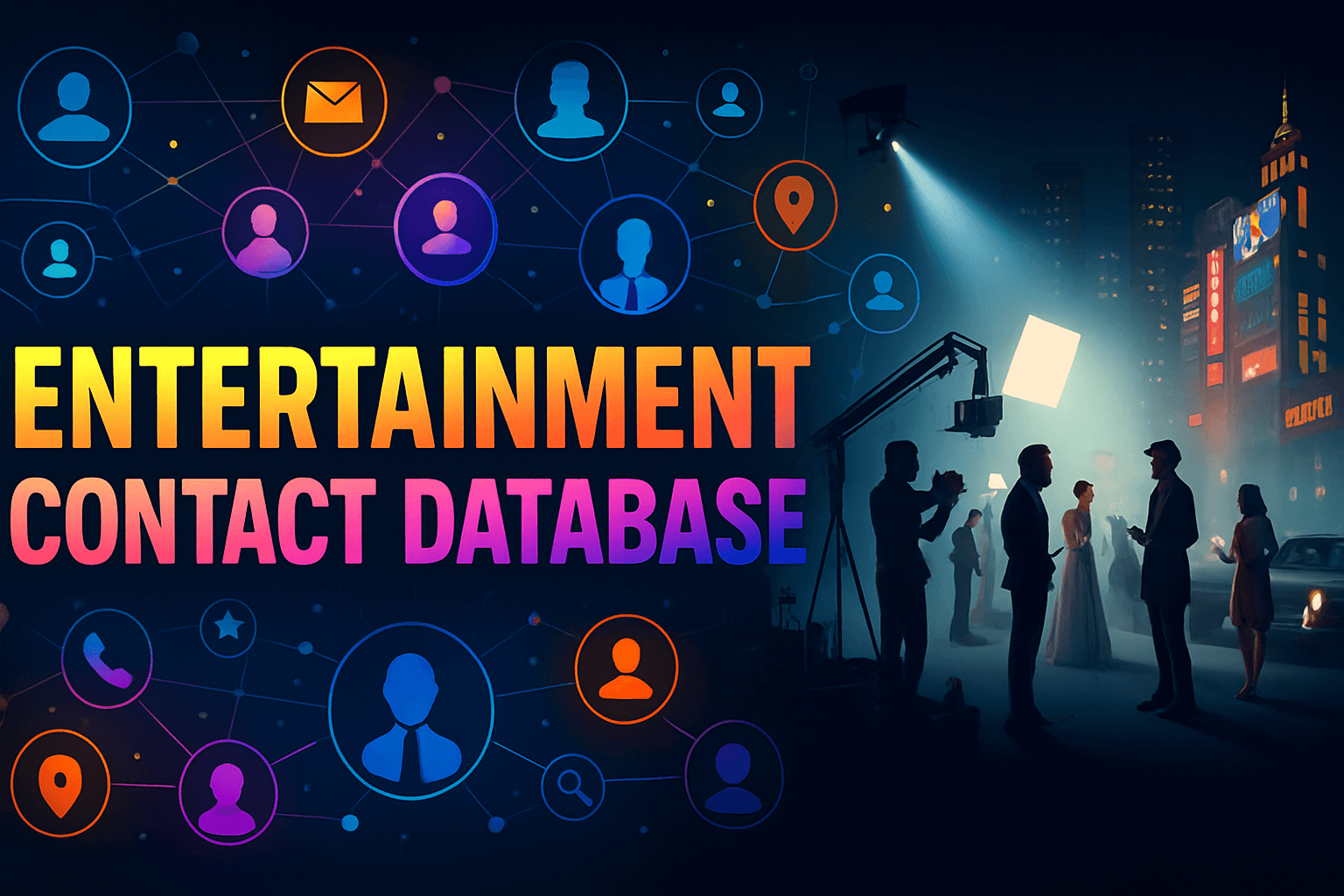
A verified entertainment contact database is a centralized, real-time intelligence framework that provides structured and validated data on companies, projects, and decision-makers across the media supply chain.
Unlike legacy spreadsheets or personal networks, this involves mapping interconnected relationships and deal histories to eliminate the “data deficit” plaguing modern M&E executives.
According to industry analysis, the global M&E supply chain comprises over 600,000 companies, yet 70% of executives report significant missed opportunities due to fragmented market visibility.
In this guide, you will learn how verified intelligence transforms partner discovery from a manual risk into a data-driven science.
While traditional networking relied on “who you know,” the modern borderless market demands “what you can verify.” The reliance on outdated word-of-mouth is structurally incapable of handling the volume of today’s $17 billion content mandates.
This article fills the gap by explaining the transition from opaque relationship-driven models to centralized, data-powered ecosystems.

Your AI Assistant, Agent, and Analyst for the Business of Entertainment
VIQI AI helps you plan content acquisitions, raise production financing, and find and connect with the right partners worldwide.
- Find active co-producers and financiers for scripted projects
- Find equity and gap financing companies in North America
- Find top film financiers in Europe
- Find production houses that can co-produce or finance unscripted series
- I am looking for production partners for a YA drama set in Brazil
- I am looking for producers with proven track record in mid-budget features
- I am looking for Turkish distributors with successful international sales
- I am looking for OTT platforms actively acquiring finished series for the LATAM region
- I am seeking localization companies offer subtitling services in multiple Asian languages
- I am seeking partners in animation production for children's content
- I am seeking USA based post-production companies with sound facilities
- I am seeking VFX partners to composite background images and AI generated content
- Show me recent drama projects available for pre-buy
- Show me Japanese Anime Distributors
- Show me true-crime buyers from Asia
- Show me documentary pre-buyers
- List the top commissioners at the BBC
- List the post-production and VFX decision-makers at Netflix
- List the development leaders at Sony Pictures
- List the scripted programming heads at HBO
- Who is backing animation projects in Europe right now
- Who is Netflix’s top production partners for Sports Docs
- Who is Commissioning factual content in the NORDICS
- Who is acquiring unscripted formats for the North American market
Table of Contents
Key Takeaways for CXOs
- Eliminate Data Deficit: Verified databases replace anecdotal information with structured, real-time intelligence across 100 plus countries to inform high-stakes board decisions.
- Accelerated Partner Discovery: Strategy teams identify active production partners and vendors 5x faster than traditional manual sourcing methods.
- Enhanced Due Diligence: Verification allows executives to vet cross-border partners based on verifiable track records rather than subjective referrals.
What is a Verified Entertainment Contact Database?
A verified entertainment contact database is more than a list of emails; it is a strategic map of the global content ecosystem. It integrates deep profiling of over 140,000 companies and 5 million professionals with real-time tracking of 30 million industry relationships.
This infrastructure allows executives to bypass the noise of social media and fragmented trade reports. By providing a single source of truth, it enables precision targeting of financiers, distributors, and technology vendors who are actively engaging in the market today.
Access intelligence on verified global distributors:
Bridging the Entertainment Fragmentation Paradox
The fragmentation paradox occurs because while global production is more connected than ever, the operational data required to navigate it remains siloed. Executives often find themselves making multi-million dollar decisions based on incomplete spreadsheets.
Platforms like Vitrina AI address this by industrializing the insider intelligence that once defined Hollywood. By tracking over 1.6 million titles and their attached vendors, verified databases reveal the critical connections between financiers and production houses that remain invisible in traditional directories.
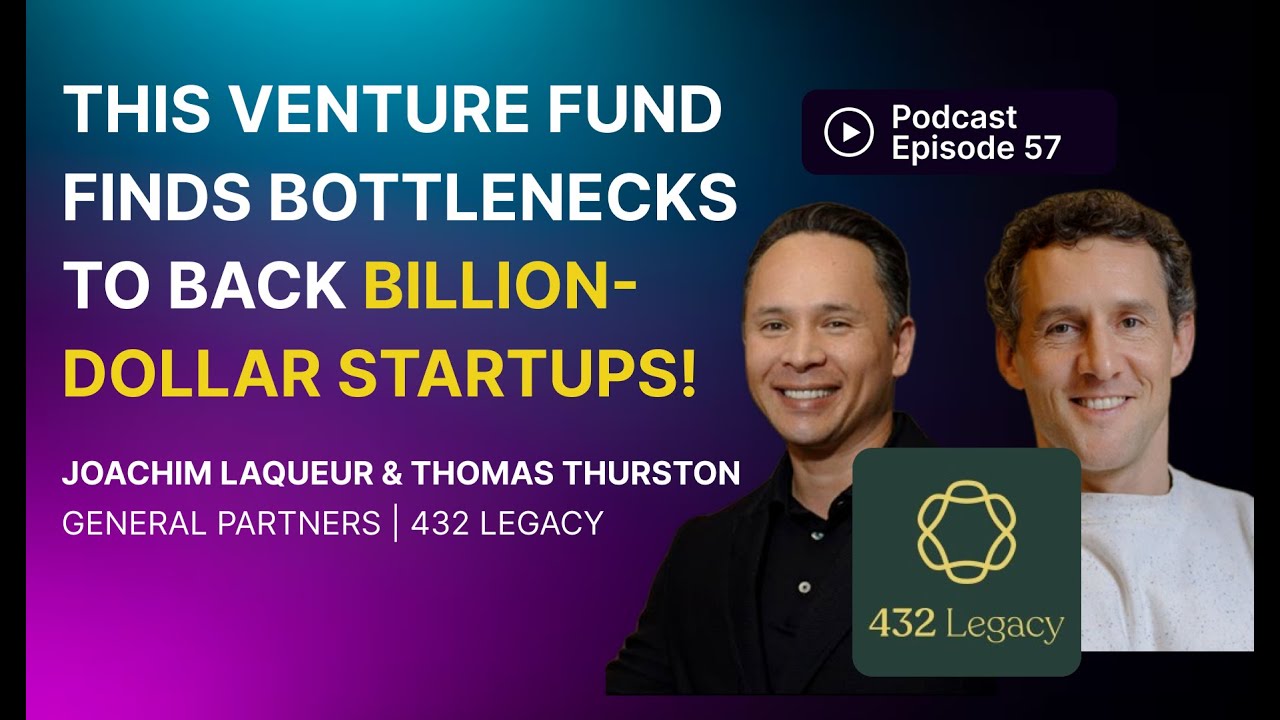
Industry Expert Perspective: 432 Legacy’s VC Investment in Content Value-Chain
This discussion highlights how data-driven computational approaches are being used to identify and invest in startups that tackle bottlenecks in the complex media supply chain.
Key Insights
General Partners Joachim Laqueur and Thomas Thurston discuss their venture fund, 432 Legacy, which uses data-driven models to identify disruptive startups tackling the supply chain’s complex bottlenecks.
Legacy Networking vs. Data-Driven Intelligence
The shift from legacy networking to verified intelligence is a move from subjective art to data-driven science. Traditional methods, relying on trade show coffee meetings and personal black books, are no longer scalable in a market where Netflix acquisitions and Disney investments move at the speed of algorithms.
Verified databases provide the insider advantage of a global talent agent at an enterprise scale. By qualifying partners based on specialization and deal history, strategy teams can monitor competitive moves and emerging financial models in real-time, ensuring they are always ahead of the consolidation curve.
Partner Due Diligence: Securing the Supply Chain
In the era of Weaponized Distribution, where premium content is licensed to rivals to maximize ROI, the risk of unverified partnerships is higher than ever. Due diligence must move beyond surface-level credits to include verifiable track records and collaborator network mapping.
A verified database offers reputation scores and verified profiles for studios and vendors alike. This structured intelligence allows CXOs to mitigate financial and operational risks before signing co-production or distribution agreements, effectively future-proofing their content supply chain.
Moving Forward
The entertainment industry has shifted from relationship-dependent silos to centralized, data-powered frameworks. This evolution addresses the data trust deficit that has historically made cross-border collaboration risky and inefficient.
Whether you are a CXO looking to identify indie studios for acquisition, or a sales agent trying to find verified content buyers in regional markets, actionable intelligence is the new currency of the M&E supply chain.
Outlook: Over the next 18 months, we expect the authorized data market to expand, making the verification of AI-driven production tools a core requirement for any high-value partnership.
Frequently Asked Questions
-
What is a verified entertainment contact database?
It is a centralized intelligence framework providing structured and validated data on companies, projects, and decision-makers. It replaces fragmented personal networks with real-time, interconnected data points.
-
Why is verification important for M&E partners?
Verification eliminates the risk of fake track records and allows executives to perform objective due diligence. It ensures that partners are qualified based on real specialization and historical deal success.
-
How does Vitrina AI verify industry data?
Vitrina leverages vertical AI and machine learning to map over 30 million industry relationships and 1.6 million titles. It cross-references multiple data points to ensure every profile is credible and structured.
-
How do acquisition leads use verified databases?
They use it to discover regional content and distributors faster than manual sourcing. By tracking unreleased projects, they can engage with IP at the earliest stages of development.
-
Can Vitrina data integrate with CRM?
Yes, Vitrina offers API-ready data feeds that plug directly into CRM systems like Salesforce and HubSpot. This allows companies to automatically enrich leads with verified metadata.
About the Author
Industry Content Strategist with over 15 years of experience analyzing entertainment supply chains. Specialist in data-driven market intelligence for global studios and streamers. Connect on Vitrina.
Find Film+TV Projects, Partners, and Deals – Fast.
VIQI matches you with the right financiers, producers, streamers, and buyers – globally.
Producers Seeking Financing, Co-Pros, or Pre-Buys?
Vitrina Concierge helps producers reach the right financiers, commissioners, distributors, and co-production partners — with precision outreach, not cold pitching.
Join Industry Briefings Trusted by Leaders

Streamers – Netflix vs. Amazon – The 2026 Strategy
How Netflix and Amazon’s content and revenue strategies are diverging ahead of 2026.

Format Adaptations: Global Trends
Where formats are traveling, which adaptations are breaking out, and how streamers are backing remakes in 2025–2026.

Books, Novels & Comics Adaptations: Global Trends
Books, webtoons, and manga driving the next global screen hits. Discover how in this webinar.

Micro-Dramas & Mobile-First Storytelling
Micro-dramas are building real audiences and revenue. Understand the platforms, buyers, and economics behind the growth.