

 Companies
  Content
 Global Content Pulse (Webinar)

 Global Production Financing (Webinar)
  LeaderSpeak Podcast
  Latest Projects
 Global Trends
 About Projects Tracker
 About Vitrina
 Our Story
 Our Solutions 🔥
 Case Studies
 Our Profile
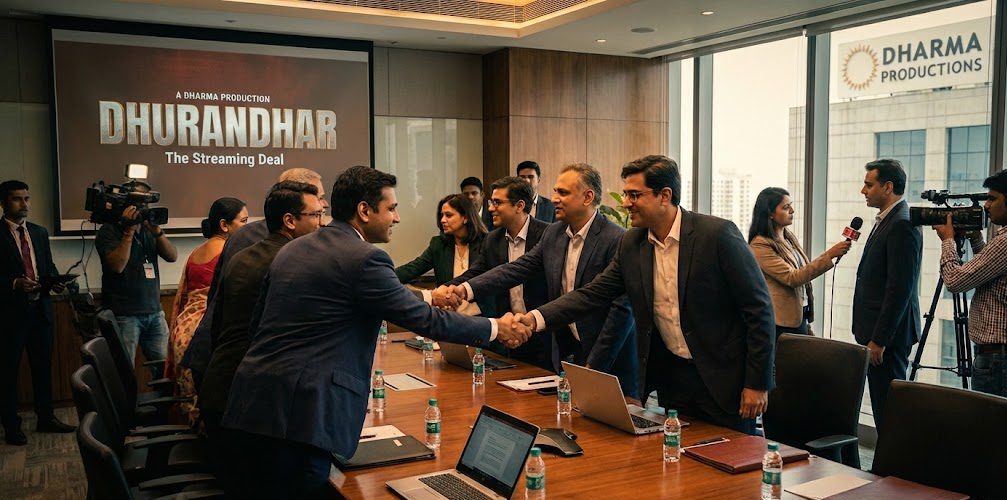
Dhurandhar streaming rights were acquired by Netflix in a landmark deal estimated between ₹130 crore and ₹285 crore, covering both Part 1 and Part 2 of the spy thriller saga.
This acquisition involves a multi-layered licensing agreement where the platform secures exclusive digital distribution for a specific window, often post-theatrical run, to capitalize on global “Weaponized Distribution” trends.
Market data suggests this deal sets a record for Ranveer Singh-starrers, reflecting Netflix’s aggressive push into high-concept Indian espionage IP following the success of director Aditya Dhar’s previous works.
In this guide, you’ll learn the mechanics of high-stakes OTT negotiations, the shift toward performance-linked licensing slabs, and how to leverage supply chain intelligence to identify such lucrative opportunities.
While legacy resources focus on simple upfront flat-fee models, they fail to address the complex reality of staggered releases, territorial rights availability, and the data-driven valuation models currently dominating the entertainment supply chain.
This analysis addresses these gaps by dissecting the Dhurandhar deal through the lens of modern acquisition strategies—providing professionals with actionable insights into deal structuring and platform discovery.
Table of Contents
- 01
The Dhurandhar Deal: A New Benchmark for Hindi Cinema - 02
How Does Netflix Buy Streaming Rights in 2025? - 03
The Rise of Weaponized Distribution and Rotational Windows - 04
Leveraging Supply Chain Intelligence for Acquisition - 05
Key Takeaways for Producers and Buyers - 06
FAQ: Streaming Rights and Dhurandhar
Key Takeaways for Content Acquisition Leads
-
Multi-Part Deal Value: Securing rights for franchise sagas like Dhurandhar Part 1 & 2 before the box office results maximizes leverage for streaming platforms during high-growth phases.
-
Slab-Based Pricing: Modern OTT deals now often include “box office slabs,” where the final payout increases as the film hits ₹100cr, ₹200cr, or ₹500cr milestones.
-
Global Espionage Appetite: High-octane action thrillers with realistic geopolitical underpinnings (like those from Aditya Dhar) command premium valuations due to their cross-border viewership potential.
The Dhurandhar Deal: A New Benchmark for Indian Cinema
The Dhurandhar movie acquisition is not just a standard licensing agreement; it is a signal of the evolving relationship between major studios like Jio Studios and global streamers like Netflix. In a market where digital rights can account for 40-50% of a film’s total recovery, the strategic timing of this deal was critical. Netflix reportedly secured the rights for a staggering amount, underscoring their commitment to “Weaponized Distribution” where premium Indian content serves as a lead generator for global subscriptions.
Unlike traditional models where a film might stay on a platform in perpetuity, the Dhurandhar deal likely involves a specific “window” period. This approach allows the producers to recoup high production costs (estimated at ₹250-300 crore for the two-part saga) while ensuring the streamer gets first-mover advantage during the peak digital interest phase following the theatrical release.
Discover trending Indian spy thrillers with available rights:
How Does Netflix Buy Streaming Rights in 2025?
Netflix’s acquisition engine is fueled by five core pillars: data-driven decision making, global dominance through regional hits, and aggressive investment in talent. For a project like Dhurandhar, the platform leverages viewing data from previous hits like Money Heist and Squid Game to predict the performance of a high-octane spy thriller. This predictive intelligence allows them to outbid competitors who may still rely on subjective “gut feel” for content selection.
According to the Vitrina Brief, the industry has shifted toward an “Authorized Data” market. Buyers are now looking for verified supply chain data to ensure they are partnering with studios that have a proven track record of delivering at scale. Netflix, in particular, uses consumer data mining to calculate the total cost of each licensing agreement, ensuring the ROI matches their aggressive subscriber growth targets.
Industry Expert Perspective: Beyond Bollywood: Unpacking India’s Regional Film Markets
This conversation with Naveen Chandra explores the transition of Indian regional cinema into a global powerhouse, providing context on why platforms like Netflix are betting big on high-concept regional and pan-Indian IP.
Naveen Chandra discusses the founding philosophy of organized capital funds for films and the immense, yet often misunderstood, potential and business dynamics of India’s regional cinema market, which now includes high-budget spy sagas.
The Rise of Weaponized Distribution and Rotational Windows
The Dhurandhar deal exemplifies the concept of “Weaponized Distribution,” a strategy where premium content is licensed to rival platforms post-release to maximize ROI on “sunk” production assets. In 2025, we are seeing the end of the “Walled Garden” era. Streamers like Netflix and JioHotstar are increasingly willing to share or license IPs after a rotational window (typically 18-24 months) to extract maximum value from their content libraries.
This shift is driven by the need for financial sustainability in a post-streamer world. As Phil Hunt of Head Gear Films notes, film finance has become harder, and the industry is shifting away from simple pre-sales toward complex, performance-linked equity and distribution models. The Dhurandhar saga, with its massive ₹500cr+ theatrical collection, provided the perfect leverage for Netflix to step in as the exclusive digital home, further boosting the IP’s value ahead of the Part 2 release in March 2026.
Analyze recent content acquisition trends for Netflix:
Leveraging Supply Chain Intelligence for Acquisition
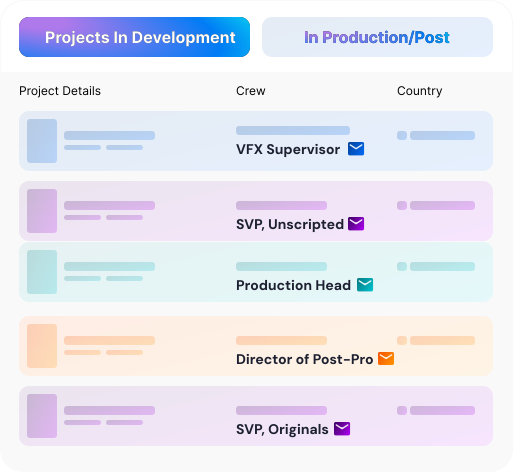
How do buyers identify the next Dhurandhar before it becomes a box-office phenomenon? The answer lies in the “Single Source of Truth” provided by supply chain intelligence platforms like Vitrina AI. By tracking over 1.6 million titles and 140,000+ companies, Vitrina allows acquisition leads to monitor projects as they enter the “In-Development” and “Post-Production” stages.
For example, a buyer using Vitrina’s Global Film+TV Projects Tracker could have identified the Dhurandhar project early in its production phase, mapped director Aditya Dhar’s historical collaboration with star-studded ensembles, and analyzed the burgeoning appetite for espionage thrillers in regional languages. This “digital lighthouse” approach eliminates the guesswork, allowing for precision outreach and data-backed bidding.
Moving Forward
The Dhurandhar Netflix deal is a testament to the fact that the entertainment supply chain has shifted from relationship-dependent networking to data-powered, strategic acquisition. By filling the gaps in market transparency and deal valuation, this case study highlights how data intelligence compressed months of research into a high-value, record-breaking agreement.
Whether you are an independent producer looking to secure the next big OTT deal, or an acquisition lead trying to discover regional hits before they peak, the unified solution remains: actionable supply chain intelligence.
Outlook: Over the next 12-18 months, we predict an acceleration in franchise-based multi-part licensing deals, as streamers prioritize IP longevity and “Weaponized Distribution” over short-term exclusivity.
Frequently Asked Questions
Quick answers to the most common queries about Dhurandhar and streaming rights.
Where can I watch the Dhurandhar movie online?
How much did Netflix pay for Dhurandhar streaming rights?
What is a rotational window in streaming deals?
Will Dhurandhar Part 2 also be on Netflix?
Why did Netflix invest so heavily in Dhurandhar?
How can producers find streamers like Netflix for their films?
What is slab-based pricing in OTT deals?
Is Dhurandhar based on a real story?
“The distribution model that worked five years ago—festival premieres followed by traditional sales agent representation—no longer serves independent creators in a direct-to-platform era. Filmmakers who understand how to leverage data intelligence to identify and engage the right buyers at the right moment are securing deals 60-90 days faster than peers using legacy methods.”
About the Author
This analysis was compiled by the Vitrina Strategic Intelligence team, specializing in M&E supply chain transformation and data-driven acquisition strategies. With a combined 40+ years in media technology and content distribution, we help industry leaders navigate the opaque world of global deals. Connect on Vitrina.