About Innovation Hub
 Global Content Pulse (Webinars)


 Global Production Financing
(Webinars)
Global Production Financing
(Webinars)  LeaderSpeak Podcast
  Global Entertainment Digest (Newsletter)
  About Vitrina
 About VIQI
 Our Story
 Our Solutions 🔥
 Film+TV Projects Tracker 🚀
 Case Studies
 Our Profile
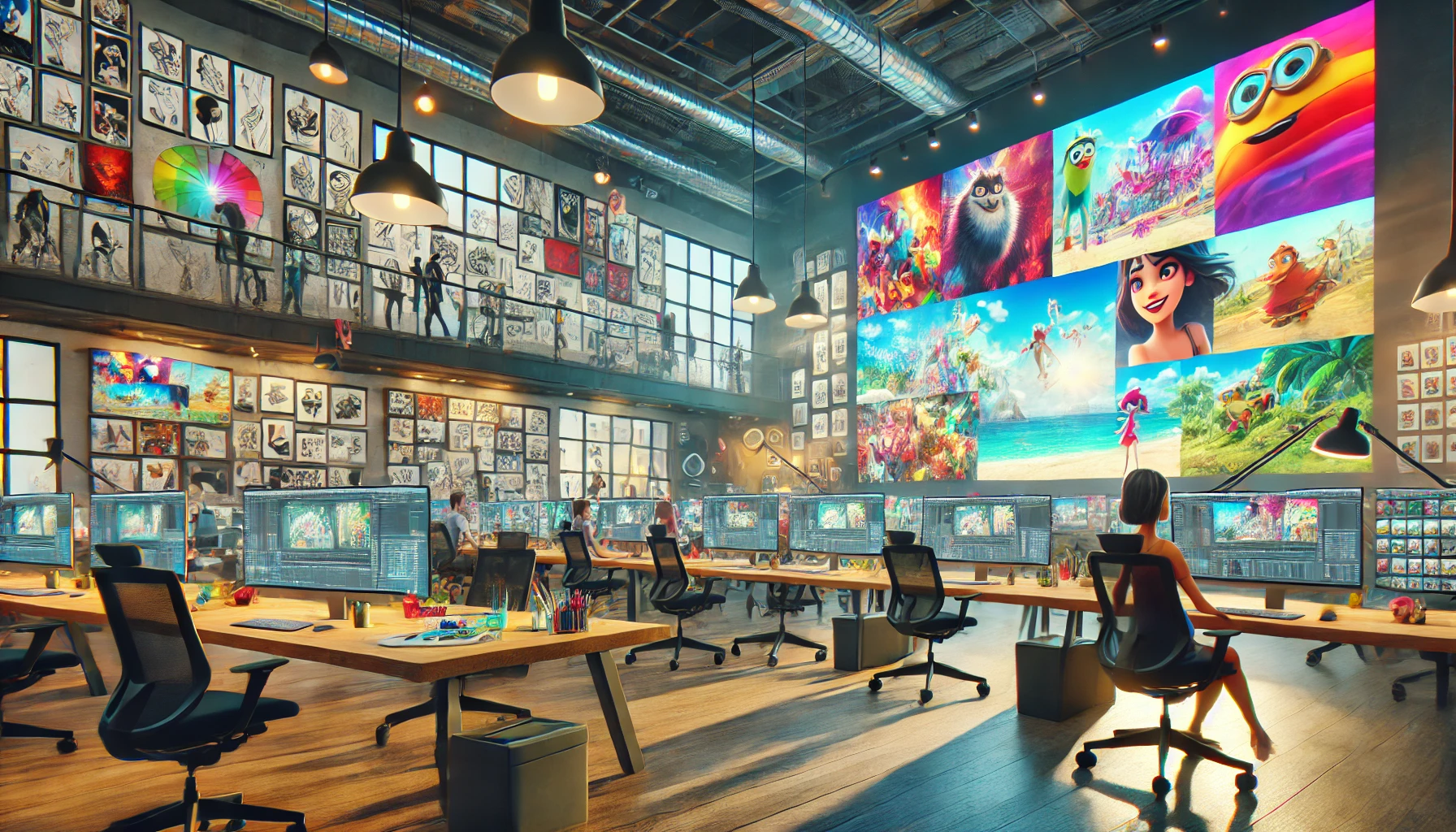
The global VFX industry crossed $9.7 billion in revenue in 2024 and it’s not slowing down. Streaming platforms are commissioning at pace, theatrical tentpoles keep raising the bar on visual complexity, and AI is reshaping what a mid-sized studio can actually deliver. But here’s the thing most producers find out the hard way: knowing which VFX companies are the biggest isn’t the same as knowing which ones are right for your project.
The top VFX companies worldwide in 2026 range from 10,000-person global enterprises to 300-person boutiques punching well above their weight—and the right match depends on your budget, timeline, genre, and how much the deliverable spec actually matters.
This guide maps the 10 most strategically significant VFX studios operating globally in 2026. You’ll get more than a name-and-logo list. Each profile covers what a studio actually does best, which recent projects prove it, and what the real-world deal dynamics look like when you’re trying to secure capacity. Because capacity—not capability—is the constraint that bites most production executives.
Vitrina tracks 10,000+ VFX companies globally across its supply chain intelligence platform. What follows draws on that data, verified industry credits, and expert insights from our interview series with VFX leaders—including an industry veteran who spent years at Industrial Light & Magic before tracking the sector’s evolution from inside the machine.
In This Guide:
- The VFX Market in 2026: What’s Changed
- Top 10 VFX Companies Worldwide
- 1. DNEG
- 2. Industrial Light & Magic (ILM)
- 3. Framestore
- 4. Weta FX
- 5. MPC (Moving Picture Company)
- 6. Scanline VFX
- 7. Rodeo FX
- 8. Outpost VFX
- 9. PhantomFX
- 10. Crafty Apes
- How to Choose the Right VFX Studio for Your Project
- The VFX Sourcing Problem Most Producers Don’t See Coming
- Frequently Asked Questions
- Key Takeaways
Find & Vet the Right VFX Studio for Your Project—Instantly
Vitrina maps 10,000+ VFX companies worldwide with verified credits, capacity status, and deal history. Netflix, Warner Bros, and Paramount teams use Vitrina to de-risk vendor selection before they commit. Ask VIQI which studios have capacity for your genre, budget, and delivery window right now.
200 free credits · No credit card required
The VFX Market in 2026: What’s Actually Changed
Three forces are reshaping which studios win the best work in 2026. First, AI-assisted pipelines are compressing timelines on effects work that used to require manual frame-by-frame attention. Second, the consolidation wave—which saw companies like Technicolor struggle through bankruptcy—has redistributed talent across independent studios and created genuine capacity gaps at the premium end. Third, streaming platform production is maturing: Netflix, Amazon Prime Video, and Apple TV+ are no longer just volume buyers—they’re managing preferred vendor lists and returning to the same studios for episodic work.
What this means for producers: the studios on a preferred vendor list have more leverage than they did three years ago. And boutique studios that survived the post-2022 streaming pullback are leaner, more disciplined, and—in several cases—delivering at a standard that rivals the giants on a per-shot basis. Don’t assume that the biggest name guarantees the best outcome for your specific brief.
As industry veteran Joseph Bell—who spent years at Industrial Light & Magic before becoming a sector analyst—notes in his Vitrina interview, the VFX market’s dynamics have fundamentally shifted. The conversation is no longer just about technical capability. It’s about which studios can scale quality consistently across episodic workloads, manage distributed teams post-pandemic, and integrate AI toolsets without sacrificing the human craft that makes the final frames land on screen.
Joseph Bell (Industry Veteran, former Industrial Light & Magic) on VFX trends, AI’s impact, and where the global VFX market is heading:

Top 10 VFX Companies Worldwide in 2026
These studios are ranked not just by scale—but by strategic significance. That means proven credits on major productions, technical leadership, global delivery capability, and the kind of client relationships that sustain long-term partnerships. Capacity and cost context is included where it’s practically useful for producers making sourcing decisions.
1. DNEG — London, UK
DNEG (formerly Double Negative) is the largest independent VFX studio in the world by headcount, with over 10,000 artists and technicians across facilities in London, Mumbai, Chennai, Los Angeles, Vancouver, Montreal, Sydney, and Bangalore. Their credits include some of the most technically demanding films of the last decade—Oppenheimer, Dune: Part Two, No Time to Die, and the Christopher Nolan slate across multiple films.
What sets DNEG apart isn’t just scale. It’s the combination of R&D capability and global delivery infrastructure. Their proprietary rendering pipeline—Manuka—gives them a performance advantage on photorealistic environments and complex simulation work. And their India operations, particularly in Mumbai and Chennai, allow them to deploy significant shot volumes at a cost structure that makes large slate deals viable for studios on production budgets below the traditional blockbuster tier.
Deal reality: DNEG is selective about project intake. Their preferred engagement is large-volume episodic or tentpole work where their pipeline efficiency drives ROI. If you’re sourcing for a sub-$30M production, you may find their minimum engagement size doesn’t fit—but for mid-budget streaming features and premium episodic series, they’re an active conversation worth having through their producer relations team. Our guide to working with DNEG as a buyer covers their engagement model in detail.
2. Industrial Light & Magic (ILM) — San Francisco, USA
Industrial Light & Magic is the studio that built the template every other VFX house has been measuring itself against since 1975. Now part of Lucasfilm (and therefore Disney), ILM operates facilities in San Francisco, Vancouver, London, Sydney, and Singapore. Their credits span the entirety of the Marvel Cinematic Universe, Indiana Jones, Star Wars, Ready Player One, and The Mandalorian—where their proprietary StageCraft virtual production technology changed the industry’s relationship with LED volume shoots.
ILM’s strategic play in 2026 is virtual production. Their StageCraft volume at Manhattan Beach has become a de facto R&D lab for the wider industry—and Disney’s investment in rolling this technology to international facilities signals where they see the next decade’s competitive differentiation. For producers, accessing ILM typically means working through Disney’s studio system or being a major theatrical client. But their Singapore and Sydney operations have been taking on projects from international streamers operating in the Asia-Pacific market.
The real dynamic here is IP protection. ILM’s internal-facing structure means their best work often stays within Disney’s catalogue. Independent producers seeking top-tier US-market VFX at ILM-adjacent quality are increasingly routing to DNEG, Framestore, and Weta FX.
Compare VFX Studios by Credits, Capacity & Cost—in One Platform
Stop relying on word-of-mouth to vet VFX vendors. Vitrina’s 140,000+ company database lets you filter studios by genre specialization, territory, budget range, and active project load. Get 200 free credits and run your first VFX studio search today.
No credit card required · Search 10,000+ VFX companies worldwide
3. Framestore — London, UK
Framestore is the studio most producers mention in the same breath as DNEG—and for good reason. Oscar-winning work on Gravity, groundbreaking creature work on Paddington, and major episodic credits including Netflix’s One Piece and Godfather of Harlem demonstrate a range that few studios match. Their team in London alone numbers over 2,500 artists, with additional operations in New York, Chicago, Mumbai, and Montreal.
John Kilshaw, Framestore’s Creative Director and VFX Supervisor, spoke directly about this in his Vitrina interview: the studio’s approach to episodic work for Netflix required building a production model that didn’t just deliver technically—it delivered consistently across a multi-season workload, with shot counts that rival theatrical features spread across each episode. That’s a different operational muscle than one-off blockbuster credits, and Framestore has invested in it deliberately.
For producers, Framestore is particularly strong on creature animation, digital environments, and episodic VFX. Their pricing sits in the premium tier—but their deliverables quality at scale is genuinely consistent, which matters when you’re managing 800+ shots across a season. Their Mumbai operation provides cost efficiency on shots that don’t require their London team’s senior-level attention.
4. Weta FX — Wellington, New Zealand
Weta FX (separated from Weta Workshop in 2021 and majority-acquired by Unity Technologies) brings the pedigree of The Lord of the Rings, Avatar, Planet of the Apes, and The Batman to a studio that’s been navigating significant change at the parent-company level. The Unity acquisition created turbulence—the software company’s own financial difficulties cast uncertainty over Weta FX’s independence and long-term investment trajectory.
But the talent and capability at Weta FX remain elite. Their Manuka renderer (the same name as DNEG’s, interestingly) and deep simulation tools are among the industry’s best for large-scale digital environment and crowd work. Avatar: The Way of Water set a benchmark for underwater simulation that no other studio has matched. Wellington’s isolation creates recruitment advantages—a stable, committed team culture—but it’s also a limitation when clients need rapid on-site collaboration during principal photography in the US or UK.
Deal reality in 2026: watch the Unity relationship closely before committing to a long-term episodic slate deal with Weta FX. The capability is there. The strategic ownership picture needs monitoring.

Your AI Assistant, Agent, and Analyst for the Business of Entertainment
VIQI AI helps you plan content acquisitions, raise production financing, and find and connect with the right partners worldwide.
- Find active co-producers and financiers for scripted projects
- Find equity and gap financing companies in North America
- Find top film financiers in Europe
- Find production houses that can co-produce or finance unscripted series
- I am looking for production partners for a YA drama set in Brazil
- I am looking for producers with proven track record in mid-budget features
- I am looking for Turkish distributors with successful international sales
- I am looking for OTT platforms actively acquiring finished series for the LATAM region
- I am seeking localization companies offer subtitling services in multiple Asian languages
- I am seeking partners in animation production for children's content
- I am seeking USA based post-production companies with sound facilities
- I am seeking VFX partners to composite background images and AI generated content
- Show me recent drama projects available for pre-buy
- Show me Japanese Anime Distributors
- Show me true-crime buyers from Asia
- Show me documentary pre-buyers
- List the top commissioners at the BBC
- List the post-production and VFX decision-makers at Netflix
- List the development leaders at Sony Pictures
- List the scripted programming heads at HBO
- Who is backing animation projects in Europe right now
- Who is Netflix’s top production partners for Sports Docs
- Who is Commissioning factual content in the NORDICS
- Who is acquiring unscripted formats for the North American market
5. MPC (Moving Picture Company) — London & Global
MPC emerged from Technicolor’s 2020 bankruptcy restructuring as a leaner operation, now operating under Technicolor Creative Studios alongside Mill Film and Mikros. Their credits still carry serious weight: The Lion King (2019), Blade Runner 2049, Doctor Strange. And their distributed pipeline—with significant operations in Bangalore, Montreal, and Pune—positions them as cost-competitive for mid-budget productions that need Hollywood-standard output without Hollywood-standard pricing.
The bankruptcy history and ongoing restructuring at Technicolor Creative Studios level creates operational complexity that buyers should factor in. Management continuity and team stability at MPC’s various facilities has been mixed. That said, their photorealistic CG work—particularly photoreal animals and digital environments—remains world-class when the right team is on the brief. Producers with established MPC relationships tend to be very direct about which specific supervisors they want attached before deal close.
6. Scanline VFX — Vancouver & Global
Scanline VFX, acquired by NetEase in 2021, has built one of the industry’s strongest reputations for fluid simulation and destruction effects. Their Flowline simulation system is proprietary and demonstrably superior for large-scale water, fire, and environmental destruction—Black Adam, The Witcher, Shadow and Bone, and several Marvel series all carry Scanline credits in exactly this work.
The NetEase ownership initially raised questions about data security and IP handling for US-market clients—a legitimate concern that’s become a standard due-diligence item in Hollywood contracts where Chinese parent companies are involved. Scanline has navigated this through contractual ring-fencing and client-specific data protocols. Most major studio and streaming clients have found workable solutions. But if your production involves sensitive IP, put the data handling provisions in front of your legal team before the deal advances.
Beyond that, Scanline’s operational strength across Vancouver, Los Angeles, Munich, Seoul, and Montréal makes them genuinely global—with Canadian tax credit eligibility adding meaningful cost efficiency for projects structured appropriately.
7. Rodeo FX — Montréal & Paris
Rodeo FX is the boutique studio that keeps punching into projects far above its size tier. Based in Montréal and Paris, with roughly 700 artists at peak capacity, their credits include Game of Thrones, Stranger Things, House of the Dragon, The Crown, and The Last of Us—a TV drama portfolio that rivals studios three times their size.
Their sweet spot is premium prestige drama and complex environment work. Québec’s generous 37.5% tax credit for visual effects makes the cost arithmetic attractive for productions structured to access it. And their Paris operation adds European co-production eligibility for the right projects.
But Rodeo FX’s capacity is genuinely finite. When they’re full on a major HBO or Netflix commitment, they’re full. Getting on their slate for a prestige series requires building the relationship before you’re in production—not after greenlight.
8. Outpost VFX — Bournemouth, UK
Outpost VFX is one of the UK’s most interesting mid-tier success stories. Founded by Duncan McWilliam in Bournemouth—deliberately outside London to access a different talent pool—they’ve built a studio culture that’s attracted serious episodic credits: Foundation, For All Mankind, Black Mirror, Peaky Blinders. For Apple TV+ and Netflix, they’ve become a trusted episodic partner for ambitious, effects-heavy series that don’t require a 2,000-person facility.
McWilliam spoke candidly in his Vitrina interview about the AI and macroeconomic pressures reshaping the independent VFX sector. Outpost has responded by investing in pipeline efficiency and being selective about project intake—focusing on long-term client relationships over transaction-by-transaction volume. For producers seeking a genuinely committed creative partner (not just a shots-per-week factory), Outpost represents a model worth understanding.
UK tax reliefs—specifically the Visual Effects Tax Relief (VETR) that took effect in 2024, offering an enhanced 40% rate on qualifying VFX costs—make British studios like Outpost more cost-competitive than their headline day rates suggest. Structure the production correctly and the net cost of UK VFX work shifts materially. For more on navigating this, our UK tax credit guide for film and TV covers the VETR mechanics in full.
9. PhantomFX — Chennai & Mumbai, India
PhantomFX is India’s most globally ambitious VFX studio. Founded by Bejoy Arputharaj, they’ve built a 1,200+ artist operation with credits spanning Indian cinema, Hollywood productions, and direct Netflix and streaming platform work. Their CGI mastery—particularly creature work and photorealistic environments—has earned them projects that sit comfortably alongside studios twice their cost.
The India VFX sector’s strategic position in 2026 is worth understanding directly. India’s production incentive framework is evolving, and the government’s broader push to position the country as a global post-production hub means facilities investment and talent pipeline development are accelerating. PhantomFX has been ahead of that curve—using AI-assisted workflows to compress timelines on standard VFX tasks while keeping senior artists focused on the work that drives real creative value.
For international producers, PhantomFX provides a quality tier that was simply not available out of India five years ago. The cost structure—roughly 30–50% below comparable UK or North American studios—makes them an active option for productions that need significant shot volume without sacrificing output quality. Their growing Netflix relationship signals client confidence at the highest platform tier.
10. Crafty Apes — Los Angeles & Atlanta, USA
Crafty Apes occupies a distinct niche in the US market: high-quality VFX for mid-budget productions that the major studios price out. Based in Los Angeles and Atlanta (Atlanta’s 30% Georgia film tax credit is directly accessible), they’ve built a reputation for delivering broadcast and streaming-standard work on budgets that would get laughed out of DNEG’s intake process.
Their credits skew toward streaming series, network television, and feature work in the $10–40M budget range. But “skew toward” doesn’t mean limited to—their work on AI-integrated VFX workflows has given them a pipeline efficiency that increasingly competes on shot-for-shot quality against studios charging double. For the US-based producer who needs domestic VFX with incentive-accessible cost structure, Crafty Apes is the conversation you’re probably not having enough.
Need Expert Help Sourcing the Right VFX Studio for Your Slate?
Vitrina’s Concierge Service gives you direct access to verified VFX studio contacts—matched to your genre, budget, and delivery requirements. Netflix, Warner Bros, and Paramount teams already use Vitrina intelligence to de-risk their vendor selection before commitments are made.
Match to VFX studios by capacity & specialty · No commitment required
How to Choose the Right VFX Studio for Your Project
The studio name on the shortlist matters less than the specific team that will actually be on your project. Here’s how strategic producers think through VFX partner selection:
Match Genre Specialty to Studio Strength
Scanline for fluid dynamics and destruction. Weta FX for large-scale creature and environment simulation. Framestore for photoreal CG characters. Rodeo FX for prestige drama atmospherics. The studios on this list are not interchangeable—each has a craft identity built around specific technical pipelines and the artists who’ve spent careers mastering them. Put the wrong studio on the wrong brief and you’ll spend months watching expensive iterations that never quite land.
Audit Capacity Before You’re in Active Production
The top studios in this list carry backlogs. 6–12 months of forward booking is normal for the premium tier. If you approach DNEG or Framestore after you’ve greenlighted and you need VFX delivery in seven months, you’re starting that conversation too late. Build the VFX relationship while you’re still in pre-production—ideally while you’re finalizing the script supervisor and before you’ve locked the shooting schedule.
Factor Tax Incentives Into the True Cost
UK’s 40% VETR, Québec’s 37.5% VFX credit, Georgia’s 30% film tax credit, India’s evolving production rebate framework—these aren’t footnotes. They’re budget line items that change whether a particular studio relationship is financially viable for your production. A UK boutique quoting £4M for a VFX package might net to £2.4M effective cost after VETR. The same shots from a US studio without equivalent incentives could cost more in net terms even with a lower headline quote.
The VFX Sourcing Problem Most Producers Don’t See Coming
Here’s what the trades don’t report: most producers know 5–10 VFX studios by name. The global market has 10,000+. That gap—between what a producer knows and what actually exists—is The Fragmentation Paradox™ in direct action. The result is predictable: producers default to familiar names, pay premium prices because they have no alternative benchmark, and miss studios that could have delivered the same or better work at significantly lower effective cost.
The manual alternative—asking trusted contacts, requesting capability decks, scheduling calls—typically takes 3–6 months from initial need to signed deal. And the referrals you get from your network are biased by who your contacts happen to know. It’s not intelligence. It’s anecdote.
Strategic players use real-time supply chain data to de-risk this. Vitrina’s platform lets you filter the global VFX market by genre specialization, verified credits, geographic territory, capacity status, and deal history. That’s not a directory—it’s an intelligence layer. And the difference between the two is the difference between a three-month vendor search and a three-day shortlist. Learn more about strategic VFX vendor selection for executives on Vitrina’s blog.
Frequently Asked Questions: Top VFX Companies Worldwide
What is the largest VFX company in the world?
DNEG (Double Negative) is widely considered the largest independent VFX studio globally by headcount, with over 10,000 artists and technicians across facilities in London, Mumbai, Chennai, Los Angeles, Vancouver, Montreal, Sydney, and Bangalore. Industrial Light & Magic (ILM), part of Disney/Lucasfilm, is larger by parent company resources but operates as a more vertically integrated studio primarily serving Disney’s own productions.
Which VFX company does Marvel use?
Marvel distributes VFX work across multiple studios depending on the project. Regular collaborators include Industrial Light & Magic (ILM), DNEG, Framestore, Scanline VFX, MPC, and Weta FX. A single Marvel film or series often involves 4–6 studios working simultaneously on different shot packages. ILM tends to handle the highest-complexity hero shots, while other studios manage supporting environments, crowd work, and secondary effects.
How much do top VFX companies charge?
VFX pricing varies enormously by studio tier, shot complexity, and territory. Major studios like DNEG and ILM typically work in per-shot or package pricing models, with complex shots running $10,000–$150,000+ per shot depending on difficulty. Mid-tier studios like Rodeo FX and Outpost VFX offer competitive rates while maintaining quality. Indian studios like PhantomFX deliver comparable output at 30–50% lower cost before tax incentives. Net effective cost after territory-specific incentives (UK 40% VETR, Quebec 37.5%, Georgia 30%) changes the calculus further.
What is the best VFX company for episodic TV series?
For prestige episodic drama, Framestore (One Piece, Avatar: The Last Airbender), Rodeo FX (House of the Dragon, The Last of Us, Stranger Things), and Outpost VFX (Foundation, For All Mankind, Black Mirror) have the strongest verified track records in 2026. The right choice depends on shot volume, genre requirements, delivery timeline, and whether your production can access UK or Canadian tax incentives that change the net cost comparison.
Are there good VFX companies in India?
Yes—India’s VFX sector has matured significantly in recent years. PhantomFX (Chennai/Mumbai) is the standout for international-standard work at competitive rates, with direct Netflix relationships validating their quality tier. DNEG’s own Mumbai and Chennai operations also run significant shot volumes for global productions. The cost advantage—roughly 30–50% below UK/North American equivalents—combined with improving pipeline technology makes Indian VFX studios a strategic option that serious productions should evaluate.
How is AI affecting top VFX companies in 2026?
AI is compressing timelines on standard VFX tasks—rotoscoping, cleanup, crowd simulation, basic environment generation—that previously required significant manual artist time. Studios like PhantomFX and Crafty Apes are deploying AI toolsets to handle high-volume standard tasks while keeping senior artists focused on hero shots and complex creative work. The net effect is better cost efficiency on large shot packages, not artist replacement. Studios that have integrated AI pipelines effectively are winning episodic clients who need consistent quality across 500+ shots per season.
How do I find top VFX companies worldwide for my specific project?
Beyond this list, you need studio-specific intelligence: current capacity status, recent credits in your genre, verified team size, and whether they’re on a preferred vendor list for your target platform. Vitrina’s platform maps 10,000+ VFX companies with this data in real time, allowing producers and production executives to filter by genre specialization, geographic territory, budget range, and active client relationships. This replaces the traditional 3–6 month vendor search with a structured shortlist process.
Which countries have the best VFX tax incentives in 2026?
The UK’s Visual Effects Tax Relief (VETR) offers an enhanced 40% credit on qualifying VFX costs—the most generous of any major English-language VFX market. Quebec’s 37.5% VFX-specific tax credit is the North American benchmark. Georgia (USA) offers 30% on qualified expenditures. New Zealand (home to Weta FX) provides a 20% PDV grant. India’s emerging production incentive framework is developing but not yet comparable to these in VFX-specific credits. Structuring production to access these incentives is a core part of the VFX cost optimization conversation.
Key Takeaways
The global VFX market in 2026 rewards producers who move beyond name recognition and make sourcing decisions based on actual studio capability, current capacity, and strategic fit. Here’s the summary intelligence:
- Scale isn’t the only metric. DNEG and ILM are the giants, but Rodeo FX, Outpost VFX, and PhantomFX are delivering work on major streaming originals that competes directly with the top tier. Match studio specialty to your specific brief.
- Capacity is the real constraint. The best studios book 6–12 months out. Lock your VFX partner in pre-production, not post-greenlight. Waiting costs you options and leverage.
- Tax incentives change the cost equation materially. UK’s 40% VETR, Quebec’s 37.5%, and Georgia’s 30% mean that headline rates don’t tell the real story. Net effective cost is the number that matters.
- AI is reshaping efficiency, not replacing craft. Studios using AI-assisted pipelines for standard tasks are delivering more shots at lower cost per frame—which makes them more competitive for high-volume episodic work without sacrificing quality on hero shots.
- The Fragmentation Paradox™ is real. Most producers know a fraction of available studios. Real-time supply chain intelligence—not referral networks—is how strategic production executives access the full market and protect their VFX budget.
Find Your Next VFX Partner Faster with Vitrina
Search 10,000+ verified VFX companies worldwide—filtered by genre, budget, territory, and capacity. 140,000+ entertainment companies use Vitrina to de-risk supply chain decisions. Start with 200 free credits—no credit card needed.
No credit card required · Netflix, Warner Bros and Paramount teams use Vitrina
Find Film+TV Projects, Partners, and Deals – Fast.
VIQI matches you with the right financiers, producers, streamers, and buyers – globally.
Join Industry Briefings Trusted by Leaders
Unreleased Film+TV Projects: Opportunities & Showcase
A curated view of unreleased Film and TV projects open for financing and collaboration
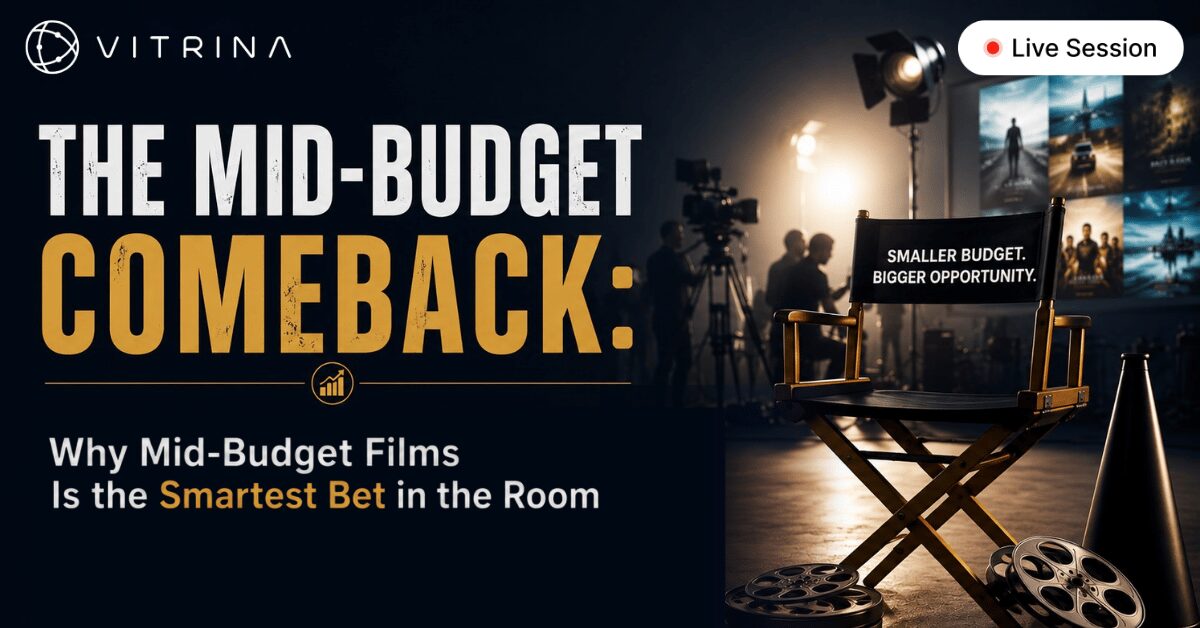
The Mid-Budget Comeback: Why Mid-Budget Films Is the Smartest Bet in the Room
Mid-budget films are attracting new capital. See why this segment is becoming one of the strongest bets in Film today.
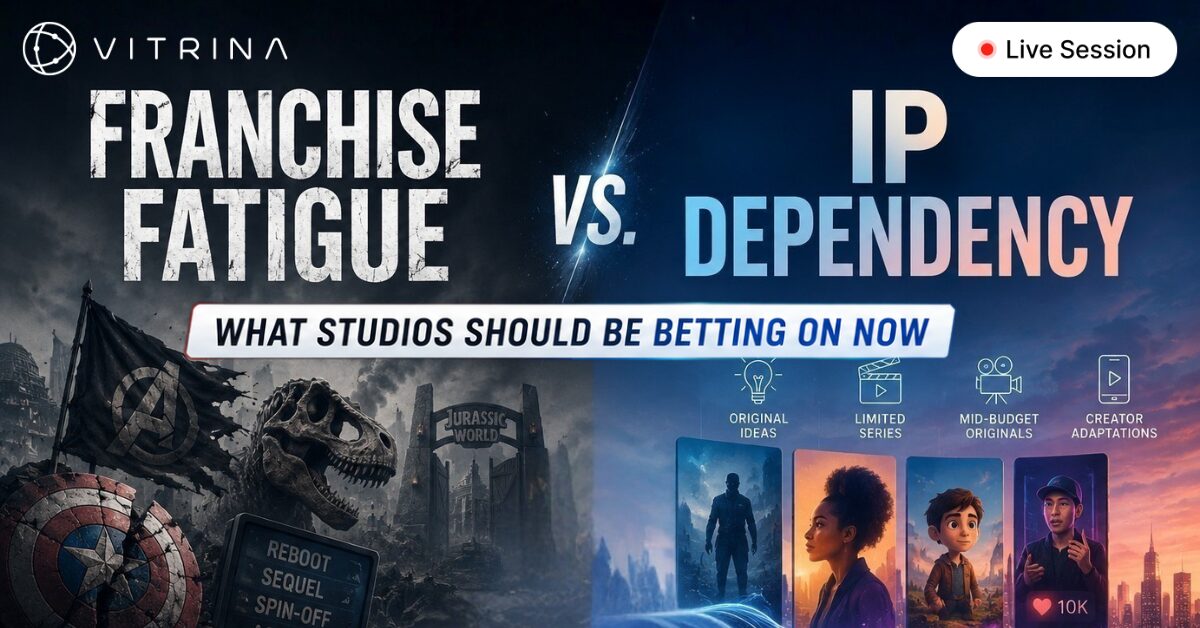
Franchise Fatigue vs. IP Dependency: What Studios Should Be Betting On Now
s franchise performance softens, where will the next generation of valuable IP come from? Join the briefing.
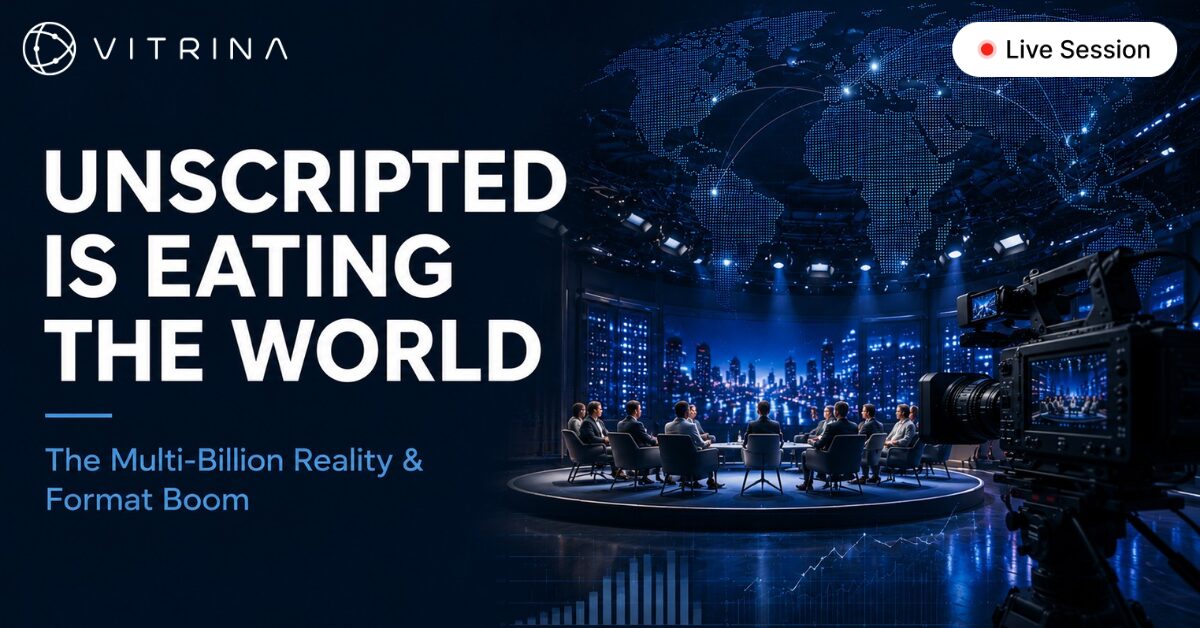
Unscripted Is Eating the World: The Multi-Billion Reality and Format Boom
Unscripted is the new prestige — inside the $19.8B global format boom reshaping how streaming platforms compete.