About Innovation Hub
 Global Content Pulse (Webinars)


 Global Production Financing
(Webinars)
Global Production Financing
(Webinars)  LeaderSpeak Podcast
  About Vitrina
 Our Story
 Our Solutions 🔥
 Film+TV Projects Tracker 🚀
 Case Studies
 Our Profile
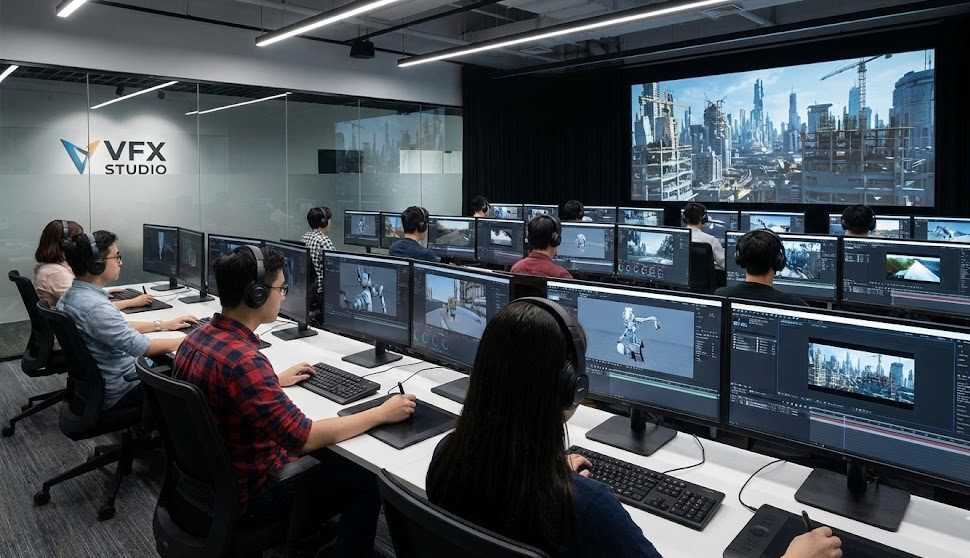
Top VFX companies are elite visual effects studios defined by their technical innovation, expansive global infrastructure, and a portfolio of high-impact entertainment projects.
Selecting the right partner involves evaluating a studio’s expertise in real-time rendering, virtual production pipelines, and their ability to manage complex multi-territory tax incentives.
According to Ampere Analysis, the global VFX market reached $18.2 billion in 2024, with demand increasingly concentrated in high-end episodic streaming content.
In this guide, you’ll learn a strategic framework for vendor evaluation, a curated list of global leaders, and how to leverage supply chain intelligence to secure the best creative partners.
While many industry lists focus exclusively on regional hubs, they often fail to address the critical “data deficit” producers face when sourcing global partners. Traditional discovery relies on fragmented trade news, leaving acquisition and production leads with limited visibility into active bidding windows and verified technical capabilities.
This comprehensive analysis fills those gaps by providing a globally-focused directory and a simplified evaluation framework powered by supply chain intelligence.
Table of Contents
- 01Beyond Regional Borders: The 2025 Global VFX Directory
- 02Boutique vs. Enterprise: Comparing VFX Studio Scales
- 03Segmenting Success: Top Partners for OTT, Gaming, and Film
- 04VFX Evolution: AI, Unreal Engine, and Virtual Production
- 05Strategic Selection: The Vendor Evaluation Framework
- 06Key Takeaways
- 07FAQ
- 08Moving Forward
Key Takeaways for Studio Executives
-
Global Discovery Gap: Most lists are regionally biased; using supply chain intelligence to track 140,000+ companies ensures access to elite global vendors beyond common hubs.
-
Strategic Scaling: Boutique studios offer agility and Unreal Engine specializations, while enterprise firms provide the capacity for massive, high-complexity blockbusters.
-
Tech-First Evaluation: 2025 selection criteria must prioritize AI integration and virtual production capabilities to optimize budgets and project timelines effectively.
What Are the Top VFX Companies Globally in 2025?
The global VFX landscape is no longer restricted to traditional hubs like Los Angeles or London. Today’s top VFX companies operate across a decentralized network of studios in Canada, India, Australia, and New Zealand, leveraging local talent pools and government tax credits. This shift requires producers to look beyond basic directories toward platforms that offer verified data on multi-territory operations.
Leading the global market are enterprise giants like Industrial Light & Magic (ILM), Weta Digital, and DNEG. These firms have set the standard for high-end cinematic visuals, but emerging players in regions like South Korea and Southeast Asia are rapidly closing the technical gap. Tracking these movements is essential for identifying partners who can deliver Hollywood-grade quality at competitive price points.
Discover global VFX studios with active projects:
Boutique vs. Enterprise: Which VFX Partner Is Right for You?
Selecting between an enterprise-level studio and a boutique firm is one of the most critical decisions in the entertainment supply chain. Enterprise companies like Framestore or MPC offer massive infrastructure, capable of handling thousands of complex shots simultaneously across multiple global offices. This scale provides a safety net for massive tentpole productions with tight deadlines.
Conversely, boutique studios are increasingly winning premium work by specializing in niche areas like creature design, digital humans, or Unreal Engine workflows. These firms often offer more direct access to senior creative talent and greater flexibility in pipeline integration. For OTT series and indie films, a boutique partner can often deliver superior “pixel-for-dollar” value by focusing on specific creative challenges.
Find boutique studios specializing in Unreal Engine:
How to Segment Top VFX Partners for Different Industry Verticals?
The needs of a AAA gaming title differ vastly from those of a period drama for an OTT platform. Top VFX companies are increasingly segmenting their services to cater to these specific industry verticals. For instance, studios with strong “real-time” backgrounds are becoming the preferred choice for virtual production in high-end advertising and television.
In the realm of Bollywood and regional cinema, companies like Prime Focus and Red Chillies.vfx have built specialized pipelines that balance high-volume asset creation with local cultural nuances. By segmenting your search based on project type—whether it’s creature-heavy fantasy or invisible VFX for prestige drama—you can align with vendors who possess the relevant “supply chain history” to ensure project success.
Compare VFX studios by industry specialization:
Industry Expert Perspective: Modern VFX Landscape with Framestore
John Kilshaw, Creative Director at Framestore, shares insights into the evolution of global episodic VFX and the collaborative nature of working with major studios like Netflix.
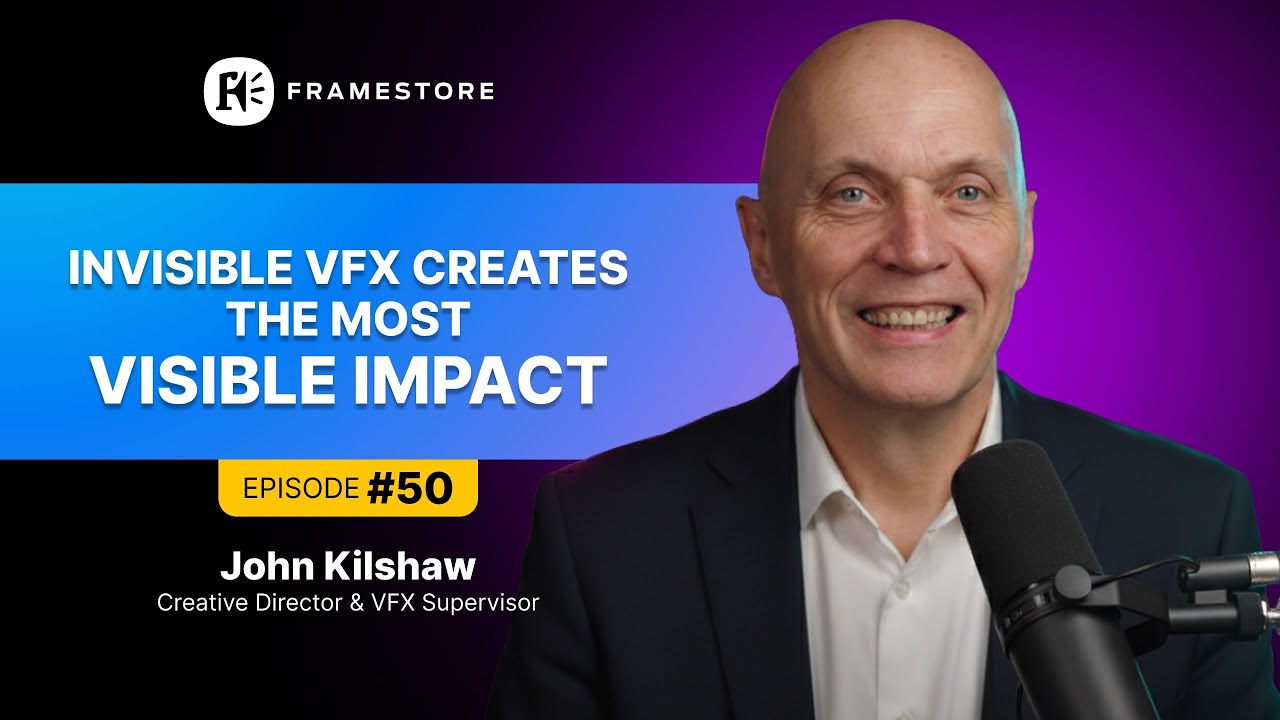
This deep dive covers the art of collaboration, the transition from traditional film to high-end episodic content, and how elite teams bring global franchises like “One Piece” and “Avatar: The Last Airbender” to life.
What Are the Emergent VFX Trends Reshaping Selection in 2025?
The integration of Generative AI is no longer a futuristic concept; it is a core business strategy for the world’s best VFX studios. Authorized AI models are now being used for ethical asset generation, de-aging, and complex environment extensions, significantly reducing the “manual labor” hours of rotoscoping and paint-outs. Producers must evaluate how vendors are formalizing these tools while maintaining strict IP protection protocols.
Furthermore, the transition to “MovieLabs 2030 Vision” workflows—where content is cloud-native and secured via Zero Trust architecture—is becoming a prerequisite for working with major studios like Disney and Netflix. Virtual production via LED volumes and real-time engines like Unreal Engine is also maturing, allowing for iterative creative decisions on-set rather than in post-production. These trends are redefining the value proposition of top VFX companies from pure “execution” to “integrated creative production.”
Identify studios leveraging AI-powered pipelines:
How to Evaluate VFX Vendors Using Strategic Supply Chain Intelligence?
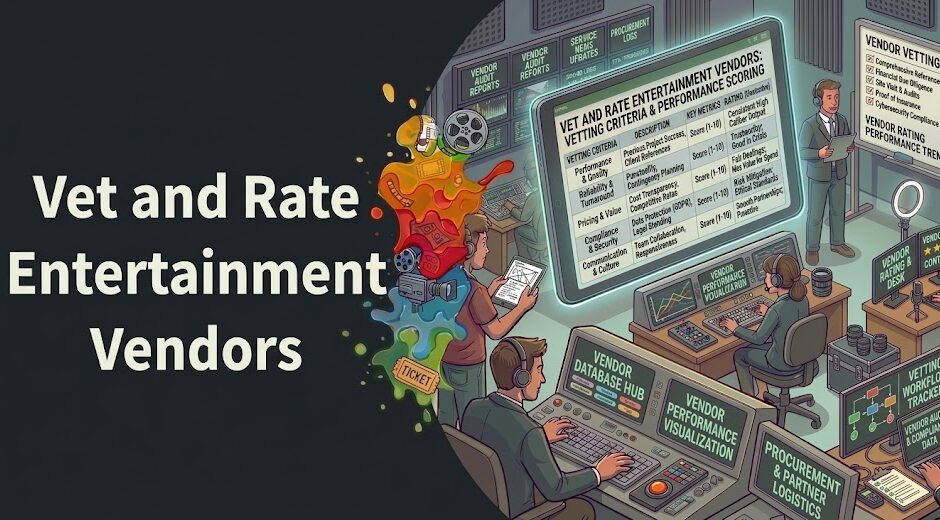
To bridge the “data trust deficit,” studio executives should move beyond anecdotal evidence and adopt a structured evaluation framework. This framework prioritizes verifiable track records over slick showreels. When vetting a potential partner, look for three key pillars: technical capability alignment, financial stability (especially in high-incentive regions), and collaborator network depth.
Supply chain platforms like Vitrina AI allow you to map these 30 million+ relationships in real-time. By analyzing which studios have consistently collaborated with top streamers or have experience in specific budget ranges, you can mitigate operational risk. This objective approach transforms vendor selection from a high-risk art into a data-driven science, ensuring your project remains on schedule and on budget.
Access deep intelligence on VFX partner history:
Frequently Asked Questions
Quick answers to the most common queries about the global VFX market.
What is the top VFX company in the world?
How do I choose the right VFX partner for an indie project?
What are the benefits of using Unreal Engine in VFX?
Which Indian VFX companies work on Hollywood projects?
How is AI changing the VFX supply chain?
What is virtual production?
Are boutique VFX studios better than large firms?
What should I look for in a VFX vendor’s reputation?
“The global VFX market is transitioning from a relationship-driven art into a data-powered science. Those who leverage supply chain intelligence to identify the right specialized partners will dominate the next era of cinematic storytelling.”
Moving Forward
The entertainment supply chain for visual effects has evolved into a hyper-connected, global ecosystem where data-driven selection is no longer optional. This guide has addressed the critical gaps in global coverage, comparative analysis, and emerging trends, providing a roadmap for executives to navigate this metamorphosis.
Whether you are a studio producer looking to optimize project tax credits, or a technology vendor seeking to partner with elite studios, actionable intelligence is the primary driver of deal velocity and creative success.
Outlook: Over the next 18 months, the ‘weaponization’ of distribution and the maturation of authorized generative AI will further consolidate the market toward studios that embrace cloud-native, real-time workflows.
About the Author
Expert strategist with 15+ years in the global entertainment supply chain, specializing in data-driven partner discovery and industry transformation. Connect on Vitrina.