About Innovation Hub
 Global Content Pulse (Webinars)


 Global Production Financing
(Webinars)
Global Production Financing
(Webinars)  LeaderSpeak Podcast
  About Vitrina
 Our Story
 Our Solutions 🔥
 Film+TV Projects Tracker 🚀
 Case Studies
 Our Profile
The top production houses in Europe aren’t playing supporting roles anymore. They’re setting the global agenda. A show produced in Spain or Italy can now be a global hit—and that wasn’t true twenty years ago. Today, European production groups collectively represent billions in annual revenue, control IP catalogues spanning thousands of titles, and are landing on Netflix, Prime, HBO Max, and theatrical release in 90+ countries simultaneously.
But here’s what most sourcing guides get wrong: Europe’s production landscape isn’t a handful of obvious names. It’s a continent-wide Fragmentation Paradox—600,000+ companies operating across 43 co-production treaty countries, with information asymmetry so severe that the best co-production partners for your specific project might be invisible to your current sourcing process. This guide cuts through that noise.
What you’ll find below: 10 production houses—from continent-spanning supergroups generating over €3 billion in annual revenue to precision-crafted prestige outfits with 14 Oscars in their trophy cabinet—and the strategic intelligence you need to assess each one for your 2026 slate. Global content investment is projected to hit $255 billion in 2026 as streaming platforms widen the gap with broadcasters. The European production houses on this list are positioned to capture a disproportionate share of it.
Table of Contents
- Why European Production Houses Are a 2026 Priority
- The Continental Supergroups: Scale, IP, and Market Power
- France’s Prestige Studios: Where Auteur Meets Commercial
- UK & Ireland: The English-Language Gateway
- The Nordic Edge: Premium Drama and Co-Production Depth
- How to Weaponize European Co-Production Treaties
- Selecting a European Production Partner: The Due Diligence Framework
- FAQ
- Conclusion
Ask VIQI: Which European Production Houses Are Actively Co-Producing in Your Genre Right Now?
VIQI is Vitrina’s AI assistant, trained on 1.6 million titles, 360,000 companies, and 5 million entertainment professionals. Ask about active project slates, co-production mandates, and which European houses are greenlighting in your format today.
✓ 200 free credits included | ✓ No credit card required
Why European Production Houses Are a 2026 Priority for Global Buyers
The numbers don’t lie. Banijay Group posted €3,348 million in 2024 revenue—growth in a year when competitors contracted. Studiocanal finances and distributes around 80 feature films and 20 series annually, operating directly in nine European markets plus Australia and New Zealand. ITV Studios still generated £2.038 billion even in a year of streaming-induced headwinds. This isn’t a market in retreat. It’s a market in consolidation—and consolidation creates co-production opportunity for buyers who understand the new power structures.
Three structural forces make European production houses an urgent 2026 sourcing focus. First, the European Convention on co-production now covers 43 countries, meaning a single co-production agreement can simultaneously unlock incentives across the continent at minimums as low as 5% per partner. Second, European incentive regimes are genuinely competitive: the UK’s VFX credit hit 29.25% as of April 2025, France’s cash rebate reaches 40% when French VFX exceeds €2 million, and Greece has allocated €105 million to its 40% rebate program for 2025. Third—and this is what most buyers miss—European producers are no longer servicing Hollywood. They’re building IP libraries and retaining rights in ways that create real partnership value.
As Andrea Scarso, Managing Partner of IPR VC, noted in a Vitrina LeaderSpeak conversation: “Especially here in Europe, there is a great system of co-productions of local producers that understand the specificities of their own countries extremely well and they can help bring in more resources to the table so that you can keep production values and production budgets higher—but managing your downside protection and managing your risk.” That’s not marketing language. That’s the financial logic of why Europe’s best production houses are the smartest capital stack partners available to international buyers right now. For a complete guide to European film funding opportunities, Vitrina’s cross-border collaboration guide maps every major mechanism.

Your AI Assistant, Agent, and Analyst for the Business of Entertainment
VIQI AI helps you plan content acquisitions, raise production financing, and find and connect with the right partners worldwide.
- Find active co-producers and financiers for scripted projects
- Find equity and gap financing companies in North America
- Find top film financiers in Europe
- Find production houses that can co-produce or finance unscripted series
- I am looking for production partners for a YA drama set in Brazil
- I am looking for producers with proven track record in mid-budget features
- I am looking for Turkish distributors with successful international sales
- I am looking for OTT platforms actively acquiring finished series for the LATAM region
- I am seeking localization companies offer subtitling services in multiple Asian languages
- I am seeking partners in animation production for children's content
- I am seeking USA based post-production companies with sound facilities
- I am seeking VFX partners to composite background images and AI generated content
- Show me recent drama projects available for pre-buy
- Show me Japanese Anime Distributors
- Show me true-crime buyers from Asia
- Show me documentary pre-buyers
- List the top commissioners at the BBC
- List the post-production and VFX decision-makers at Netflix
- List the development leaders at Sony Pictures
- List the scripted programming heads at HBO
- Who is backing animation projects in Europe right now
- Who is Netflix’s top production partners for Sports Docs
- Who is Commissioning factual content in the NORDICS
- Who is acquiring unscripted formats for the North American market
The Continental Supergroups: Scale, IP, and Market Power
1. Banijay Group — Paris, France
Revenue: €3,348M (2024) | Formats, scripted, unscripted, live experiences | Active in 20+ countries
Verdict: Europe’s largest independent content group—and the one that grew revenue in 2024 while competitors declined.
Banijay’s scale is genuinely remarkable. The group controls the IP behind Big Brother, Survivor, Deal or No Deal, Peaky Blinders, Temptation Island, and hundreds of other formats and scripted properties—assembled through a $2.2 billion acquisition of Endemol Shine followed by a steady stream of indie acquisitions. According to Cineuropa’s 2024 analysis, Banijay’s 0.5% revenue growth to €3,348 million “was achieved despite a difficult industry environment, with a particularly strong fourth quarter driven by major scripted series.” That’s the moat: volume and diversity across formats, scripted, and increasingly live experiences means Banijay is recession-resistant in ways smaller houses aren’t. For content buyers, the strategic value is the ready-made format library: licensing, remake rights, and format adaptations are all live conversation opportunities without the development cycle. Their M&A machine also means new labels are regularly absorbed—keeping the creative pipeline fresh even as the group scales.
Hero Projects: Big Brother, Peaky Blinders, Survivor, Temptation Island · Strategic Value: Largest European format library, proven global distribution infrastructure, live experiences diversification
2. Fremantle — Amsterdam, Netherlands (RTL Group / Bertelsmann)
Revenue: €2,254M (2024) | Scripted, unscripted, formats | 27 countries
Verdict: The acquisitions machine that’s methodically building the most geographically diverse production group in Europe—and their scripted credentials are now matching their format legacy.
Fremantle’s transformation over the past decade is one of European entertainment’s most instructive case studies in strategic portfolio construction. They were long known for unscripted formats—American Idol, X Factor, The Price Is Right—but a string of targeted acquisitions rebuilt the group’s creative identity. Taking control of Ireland’s Element Pictures (producer of Normal People and Oscar winners The Favourite and Room) and Italy’s Lux Vide gave Fremantle genuine prestige scripted credentials in two of Europe’s most creatively distinct markets. CEO Jennifer Mullin has been explicit that new acquisitions focus on businesses that “feel complementary to the type of content we are already producing.” Operating across 27 countries, the group’s infrastructure means a co-production with one of its labels can access theatrical, streaming, and broadcast distribution simultaneously across most of the developed world. For buyers seeking a European partner with both format scale and prestige scripted capability—plus global distribution architecture already in place—Fremantle is the group worth the most senior conversation.
Hero Projects: Normal People, The Favourite, Room (Element Pictures), American Idol · Strategic Value: 27-country production infrastructure, prestige scripted + proven format library, active acquisition pipeline
3. ITV Studios — London, United Kingdom
Revenue: £2.038B (2024) | Drama, formats, unscripted | Target: 400 hours original drama by 2026
Verdict: ITV Studios is the world’s most scalable drama and format machine—and their 2026 delivery target signals where to expect the most active commissioning conversations.
Don’t let the 2024 revenue decline distort the picture. ITV Studios’ -6% fall to £2.038 billion was driven by the lingering effects of the 2023 US strikes and timing shifts—not structural market share loss. And the company’s strategic direction makes the 2025-2026 picture materially different: they’ve committed to 400 hours of original drama series by 2026 with explicit focus on “formats that return and travel”—which, translated into buyer language, means returning series with strong international IP profiles. Love Island, The Voice, The Chase are the format benchmarks. But ITV Studios’ drama labels—including Hell’s Kitchen, World Productions (Line of Duty), and its recently acquired Spanish scripted powerhouse Plano a Plano—are where the 2026 opportunity sits for co-production partners. The acquisition of Plano a Plano specifically signals an intentional expansion into Spanish-language drama, creating Smart Pairing opportunities for North American and LatAm buyers.
Hero Projects: Love Island, The Voice, Line of Duty · Strategic Value: Global format distribution, 400-hour 2026 drama commitment, Spanish-language expansion via Plano a Plano
Track Every European Production House’s Active Projects and Co-Production Activity in Real Time
Trusted by Netflix, Warner Bros, Paramount, and Google TV. Join 140,000+ companies tracking active slates, co-production mandates, and deal flow across European production houses—before they hit the trades.
✓ 200 free credits | ✓ No credit card required | ✓ Cancel anytime
France’s Prestige Studios: Where Auteur Meets Commercial
France is the only country in the world with 61 bilateral co-production treaties—administered by the CNC—plus the unique position of its joint fund with Italy (€1M) and the most protective cultural exception policy in Europe. But what distinguishes the best French production houses isn’t the policy environment. It’s the integration of auteur credibility with commercial ambition that no other national industry matches at this level.
4. Studiocanal — Paris, France (Canal+ Group)
Slate: 80 features + 20 series/year | Catalogue: 9,400+ titles | CEO: Anna Marsh | Direct distribution: 9 European markets
Verdict: Europe’s most vertically integrated film-to-distribution machine—and the 2026 English-language push makes them a more accessible co-production partner than they’ve ever been.
Studiocanal is in a class of its own among European production companies. They’re not a production house with distribution relationships—they’re a production, financing, and distribution studio that controls the full supply chain in nine European markets plus Australia and New Zealand. Their catalogue of 9,400+ titles from 60 countries—including 1,000 classic films restored in 4K—represents a library asset that makes Studiocanal a fundamentally different co-production conversation than any other house on this list. CEO Anna Marsh was explicit at CinemaCon 2026: “We remain firmly committed to films made for the big screen.” But it’s the strategic shift that creates 2026 opportunity: Studiocanal’s newly launched in-house production arm, Sixth Dimension (horror, thriller, sci-fi action), and their explicitly English-language expansion—including the Glen Powell drama How to Make a Killing and the sci-fi Cold Storage—signals they’re actively looking for English-language co-production partners at scale. Paul Gilbert, Senior VP of English-Language Series, frames it clearly: “We’re no longer in the gold-rush phase—buyers today want shows that can define a brand, build an audience and genuinely travel.” That’s exactly Studiocanal’s pitch to co-producers too.
Hero Projects: Paddington in Peru, Guru, Paris Has Fallen, How to Make a Killing · Strategic Value: Full production-to-distribution vertical, 9,400+ title catalogue, English-language expansion in 2026, 9-market direct distribution
5. mk2 — Paris, France
Founded: 1974 | Co-CEOs: Nathanaël & Elisha Karmitz | 1,250+ titles | 14 Oscars | 152 international festival prizes | 450 employees
Verdict: Fifteen Cannes 2025 Oscar nominations. A24 co-production partner. The prestige production house that’s cracked the code of making auteur cinema commercially viable—and now has active English-language expansion on its agenda.
Founded in 1974 by Marin Karmitz and now run by his sons Nathanaël and Elisha, mk2 has built something almost unique in global cinema: a company that simultaneously wins over critics, festival juries, awards voters, and audiences. Their 14 Oscars and 152 international festival prizes aren’t honorary decoration—they’re the outcome of a deliberate creative strategy. The relationship with A24 is the tell: mk2 has co-produced over 15 films with A24, including Anatomy of a Fall (Palme d’Or, Cannes). IPR VC’s Andrea Scarso, who has backed mk2 projects, describes the company as “dominating the sort of international quality films, which are also very commercial.” As reported by Screen International, mk2 is now expanding into English-language arthouse through newly appointed UK lead Vanessa Saal, tasked with co-productions and acquisitions. But here’s what matters for buyers: mk2 doesn’t buy growth through acquisition. They build it through taste. “A decade ago, we stopped distributing films and everyone said, ‘You’re crazy.’ But we had a strategic vision, and it is working,” co-CEO Nathanaël Karmitz has said. That’s Insider Candor worth paying attention to.
Hero Projects: Anatomy of a Fall (Palme d’Or), 15+ A24 co-productions · Strategic Value: Highest prestige-to-commercial ratio in European cinema, A24 relationship, English-language expansion active, Cannes access
6. Federation Studios — Paris, France
Founded: 2014 | Backed by: Montefiore Investment + Bpifrance | $78.87M total raised | High-end drama and fiction
Verdict: The fastest-growing French drama studio of the streaming era—and the best bet for co-producers seeking French CNC support combined with genuine global platform relationships.
Founded in 2014—barely a decade old—Federation Studios has moved faster than any other French production house into the premium scripted streaming space. Backed by private equity (Montefiore Investment) and public financing (Bpifrance), Federation raised $78.87 million and built a slate that’s now landing on Netflix, Prime, and major European streamers in multiple languages. Their co-production of Spinners—a collaboration between MultiChoice and Canal+, distributed internationally by Studiocanal—is the model of what Federation executes: multi-territory IP with structured co-production financing that gives each partner a meaningful ownership position. But Federation’s most important strategic asset for international buyers isn’t any specific project. It’s their fluency with French CNC co-production mechanics—a system that can add 30-40% soft money to a qualifying project but that requires a partner who has navigated the regulatory framework before. For English-language producers seeking French co-production support, Federation is the house most likely to execute in twelve months, not thirty-six.
Hero Projects: Spinners (Canal+/MultiChoice), premium scripted for Netflix and Prime · Strategic Value: Fast-moving drama house, French CNC access, strong private equity backing, multi-territory co-production fluency
Need a Warm Introduction to a European Production House This Week?
Vitrina Concierge doesn’t hand you a list. We make direct introductions to the right creative directors, heads of co-production, and commissioning executives—based on your exact project requirements.
- LA producer → Netflix UK, Fifth Season, Fox Entertainment (48 hours)
- Korean studio → Netflix Adult Animation (week one)
- Middle Eastern studio → Legendary Pictures (direct access)
UK & Ireland: The English-Language Gateway to European Co-Production
The UK’s position as Europe’s dominant English-language production hub is reinforced by the most competitive incentive revision in years. The Audio-Visual Expenditure Credit now runs at 25% base (29.25% for VFX as of April 2025), with business rate relief of 40% for film studios locked in to 2034. That infrastructure investment is deliberate: the UK produced £4.2 billion in film and TV spend in 2023, attracting productions including Jurassic World 4, Mission: Impossible, and Fantastic Four. For international buyers, the UK’s treaty network—including Australia, Brazil, Canada, China, France, India, and South Africa—means an official UK co-production automatically passes the cultural test for all those territories. For the specifics of UK film tax reliefs and incentives, Vitrina’s filmmaker guide walks through every mechanism.
James Burstall, CEO of Argonon—one of the UK’s leading independent production groups—spoke to Vitrina’s LeaderSpeak about how a diversified content portfolio and international co-production strategy keeps a superindie competitive in the streaming era:
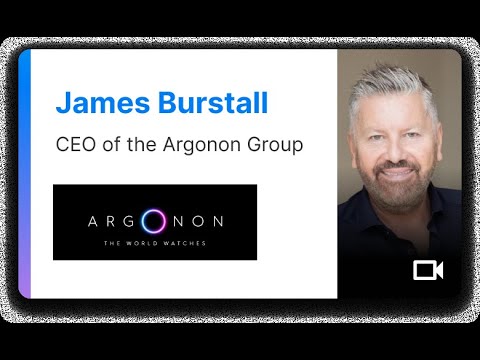
7. Argonon Group — London, United Kingdom
Founded: 2011 | CEO: James Burstall | 130+ awards | 4,000+ hours catalogue | ~200 hours fresh content/year | Labels in London, Los Angeles, New York, Glasgow
Verdict: The UK’s most genre-diversified independent superindie—and the group actively looking for co-production partners as its labels run near-fully commissioned across international buyers.
Founded by James Burstall in 2011, Argonon has built one of the UK’s most genuinely diversified production groups—scripted, factual, formats, entertainment, and documentary—across labels including Windfall Films (Emmy-winning The Future with Hannah Fry), Leopard USA, Like A Shot Entertainment, and BriteSpark Films. With 130+ international awards including Emmys and BAFTAs, a 4,000+ hour catalogue, and production across 200 fresh hours annually, the group operates at a scale most UK independents can’t match. Burstall was explicit about 2026 strategy writing for Televisual: “The majority of hours produced by our UK-based labels have been for multiple international buyers”—meaning Argonon’s content already travels by design, not by luck. That’s exactly the co-production mindset international buyers need in a European partner. Note: as of October 2025, Argonon was reported as exploring a sale, with strong interest from North American and European buyers—which, depending on timing, may affect ownership structure by mid-2026. Worth monitoring before finalizing any long-term co-production commitment.
Hero Projects: The Masked Singer (ITV), Hard Cell (Netflix), Attenborough and the Mammoth Graveyard (BBC), The Future with Hannah Fry (Bloomberg, Emmy-winning) · Strategic Value: Full-genre UK production, international co-production track record, BAFTA + Emmy pedigree
8. Head Gear Films — London, United Kingdom
Founded: 2002 | Founders: Phil Hunt & Compton Ross | 550+ films financed | 35-40 films/year | Structured lending + production packaging + gap/senior equity
Verdict: Not just a production house—the most active film financing operation in Europe. If you need gap financing, structured lending, or production packaging for a European film, Head Gear is the conversation that closes fastest.
Head Gear Films, co-founded by Phil Hunt and Compton Ross, occupies a position in European film production that no other company matches. Hunt describes it plainly: “Compton and I are now the most highly credited producers ever in the UK since records began in 1906.” That’s not a claim—it’s a documented fact derived from producing and financing 550+ movies at a rate of 35-40 films per year—”more than studios do,” as Hunt notes. Head Gear operates across three business lines: structured lending against film IP, production packaging and business affairs support for independent producers, and gap/senior equity financing. In the post-COVID “big crunch” that’s made film finance harder across the board, Hunt’s assessment cuts through the noise: “What we’re really primarily looking for are projects that the market really wants.” That market-first discipline—combined with the volume and speed of Head Gear’s operation—makes them the most immediately useful European production finance partner for international buyers who need gap closed before principal photography. For a deeper understanding of co-production opportunities in Europe, Vitrina’s step-by-step guide applies directly.
Strategic Value: Highest-volume European film financing operation, structured lending + gap finance + production packaging, market-driven project selection, 25-year track record
The Nordic Edge: Premium Drama and Co-Production Infrastructure
9. SF Studios — Stockholm, Sweden
Speciality: Scandinavian production, distribution, and international co-production | Nordic market leadership
Verdict: The gateway to the Nordic content market and the co-production partner that gives an international project instant Scandinavian distribution credibility.
SF Studios sits at the intersection of production, distribution, and exhibition across the Nordic region—a combination that’s rare in any market and genuinely powerful in Scandinavia, where theatrical, streaming, and broadcast rights are more tightly integrated than almost anywhere else. The Nordic region punches internationally at a rate far above its population size: The Girl with the Dragon Tattoo, Borgen, The Bridge, and the global Nordic Noir phenomenon all came from an ecosystem SF Studios has been central to building and sustaining. For international co-production partners seeking access to Danish, Swedish, Norwegian, and Finnish funding mechanisms—plus the Nordic public broadcasters’ co-production mandates—SF Studios provides infrastructure that’s genuinely difficult to replicate through individual partner relationships. And the Nordic VFX and post-production ecosystem, increasingly anchored around SF Studios’ pipeline, delivers a technical standard that competes with any European market.
Strategic Value: Nordic production + distribution + exhibition integration, access to Scandinavian film funds and broadcaster mandates, Nordic Noir IP expertise
10. Element Pictures — Dublin, Ireland (now part of Fremantle)
Speciality: Prestige film and limited series | Credits: Normal People, The Favourite, Room
Verdict: Two Oscar wins and a Hulu/BBC hit that redefined prestige drama. As Fremantle’s Irish flagship, Element now gives co-production partners simultaneous access to Ireland’s 32% Section 481 tax credit and Fremantle’s global distribution machine.
Element Pictures—founded by Andrew Lowe and Ed Guiney—is among the most decorated production companies operating anywhere in Europe. Their film credits include Oscar-winning The Favourite (Yorgos Lanthimos) and Room (Lenny Abrahamson), while their limited series Normal People became a global cultural moment on BBC Three and Hulu. Now operating under Fremantle’s ownership, Element retains its creative independence while gaining access to Fremantle’s distribution network—a combination that transforms an already exceptional production house into a full value-chain co-production partner. But the structural prize is Ireland’s Section 481 credit: at 32% base with an additional 8% for films under €20M (40% total for smaller films), and a new 20% incentive for unscripted TV in 2025, Ireland’s incentive landscape is among Europe’s most generous. Element knows how to access it. For international buyers seeking prestige scripted co-production with immediate Fremantle distribution access, Element is the conversation that unlocks the most complete package on this list.
Hero Projects: The Favourite (Oscar), Room (Oscar), Normal People (BBC/Hulu) · Strategic Value: Prestige film + drama pedigree, Ireland Section 481 (40% for smaller films), Fremantle global distribution access
How to Weaponize European Co-Production Treaties
The Eurimages multilateral framework and 43-country European Convention mean that structuring a European co-production correctly is one of the most powerful de-risking moves available to an international producer. But “correctly” is doing a lot of work in that sentence. Belgium—where 72% of films are co-productions—has mastered this because producers there treat treaty stacking as a financial discipline from day one, not an afterthought at packaging.
The practical mechanics that most buyers miss: under the revised 2018 European Convention, the multilateral minimum contribution per co-producer has dropped to just 5%. That means a UK-France-Ireland trilateral co-production can access the UK’s 25% AVEC, France’s 30-40% international cash rebate, and Ireland’s 32-40% Section 481 credit from a single project—while each partner contributes a minimum of 5% of the total budget. Stack that with Eurimages grants (up to €750,000 for features, available from any of the 43 member states), and the “soft money” component of a European co-production can realistically represent 35-50% of a film’s budget before a single presale or equity check is signed.
But here’s the operational constraint: applications must be submitted to competent authorities a minimum of four weeks before principal photography begins, and in practice, earlier consultation is strongly recommended. The production houses profiled above—especially Studiocanal, Federation Studios, Element Pictures, and Head Gear Films—all have treaty administration expertise in-house. For buyers who don’t, this is genuinely the best argument for starting with a European partner rather than trying to navigate the framework independently. For more on the UK Global Screen Fund as a co-production avenue, Vitrina’s guide covers the specific program mechanics in detail.
Selecting a European Production Partner: The Due Diligence Framework
Broadcaster vs. Streamer Access—Know the Difference
European production houses have fundamentally different relationships with linear broadcasters and streaming platforms. Banijay, ITV Studios, and Fremantle have broadcaster relationships built over decades—they know how to pre-sell to ZDF, France Télévisions, RAI, and Canal+ in ways that close a capital stack efficiently. But mk2 and Federation Studios are the Netflix and Prime-first generation. Make sure the house you’re co-producing with has actual delivery credits on the platform you’re targeting—not just development conversations.
IP Ownership Structure
This is where European production deals get complicated fast. The older supergroups—Banijay, Fremantle, ITV Studios—have become increasingly aggressive about retaining format rights and creative IP ownership in their acquisition deals. As a co-producer, you need to negotiate IP ownership position before production commences, not during delivery. Independent houses like mk2 and Argonon tend to be more flexible on IP splits precisely because they’re not operating under a publicly listed parent company’s margin pressure.
The Incentive Expiry Problem
Incentive programs change. Greece’s 40% rebate was renewed for 2025 but required €105 million in new government allocation. The Czech Republic’s animation incentive hit 35% and tripled its cap—but on January 1, 2025, not six months earlier. If your co-production structure depends on a specific incentive rate, the partner you need is one with an active government relations team that tracks policy changes in real time. That’s the practical case for using Vitrina’s European distribution intelligence to verify current incentive status before a deal is structured—six-month-old trade reports won’t do it.
Frequently Asked Questions
Which is the largest production house in Europe?
Banijay Group is the largest European independent production group by revenue, posting €3,348 million in 2024 with 0.5% growth despite a challenging industry environment. This makes it larger than Fremantle (€2,254M) and ITV Studios (£2.038B / €2.446B). Banijay controls the IP behind major global formats including Big Brother, Survivor, Deal or No Deal, and Peaky Blinders, and operates across more than 20 countries with additional live events and branded entertainment capabilities.
How do European co-production treaties work for international producers?
European co-production treaties are bilateral or multilateral agreements between countries that grant a project national film status in each co-producing country. Under the revised 2018 European Convention covering 43 countries, the minimum contribution per co-producer for multilateral productions is just 5%. This structure allows a single project to simultaneously access tax incentives, national film funds, broadcaster pre-buy obligations, and Eurimages grants across multiple territories. Applications must be submitted to competent authorities at least four weeks before principal photography, and each country’s requirements differ—which is why working with a production house that has treaty administration experience is strongly recommended.
What tax incentives do European production houses help access?
The most competitive European incentive rates in 2025-2026 include: UK at 25% base (29.25% for VFX as of April 2025), France at 30-40% depending on French VFX spend, Ireland Section 481 at 32-40% (40% for films under €20M), Germany at 30% (up from 25% in 2024), Greece at 40% with €105M program allocation, Spain’s Canary Islands at 45-50% (highest in Europe), and Italy at 30-40% with bankable tax credits. Stacking multiple country incentives through official co-production structures can bring combined soft money to 35-50% of a project budget in favorable configurations.
Which European production house is best for Netflix or streaming co-productions?
For Netflix specifically, mk2 (with 15+ A24 films and active Netflix sales through its Cannes slate) and Federation Studios (with a streaming-first scripted strategy and French CNC access) are the most purpose-built streaming co-production partners. For broader streaming coverage including HBO Max, Prime, and Paramount+, Studiocanal‘s English-language expansion and its 9-market direct distribution network provides the widest platform access. Element Pictures (via Fremantle) delivered Normal People for Hulu and BBC—demonstrating the Ireland-UK co-production route to American streamers.
How can Vitrina help me find and connect with European production houses?
Vitrina tracks 140,000+ entertainment companies globally with verified profiles for production houses, co-production partners, and financing entities across the UK, France, Germany, Ireland, the Nordics, and beyond. You can filter by genre speciality, co-production treaty experience, platform relationships, and active project status. VIQI—Vitrina’s AI assistant—answers specific questions about which European houses are actively commissioning in your format right now. The Concierge service arranges direct introductions to heads of co-production and commissioning executives within your target companies. Start with 200 free credits, no credit card required.
Why is Belgium cited as Europe’s most active co-production market?
Belgium’s 72% co-production rate—the highest in Europe—is a structural outcome of the country’s linguistic divide (Flemish and French) and its proximity to France, Germany, the Netherlands, and the UK. Belgian producers have decades of experience navigating multi-territory co-production frameworks as a financial necessity, not a strategic option. This makes Belgian co-producers some of the most treaty-literate partners in Europe, capable of structuring complex multi-country deals that most national industries would find administratively prohibitive. For international buyers targeting continental European co-production, Belgian partners are often the most experienced navigators of the European Convention framework.
Conclusion: Europe’s Production Houses Are the Smartest Capital Stack Partners in 2026
The top production houses in Europe profiled above aren’t a uniform category. They’re ten distinct strategic options—from Banijay’s €3.3 billion scale to mk2’s 14-Oscar precision—each unlocking different combinations of incentive access, distribution infrastructure, creative credential, and co-production framework expertise. The right partner depends on your genre, your capital stack, your target platform, and the treaty architecture that best serves your project.
Key Takeaways:
- Scale leaders are consolidating, not retreating: Banijay (€3,348M), Fremantle (€2,254M), and ITV Studios (£2.038B) are acquiring indie labels, building format libraries, and expanding geographically—which creates new co-production entry points, not fewer.
- French prestige is commercially operationalized: Studiocanal’s 9,400-title catalogue and 9-market direct distribution, mk2’s 15+ A24 co-productions, and Federation’s streaming-first strategy represent the most sophisticated integration of art and commerce in European production.
- UK incentives just got better: The VFX credit hitting 29.25% as of April 2025, combined with 40% business rate relief for studios through 2034, makes the UK the most structurally stable European production base for international buyers.
- Treaty stacking is your most underused lever: Belgium’s 72% co-production rate proves what’s possible when treaty mechanics are treated as a financial discipline. Combined soft money of 35-50% of budget is achievable through properly structured multi-territory European co-productions.
- The Fragmentation Paradox applies here too: The 10 houses above represent the visible surface of a European production ecosystem of thousands of active companies. Real-time intelligence—not six-month-old trade reports—is the only sustainable sourcing advantage for buyers targeting European co-production partners in 2026.
Global content investment hits $255 billion in 2026. A disproportionate share of the best-structured, highest-ROI co-productions available to international buyers will come from European partnerships structured in the next twelve months. The producers who move now—with the right intelligence on which houses are actively commissioning in their format—will close better deals at better terms than those who wait for the market to move first.
Find and Connect With Europe’s Top Production Houses—Before the Market Moves
Trusted by Netflix, Warner Bros, Paramount, and Google TV. Join 140,000+ companies tracking active slates, co-production mandates, and deal flow across European production houses. Track 400,000+ projects. Ask VIQI which European houses are actively commissioning in your genre today.
✓ 200 free credits | ✓ No credit card required | ✓ Cancel anytime
Need warm introductions to European production house executives this week? Explore Concierge Service →
Find Film+TV Projects, Partners, and Deals – Fast.
VIQI matches you with the right financiers, producers, streamers, and buyers – globally.
Producers Seeking Financing, Co-Pros, or Pre-Buys?
Vitrina Concierge helps producers reach the right financiers, commissioners, distributors, and co-production partners — with precision outreach, not cold pitching.
Join Industry Briefings Trusted by Leaders

Format Adaptations: Global Trends
Where formats are traveling, which adaptations are breaking out, and how streamers are backing remakes in 2025–2026.

Books, Novels & Comics Adaptations: Global Trends
Books, webtoons, and manga driving the next global screen hits. Discover how in this webinar.

Micro-Dramas & Mobile-First Storytelling
Micro-dramas are building real audiences and revenue. Understand the platforms, buyers, and economics behind the growth.

Navigating Global Content Licensing Trends
How global content licensing is shifting beyond flat fees to flexible, deal-driven models.