About Innovation Hub
 Global Content Pulse (Webinars)


 Global Production Financing
(Webinars)
Global Production Financing
(Webinars)  LeaderSpeak Podcast
  About Vitrina
 Our Story
 Our Solutions 🔥
 Film+TV Projects Tracker 🚀
 Case Studies
 Our Profile

India’s film financing companies are no longer a cottage industry operating on handshakes and distributor advances. They’re a structured, multi-layered ecosystem—and if you’re sourcing capital for your next project here, you need to know exactly who’s writing cheques, what they want, and how the whole thing fits together.
Here’s the thing: India is the world’s largest film industry by output—producing more titles annually than Hollywood, Bollywood and regional combined.
The country now offers a 40% federal incentive (increased from 30% in 2024), capped at $3.6M, with an additional 5% bonus for projects with significant Indian content. That’s a real capital stack contribution—not soft money footnotes. And yet most international producers still treat India’s financing landscape as a single market when it’s actually eight or nine very distinct ones.
This guide cuts through that confusion. You’ll get a clear picture of the top film financing companies in India—from government bodies and major studios to equity funds and streaming-era financiers—so you can de-risk your project and move toward greenlight faster.
💡 Vitrina Analyst Note
From our analysis, the most common mistake international producers make in India is treating it as one financing market. It is eight or nine distinct ones. This guide is particularly useful for producers who want to move beyond Bollywood and actually understand where the real capital opportunity sits in India’s regional cinema ecosystems right now.
Table of Contents
- Why India’s Film Financing Landscape Is Changing Fast
- Government-Backed Financing: NFDC and the 40% Federal Incentive
- The Studio Giants: YRF, Dharma, and Reliance Entertainment
- Streaming-Era Financiers: Netflix India, Amazon, and Jio Studios
- Independent Financiers and Equity Funds
- How to Find and Pitch Film Financing Companies in India
- FAQ
- Conclusion
Ask VIQI: Which Indian Film Financiers Are Actively Funding Projects Right Now?
VIQI is Vitrina’s AI assistant—trained on 1.6 million titles, 360,000 companies, and 5 million entertainment professionals. Ask it about Indian equity funds, co-production partners, or government incentives. Get a strategic answer in seconds.
✓ Included with 200 free credits | ✓ No credit card needed
Why India’s Film Financing Landscape Is Changing Fast
India’s production market used to run almost entirely on one model: a big studio or distributor pre-bought territorial rights, and that advance funded the film. Simple. But that model is cracking under pressure—from streaming platforms rewriting the distribution waterfall, from regional industries (Tamil, Telugu, Kannada, Malayalam) muscling into the global conversation, and from a new generation of institutional investors who’ve finally figured out how to structure film equity deals here.
Phil Hunt of Head Gear Films—one of the most active international gap financiers—noted in a recent conversation with Vitrina that a film fund in India told him micro-budget films are now producing outsized ROI, specifically because producers can control more of the value chain. “If you’re managing to make it in a territory that is supportive of its own homegrown movies—like India is—then micro-budget can absolutely work,” he observed. That’s not a niche trend. It’s a structural shift in how Indian film finance is getting assembled.
But here’s what makes India genuinely complicated: you’re not dealing with one market. You’re dealing with multiple language-specific industries—each with its own financing ecosystem, distributor relationships, and audience economics. A Telugu action film and a Hindi prestige drama have almost nothing in common from a capital stack perspective. So when you ask which are the top film financing companies in India, the answer depends heavily on which market you’re actually targeting.
That said, there are key players that operate across multiple verticals—and they’re the ones you need to know first. As our deeper look at India’s regional film markets shows, the real money increasingly sits outside of Mumbai.
Stop Guessing Who’s Financing. Get Targeted Outreach.
Stop searching and start getting funded. We identify the exact decision-makers currently backing projects like yours, turning raw data into risk-aligned capital partnerships.
Major Studios
Scouting early stage projects, IP, and Regional partners for global studio pipelines.
IP Owners & Leads
Connecting creative leads with qualified financiers and major streaming platforms.
Streamers
Securing high-value pre-buy content and discovering early-stage global IP for platforms.
Indie Producers
Bridging the gap for indie filmmakers to reach executive production partners and capital.
Global Financing Ecosystems
Mapping complex markets and pairing projects with disciplined, risk-aligned capital across global territories worldwide.
Government-Backed Financing: NFDC and the 40% Federal Incentive
The National Film Development Corporation of India (NFDC) is the government’s primary vehicle for funding films—particularly art-house, documentary, and culturally significant productions. It offers production financing, co-production facilitation, and market development support. NFDC-backed films have screened at Cannes, Berlin, and Sundance. But it’s not where you go for commercial tentpole financing. Think of it as India’s answer to the BFI or Film4—culturally important, but not designed for a ₹200 crore action franchise.
Far more commercially significant is India’s enhanced federal production incentive—now set at 40% reimbursement (raised from 30% in 2024), capped at $3.6M per project. An additional 5% kicks in for projects with substantial Indian content, talent, or locations. This applies not just to features but to documentaries, VFX work, and animation. For international producers eyeing a co-production structure here, that’s a real contribution to your capital stack—not an afterthought.
India also maintains co-production treaties with multiple countries—including Italy, Germany, France, Brazil, and the UK—which means qualifying co-productions can potentially access Indian incentives plus a second jurisdiction’s program simultaneously. That’s the kind of stacking that makes a project financially viable when it wouldn’t be otherwise. For a full breakdown of how Indian incentives interact with global co-production structures, our film financing India guide covers the mechanics in detail.
The Studio Giants: YRF, Dharma Productions, Reliance, and T-Series
If you’re making mainstream Hindi cinema, these are the four names you need on your radar. Each operates as a full-service studio with financing, production, and distribution arms—which means they’re not just co-investors, they’re potential end-to-end partners.
Yash Raj Films (YRF)
Yash Raj Films is India’s most powerful independent studio—with a catalogue spanning five decades and a domestic theatrical distribution network that no other private company matches. YRF doesn’t just finance its own slate; it co-finances select outside projects and holds international rights on much of what it touches. Their deal structure typically involves full equity ownership in exchange for production and distribution control. If you’re in, you’re really in—and if you’re out, you’re out. They’re selective, but the recoupment track record justifies the tight terms.
Dharma Productions
Dharma Productions, founded by Karan Johar, has evolved from a prestige Bollywood studio into a content house with genuine streaming ambitions. Dharma now produces OTT originals alongside theatrical releases—which means their financing model has diversified. They’re actively exploring co-production partnerships, particularly for premium content with global distribution potential. If your project has Indian cultural authenticity and international crossover appeal, Dharma is worth a conversation.
Reliance Entertainment
Reliance Entertainment—the media and entertainment arm of Reliance Industries, one of India’s largest conglomerates—has the balance sheet to finance at a scale most Indian studios can’t match. They’ve co-financed DreamWorks titles, backed major Telugu and Hindi productions, and operate across theatrical, streaming, and TV windows simultaneously. Their capital is patient and strategic—but so is their recoupment position. Expect senior debt terms even on what looks like equity participation.
T-Series Films
T-Series built its empire on music rights and has systematically expanded into production and co-financing. Their music catalogue integration—where a T-Series co-production gets premium placement on T-Series’ music platforms, which boast over 260 million YouTube subscribers—creates a cross-promotional dynamic that genuinely moves the needle on a film’s P&A effectiveness. That’s not a soft benefit; it changes the economics of theatrical marketing spend.
Find Indian Film Financiers Who Are Actively Investing—Right Now
Trusted by Netflix, Warner Bros, and Paramount. Join 140,000+ companies tracking the global entertainment supply chain—filter by territory, budget range, and content type to surface decision-makers who want what you have.
✓ 200 free credits | ✓ No credit card required | ✓ Full platform access
Streaming-Era Financiers: Netflix India, Amazon Prime Video, and Jio Studios
The single biggest structural change in Indian film financing over the past five years has been the entry of global streaming platforms as direct financiers—not just acquirers of completed films. This matters for your capital stack because it changes when money comes in and what rights you give up to get it.
Netflix India
Netflix has committed substantial capital to Indian originals—both theatrical co-productions and streaming-first content. Their approach has evolved from simply licensing completed Indian films (remember when Bollywood classics landed on Netflix globally?) to commissioning projects from development stage. According to Variety, Netflix has dramatically increased its India-specific content budget, with an eye on both the domestic subscriber base and the Indian diaspora globally. But they’re not passive equity—they typically take streaming rights for a fixed term, which can complicate your downstream revenue picture. As India’s top production companies have discovered, Netflix partnerships come with creative oversight that feels lighter than a studio deal but tighter than a traditional pre-sale.
Amazon Prime Video India
Amazon Prime Video entered Indian content financing earlier than Netflix and has been particularly aggressive in regional language content—Telugu, Tamil, Malayalam. Their licensing structure for theatrical co-productions typically involves a streaming window pre-buy that finances a meaningful portion of the budget. And unlike Netflix, Amazon has occasionally structured deals where theatrical and streaming rights are split, giving producers more flexibility in building the rest of their capital stack.
Jio Studios
Jio Studios—part of Reliance’s broader digital ecosystem—has emerged as a serious production and co-financing force. With JioCinema as its distribution arm (which gained enormous visibility through its IPL cricket streaming deals), Jio Studios can now offer producers an integrated package: co-financing plus guaranteed digital distribution to one of India’s largest OTT audiences. That’s a powerful combination for projects where theatrical alone can’t justify the budget.
Find the Financiers Backing Your Genre
Stop searching and start getting funded. We identify the exact decision-makers currently backing projects like yours, turning raw data into risk-aligned capital partnerships.
Independent Financiers and Equity Funds: 91 Film Studios, Excel Entertainment, and PVR INOX
Beyond the giants, there’s a growing tier of independent financiers and specialist equity funds that are arguably more accessible for mid-budget and regional projects. These are the players who can actually move on a deal without six months of committee approvals.
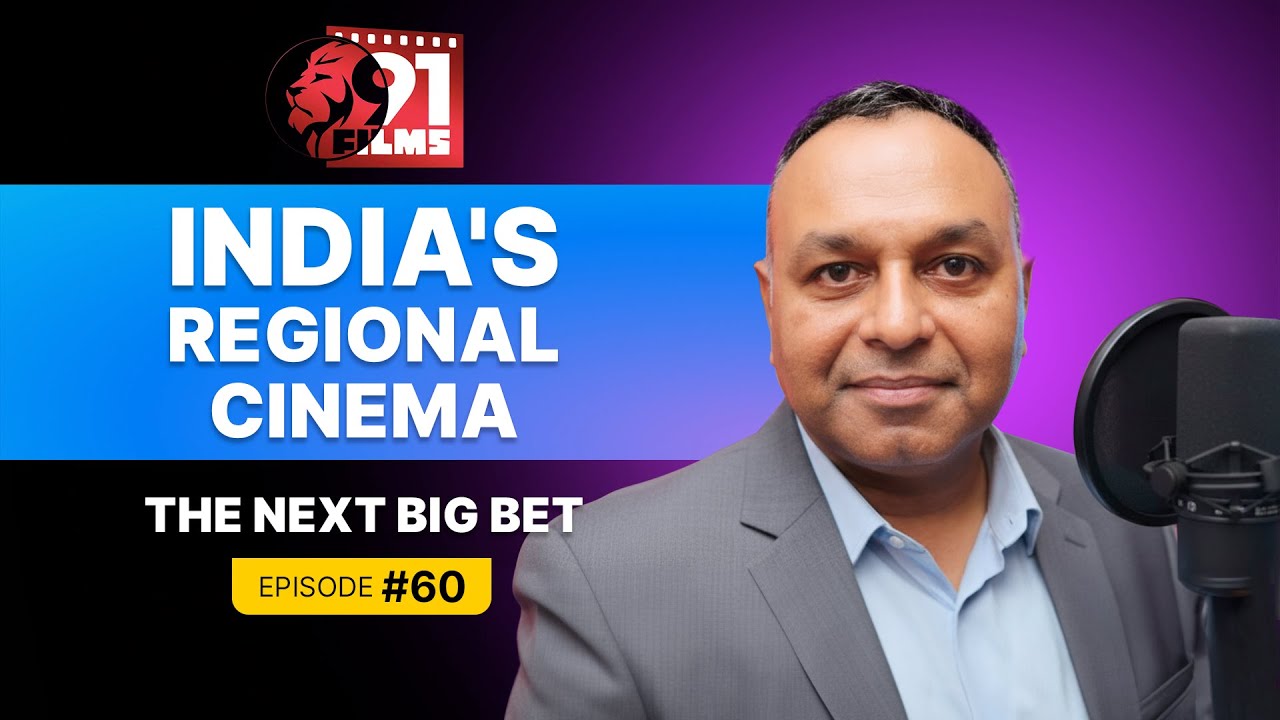
Naveen Chandra (CEO & Founder, 91 Film Studios) unpacks the real economics of India’s regional cinema markets—and the organized capital fund model he’s built to finance them at scale:
91 Film Studios
91 Film Studios, founded by Naveen Chandra, operates what he describes as an “organized capital fund for films”—a structure designed specifically for the regional cinema market that traditional institutional investors have historically underserved. The founding philosophy: India’s regional industries (particularly South Indian cinema) represent an enormous, misunderstood opportunity where disciplined capital can generate strong returns if you truly understand the local audience economics. That’s not a soft pitch—it’s a genuine data-driven thesis built on box office pattern analysis across multiple language markets.
Excel Entertainment
Excel Entertainment—the production house founded by Farhan Akhtar and Ritesh Sidhwani—punches well above its size in terms of creative credibility. They’ve backed Dil Chahta Hai, Zindagi Na Milegi Dobara, and the Don franchise. But beyond their own productions, Excel has increasingly structured co-financing arrangements with international partners, particularly for projects with crossover potential. Their creative instinct for what actually works with younger urban audiences is an asset that many purely financial investors don’t bring to the table.
PVR INOX Pictures
PVR INOX—formed through the merger of India’s two largest multiplex chains—has its own production and co-financing arm that brings an interesting dynamic: they’re a theatrical financier with inherent alignment on making your film work in cinemas. Their co-financing deals often include committed screen counts and marketing support as part of the package, which de-risks the theatrical window more meaningfully than a pure equity investor can. For commercial films targeting the multiplex audience, that alignment of interests is genuinely valuable.
How to Find and Pitch Film Financing Companies in India
Knowing who these companies are gets you halfway there. Actually getting in front of the right decision-maker is the other half—and that’s where most international producers stall. India’s film financing market is relationship-driven in a way that even Hollywood veterans underestimate. Cold emails don’t move deals here. Warm introductions do.
Here’s what your outreach strategy should look like if you’re serious about building a capital stack in India:
- Identify the right market first. Are you going to YRF (pan-India Hindi theatrical) or to 91 Film Studios (regional equity)? These are completely different conversations with different package requirements.
- Have your numbers ready before the first call. Indian financiers—especially the institutional equity funds—are increasingly sophisticated. They’ll want to see territory-by-territory revenue projections, not just a gut-feel budget. Your capital stack breakdown and recoupment waterfall should be presentation-ready.
- Understand what the government incentive does for your deal. The 40% federal incentive changes your effective equity ask significantly—but claiming it requires proper documentation from day one. Don’t treat it as a backend afterthought.
- Use data to find who’s actively investing right now. Financiers’ appetite shifts with market conditions—what YRF was funding 18 months ago may not be what they’re prioritizing today. Our guide on government grants for India movie production covers the institutional side in detail.
- Know your entry points for co-productions. If you’re an international producer, India’s treaty co-production structure is your cleanest path to local financing—but you need a credible Indian co-producer attached before most institutional financiers will take the meeting seriously.
The Fragmentation Paradox of India’s film market—where enormous aggregate output masks wildly different economics by language and region—means generic outreach fails. Specificity wins. Know which market you’re targeting, know which financier’s mandate matches your project, and come in with data. As Screen International has reported, international producers who succeed in Indian co-productions almost universally cite local partner relationships as the critical differentiator.
For a deeper look at how the full film financing process works from capital stack assembly to recoupment, that framework applies directly to how Indian deals get structured.
Need Direct Introductions to Indian Film Financiers? We’ll Make Them.
Vitrina Concierge is your Virtual Agent. We don’t give you a list—we make warm introductions directly to decision-makers at Indian studios, equity funds, and streaming platforms who are actively seeking your type of content.
- LA producer → Netflix UK, Fifth Season, Fox Entertainment (48 hours)
- Korean animation studio → Netflix Adult Animation (week one)
- Middle Eastern studio → Legendary Pictures (direct access)
Frequently Asked Questions
What are the top film financing companies in India for independent producers?
For independent producers, the most accessible film financing companies in India include 91 Film Studios (equity fund focused on regional cinema), Excel Entertainment (selective co-financing with creative alignment), and the NFDC for art-house and culturally significant work. Streaming platforms—Netflix India and Amazon Prime Video—are increasingly accessible for projects with clear OTT potential, sometimes stepping in as a development-stage financer rather than just an acquirer.
How does India’s 40% film production incentive work?
India’s federal incentive reimburses 40% of qualifying production expenditure incurred in India, capped at $3.6M per project. An additional 5% bonus applies for projects with significant Indian content—meaning Indian talent, locations, or subject matter. It covers features, documentaries, VFX work, and animation. Claiming it requires pre-qualification and meticulous documentation from production start—not a backend claim you can reconstruct after wrap.
What’s the difference between Bollywood and regional film financing in India?
Bollywood (Hindi-language) financing typically involves a major studio like Yash Raj Films, Dharma Productions, or a streaming platform pre-buy. Regional cinema (Tamil, Telugu, Malayalam, Kannada) runs on a different model—often smaller equity pools, stronger domestic theatrical focus, and increasingly its own OTT infrastructure. Companies like 91 Film Studios were built specifically because mainstream financiers have systematically underestimated regional cinema’s ROI potential. The unit economics are genuinely different.
Can international producers access Indian film financing companies?
Yes—but not without a credible local partner attached first. India’s co-production treaties with countries including Italy, Germany, France, Brazil, and the UK provide the structural framework for international co-productions accessing Indian capital and incentives. Most Indian institutional financiers won’t seriously engage with an international producer until a reputable Indian co-producer is already on board. That relationship is the gateway, not an optional add-on.
How does Jio Studios fit into the Indian film financing landscape?
Jio Studios has quickly become one of India’s most significant production and co-financing players, backed by Reliance’s deep pockets and the integrated distribution muscle of JioCinema. Their model offers producers co-financing plus a guaranteed large OTT distribution footprint—a package no traditional studio can replicate. For mid-budget commercial films targeting India’s digital-first audience, Jio Studios is now firmly in the tier-one conversation.
What do Indian film financing companies look for in a pitch?
Indian financiers—especially institutional equity funds—increasingly want to see a data-backed case, not just creative passion. That means a clear capital stack breakdown, territory-by-territory revenue projections with comparable analysis, confirmed talent attachments with deal memos, a recoupment waterfall showing the lender’s position, and a realistic P&A plan. The days when a strong script and a known director were sufficient for a greenlight are largely over in mainstream Indian film finance.
Is micro-budget film financing viable in India?
Yes—and arguably more viable in India than in most other major markets. As Head Gear Films’ Phil Hunt noted in conversation with Vitrina, India is one of the few territories where controlling the domestic distribution chain plus keeping budgets tight can generate meaningful returns without requiring international sales. The key is genuine distribution control, a supportive domestic market for the language/region you’re targeting, and a budget sized for realistic domestic recoupment—not phantom international revenue.
How do I find the right film financing company in India for my specific project?
The most efficient path is to use a platform like Vitrina that tracks 140,000+ companies in the global entertainment supply chain, filtered by territory, content type, and budget range. You can also use VIQI—Vitrina’s AI assistant trained on entertainment industry data—to ask strategic questions about which Indian financiers are actively investing in your genre. Alternatively, Vitrina Concierge makes warm introductions directly to decision-makers, cutting through the relationship bottleneck that stalls most international producers.
Conclusion: India’s Film Finance Ecosystem Rewards Specificity—Not Generic Outreach
The top film financingcompanies in India aren’t gatekeepers—they’re partners who need a clear reason to say yes. And increasingly, that reason has to be built on data, a credible capital stack, and a genuine understanding of which market you’re actually targeting. India isn’t one opportunity. It’s ten.
Key Takeaways:
- Federal Incentive Is Real Capital: India’s 40% production incentive (capped at $3.6M) plus a potential 5% bonus for significant Indian content materially changes your capital stack—but it requires pre-qualification and meticulous documentation.
- Regional Markets Are Underfinanced and Underrated: Companies like 91 Film Studios exist because mainstream capital has systematically missed the ROI in regional cinema. That’s a gap worth exploiting if your project fits.
- Streaming Platforms Are Now Co-Financiers: Netflix India, Amazon Prime Video, and Jio Studios aren’t just acquirers—they’re increasingly stepping into development-stage financing for the right projects.
- Relationships Are the Gateway: For international producers, attaching a credible Indian co-producer before approaching institutional financiers isn’t optional—it’s the entry ticket.
- Data Wins Meetings: India’s financing community has grown increasingly sophisticated. Capital stack breakdowns, comparable analysis, and realistic recoupment waterfalls are expected—not impressive extras.
The producers who close Indian co-production deals in 2025 won’t be the ones who cold-emailed the most financiers. They’ll be the ones who came in with specificity, the right local partnership, and a capital structure that already made sense before the first meeting. The market rewards preparation. Don’t show up hoping to figure it out in the room.
Track India’s Film Financing Landscape Before Your Competition Does
Trusted by Netflix, Warner Bros, Paramount, and Google TV. Track 400,000+ projects. Access 3 million verified executives. Ask VIQI strategic questions about your market.
✓ 200 free credits | ✓ No credit card required | ✓ Cancel anytime
Need direct introductions to Indian film financiers? Explore Concierge Service →
Find Film+TV Projects, Partners, and Deals – Fast.
VIQI matches you with the right financiers, producers, streamers, and buyers – globally.
Producers Seeking Financing, Co-Pros, or Pre-Buys?
Vitrina Concierge helps producers reach the right financiers, commissioners, distributors, and co-production partners — with precision outreach, not cold pitching.
Join Industry Briefings Trusted by Leaders

Format Adaptations: Global Trends
Where formats are traveling, which adaptations are breaking out, and how streamers are backing remakes in 2025–2026.

Books, Novels & Comics Adaptations: Global Trends
Books, webtoons, and manga driving the next global screen hits. Discover how in this webinar.

Micro-Dramas & Mobile-First Storytelling
Micro-dramas are building real audiences and revenue. Understand the platforms, buyers, and economics behind the growth.

Navigating Global Content Licensing Trends
How global content licensing is shifting beyond flat fees to flexible, deal-driven models.