About Innovation Hub
 Global Content Pulse (Webinars)


 Global Production Financing
(Webinars)
Global Production Financing
(Webinars)  LeaderSpeak Podcast
  About Vitrina
 Our Story
 Our Solutions 🔥
 Film+TV Projects Tracker 🚀
 Case Studies
 Our Profile
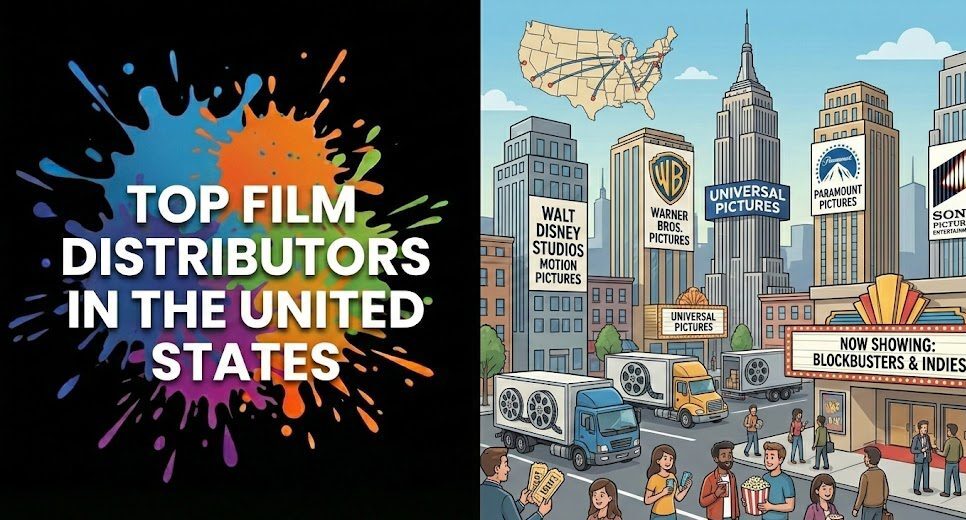
Top film distributors in the United States are the primary gatekeepers for content monetization, specializing in specific genres, platforms, and audience demographics.
Securing a deal with these entities involves aligning a film’s creative profile with a distributor’s rights specialization, ranging from theatrical blockbusters to niche digital streaming.
According to industry reports, while major studios still dominate box office revenue, independent and emerging distributors now control over 40% of the digital acquisition market.
In this guide, you’ll learn how to evaluate distributor specialties, leverage data for outreach, and adapt to the community-driven strategies of emerging indie players.
While traditional lists often focus on “The Big Five,” they frequently overlook the tactical specialties and emerging community-centric models that define today’s fragmented supply chain.
This comprehensive guide addresses those gaps by providing in-depth analysis of distributor portfolios and actionable frameworks for independent creators.

Your AI Assistant, Agent, and Analyst for the Business of Entertainment
VIQI AI helps you plan content acquisitions, raise production financing, and find and connect with the right partners worldwide.
- Find active co-producers and financiers for scripted projects
- Find equity and gap financing companies in North America
- Find top film financiers in Europe
- Find production houses that can co-produce or finance unscripted series
- I am looking for production partners for a YA drama set in Brazil
- I am looking for producers with proven track record in mid-budget features
- I am looking for Turkish distributors with successful international sales
- I am looking for OTT platforms actively acquiring finished series for the LATAM region
- I am seeking localization companies offer subtitling services in multiple Asian languages
- I am seeking partners in animation production for children's content
- I am seeking USA based post-production companies with sound facilities
- I am seeking VFX partners to composite background images and AI generated content
- Show me recent drama projects available for pre-buy
- Show me Japanese Anime Distributors
- Show me true-crime buyers from Asia
- Show me documentary pre-buyers
- List the top commissioners at the BBC
- List the post-production and VFX decision-makers at Netflix
- List the development leaders at Sony Pictures
- List the scripted programming heads at HBO
- Who is backing animation projects in Europe right now
- Who is Netflix’s top production partners for Sports Docs
- Who is Commissioning factual content in the NORDICS
- Who is acquiring unscripted formats for the North American market
Table of Contents
Key Takeaways for Independent Producers
-
Specialty-First Targeting: Producers must match their genre and budget with a distributor’s specific rights history to increase deal probability by over 70%.
-
Community-Driven Advantage: Emerging distributors like Watermelon Pictures use niche audience engagement to outperform traditional mass-marketing models for indie titles.
-
Data-Backed Discovery: Leveraging supply chain intelligence platforms allows sellers to identify active acquisition leads 5x faster than manual festival networking.
What are Film Distribution Specialties?
Film distribution specialties refer to the specific genres, budget ranges, and exhibition platforms (theatrical, streaming, FAST) where a distributor has proven expertise and market leverage. For independent producers, understanding these specialties is the difference between a generic rejection and a high-value acquisition deal.
Specialties are often defined by a distributor’s historical acquisition patterns and their relationships with exhibition partners. While a major studio might specialize in global theatrical tentpoles, a boutique distributor might focus on Ibero-American remakes or specific documentary sub-genres.
Find US distributors specializing in your film’s genre:
The Major US Distributors and Their Core Focus
The United States distribution landscape is anchored by massive conglomerates, yet their acquisition strategies are remarkably distinct. Understanding these nuances allows producers to position their projects as strategic assets rather than simple content listings.
1. The Walt Disney Studios: Franchise and Family Globalism
Disney remains the gold standard for global franchise distribution, focusing on established IP (Marvel, Star Wars, Pixar) and multi-quadrant family entertainment. Their strategy is increasingly defined by the “Weaponized Distribution” model, where content is curated for Disney+ while simultaneously leveraging theatrical windows for maximum ROI.
2. Warner Bros. Discovery: Pre-existing IP and Premium Episodic
Following the landmark $72 billion deal where Netflix acquired WBD’s studio assets, the focus has shifted toward high-concept blockbusters and premium HBO-style drama. They specialize in projects with significant cross-platform potential across theatrical and Max.
3. A24 and Neon: High-Concept Auteurism
These companies have redefined “indie” by specializing in auteur-driven, aesthetically unique projects that command “watercooler” conversation. Their strength lies in sophisticated marketing that transforms niche titles into cultural phenomena.
Industry Expert Perspective: Radial Entertainment: Forging a Content Distribution Giant
As the distribution market consolidates, new giants are emerging. This conversation with Garson Foos explores the merger of Shout! Studios and FilmRise to create a multi-platform powerhouse.
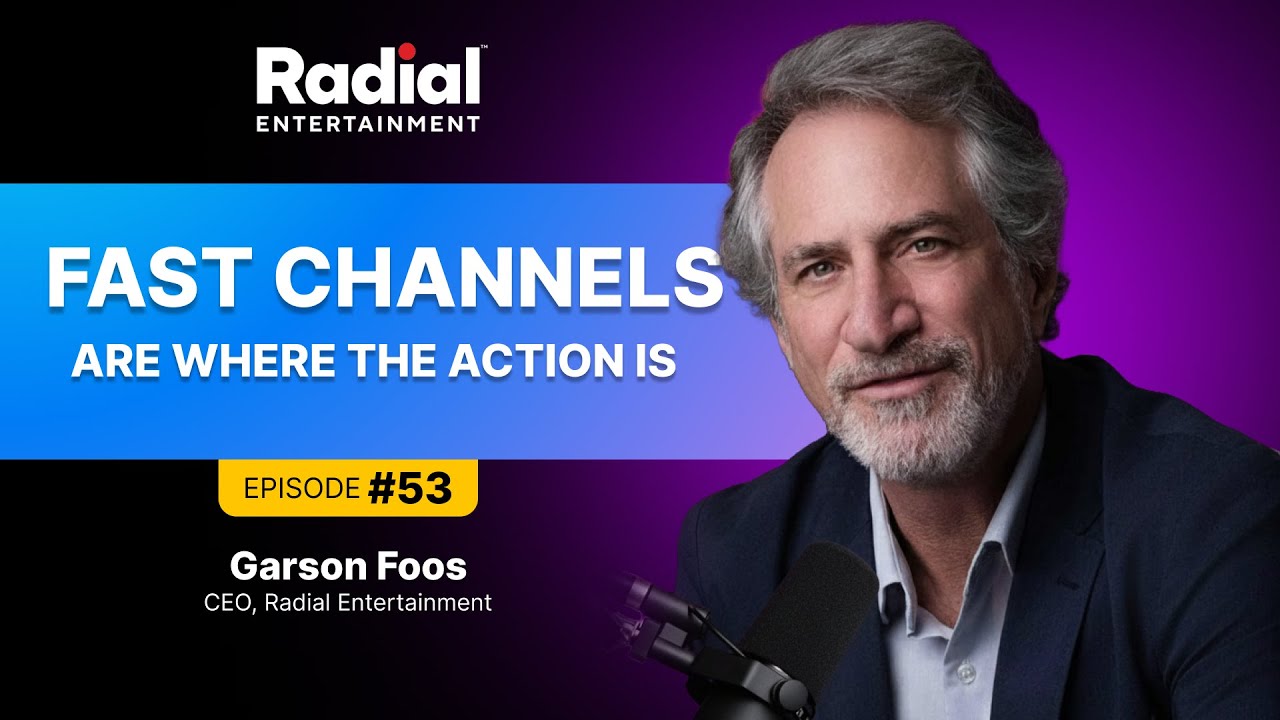
Garson Foos discusses the strategic merger of Shout! Studios and FilmRise, highlighting how combining diverse content libraries and platform expertise (from physical media to FAST channels) creates a robust distribution model for the modern era.
The Rise of Emerging Indie and Community Distributors
A significant market gap identified in the current landscape is the lack of coverage for emerging indie distributors. Companies like Watermelon Pictures and Cartuna x Dweck are reshaping the landscape by prioritizing community engagement and hyper-targeted audience building over traditional billboard-and-trailer marketing.
These “Community Distributors” leverage social media circles and niche cultural movements to ensure that independent films reach their most fervent supporters. This approach not only builds authoritativeness but also ensures that indie films can achieve financial sustainability without a massive theatrical ad spend.
Discover active indie distributors and their recent acquisitions:
How Do Producers Select the Right Distribution Partner?
Selecting a distributor requires a technical framework beyond just “who has the biggest check.” In 2025, producers must evaluate potential partners across four critical pillars: platform reach, marketing innovation, financial transparency, and rights management.
1. Audit the Catalog Alignment
The Challenge: Many producers pitch to distributors whose catalogs show no appetite for their specific sub-genre, resulting in a 95% rejection rate. The Approach: Use supply chain intelligence to audit a distributor’s last 24 months of acquisitions. If they haven’t acquired an action-thriller in two years, they likely aren’t your primary target.
2. Evaluate Social Proof and Community Engagement
In today’s digital landscape, a distributor’s ability to mobilize a niche community is more valuable than a generic PR firm. Audit their social media performance on recent titles: are they driving meaningful engagement or just posting trailers?
3. Leverage Data-Driven Outreach
Instead of cold emailing “info@” addresses, producers use platforms like Vitrina AI to identify the specific acquisition executives and their current commissioning mandates. This “Insider Advantage” scales your reach from a single network to the entire global supply chain.
Managing Distribution in a Fragmented Digital Market
The “Streaming Wars” have transitioned into an era of “Weaponized Distribution,” where rights are no longer exclusive to a single platform for their entire lifecycle. Producers now navigate a landscape of rotational windows, FAST channel licensing, and regional digital platforms.
This fragmentation creates a “data deficit” for executives. To solve this, Vitrina AI tracks 1.6 million titles and 140,000+ companies, providing a “digital lighthouse” for producers to see which distributors are actively licensing content to rivals like Amazon or Roku to maximize ARPU.
Analyze the latest US content acquisition and licensing trends:
Moving Forward
The independent film distribution landscape has shifted from relationship-dependent networking to data-driven specialty targeting. This guide addressed the critical gaps in understanding US distributor niches, the rise of community-centric indie players, and the tactical framework required for successful acquisition.
Whether you are an independent producer looking to secure your first distribution deal, or a distribution executive trying to source trending regional content, actionable intelligence is the primary driver of deal velocity.
Outlook: Over the next 12-18 months, platform fragmentation will accelerate, making “Weaponized Distribution” the standard. Producers who adopt supply chain intelligence now will position themselves as early adopters in a data-first market.
Frequently Asked Questions
Quick answers to the most common queries about US film distribution.
Who are the top film distributors in the United States?
How do I find a specialty distributor for my indie film?
What is a community-driven distributor?
Does Netflix acquire indie films from US producers?
What is “Weaponized Distribution”?
How can Vitrina AI help independent producers?
Are US film distributors looking for foreign language content?
What genres are currently most popular with US distributors?
“The distribution model that worked five years ago—festival premieres followed by traditional sales agent representation—no longer serves independent creators in a direct-to-platform era. Producers who understand how to leverage data intelligence to identify and engage the right buyers are securing deals 60-90 days faster than peers using legacy methods.”
About the Author
Atul Phadnis is the Founder and CEO of Vitrina AI and a media-tech veteran with over 20 years of experience in entertainment metadata. Formerly the Chief Content Officer at Gracenote, he leads the charge in industrializing the entertainment supply chain through vertical AI. Connect on Vitrina.