About Innovation Hub
 Global Content Pulse (Webinars)


 Global Production Financing
(Webinars)
Global Production Financing
(Webinars)  LeaderSpeak Podcast
  About Vitrina
 Our Story
 Our Solutions 🔥
 Film+TV Projects Tracker 🚀
 Case Studies
 Our Profile
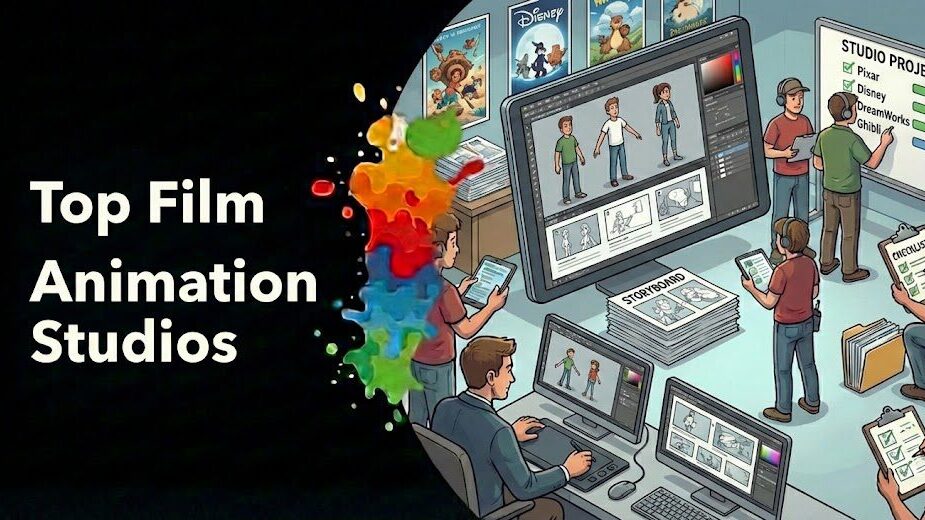
Every frame of a great animated film represents hundreds of decisions you’ll never see—and thousands of hours of work you’ll never fully appreciate unless you know what to look for. The top film animation studios in the world aren’t just creative shops. They’re extraordinarily complex production machines that blend artistic direction, technical engineering, financial architecture, and supply chain logistics into something that looks, to an audience, like effortless magic.
But here’s what’s actually happening behind that magic in 2026: the global animation market has surpassed $350 billion, streaming platforms are commissioning animated content at an unprecedented pace, and the production geography has shifted dramatically. It’s not just Hollywood anymore. Sovereign Content Hubs in India, Saudi Arabia, and South Korea are building full animation ecosystems backed by government capital—and they’re not servicing Western studios. They’re competing with them.
This guide takes you inside the production realities, business models, and strategic decisions that separate the studios producing blockbusters from the ones producing noise. Whether you’re sourcing an animation partner, evaluating co-production opportunities, or tracking where the global pipeline is heading, you’ll find the real picture here.
Ask VIQI: Which film animation studios are actively co-producing in 2026?
VIQI is Vitrina’s AI assistant—trained on 1.6 million titles, 360,000 companies, and 5 million entertainment professionals. Ask targeted questions about studio capabilities, co-production openings, project pipelines, and financing structures. Get intelligence that’s actually current.
✓ 200 free credits included | ✓ No credit card required
How the Animation Production Pipeline Actually Works
The thing that surprises most people when they look under the hood of a major animated feature? It takes 4 to 6 years from initial concept to theatrical release. Disney’s typical production cycle runs longer than that. Pixar’s development process is legendary for the number of complete story overhauls a film might go through before a single frame is approved for render. That’s not inefficiency—it’s the price of excellence at scale.
The pipeline breaks into three broad phases that every serious studio operates, though how they structure each phase reveals a lot about their creative and commercial priorities.
Development: Where Most Films Actually Die
Concept development at the top studios isn’t a committee process—it’s a sustained internal R&D operation. Pixar maintains development teams working on 8 to 12 projects at any given time, knowing that only 2 or 3 will survive to greenlight. The famous “Braintrust” model—where a group of senior creatives reviews and challenges story logic iteratively—has been adopted in various forms by DreamWorks, Sony Pictures Animation, and Illumination. It’s expensive. But it’s also why their batting average on quality is higher than their competitors’.
Pre-production covers everything from character design, world-building, and storyboarding to voice casting, music direction, and early production design. This is where the capital stack starts being built, too. Major theatrical animations typically assemble their financing during pre-production—combining studio P&A commitments, territory pre-sales, and in some cases, co-production arrangements with international partners who bring either tax incentive capital or distribution guarantees.
Production: The Technical Monster
Modern CG animation production means running a coordinated machine involving hundreds of specialized artists working in parallel across departments—character animation, lighting, effects simulation, environment creation, rigging, and compositing—all coordinating across render pipelines that consume millions of compute hours. A single frame of a Pixar feature can take 200+ compute hours to render at full quality.
This is also where studios’ technical differentiation becomes commercially relevant. Illumination, under Chris Meledandri, built an entire competitive advantage around a leaner production model—running theatrical animation budgets at $80–100 million versus Disney’s typical $150–200 million. The result? Despicable Me 4 generated $969 million at the global box office in 2024, according to Variety, on a budget that made the ROI profile significantly more attractive than a comparably-performing Disney theatrical. Efficiency matters.
Post-Production and Distribution: The Recoupment Clock Starts
Post covers final compositing, color grading, sound design, musical scoring, localization (now covering 30+ language versions for global theatrical releases), and delivery. But smart studios don’t wait for post to start working the distribution pipeline. Your theatrical window, streaming licensing terms, home entertainment deals, and merchandise partnerships should all be in motion well before delivery—ideally before production starts. The recoupment clock starts ticking from greenlight, not from release.

Your AI Assistant, Agent, and Analyst for the Business of Entertainment
VIQI AI helps you plan content acquisitions, raise production financing, and find and connect with the right partners worldwide.
- Find active co-producers and financiers for scripted projects
- Find equity and gap financing companies in North America
- Find top film financiers in Europe
- Find production houses that can co-produce or finance unscripted series
- I am looking for production partners for a YA drama set in Brazil
- I am looking for producers with proven track record in mid-budget features
- I am looking for Turkish distributors with successful international sales
- I am looking for OTT platforms actively acquiring finished series for the LATAM region
- I am seeking localization companies offer subtitling services in multiple Asian languages
- I am seeking partners in animation production for children's content
- I am seeking USA based post-production companies with sound facilities
- I am seeking VFX partners to composite background images and AI generated content
- Show me recent drama projects available for pre-buy
- Show me Japanese Anime Distributors
- Show me true-crime buyers from Asia
- Show me documentary pre-buyers
- List the top commissioners at the BBC
- List the post-production and VFX decision-makers at Netflix
- List the development leaders at Sony Pictures
- List the scripted programming heads at HBO
- Who is backing animation projects in Europe right now
- Who is Netflix’s top production partners for Sports Docs
- Who is Commissioning factual content in the NORDICS
- Who is acquiring unscripted formats for the North American market
North America’s Dominant Film Animation Studios
Let’s be direct: the four studios below set the technical and commercial benchmarks that every other animation operation globally is measured against. That’s not arrogance—it’s market reality. But as you’ll see shortly, that dominance is being challenged from directions that weren’t visible five years ago.
Walt Disney Animation Studios & Pixar
The two studios operate with distinct identities—Disney Animation handling the franchise-scale theatrical tentpoles, Pixar maintaining its original IP-first philosophy—but share infrastructure, technology (RenderMan is still the industry’s leading render engine), and distribution under Disney. Disney’s streaming segment generated $2.9 billion in operating income in fiscal year 2024, with animation IP driving a disproportionate share of that through merchandise, parks, and licensing. The real competitive moat here isn’t artistic—it’s the IP flywheel. A film like Frozen or Encanto is worth more as a franchise engine than as a theatrical release.
DreamWorks Animation (NBCUniversal/Peacock)
DreamWorks has completed its pivot to a streaming-first model under NBCUniversal’s ownership—building its pipeline around Peacock originals while maintaining theatrical presence for franchise properties. The Puss in Boots and How to Train Your Dragon franchises remain anchor IP. The studio’s strength is in genre range: it’s more willing to take tonal risks than Disney, which makes it a more interesting co-production partner for projects that don’t fit the Disney aesthetic.
Illumination (Universal Pictures)
Don’t mistake Illumination’s lower budgets for lower ambition. The studio’s capital-efficient production model—anchored in its Paris-based facility run in partnership with Universal—has produced some of the highest-ROI animated films in history. The Despicable Me franchise alone has generated over $4 billion in global box office. Chris Meledandri’s thesis—that audiences respond to character and humor more than technical spectacle—has been validated repeatedly in the numbers.
Jayakumar P, CEO at Toonz Media Group, discusses how one of Asia’s leading film animation studios is navigating AI integration, market expansion, and the shift in global demand for animated content.
Europe’s Film Animation Studios: Creative Heritage Meets Tax Incentive Capital
Europe’s animation sector isn’t trying to beat Hollywood at its own game—and that’s exactly why it wins at a different game entirely. The studios here combine genuine creative distinctiveness with some of the world’s most structurally advantageous tax incentive frameworks. If you’re building a co-production capital stack and haven’t modeled European animation partners into it, you’re leaving soft money on the table.
You’ll find a full strategic buyer’s guide to sourcing global animated content across Vitrina’s resources—but here are the three European studios whose business models are most instructive for anyone serious about international co-production.
Aardman Animations (UK)
Nick Park’s studio isn’t just culturally iconic—Wallace & Gromit, Chicken Run, Shaun the Sheep—it’s a masterclass in IP longevity management. Aardman has maintained creative and commercial relevance across four decades by keeping its production model deliberately human-scale: stop-motion and handcrafted CG that can’t be replicated by larger studios playing the volume game. Their Netflix and Apple TV+ partnership deals demonstrate the continuing premium buyer interest in distinctive animation aesthetic. UK’s 40% HETV tax relief makes them a highly compelling co-production target for qualifying international partners.
Cartoon Saloon (Ireland)
Five Academy Award nominations for a studio based in Kilkenny. Paul Young and Tomm Moore have built an operation that punches so far above its size that it’s become a case study in how creative vision translates to premium valuation. Wolfwalkers, The Breadwinner, The Secret of Kells—each positioned as a theatrical event rather than a content play. Ireland’s Section 481 tax credit (up to 32% of qualifying expenditure) plus MEDIA Programme funding creates a stacked incentive structure that makes Irish co-production genuinely competitive.
Mediawan Kids & Family (France)
Volume and versatility define Mediawan’s animation offering—delivering 400+ hours of animated content annually for Canal+, France Télévisions, Netflix, and international broadcasters. France’s 25% tax rebate on international productions combined with Canal+ pre-buy infrastructure makes the French co-production model one of the most financially structured entry points into European animation.
Discover Which Animation Studios Are Actively Co-Producing Right Now
Trusted by Netflix, Warner Bros, Paramount, and Google TV. Vitrina tracks 400,000+ active projects and 140,000+ production companies—with real-time capability data, current pipeline status, and co-production openings you won’t find in the trades.
✓ 200 free credits | ✓ No credit card required | ✓ Full platform access
Japan’s Film Animation Studios: The Aesthetic Standard and the Capacity Gap
Japanese animation studios occupy a unique position in the global market: they produce the most culturally influential animation on the planet—and they can’t meet the global demand for it. That supply-demand gap is both a challenge and a business opportunity, depending on how you’re positioned.
Toei Animation
Dragon Ball, One Piece, Sailor Moon. The IP portfolio alone tells you what Toei Animation represents—an animation house with a direct line to the foundational mythology of global anime fandom. Their 2025 launch of the Eterna brand signals a deliberate push toward premium theatrical animation targeting global adult audiences, not just the episodic TV model that built the company. According to The Hollywood Reporter, the global anime market is generating over $25 billion annually in direct IP revenue, with licensing and merchandise representing the bulk of that. Toei’s IP depth is almost incalculably valuable in that context.
Studio Ghibli
Following Nippon TV’s acquisition, Studio Ghibli operates with a level of institutional stability it’s never previously had—and a mandate to continue the work of Hayao Miyazaki on Miyazaki’s own terms. The Boy and the Heron grossed $182 million globally in 2024, winning the Academy Award for Best Animated Feature. But the more strategically interesting number is what the Ghibli back catalog generates through streaming licensing—particularly the ongoing Netflix deal covering all catalog titles outside North America. That’s a recurring revenue engine from IP created 30 years ago. That’s the animation ROI profile that smart producers are trying to replicate.
Sovereign Content Hub Animation Studios: The New Power Centers
Here’s the part of the animation market that most industry lists don’t cover with the seriousness it deserves: the Sovereign Content Hubs are building animation ecosystems that aren’t designed to service Hollywood—they’re designed to compete with it. Government-backed capital, aggressive tax incentive regimes, and a clear strategic mandate to own IP and export culture are creating animation operations in India, Saudi Arabia, and South Korea that will look very different in 2030 than they do today.
The Fragmentation Paradox hits especially hard in these markets. There are 600,000+ companies operating globally in the film and TV ecosystem—including thousands of animation studios in India and Southeast Asia alone—and producers operating from relationship-only networks are touching less than 1% of the available co-production and service options. That information deficit costs them 15–20% margin in inflated service pricing, and 3–6 months in deal cycle extension. The studios below are worth knowing specifically. But the broader market requires real-time intelligence to navigate.
The full landscape of global animation studio directories has expanded significantly as these hubs have scaled—which means the gap between what your existing network knows and what the market actually contains is wider than ever.
Toonz Media Group (India)
Toonz is one of the most strategically significant animation studios you’re not giving enough credit to. India’s federal animation incentive increased to 40% in 2024—and Toonz, with its 4,000+ minutes of animation produced annually out of its Thiruvananthapuram facility, is positioned at the center of India’s international co-production pipeline. As Jayakumar P, CEO of Toonz Media Group, noted in his Vitrina LeaderSpeak interview: the integration of AI tools across production is compressing timelines while the studio actively pursues cross-border collaboration deals that weren’t structurally possible five years ago. The preschool audience segment is their core commercial strength—but the studio’s service capabilities extend well into premium theatrical CG.
Manga Productions (Saudi Arabia)
Vision 2030 didn’t just build cinemas—it funded the creation of Saudi IP. Manga Productions, backed by Saudi Arabia’s $71.2 billion entertainment sector investment, is the flagship animation studio of that mandate. The Journey (2021) was the first major Saudi animated theatrical release; it won’t be the last. The studio’s 40% cash rebate structure—one of the most generous in the world—creates compelling co-production economics for international partners willing to bring their IP into a Saudi story. This is patient government capital, not quarterly earnings pressure. That changes the deal structure conversation entirely.
Triggerfish Animation Studios (South Africa)
Stuart Forrest’s Cape Town studio proved something important with Kizazi Moto: Generation Fire on Netflix: African stories, told by African creators, find global audiences when given the distribution infrastructure to reach them. Triggerfish operates as one of the continent’s leading full-service animation houses—and its Netflix relationship has created a template that other African animation studios are now working to replicate. Watch this space for the next African animated IP breakout.
How AI Is Reshaping the Film Animation Studio Model
Every studio is dealing with this. The question isn’t whether to integrate AI—it’s how to do it without creating IP liability that blocks distribution financing or triggers completion bond complications.
AI-assisted pre-production is compressing timelines by 30–40% across studios that have implemented it seriously. Concept art generation, storyboard iteration, and rough animatic production that previously took weeks can now cycle in days. That’s not replacing artists—it’s accelerating the development phase where most animation projects stall or die.
South Korea’s CJ ENM has been publicly targeting a 30% cost reduction in animation production through AI integration. Japanese studios face a more complex calculus: anime’s aesthetic is intrinsically tied to human artistic expression, and audience sensitivity to AI-generated visual elements is measurably higher in that genre than anywhere else. Any studio that moves too aggressively on AI animation automation in anime risks destroying the brand equity it spent decades building.
The Authorized AI framework is the key risk-management concept here. Productions using AI tools without verified licensing protocols for training data are creating chain-of-title exposure that will surface at the distribution deal stage. Studios structuring AI-assisted production with proper IP authorization are building a competitive advantage—not just creatively, but financially. You can explore how innovative animation companies are building AI into their production models with that lens.
Need a Specific Animation Studio Partner? Vitrina Concierge Finds Them in 48 Hours.
Skip the months of relationship-building and relationship-guessing. Vitrina Concierge makes warm introductions directly to verified studio decision-makers matched to your specific project needs.
- LA producer → Netflix UK, Fifth Season & Fox Entertainment (48 hours)
- Middle Eastern IP → Legendary Pictures (direct access)
- Animation brief → Verified shortlist of co-production-ready studios
Frequently Asked Questions
What are the top film animation studios in the world in 2026?
The leading film animation studios globally include Walt Disney Animation Studios, Pixar, DreamWorks Animation, Illumination, Studio Ghibli, Toei Animation, Aardman Animations, Cartoon Saloon, Toonz Media Group, and several emerging powerhouses backed by Sovereign Content Hub investment in Saudi Arabia (Manga Productions), India, and South Korea. The landscape is shifting rapidly as government-backed studios in these regions build genuine production infrastructure and IP libraries.
How long does it take to make an animated feature film?
Major theatrical animated features typically require 4 to 6 years from initial concept to theatrical release—sometimes longer for studios like Pixar with extensive development iteration processes. This timeline covers concept development (often 1–2 years), pre-production including storyboarding and voice casting (1–2 years), full production (1–2 years), and post including localization, scoring, and delivery (6–12 months). Streaming-first animated series can move faster, but still typically require 18–36 months from greenlight to delivery.
What makes Illumination’s animation model different from Disney and Pixar?
Illumination, under CEO Chris Meledandri, built a deliberately capital-efficient production model—running animated feature budgets at $80–100 million versus Disney and Pixar’s typical $150–200 million. The studio’s Paris-based facility partnership with Universal reduces overhead costs, and their creative thesis prioritizes character comedy and accessibility over technical spectacle. The result: franchises like Despicable Me generate extraordinary ROI because the revenue-to-budget ratio is structurally more favorable. It’s not a lesser model—it’s a different strategic bet on what drives audience loyalty.
How is AI changing film animation studio production in 2026?
AI is most actively reshaping pre-production, compressing concept art, storyboard iteration, and animatic development timelines by 30–40% in studios that have implemented it seriously. South Korea’s CJ ENM is targeting a 30% cost reduction in animation production through AI integration. The critical risk-management challenge is ensuring AI tools operate within an “Authorized AI” framework—with verified training data licensing—to protect chain-of-title integrity and maintain insurability for completion bonds. Studios that get this right gain a structural advantage; studios that don’t face distribution deal complications.
What is a Sovereign Content Hub and why does it matter for animation?
Sovereign Content Hubs are territories where government-backed capital—sovereign wealth funds, state incentives, infrastructure investment—creates vertically-integrated production ecosystems that compete with traditional Western studios rather than servicing them. For animation, Saudi Arabia’s $71.2 billion entertainment sector investment (with a 40% cash rebate), India’s 40% federal incentive, and South Korea’s KOFIC support structure are creating animation operations with patient capital, no quarterly earnings pressure, and a strategic mandate to build exportable IP. These aren’t “emerging markets.” They’re operational hubs reshaping where animation IP gets created and owned.
How do I find the right film animation studio for a co-production?
The challenge with finding the right animation studio isn’t the number of options—it’s the quality of available intelligence. 600,000+ companies operate in the global film and TV ecosystem, and relationship-dependent sourcing means most producers evaluate less than 1% of available options. Vitrina’s platform maps 140,000+ active production companies with verified capabilities, current project pipelines, and co-production openings. VIQI, Vitrina’s AI assistant, can answer specific queries like “animation studios with verified kids’ content capability currently in development with Netflix.” Start with 200 free credits at app.vitrina.ai to run targeted searches without commitment.
What Separates the Studios That Last From the Ones That Fade
The magic behind the world’s best film animation studios isn’t really magic at all. It’s discipline—in story development, production efficiency, IP management, and market intelligence. Disney’s IP flywheel works because decades of disciplined franchise stewardship created something that generates revenue independently of any single film’s performance. Illumination’s model works because Chris Meledandri made a deliberate bet that efficiency and accessibility beat spectacle—and proved it at the box office. Cartoon Saloon’s model works because Tomm Moore and Paul Young built creative distinctiveness that commands premium positioning across global buyers.
And the Sovereign Content Hubs? They work because patient government capital makes long-term IP building possible in markets where quarterly earnings pressure would kill it before it had time to compound.
Key Takeaways:
- Market Scale: The global animation market exceeds $350 billion—but the real value lives in IP that generates recurring licensing, merchandise, and streaming revenue, not just theatrical receipts.
- Production Efficiency: Illumination’s $80–100M budget model versus Disney’s $150–200M proves that efficiency and quality aren’t mutually exclusive—and the ROI difference is material to EBITDA.
- Sovereign Hubs Are Operational: India’s 40% federal incentive, Saudi Arabia’s 40% cash rebate, and South Korea’s KOFIC support are reshaping where animation IP gets created and who owns it.
- AI Integration Is a Competitive Differentiator: Studios using Authorized AI pipelines gain 30–40% pre-production timeline compression without the IP liability exposure that could block distribution financing.
- Intelligence Beats Relationships: The Fragmentation Paradox means 600,000+ global suppliers create opacity that costs producers 15–20% margin. Real-time verified intelligence—not relationship networks—is the competitive advantage in 2026.
Access Real-Time Intelligence on the World’s Top Film Animation Studios
Trusted by Netflix, Warner Bros, Paramount, and Google TV. Track 400,000+ projects. Access 3 million verified entertainment executives. Ask VIQI targeted questions about studio pipelines, co-production availability, and animation market intelligence.
✓ 200 free credits | ✓ No credit card required | ✓ Cancel anytime
Find Film+TV Projects, Partners, and Deals – Fast.
VIQI matches you with the right financiers, producers, streamers, and buyers – globally.
Producers Seeking Financing & Partnerships?
Book Your Free Concierge Outreach Consultation
(To know more about Vitrina Concierge Outreach Solutions click here)
Producers Seeking Financing, Co-Pros, or Pre-Buys?
Vitrina Concierge helps producers reach the right financiers, commissioners, distributors, and co-production partners — with precision outreach, not cold pitching.
Join Industry Briefings Trusted by Leaders
Streamers – Netflix vs. Amazon – The 2026 Strategy
How Netflix and Amazon’s content and revenue strategies are diverging ahead of 2026.

Format Adaptations: Global Trends
Where formats are traveling, which adaptations are breaking out, and how streamers are backing remakes in 2025–2026.

Books, Novels & Comics Adaptations: Global Trends
Books, webtoons, and manga driving the next global screen hits. Discover how in this webinar.