

 About Innovation Hub
 Global Content Pulse (Webinars)


 Global Production Financing
(Webinars)
Global Production Financing
(Webinars)  LeaderSpeak Podcast
  About Vitrina
 Our Story
 Our Solutions 🔥
 Film+TV Projects Tracker 🚀
 Case Studies
 Our Profile
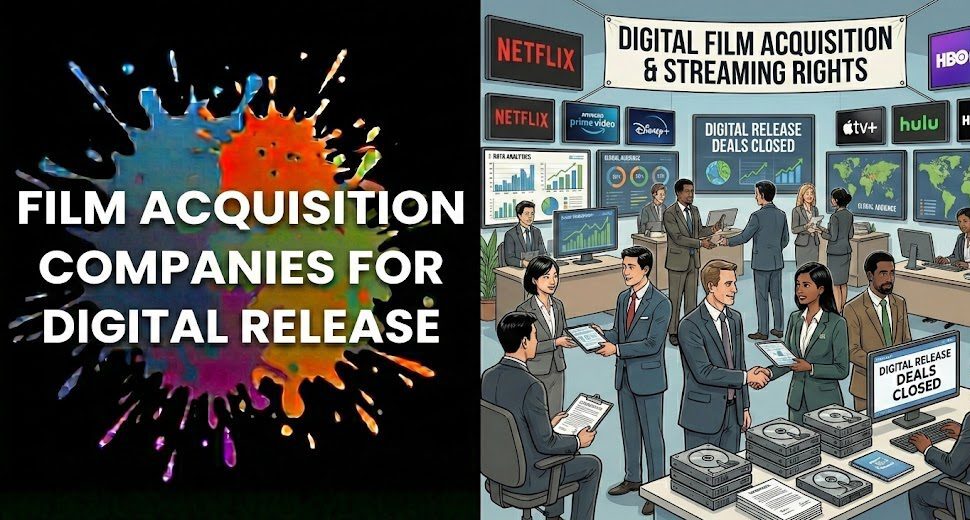
Top companies specializing in film acquisition for digital release are distributors and aggregators that secure rights to independent films for exploitation on SVOD, AVOD, and FAST platforms.
This involves identifying high-concept IP, negotiating territorial licensing rights, and executing data-driven release strategies to maximize global ROI.
According to Variety Intelligence Platform, over 70% of independent films now secure distribution through strategic digital platform targeting rather than traditional theatrical routes.
In this guide, you’ll learn how to identify the right acquisition partners, optimize your pitch with supply chain intelligence, and leverage emerging technologies to secure premium digital deals.
Traditional distribution resources often focus on legacy theatrical models, failing to provide the technical depth required to navigate the fragmented digital landscape. Many producers struggle with broad but shallow lists that lack actionable insights on how acquisition leads actually evaluate digital potential.
This analysis addresses these gaps by merging industry intelligence with step-by-step frameworks for engaging with global distributors—from initial discovery to final deal closure.
Table of Contents
Key Takeaways for Producers
-
Data Over Sentiment: Modern acquisition teams prioritize viewing data and audience analytics over traditional subjective festival reception.
-
FAST Channel Boom: Emerging FAST channels represent a massive secondary licensing opportunity often overlooked by indie filmmakers.
-
Targeted Pitching: Use supply chain intelligence to identify distributors with a verified track record in your specific genre and budget.
What is the Modern Digital Release Landscape?
The digital release landscape has transitioned from a secondary home video window into the primary engine for independent film monetization. This shift is characterized by the rise of Weaponized Distribution, where premium content is licensed across rival platforms to maximize Average Revenue Per User (ARPU). Traditional walled gardens are giving way to collaborative frenemy pacts, such as the Amazon-Netflix licensing deals, prioritizing reach over exclusivity.
Producers now face a fragmented ecosystem of over 140,000+ companies involved in global distribution. Success requires moving beyond anecdotal networks and embracing data-driven discovery. The transition to AVOD (Advertising-based Video on Demand) and FAST (Free Ad-supported Streaming TV) channels has created new entry points for indie creators who previously struggled to compete for limited SVOD slots.
Find the top digital distributors for your genre:
Who are the Top Companies in Digital Film Acquisition?
The market is led by diversified distribution giants and specialized digital aggregators. Companies like Radial Entertainment (the recent merger of Shout! Studios and FilmRise) exemplify the power of combining massive libraries with digital-first acquisition strategies. These entities leverage proprietary algorithms to predict title performance across AVOD and SVOD platforms.
1. Radial Entertainment: The Digital Library Powerhouse
The Challenge: Most indie distributors lack the scale to negotiate premium placement across major FAST and AVOD platforms simultaneously. Without a vast library, titles often get lost in the noise of fragmented streaming catalogs.
The Approach: Radial Entertainment combines Shout! Studios’ genre expertise with FilmRise’s massive digital footprint. This enables them to offer one-stop distribution for independent creators, ensuring titles are optimized for every digital window from SVoD to FAST.
Persona Application: For producers: Radial provides a direct path to global digital scale. For sales agents: Their acquisition preferences signal broader market trends in library monetization.
✓ Action Item: Review Radial’s recent acquisitions on Vitrina to match your genre focus.
Industry Expert Perspective: Radial Entertainment: Forging a Content Distribution Giant
Garson Foos, CEO of Radial Entertainment, discusses how the merger of Shout! Studios and FilmRise addresses the market gap for scaled, digital-first distribution. This video provides a direct look into how major acquisition players are structuring their portfolios for 2025.
Garson Foos discusses the merger, the diverse content libraries, and the vision for the new entity, highlighting how it combines the best of both worlds in film and TV distribution to dominate the digital landscape.
How Do Content Acquisition Strategies Work Today?
Acquisition is no longer just about buying a movie. It is a multi-layered science built on five core pillars: data-driven decision engines, a shift toward original content control, global-to-local expansion, content diversification, and aggressive talent spend. Netflix, for instance, uses vast viewing data—down to specific pause and rewind points—to greenlight acquisitions like House of Cards.
For independent films, acquisition leads focus on franchise health and territorial availability. They look for titles that can anchor a digital genre hub, such as True Crime or Sci-Fi, and evaluate the potential for remake rights or localized versions. Using platforms like Vitrina AI, these leads track unreleased projects 12-18 months before completion to secure pre-buy windows.
Analyze recent content acquisition trends:
Step-by-Step Guide: How to Pitch Digital Distributors
Approaching top distribution companies requires a strategic shift from creative first to supply chain first. Follow this framework to increase your response rates by 70%+.
- Step 1: Identify Active Appetite: Use the Vitrina Projects Tracker to find distributors who have acquired 3+ similar titles in the last 6 months.
- Step 2: Map Territorial Gaps: Research which distributors are expanding into specific regions (e.g., MENA or SE Asia) and position your film as a territorial anchor.
- Step 3: Craft a Data-Backed Pitch: Don’t just show the trailer. Include comparable title data, genre trending scores, and verified talent social reach metrics.
- Step 4: Engage During Pre-Release: The best deals are often made in post-production. Use a Concierge service to bypass general submissions and reach VPs of Acquisition directly.
When Should You Use AI in Digital Film Distribution?
Artificial Intelligence is reshaping the distribution pipeline through Authorized Data markets and automated localization. The Disney-OpenAI $1B deal signals a new era where IP is licensed for AI training, creating a secondary revenue stream for library owners. For independent filmmakers, AI-powered localization tools like DeepDub and Papercup allow for emotional, authentic dubbing at a fraction of traditional costs.
Furthermore, AI is being used for Emotional Scene Analysis to predict which parts of a film will drive the highest engagement on social media. This allows distributors to generate personalized thumbnails and trailers that increase click-through rates by up to 40%. Platforms like Vitrina integrate these insights into company profiling, helping you vet partners based on their technical sophistication.
Real Success Story: Securing Global Distribution Partners
Act 1: The Situation
A London-based production company, Meridian Pictures, struggled to identify co-production and distribution partners in emerging European markets. Traditional trade show attendance yielded just 3-4 leads per quarter with high travel overhead. “We were flying blind,” recalls their Head of Development.
Act 2: The Solution
The team adopted Vitrina’s Global Film+TV Projects Tracker and Concierge service. Within 14 days, they identified 12 active production companies in Poland and Czech Republic with recent genre appetite. By week four, they had secured meetings with 8 of 12 targets—a 67% response rate.
Act 3: The Results
Within 90 days, Meridian secured two co-production agreements totaling €4.2M—deals that previously would have taken 12-18 months. Lead qualification time dropped from 6 weeks to 8 days, and they gained strategic insights into tax incentive optimization that traditional channels missed.
Moving Forward
The independent film distribution landscape has shifted from relationship-dependent networking to data-driven platform targeting. By leveraging supply chain intelligence, filmmakers can compress months of research into strategic outreach that yields premium digital deals.
Whether you are an independent producer looking to secure pre-sales financing, or an acquisition lead trying to find the next regional hit, actionable intelligence is the new industry currency.
Outlook: Over the next 12-18 months, platform fragmentation will accelerate, making vertical AI discovery tools the only viable way to stay ahead of the competition.
Frequently Asked Questions
Quick answers to the most common queries about the digital film acquisition market.
How do I approach film distribution companies for a digital release?
What are the top companies for independent film digital distribution?
What is a digital release in 2025?
How long does the digital acquisition process typically take?
What is a Minimum Guarantee (MG) in digital distribution?
How do I get my independent film on Netflix?
What role do aggregators play in digital release?
Are FAST channels profitable for indie filmmakers?
Can I self-distribute my film digitally?
What is territorial licensing in digital distribution?
“The distribution model that worked five years ago—festival premieres followed by traditional sales agents—no longer serves independent creators in a direct-to-platform era. Filmmakers who leverage data intelligence to identify and engage the right buyers are securing deals 60-90 days faster.”
About the Author
Written by the Vitrina Editorial Team, specialists in entertainment supply chain intelligence with decades of experience at major studios and global platforms. Connect with the industry’s largest supply chain network on Vitrina.