About Innovation Hub
 Global Content Pulse (Webinars)


 Global Production Financing
(Webinars)
Global Production Financing
(Webinars)  LeaderSpeak Podcast
  About Vitrina
 Our Story
 Our Solutions 🔥
 Film+TV Projects Tracker 🚀
 Case Studies
 Our Profile
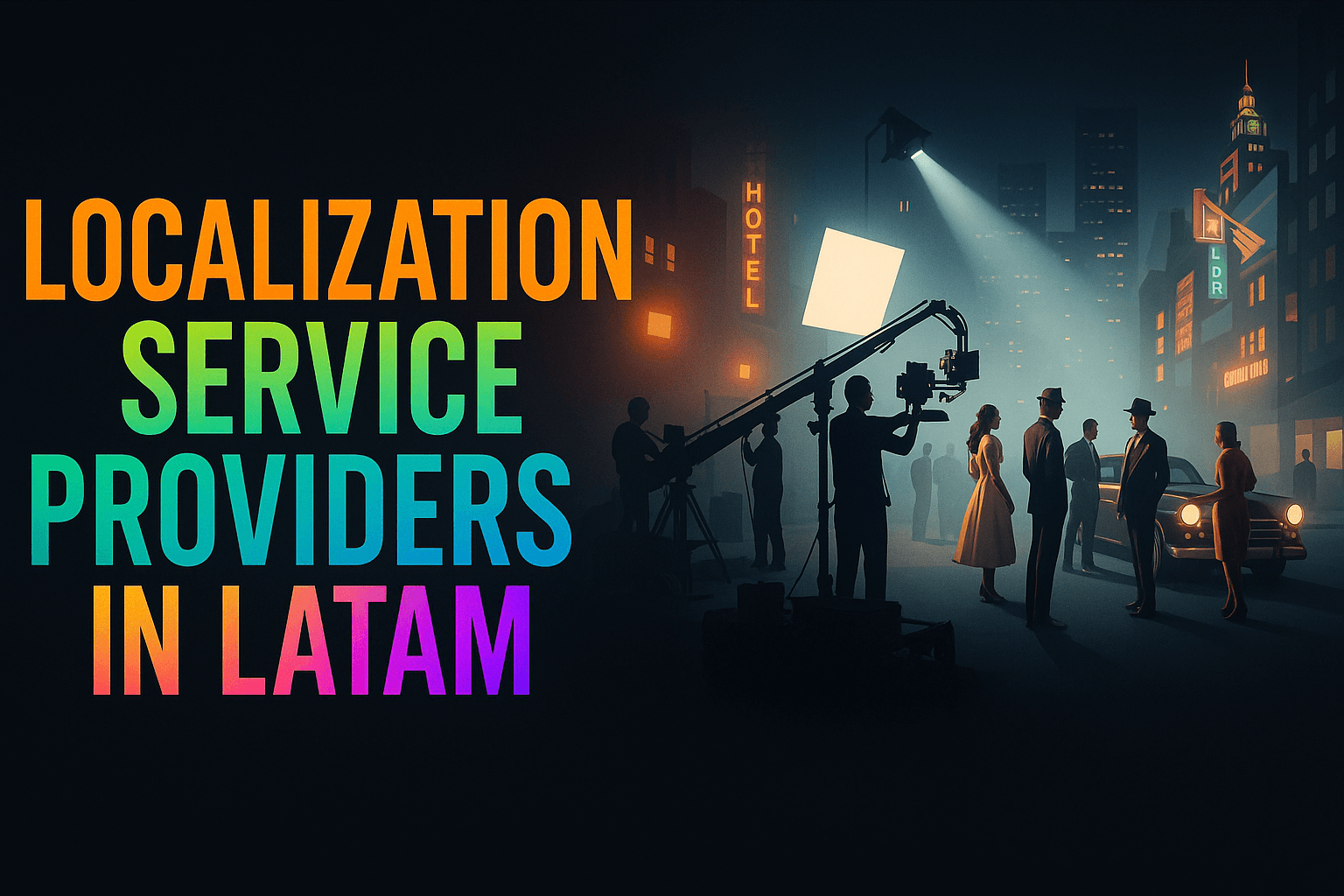
LATAM localization is the strategic process of adapting global film and television content for Latin American audiences through professional dubbing, subtitling, and cultural versioning.
This involves managing multi-territory rights, coordinating with regional voice-over talent, and ensuring linguistic nuances align with local audience expectations across 20+ countries.
According to recent industry data, the Latin American entertainment market reached 130 million OTT subscribers in 2024, driving a 40% increase in demand for high-quality Spanish and Portuguese localization.
In this guide, you will learn how to identify high-tier vendors, vet technical infrastructure, and leverage supply chain intelligence to compress vendor discovery from months to days.
While traditional sourcing relies on fragmented directories and manual outreach, executives often struggle with a lack of visibility into vendor track records and real-time capacity.
This comprehensive guide addresses those gaps by providing a data-driven framework for vetting LATAM providers, ensuring your global content resonates with the region’s diverse cultural landscape.

Your AI Assistant, Agent, and Analyst for the Business of Entertainment
VIQI AI helps you plan content acquisitions, raise production financing, and find and connect with the right partners worldwide.
- Find active co-producers and financiers for scripted projects
- Find equity and gap financing companies in North America
- Find top film financiers in Europe
- Find production houses that can co-produce or finance unscripted series
- I am looking for production partners for a YA drama set in Brazil
- I am looking for producers with proven track record in mid-budget features
- I am looking for Turkish distributors with successful international sales
- I am looking for OTT platforms actively acquiring finished series for the LATAM region
- I am seeking localization companies offer subtitling services in multiple Asian languages
- I am seeking partners in animation production for children's content
- I am seeking USA based post-production companies with sound facilities
- I am seeking VFX partners to composite background images and AI generated content
- Show me recent drama projects available for pre-buy
- Show me Japanese Anime Distributors
- Show me true-crime buyers from Asia
- Show me documentary pre-buyers
- List the top commissioners at the BBC
- List the post-production and VFX decision-makers at Netflix
- List the development leaders at Sony Pictures
- List the scripted programming heads at HBO
- Who is backing animation projects in Europe right now
- Who is Netflix’s top production partners for Sports Docs
- Who is Commissioning factual content in the NORDICS
- Who is acquiring unscripted formats for the North American market
Table of Contents
- 01
What is the LATAM Localization Landscape in 2025? - 02
Why Do Executives Prioritize Latin America for Nearshore Services? - 03
How Do You Vet High-Quality Localization Studios in LATAM? - 04
The Biggest Challenges in Sourcing LATAM Localization (Solved) - 05
How Vitrina AI Simplifies Regional Partner Discovery - 06
Key Takeaways - 07
FAQ
Key Takeaways for Content Executives
-
Market Maturity: The LATAM localization sector has transitioned from fragmented studios to data-driven hubs capable of enterprise-scale dubbing and subtitling.
-
Nearshore Advantage: Executives prioritize LATAM for nearshore localization due to significant time-zone alignment and creative talent availability at competitive price points.
-
Vetting Intelligence: Utilizing global supply chain platforms like Vitrina allows buyers to verify vendor track records and territorial coverage in seconds.
-
AI Integration: Progressive LATAM vendors are integrating authorized generative AI for subtitling, dramatically reducing turnaround times while maintaining human-led quality control.
What is the LATAM Localization Landscape in 2025?
The Latin American localization market has evolved from a series of boutique studios into a robust, technology-driven ecosystem servicing global streamers. This landscape is characterized by its dual-language focus—neutral Spanish for broader regional reach and Brazilian Portuguese for the continent’s largest single market. As global platforms like Netflix and Disney+ expand their regional libraries, the infrastructure for high-end dubbing and subtitling has professionalized.
According to Vitrina AI’s supply chain mapping, there are now over 140,000 entertainment companies globally, with a significant concentration of specialized localization vendors in Mexico, Brazil, Argentina, and Colombia. These hubs serve as the primary gateways for content entering the 600-million-person market. The industry shift toward “weaponized distribution”—licensing content to rival platforms—has further accelerated the need for versatile, multi-format localization services.
Find pre-vetted localization partners in Brazil and Mexico:
Why Do Executives Prioritize Latin America for Nearshore Services?
For North American and European content buyers, LATAM offers a unique “nearshore” advantage that offshore hubs in Asia often lack. The primary benefit is time-zone alignment, which allows for real-time collaboration between production teams in Los Angeles or New York and studios in Mexico City or São Paulo. This proximity ensures faster feedback loops and significantly reduces turnaround times for critical “day-and-date” releases.
Beyond logistics, the creative talent in LATAM is renowned for its cultural resonance. Unlike literal translation, localization in the region requires an understanding of diverse dialects, from the distinct “Rioplatense” Spanish of Argentina to the “Neutral” Spanish preferred for pan-regional distribution. This creative depth ensures that humor, idioms, and emotional beats are preserved, which is essential for subscriber retention on global streaming platforms.
Industry Expert Perspective: SBT’s Transformative Vision for Brazil’s Digital Market
In this conversation, Roberto Grosman, Chief Transformation Officer at SBT, discusses the digital evolution of Brazil’s media landscape and the critical role of technology in content distribution.
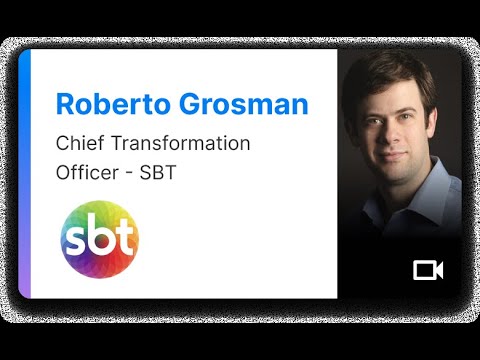
The transformation of major broadcasters like SBT into digital powerhouses highlights the massive scale of the Brazilian market. For localization executives, this shift underscores the need for partners who can handle large-scale digital ingestion and multi-platform delivery while maintaining the cultural authenticity required for one of the world’s most active digital audiences.
How Do You Vet High-Quality Localization Studios in LATAM?
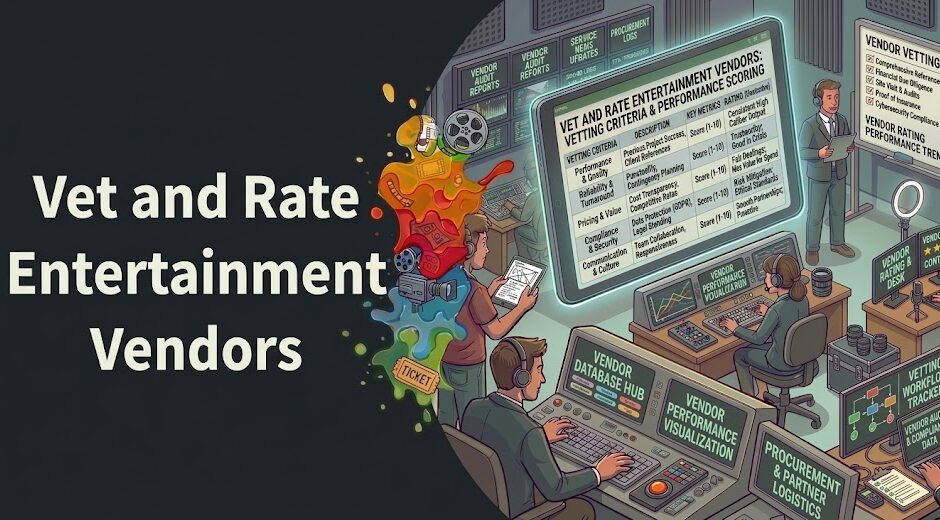
Vetting a localization partner in LATAM requires looking beyond their creative portfolio. Executives must evaluate the technical infrastructure, specifically their ability to handle secure content transfers and high-bitrate audio recording. Compliance with the Trusted Partner Network (TPN) is increasingly becoming a mandatory requirement for vendors working with major Hollywood studios and global streaming platforms.
Furthermore, professional buyers should verify the vendor’s specialized experience in specific genres. A studio that excels in localizing kids’ animation may not have the same depth of talent for high-stakes medical dramas or technical documentaries. Using Vitrina’s Company Intelligence, executives can view verified profiles that map a vendor’s historical deal history and previous collaborations, providing objective proof of their expertise.
Verify vendor credentials and TPN compliance in LATAM:
The Biggest Challenges in Sourcing LATAM Localization (Solved)
Despite the market’s maturity, content executives face significant friction when sourcing regional partners. Traditional methods—like trade show networking or general search queries—often result in “vendor fatigue,” where buyers are overwhelmed by generic pitches that lack technical evidence.
1. Overcoming the Information Deficit
The Challenge: Relying on outdated directories leads to inconsistent quality and missed capacity windows. Without a “single source of truth,” due diligence on cross-border partners becomes a high-risk manual process.
The Approach: Adopt supply chain platforms that offer structured, verifiable, and real-time intelligence. This replaces anecdotal word-of-mouth with a data-driven view of a vendor’s true operational capacity and reputation scores.
✓ Action Item: Use VIQI AI to query “Who is currently localizing thriller series for Netflix in Brazil?” to find active, proven hubs.
2. Navigating Cultural Nuance at Scale
The Challenge: Literal translations often fail to capture the emotional intent of a script, leading to poor audience engagement. This is particularly prevalent in high-growth markets like Mexico and Brazil where local slang is vital.
The Approach: Prioritize vendors that utilize native linguists and authorized generative AI for initial drafts, allowing creative directors to focus on cultural adaptation and story resonance.
✓ Action Item: Review vendor reels for localized “neutral Spanish” to ensure regional compatibility.
How Vitrina AI Simplifies Regional Partner Discovery
Vitrina AI acts as a digital lighthouse for the entertainment industry, providing the “insider advantage” of a global agent at scale. For localization sourcing, the platform tracks over 1.6 million titles and 30 million industry relationships, allowing buyers to identify which studios are currently working on high-profile productions. This real-time visibility prevents executives from wasting time on vendors with no current capacity or unverified credentials.
By leveraging the VIQI AI Assistant, executives can ask complex strategic questions like “Which Mexican studios have experience in localizing anime for US audiences?” VIQI analyzes proprietary data to map historical collaborations, ensuring you find partners with a proven track record. This approach transforms partner discovery from a manual, high-risk art into a data-driven science.
Analyze recent localization trends in the LATAM region:
“The era of sourcing localization partners through personal networks alone is over. In a borderless market where content travels at digital speed, executives who leverage structured intelligence platforms like Vitrina are securing higher quality partners 5x faster than those relying on legacy methods.”
Moving Forward
The Latin American localization sector is no longer just a service provider—it is a critical engine in the global entertainment supply chain. This guide has demonstrated that by addressing the data deficit and embracing nearshore advantages, content executives can significantly improve their regional ROI.
Whether you are an acquisition lead looking to discover trending regional content with available rights, or a production head trying to find the perfect dubbing studio for a global launch, actionable intelligence is your most valuable asset.
Outlook: Over the next 12-18 months, the authorized use of AI in localization will become standard, further compressing launch timelines and creating a massive opportunity for platforms that can localize at scale without sacrificing cultural identity.
Frequently Asked Questions
What is the difference between dubbing and subtitling preferences in LATAM?
How do I verify if a LATAM localization studio is TPN certified?
What are the primary localization hubs in Latin America?
Does Vitrina AI track early-stage projects for localization vendors?
What is the cost of localization services in LATAM compared to the US?
How does AI impact the localization supply chain in 2025?
What should I ask when vetting a LATAM studio’s technical infrastructure?
Is “Neutral Spanish” really effective for the entire LATAM region?
About the Author
Sourced from the Vitrina AI Intelligence unit, our contributors have decades of experience in the global entertainment supply chain, specializing in content acquisition, localization strategy, and market transformation. Connect on Vitrina.
Find Film+TV Projects, Partners, and Deals – Fast.
VIQI matches you with the right financiers, producers, streamers, and buyers – globally.
Producers Seeking Financing, Co-Pros, or Pre-Buys?
Vitrina Concierge helps producers reach the right financiers, commissioners, distributors, and co-production partners — with precision outreach, not cold pitching.
Join Industry Briefings Trusted by Leaders

Format Adaptations: Global Trends
Where formats are traveling, which adaptations are breaking out, and how streamers are backing remakes in 2025–2026.

Books, Novels & Comics Adaptations: Global Trends
Books, webtoons, and manga driving the next global screen hits. Discover how in this webinar.

Micro-Dramas & Mobile-First Storytelling
Micro-dramas are building real audiences and revenue. Understand the platforms, buyers, and economics behind the growth.

Navigating Global Content Licensing Trends
How global content licensing is shifting beyond flat fees to flexible, deal-driven models.