About Innovation Hub
 Global Content Pulse (Webinars)


 Global Production Financing
(Webinars)
Global Production Financing
(Webinars)  LeaderSpeak Podcast
  Global Entertainment Digest (Newsletter)
  About Vitrina
 About VIQI
 Our Story
 Our Solutions 🔥
 Film+TV Projects Tracker 🚀
 Case Studies
 Our Profile
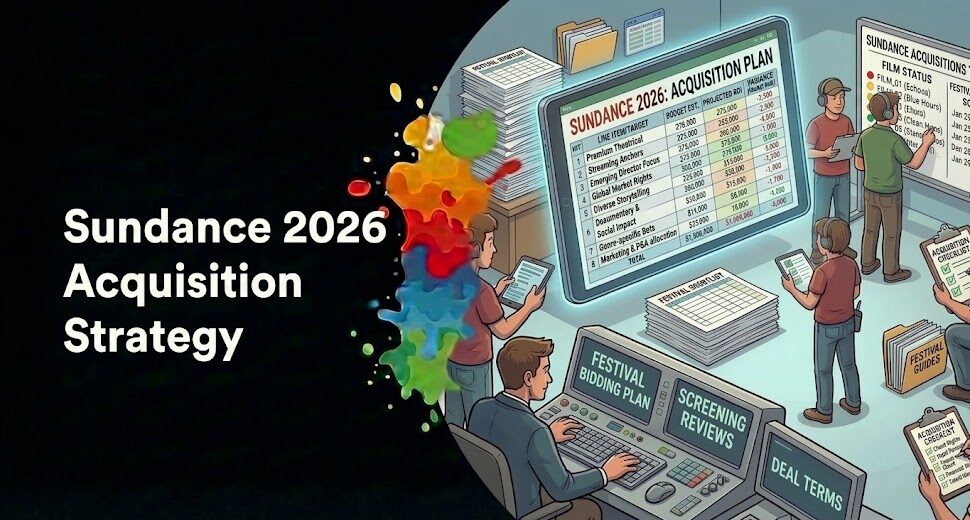
By the time that first Sundance screening ends, the best deals are already half-done. Not half-negotiated—half-decided. The buyers who close at Park City’s top prices don’t arrive with open minds and fresh screener links. They arrive with a shortlist, a price ceiling, and a relationship already warm enough to text the sales agent at 11 p.m. That’s the real Sundance 2026 acquisition strategy—and it runs on intelligence built six weeks before the festival even opens.
Most acquisition teams still treat Sundance like a market. Show up, watch films, bid in the room. And that works—if you’re happy finishing second. The buyers who took home the breakout titles in January 2026 had already read the packages, tracked the producers, identified the territory gaps in their slates, and mapped which sales agents were handling which projects. Sundance was the confirmation, not the discovery.
Here’s what those teams actually did—and how you build the same pre-festival intelligence cycle before the next market opens.
Find Festival Packages Before They Hit the Circuit
Trusted by Netflix, Warner Bros, and Paramount. Join 140,000+ companies tracking festival slates and acquisition targets on Vitrina.
✓ 200 free credits | ✓ No credit card required | ✓ Ask VIQI anything
Why the Best Sundance Deals Close Before the First Screening
Sundance runs on scarcity and speed. Roughly 100+ films across World Cinema Dramatic, U.S. Dramatic, Documentary competitions, and spotlight sections create a concentrated buyer window of just ten days. Every acquisition executive is watching the same slate, reading the same trades, competing for the same titles.
That compression used to favor the boldest bidder. Now it favors the most prepared one. And preparation happens weeks before any premiere.
What’s actually happening behind closed doors: sales agents send packages to trusted distribution contacts well before the program announcement goes public. A-list buyers—Netflix, A24, NEON, Amazon MGM Studios, Sony Pictures Classics—receive screeners and production notes on projects still in post. By the time a film premieres on the Park City main stage, these buyers have already formed a view. Some have already sent offers.
The result? The film acquisition pipeline at major festivals is far less visible than it appears. The public bidding wars are real—but the real decisions happen in private, structured months in advance through producer relationships, sales agent trust, and territory intelligence.
The 6-Week Window That Defines Your Sundance Acquisition Strategy
Here’s the thing: Sundance announces its official selection in late November each year. But acquisition intelligence starts moving in December—sometimes as early as October, once festival submissions close and word starts circulating about what the programming team is excited about.
That six-week gap between announcement and festival opening is your competitive window. Buyers who operate inside it have time to request screeners, run territory gap analysis, consult internal content strategy teams, and form a bidding position. Buyers who wait until Park City open day are playing defense.
The mechanics here follow standard presale dynamics. As detailed in the KB_FINANCING_PRESALES_MECHANICS research: when a sales agent compiles a slate, packages are sent to distributors 2-3 weeks before the market opens. The dealmaking frenzy happens at the market, yes—but the evaluations that drive those deals happen well beforehand. Sundance is no different. The premium buyers are pre-screening; they’re deciding before the premiere audience even gets their tickets.
But most buyers don’t operate this way. They’re reactive. They rely on trades coverage during the festival and bid on word-of-mouth. That’s the Fragmentation Paradox™ in action—600,000+ companies in the global supply chain, most of them operating on delayed, incomplete information.

Your AI Assistant, Agent, and Analyst for the Business of Entertainment
VIQI AI helps you plan content acquisitions, raise production financing, and find and connect with the right partners worldwide.
- Find active co-producers and financiers for scripted projects
- Find equity and gap financing companies in North America
- Find top film financiers in Europe
- Find production houses that can co-produce or finance unscripted series
- I am looking for production partners for a YA drama set in Brazil
- I am looking for producers with proven track record in mid-budget features
- I am looking for Turkish distributors with successful international sales
- I am looking for OTT platforms actively acquiring finished series for the LATAM region
- I am seeking localization companies offer subtitling services in multiple Asian languages
- I am seeking partners in animation production for children's content
- I am seeking USA based post-production companies with sound facilities
- I am seeking VFX partners to composite background images and AI generated content
- Show me recent drama projects available for pre-buy
- Show me Japanese Anime Distributors
- Show me true-crime buyers from Asia
- Show me documentary pre-buyers
- List the top commissioners at the BBC
- List the post-production and VFX decision-makers at Netflix
- List the development leaders at Sony Pictures
- List the scripted programming heads at HBO
- Who is backing animation projects in Europe right now
- Who is Netflix’s top production partners for Sports Docs
- Who is Commissioning factual content in the NORDICS
- Who is acquiring unscripted formats for the North American market
How Smart Buyers Build Pre-Festival Acquisition Shortlists
Building a real shortlist before Sundance requires more than reading the program. You’re mapping four things simultaneously: who made it, who’s selling it, who else wants it, and whether you actually need it.
1. Producer track record. The fastest signal on whether a Sundance title will perform is the producer behind it. Andrea Scarso, Managing Director at IPR VC, frames his team’s due diligence this way—identifying the actual management team from the owner level down to finance and sales before evaluating a single project. Sophisticated buyers apply the same lens at festivals: who’s the producer, what’s their last three credits, and do they have a sales agent relationship that signals real market access?
2. Sales agent credibility. The sales agent tells you more about a film’s commercial prospects than the logline does. An unknown project with XYZ Films or MK2 attached signals a package that’s been stress-tested commercially. Not every Sundance title has a sales agent pre-festival—but the ones that do are already positioned for serious acquisition conversations.
3. Territory gap analysis. What’s missing from your current slate, by geography and genre? A buyer with strong UK, Australia, and Scandinavia rights who’s thin on MENA or APAC has a different acquisition target than a streamer rebuilding its documentary offering. Your shortlist should start from your own gaps, not from the Sundance buzz cycle.
4. Genre-budget alignment. As our film festival strategic planning guide covers, the genre signals at Sundance shift year to year. In 2026, horror and elevated thriller continued drawing the most aggressive bidding, consistent with what Phil Hunt, Founder and CEO of Head Gear Films, describes as the market’s current appetite—projects the market “really wants,” which right now skews toward commercial genre and elevated IP that streams cleanly.
Track 400,000+ Projects Before They Hit the Festival Circuit
Netflix UK found their co-production partner in 48 hours. Join 140,000+ companies using Vitrina to surface acquisition targets, track packages in development, and connect with sales agents before the market opens.
✓ 200 free credits | ✓ No credit card required | ✓ Full platform access
Minimum Guarantees at Sundance: What the Market Was Actually Paying in 2026
Here’s what the trades don’t fully report: MG structures at Sundance vary wildly depending on whether you’re buying before, during, or after the festival premiere. The same film can command three very different price points across that timeline.
Pre-premiere acquisitions—deals signed before or on opening night—typically carry lower MGs but give buyers rights exclusivity before competitive bidding inflates the price. Post-premiere deals, driven by audience response and trade buzz, can run 2-4x the pre-premiere figure on a breakout title. The legendary acquisition auction dynamics—NEON vs. Netflix vs. Amazon in the same room—happen at the top of that post-premiere window.
For buyers with tight ROI mandates, the pre-premiere acquisition—or better, a streaming pre-buy arranged before the festival—compresses cost without sacrificing content quality. As the industry’s presale mechanics confirm: banks will advance 70-90% against a credible MG from a recognized distributor. That same logic runs in reverse for buyers—an early MG from a streamer like Amazon MGM Studios or Apple TV+ can lock a title at production cost before festival buzz inflates the ask.
And payment structure matters. Standard MG terms split 10% on signature and 90% on delivery—which means a buyer’s actual cash exposure in a festival acquisition is lower than the headline number. Production-ready Sundance films with completed deliverables collapse that timeline further, making the effective cost-to-commitment ratio more favorable than a first-look deal on a development project.
How Streaming Reshaped Sundance Acquisition Dynamics in 2026
The streamer presence at Sundance has fundamentally changed the territory calculus. A buyer acquiring North American rights for a theatrical play used to leave European and APAC territories for a sales agent to handle independently. Streaming’s worldwide rights model collapses that structure.
Netflix and Amazon MGM Studios can buy worldwide rights outright—eliminating the territory-by-territory presale model entirely. That’s either a threat or an opportunity depending on your position. For independent distributors, it compresses the available territory pool. For producers, it creates a ceiling and a floor simultaneously: the streamer offer sets a market price, and independent buyers can compete for the remaining windows.
According to reporting in Variety, the post-strike period has led streamers to be more selective at festivals—prioritizing higher-profile packages over broad volume acquisition. That selectivity creates openings for buyers like MUBI, IFC Films, and Oscilloscope who can move faster in the $2-5M MG range on art-house titles the streamers pass on.
What doesn’t change: the premium on speed. As The Hollywood Reporter has documented across multiple festival cycles, the gap between first offer and final deal has compressed. Sellers don’t need to run a full auction process when a streaming offer arrives with a 24-hour decision window. Buyers who can’t move that fast lose titles they want.
How Smart Buyers Use Platform Intelligence to Track Pre-Festival Packages
The intelligence gap between reactive and proactive buyers isn’t a talent gap—it’s a data access gap. Strategic players understand that the information required to build a real pre-festival shortlist exists; most teams just don’t have a system for surfacing it at scale.
That’s where Vitrina’s Smart Pairing model changes the equation. With 140,000+ companies and 400,000+ projects tracked across the global supply chain, buyers can surface acquisition targets by genre, budget tier, sales agent, producer territory, and production status—before those projects appear in a festival program.
Concretely: a documentary acquisition team building their Sundance 2026 acquisition strategy in November 2025 could use Vitrina to identify which documentary producers had submitted projects through known sales agents, cross-reference territory gaps in their existing catalog, and flag projects with known festival pedigree from producers who’ve previously had titles at Berlin, Tribeca, or TIFF. That’s actionable pre-festival intelligence—not trades speculation.
The streaming pre-buy guide covers this in detail for SVOD teams specifically. But the same principle applies to independent distributors, broadcasters with commissioning slots, and equity investors building slate exposure across festival cycles.
Phil Hunt at Head Gear Films frames the core insight directly: Head Gear’s team has “great deep relationships with the buyers and the sellers which make the marketplace”—and they listen constantly. The scale at which Vitrina operates (more deal flow than most individual sales companies can process manually) brings that same relational intelligence to teams who don’t have 25 years of market positioning behind them.
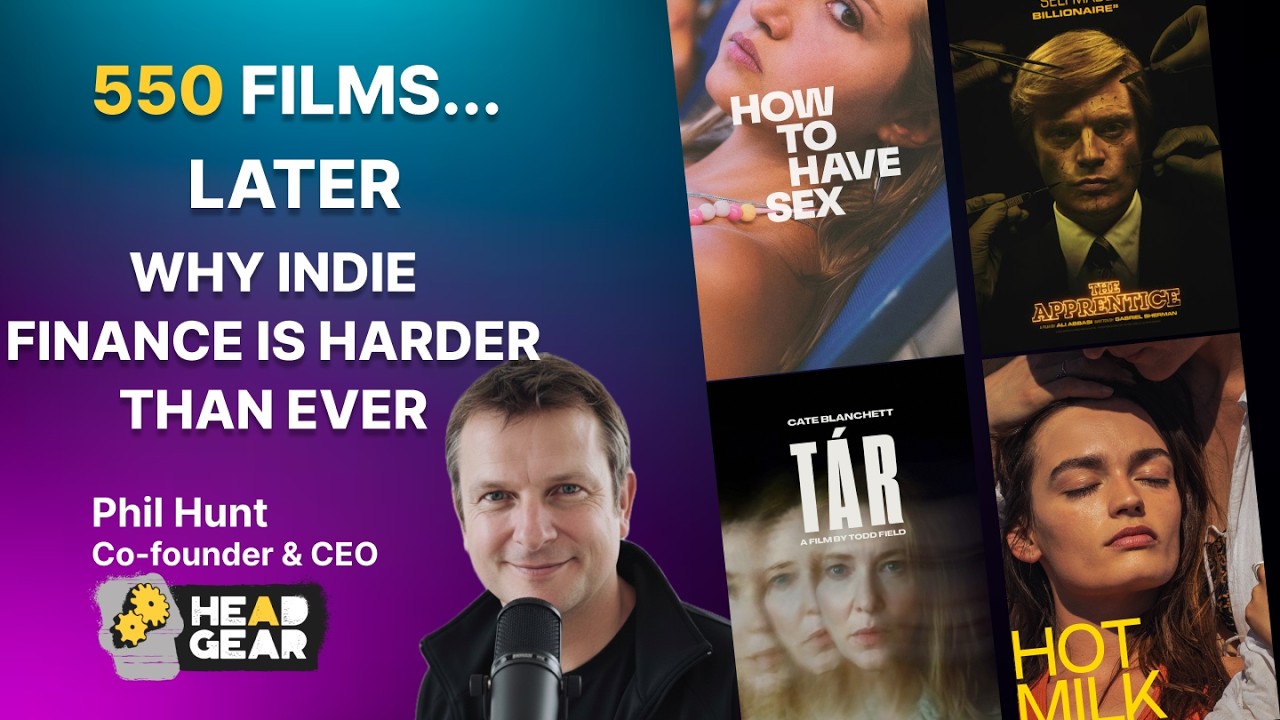
Phil Hunt (Founder & CEO, Head Gear Films) discusses why the independent film market has become harder to navigate—and what acquisition teams need to understand about deal flow, sales agent relationships, and the current production financing crunch.
Your 7-Step Pre-Festival Acquisition Checklist
This is the process top acquisition buyers ran before Sundance 2026 opened. You can build the same cycle before any major festival market. Compress or extend the timeline based on your team’s capacity—but don’t skip steps.
- Slate gap analysis — Document your content gaps by genre, language, territory, and window before the festival announcement. Your shortlist should solve real problems in your slate, not chase buzz.
- Sales agent mapping — Identify which agents typically bring Sundance-caliber projects. Build or refresh those relationships in October. You want to be on the pre-screen list.
- Producer track record review — When the selection announces, your first filter is producer. Check prior credits, prior festival performance, and existing distribution relationships.
- Pre-festival screener requests — Move within 48 hours of the official selection announcement. Request screeners and packages immediately. First-mover advantage in pre-festival viewing is real.
- Internal content strategy alignment — Run shortlisted titles through your programming team, your legal, and your finance team before Park City. Don’t arrive without internal alignment on pricing authority.
- Competitive bidder mapping — Know who else wants the titles on your shortlist. This isn’t guesswork—sales agents will tell you who’s expressed interest. Structure your offer to close before a competing offer forces an auction.
- Pre-festival offer structure — For your top two or three targets, have a pre-premiere offer ready. Know your MG ceiling, your territory scope, and your payment structure before the opening night screening starts.
But here’s the catch—this process only works if your film project tracking system surfaces packages early enough to act on. Without real-time market intelligence, you’re still reactive—just more organized about it.
Need a Human Expert to De-Risk Your Next Festival Acquisition?
Vitrina’s Concierge Service connects acquisition teams with curated packages, qualified sales agent contacts, and territory intelligence — built around your specific slate gaps. No credit card required to start.
Sundance Acquisition Strategy: Frequently Asked Questions
What is the typical MG range for a Sundance acquisition deal?
MG ranges vary considerably by title and buyer type. For North American rights on a mid-tier documentary or drama with strong producer credentials, pre-festival offers tend to range between $500K and $2M. Post-premiere deals on breakout titles—driven by audience response and trade buzz—can reach $10M or higher in competitive bidding situations. Streamers acquiring worldwide rights operate at the top of that range; independent theatrical distributors typically compete in the $1-5M window depending on their market footprint.
How early should acquisition buyers request screeners before Sundance?
Move within 48 hours of the official selection announcement—typically late November. Sales agents with Sundance titles prioritize pre-screen requests from buyers with established relationships. If you don’t have a prior relationship with the sales agent handling a project you want, introduce yourself now. Waiting until the Park City shuttle bus means you’re watching films the week of the market, not the month before.
What does a strong pre-festival acquisition shortlist look like?
A workable shortlist contains 6-10 titles ranked by strategic priority—not buzz. Top-tier titles (your 1-2 must-have projects) should have pre-festival offers ready. Mid-tier titles (3-5 secondary targets) get screener requests and internal strategy alignment. Lower-priority titles get flagged for festival tracking. The mistake most teams make is building lists that are too long and too flat—no differentiation in acquisition urgency until the market is already open.
How do streamers affect the Sundance acquisition strategy for independent buyers?
Streamers compress the timeline and raise the floor on MG pricing for competitive titles. But their worldwide rights model leaves real opportunity in the theatrical, SVOD, and FAST windows they don’t prioritize—particularly for art-house, documentary, and international titles that don’t fit a streamer’s algorithmic content profile. Independent buyers who pre-identify those streamer-pass titles (based on genre, budget, and narrative style) can move fast on quality content at reasonable MG levels.
What role does a sales agent play in a Sundance acquisition?
The sales agent is the critical intermediary—compiling the package, managing bidder relationships, and structuring the deal timeline. A Sundance title with a credible international sales agent (XYZ Films, MK2, Protagonist Pictures) is a different commercial proposition than one without. The agent signals that someone with real market knowledge has evaluated the project and committed to selling it. For buyers, the agent relationship is also your early-warning system—if you’re on a sales agent’s pre-screen list, you get the call before the bidding war starts.
How does Vitrina help with Sundance 2026 acquisition strategy?
Vitrina’s platform lets acquisition teams surface pre-festival packages by filtering across 140,000+ companies and 400,000+ projects by genre, producer, sales agent, budget tier, and territory. VIQI—Vitrina’s AI intelligence layer—can answer specific acquisition research questions in real time. For teams building pre-Sundance shortlists, Vitrina accelerates the intelligence cycle from weeks to hours. The Concierge service adds human expertise for teams that need curated acquisition support, not just data.
What genres perform best at Sundance acquisitions?
Horror, elevated thriller, and documentary have consistently driven the most competitive acquisition activity at Sundance over the past three years. True crime documentaries attract broadcaster and SVOD interest simultaneously. Elevated horror—conceptually ambitious genre films with festival credibility—draws both art-house distributor and streaming interest, creating the conditions for competitive bidding. Drama acquisition competition has compressed as streamers tighten their content mandates; comedies remain difficult in international territories due to cultural translation challenges.
The Bottom Line on Sundance 2026 Acquisition Strategy
Sundance doesn’t reward the buyers who show up with the biggest budgets. It rewards the ones who’ve already done the work. The Sundance 2026 acquisition strategy that actually closed deals was built in October and November—before the announcement, before the screeners, before the bidding wars. What looked like market speed in Park City was really just preparation arriving on schedule.
And the intelligence advantage isn’t reserved for buyers with 30-person acquisition teams. The Fragmentation Paradox™ creates information gaps at every level of the market. The buyers who close ahead of the pack—whether they’re A24 or a boutique distributor out of London—are the ones who’ve built systems to surface the right projects early enough to act.
Build your pre-festival cycle now. The next market won’t wait.
Key Takeaways
- Pre-festival intelligence wins: The best Sundance acquisitions are decided before the opening screening. Top buyers request screeners and build shortlists within 48 hours of the selection announcement.
- Sales agent relationships are the access layer: Being on a credible sales agent’s pre-screen list is the difference between reacting to a bidding war and structuring a pre-premiere offer.
- Genre matters for competitive timing: Horror, elevated thriller, and documentary consistently drive the most competitive acquisition windows. True crime and elevated horror attract simultaneous streamer and independent buyer interest.
- MG structure is your cash flow lever: Pre-premiere MGs run lower than post-premiere bids. The 10% / 90% payment split means early acquisition can deliver competitive titles at manageable upfront exposure.
- Platform intelligence compresses the discovery cycle: Tools like Vitrina’s Smart Pairing and VIQI surface pre-festival packages across 400,000+ projects—before they appear in trade announcements.
Start Building Your Pre-Festival Acquisition Pipeline Today
Netflix, Warner Bros, and Paramount use Vitrina to track projects, connect with sales agents, and surface acquisition targets across 140,000+ companies worldwide. Your first 200 credits are free.
✓ 200 free credits | ✓ No credit card required | ✓ Full platform access
Find Film+TV Projects, Partners, and Deals – Fast.
VIQI matches you with the right financiers, producers, streamers, and buyers – globally.
Producers Seeking Financing, Co-Pros, or Pre-Buys?
Vitrina Concierge helps producers reach the right financiers, commissioners, distributors, and co-production partners — with precision outreach, not cold pitching.
Join Industry Briefings Trusted by Leaders
Format Adaptations: Global Trends
Where formats are traveling, which adaptations are breaking out, and how streamers are backing remakes in 2025–2026.

Books, Novels & Comics Adaptations: Global Trends
Books, webtoons, and manga driving the next global screen hits. Discover how in this webinar.

Micro-Dramas & Mobile-First Storytelling
Micro-dramas are building real audiences and revenue. Understand the platforms, buyers, and economics behind the growth.

Navigating Global Content Licensing Trends
How global content licensing is shifting beyond flat fees to flexible, deal-driven models.