About Innovation Hub
 Global Content Pulse (Webinars)


 Global Production Financing
(Webinars)
Global Production Financing
(Webinars)  LeaderSpeak Podcast
  About Vitrina
 Our Story
 Our Solutions 🔥
 Film+TV Projects Tracker 🚀
 Case Studies
 Our Profile
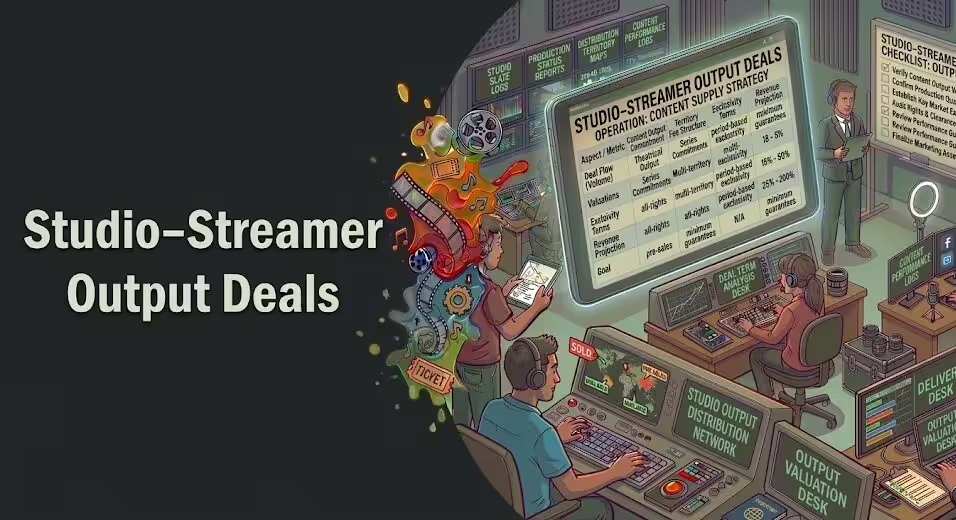
Studio–streamer output deals are back at the center of Hollywood’s capital stack—and the terms have changed dramatically since 2020. If you’re a producer, financier, or content strategist trying to figure out where your project fits in 2026’s distribution architecture, you need to understand exactly how these agreements work, who’s signing them, and what the money actually looks like once the ink dries.
This isn’t a primer. You already know what an output deal is. What you need is the current mechanics—the MG structures, the exclusivity windows, the IP retention questions, and the names of the studios actively operating under these arrangements right now. That’s what this guide covers.
Here’s the thing: the Fragmentation Paradox has made output deals both more valuable and more complicated. Studios need streaming homes for their output. Streamers need volume to feed subscriber retention algorithms. But the terms that made sense in 2020—when Netflix was paying premium prices to lock up everything in sight—look very different in a market where every major platform is watching its content spend against EBITDA targets.
Table of Contents
- What Is a Studio–Streamer Output Deal, Exactly?
- Why Output Deals Are Back—And Bigger Than Ever in 2026
- How Output Deal Money Actually Flows
- Which Studios Have Active Output Deals in 2026?
- The 3 Output Deal Structures You’ll Encounter
- What Streamers Actually Want Before They Sign
- How to Position Your Project for an Output Deal
- Red Flags That Kill Output Deal Negotiations
- Frequently Asked Questions
- The Bottom Line
Track Which Studios Are Actively Signing Output Deals—Before It Hits the Trades
Over 140,000+ companies on Vitrina track live studio-streamer deal intelligence. Netflix, Warner Bros., Sony, Paramount—see who’s negotiating what, right now.
Trusted by commissioning executives at Google TV, OSN, and major independent financiers globally.
Ask VIQI About Active Output Deals →
No credit card required. 200 free credits to start.
What Is a Studio–Streamer Output Deal, Exactly?
A studio–streamer output deal is a licensing agreement where a streaming platform commits to acquiring a predetermined volume of content—or the full output—from a studio over a set term, typically 2–5 years. The streamer pays a Minimum Guarantee (MG) per title or per slate, and in exchange gets first-look or exclusive streaming rights within agreed territories and windows.
But the devil is in the details—and in 2026, those details have gotten very specific.
The structure typically looks like this: 10% of the MG paid on contract signature, with the remaining 90% delivered on content acceptance. That 90% is what gets collateralized when producers are financing against the deal. Banks lend 70–85% of the face value of the MG, depending on the streamer’s credit rating and the bank’s appetite for that particular platform’s paper.
Output deals aren’t the same as first-look deals. A studio output deal gives the streamer rights to content the studio has already committed to produce—or is producing on a defined schedule. A first-look deal gives the streamer priority consideration on new projects before the studio shops them elsewhere. The financial risk profile is completely different.
Why Output Deals Are Back—And Bigger Than Ever in 2026
From 2021 to 2023, the prevailing view was that output deals were dying. Streamers were pulling back, producing originals in-house, and squeezing MGs down to levels that barely justified the rights restrictions they came with. That narrative turned out to be wrong—or at least, premature.
Three things changed the math:
First, subscriber growth slowed at every major platform. When you can’t grow by adding new subscribers, you grow by retaining existing ones—and retention runs on volume. Studios with reliable output become indispensable supply chain partners, not optional add-ons.
Second, the cost of originals got out of hand. Netflix’s content spend hit approximately $17 billion in 2024. At that run rate, even a platform with deep pockets starts looking at licensed output as a cost-efficiency play—you get known IP, predictable quality, and defined delivery schedules at a fraction of what it costs to develop something from scratch.
Third—and this is the part that doesn’t get enough attention—theatrical output deals have become a financing mechanism for the studios themselves. Sony, Universal, and Paramount aren’t just licensing to streamers because they need distribution homes. They’re using guaranteed MGs to anchor their capital stacks on individual productions, which makes the entire slate more bankable.
Phil Hunt, founder and CEO of Head Gear Films, has spoken directly about how the collapse of traditional pre-sales windows reshaped the demand for guaranteed output agreements. As he noted in the Vitrina LeaderSpeak podcast, the film finance market has fundamentally shifted away from territory-by-territory pre-sales toward consolidated licensing structures—which is exactly the environment where output deals flourish.
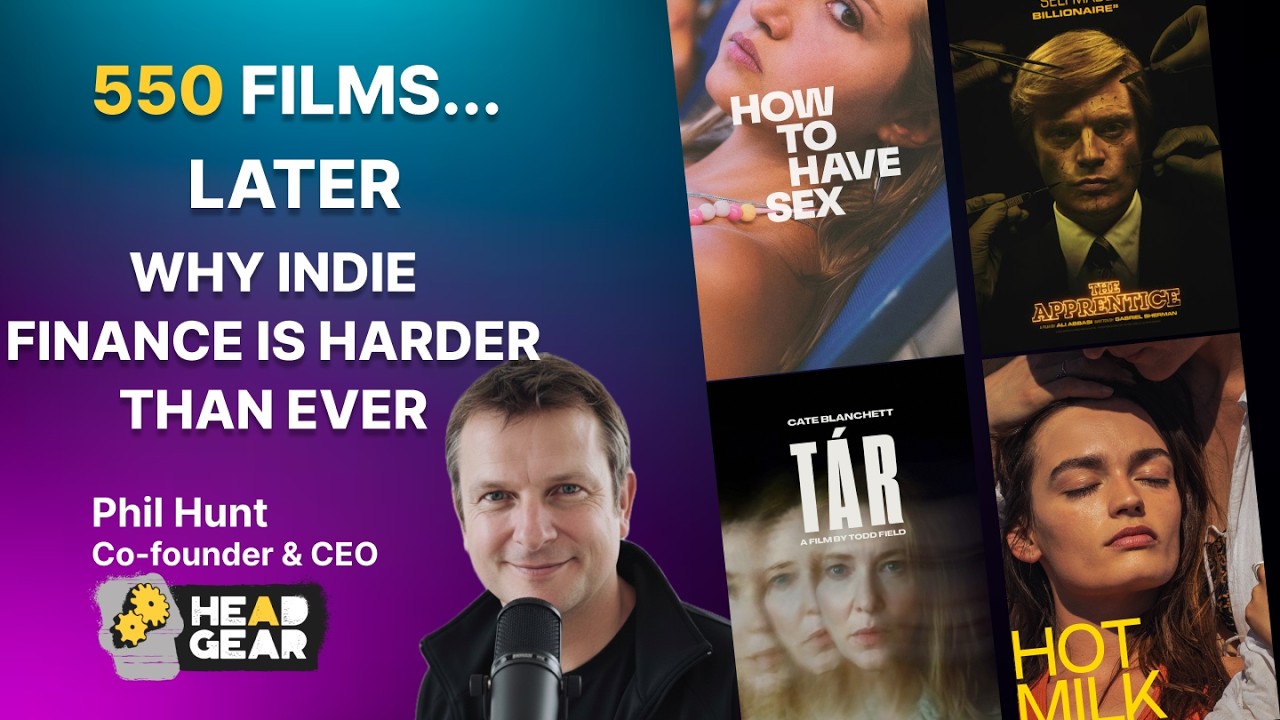
Phil Hunt (CEO, Head Gear Films) on why film finance has fundamentally changed and what that means for studio-streamer relationships. Via Vitrina LeaderSpeak.
How Output Deal Money Actually Flows
Let’s talk capital stack—because this is where most producers get confused about what an output deal actually does for their financing position.
Say you’re producing a $15M theatrical feature that’s covered by a studio’s output deal with a major streamer. Here’s a simplified version of how the money stacks:
- Streamer MG (output deal): $6–8M (40–55% of budget, secured against delivery)
- Tax incentive / rebate: $2–3M (depending on territory—UK, Australia, Canada, or Hungary offer 20–35% rebates)
- Equity from studio or co-producer: $2–4M
- Gap financing against unsold territories: $1–2M
The output deal MG sits at the top of that structure—it’s the anchor that makes everything else bankable. Banks will lend against it. Equity investors feel safer seeing it. And the studio’s internal greenlight committee has a lower bar to clear when the downside is cushioned by a guaranteed payment.
What the streamer gets in return varies by deal. But typically you’re looking at: exclusive SVOD rights in defined territories, a streaming window that starts 30–90 days after theatrical release in most markets, and an initial term of 3–5 years with options. The studio usually retains AVOD rights, airline/hospitality rights, and physical media rights—though those latter two are increasingly bundled into the streamer’s ask.
IP ownership stays with the studio. That point matters more than people realize. An output deal is a license, not a sale. The studio doesn’t give up its franchise rights, sequel rights, or merchandising. If the content performs, the studio keeps those upside positions—which is why output deals have become structurally preferable to the “all rights in perpetuity” deals Netflix pushed hard for in 2018–2020.
Find Your Output Deal Partner in 48 Hours
Vitrina’s Smart Pairing engine matches production slates with the right streaming partners based on content category, territory appetite, and current acquisition priorities—not guesswork.
Netflix UK contacted producers through Vitrina intelligence within 48 hours of deal signals being tracked on the platform.
Join 140,000+ entertainment companies. No credit card required.
Which Studios Have Active Output Deals in 2026?
Here’s the current map—with the caveat that output deal terms are confidential, and what gets reported in Variety and Deadline often lags 6–8 weeks behind the actual signing.
Sony Pictures × Netflix
Sony Pictures’ multi-year output deal with Netflix remains one of the most closely watched in the industry. Sony doesn’t have its own streaming platform—a deliberate strategic choice—which means its entire theatrical output needs distribution homes. Netflix has been Sony’s primary pay-1 window partner for US rights, covering major releases including franchises from the Spider-Man adjacent universe. The deal structure covers theatrical releases above a defined budget threshold, with lower-budget productions handled separately.
What makes the Sony-Netflix arrangement interesting is how it’s influenced Sony’s production decisions. Knowing there’s a guaranteed streaming home changes the greenlight calculus for mid-budget films ($30–80M range) that would otherwise be difficult to finance without territory-by-territory presales. The output deal is, in effect, a production financing tool as much as a distribution agreement.
Warner Bros. Discovery × Netflix
The relationship between Warner Bros. Discovery and Netflix has been one of the most covered stories in the trade press. Vitrina’s own deal intelligence tracker flagged the Netflix–Warner Bros. content conversations well before they hit the trades. WBD’s need to generate cash against its substantial debt load—the legacy of the Discovery merger—has pushed it toward licensing arrangements it might have resisted in an earlier era. The output discussions have centered on catalog and select new productions, with WBD keeping Max as the primary home for its tentpole content.
Paramount × Skydance / Paramount+
Post-Skydance merger, Paramount’s output structure has been rationalized around Paramount+. The platform now operates as the primary home for Paramount theatrical releases in the US market, with a hybrid model that sees some titles get Paramount+ streaming releases while others go theatrical-first. The international output picture is more complex—Paramount has territory-by-territory agreements with local operators rather than a single global output deal.
Universal / NBCUniversal × Peacock
Universal’s relationship with Peacock is effectively an internal output arrangement—but it operates with the same MG mechanics as an external deal, which matters for how productions get financed. Universal productions now expect a defined Peacock window, and that expectation gets baked into the capital stack at greenlight stage. The Peacock deal has also created complications in international markets, where NBCUniversal has existing output agreements with local broadcasters and streaming platforms that predate Peacock’s global ambitions.
A24 × Apple TV+
A24’s first-look arrangement with Apple TV+ sits somewhere between an output deal and a co-production agreement. Apple doesn’t want volume—it wants prestige. The A24 relationship is selective, project-by-project, and Apple pays premium prices for the right to position titles in its awards-focused programming. This is a different structural model from the Sony-Netflix arrangement, and it reflects Apple’s strategy of competing on quality rather than quantity.
But here’s what that means for producers: an A24 project that goes to Apple TV+ will have a different capital stack and a different IP structure than one going to Netflix. Apple has historically pushed harder for broader rights, including international rights that other streamers might be willing to carve out.

Your AI Assistant, Agent, and Analyst for the Business of Entertainment
VIQI AI helps you plan content acquisitions, raise production financing, and find and connect with the right partners worldwide.
- Find active co-producers and financiers for scripted projects
- Find equity and gap financing companies in North America
- Find top film financiers in Europe
- Find production houses that can co-produce or finance unscripted series
- I am looking for production partners for a YA drama set in Brazil
- I am looking for producers with proven track record in mid-budget features
- I am looking for Turkish distributors with successful international sales
- I am looking for OTT platforms actively acquiring finished series for the LATAM region
- I am seeking localization companies offer subtitling services in multiple Asian languages
- I am seeking partners in animation production for children's content
- I am seeking USA based post-production companies with sound facilities
- I am seeking VFX partners to composite background images and AI generated content
- Show me recent drama projects available for pre-buy
- Show me Japanese Anime Distributors
- Show me true-crime buyers from Asia
- Show me documentary pre-buyers
- List the top commissioners at the BBC
- List the post-production and VFX decision-makers at Netflix
- List the development leaders at Sony Pictures
- List the scripted programming heads at HBO
- Who is backing animation projects in Europe right now
- Who is Netflix’s top production partners for Sports Docs
- Who is Commissioning factual content in the NORDICS
- Who is acquiring unscripted formats for the North American market
The 3 Output Deal Structures You’ll Encounter
Not all output deals look the same. You’ll run into three main structures in 2026:
1. Full Output Deals
The streamer commits to acquiring every title above a defined budget threshold from the studio over the deal term. These are increasingly rare outside of the internal studio-platform relationships (Universal/Peacock, Disney/Disney+) because streamers have gotten smarter about not taking on output they don’t want. The MG per title is negotiated upfront or on a formula basis.
2. Slate Output Deals
The streamer agrees to acquire a defined slate—say, 8 titles over 3 years—with title-by-title approval rights. The studio has guaranteed homes for its committed slate, but the streamer retains the ability to pass on individual projects that don’t fit. MGs are negotiated title-by-title within a framework agreement. This is the dominant structure right now.
3. Pay-1 Window Deals
The narrowest structure—the streamer gets first-window streaming rights after theatrical release, but only in specified territories and for a defined window (typically 18–24 months). There’s no commitment to the studio’s overall output; just a right of first refusal on the pay-1 window. These deals show up constantly in streaming distribution models being negotiated for mid-budget productions that don’t have the scale to justify a full slate arrangement.
What Streamers Actually Want Before They Sign
You can have the perfect output deal structure on paper—but if your studio doesn’t meet the platform’s current acquisition criteria, you’re not getting to term sheet.
Here’s what the commissioning teams are actually looking at in 2026:
Genre fit: Netflix’s current appetite leans toward action, thriller, and genre films with broad international appeal. Platform-specific audience data drives these decisions more than they’ll admit publicly. Action films in the $25–60M range that test well in Latin America and Southeast Asia—two of Netflix’s highest-growth regions—get fast-tracked. Mid-budget drama that skews older and domestic? Much harder pitch.
Star power and recognizability: The pre-sales market’s collapse hasn’t eliminated the importance of cast in output deal pricing—it’s just concentrated it. A-list talent with demonstrated streaming performance (measured in completion rates and account engagement, not just viewing hours) commands MG premiums of 25–40% over comparable projects without that talent.
IP vs. original: Platforms are paying more for known IP—book adaptations, sequel-adjacent projects, franchise extensions—than for original concepts, even well-packaged ones. The algorithmic certainty of known IP is worth a premium when you’re trying to predict subscriber retention 18 months out.
Delivery timeline: A guaranteed delivery date within the output deal term matters enormously for platform programming teams building 18-month content calendars. Late delivery on an output deal triggers penalty clauses and, more damagingly, poisons the relationship for the next slate negotiation. Streamers track delivery performance and it affects renewal terms.
De-Risk Your Next Output Deal Negotiation
Vitrina Concierge puts specialist deal intelligence in your hands 6 weeks before you need it—active platform acquisition priorities, current MG benchmarks by genre, and which studios have output capacity right now.
Used by senior acquisition executives and independent financiers tracking 400,000+ projects globally.
How to Position Your Project for an Output Deal
If you’re a producer or independent financier trying to get into an existing studio output deal—or structure your own—here’s what actually moves the needle:
Attach yourself to a studio with platform capacity. The output deal negotiation happens at the studio level. If your project is packaged with a studio that has an existing output arrangement with the right streamer for your content type, you’re already halfway there. That’s the Smart Pairing principle—matching your project’s DNA to the right existing infrastructure rather than approaching platforms cold.
Build your capital stack before you approach the platform. Streamers in output deal negotiations want to see a credible production plan—not a financing pitch. Come in with confirmed equity, a territory sales strategy for the windows the output deal won’t cover, and a delivery schedule you can actually hit. The MG negotiation goes faster when the platform sees you’ve already solved your own financing problem.
Know your windows before you sign. The biggest mistake producers make in output deal negotiations is agreeing to streaming window terms without fully modeling what that does to their ancillary revenue. A 30-day post-theatrical window that goes to Netflix might kill your Pay-TV deal in Germany and your SVOD licensing in South Korea. Model the waterfall first. Always.
Matthew Helderman, co-founder and CEO of BondIt Media Capital—one of the more active media finance shops in the independent space—has noted that the complexity of multi-territory output deals is a key reason productions run into financing gaps they didn’t anticipate. The terms of the output deal itself can create the gap it was supposed to close, if you don’t read the exclusivity provisions carefully.
You can look at co-commissioning structures as an alternative or complement to pure output deals—especially for high-budget productions where a single platform can’t absorb the full MG requirement at market rates.
Red Flags That Kill Output Deal Negotiations
A few deal-killers worth flagging:
Chain-of-title gaps. Any ambiguity in who owns what rights stops an output deal cold. Streamers have gotten much more rigorous about chain-of-title review since the WGA/SAG-AFTRA strikes surfaced questions about residuals and streaming rights that hadn’t been properly documented in legacy agreements. Fix your chain-of-title before you start any output deal conversation.
Competing commitments in key territories. If you’ve already sold French rights to Canal+, German rights to RTL, and UK rights to Sky—and now you want to bring a project into an output deal that includes those territories—you’ve got a conflict. Platforms want clean territory packages. Patchwork rights situations kill deals or dramatically reduce the MG.
Unrealistic delivery schedules. Output deals are calendar-driven. If you promise Q2 2027 delivery and your production plan requires things to go perfectly in three countries simultaneously, you’re setting up a penalty situation. Platforms build in penalty clauses—typically 10–15% of the MG per month of delay—and they enforce them.
You can track how global entertainment deals are structured and closing in real time through Vitrina’s deal intelligence layer—which is how a lot of producers are de-risking these negotiation positions before they walk in the room.
Frequently Asked Questions About Studio–Streamer Output Deals
What is a studio–streamer output deal?
A studio–streamer output deal is a licensing agreement where a streaming platform commits to acquiring a studio’s content—either its full output or a defined slate—over a set period, typically 2–5 years. The streamer pays a Minimum Guarantee (MG) per title in exchange for exclusive streaming rights within agreed territories and windows. Unlike a first-look deal, the streamer is committed to taking delivery of specific content, not just reviewing it.
How do output deal MGs get structured in 2026?
Standard MG payment structure runs 10% on contract signing and 90% on content delivery and acceptance. Banks lend 70–85% of face value against the MG contract, depending on the streamer’s credit rating. The MG serves as the anchor in the production’s capital stack, making the rest of the financing—equity, tax incentives, gap—easier to layer in. MG levels vary widely by genre, budget, and star power, but mid-budget theatrical features ($25–60M) can attract MGs of $6–15M from major platforms.
Which studios currently have output deals with Netflix?
Sony Pictures has one of the most active output arrangements with Netflix for US streaming rights. Warner Bros. Discovery has been in ongoing licensing discussions for catalog and new content. The publicly confirmed arrangements shift frequently—which is why tracking platforms like Vitrina are increasingly used by financiers and producers who need current deal intelligence rather than trade press reports that lag actual negotiations by 6–10 weeks.
What’s the difference between an output deal and a first-look deal?
An output deal commits the streamer to acquiring content the studio is producing—the platform doesn’t have discretionary approval rights in a full output structure. A first-look deal gives the streamer priority consideration on new projects before the studio shops them elsewhere, but the platform can pass. The financial structures are different: output deals involve defined MGs per title, while first-look deals typically involve overhead payments and development funds rather than content MGs.
How do streaming windows work in output deals?
Standard post-theatrical streaming windows in 2026 range from 30 days (for platform-priority titles) to 90 days (for titles where theatrical performance is prioritized). The output deal specifies the window start date, which is typically the theatrical release date in the platform’s primary territory. The streaming exclusivity period usually runs 18–24 months, after which the studio can license the title to other platforms or AVOD services. Exceptions get negotiated for major markets where the studio has existing output commitments with local broadcasters.
Can independent producers benefit from studio output deals?
Yes—if your project is packaged with a studio that has an active output arrangement with a platform that fits your content. The studio’s output deal effectively becomes part of your capital stack: the guaranteed MG anchors the financing, reduces the volume of presales you need to close, and gives you a defined distribution path. The tradeoff is that the studio takes a fee and may require certain creative approvals. Independent producers who try to negotiate their own direct output deals with platforms without studio involvement rarely succeed—platforms prefer the volume and quality control that comes with studio relationships.
What are the IP ownership terms in a typical output deal?
Output deals are licenses, not acquisitions. The studio retains underlying IP ownership, franchise rights, sequel rights, and merchandising. The streamer gets defined streaming rights within specified territories and windows. This is a critical distinction from the “all rights in perpetuity” deals platforms pushed for in 2019–2021—today’s output deals are structured to give studios enough upside to justify the rights restrictions. Producers working within studio output deals should confirm what rights flow through to them versus what the studio retains, particularly around sequel participation and format rights.
How long do studio–streamer output deals typically last?
Most active output deals run 3–5 years with renewal options. Shorter terms (2 years) appear in more selective slate arrangements where the streamer wants flexibility to reassess after seeing platform performance data on the first few titles. Longer terms (5+ years) are typically reserved for the largest studio-platform relationships with highest volume commitments. Renewal terms often shift based on platform algorithm data on how the studio’s content has performed on subscriber retention and engagement metrics during the initial term.
The Bottom Line
Studio–streamer output deals in 2026 aren’t just distribution agreements—they’re financing instruments, subscriber retention tools, and capital stack anchors rolled into one structure. Understanding the mechanics matters whether you’re a producer trying to get your project inside an existing deal, a financier evaluating the bankability of a studio’s output, or a platform executive figuring out whether the MG commitment makes sense against your content budget.
A few things worth keeping front of mind:
- Output deals are licenses, not sales—the studio retains IP, franchise rights, and sequel participation
- The MG structure (10% on signing, 90% on delivery) drives how banks lend against these agreements
- Genre, IP type, and star power determine MG levels as much as budget does
- Streaming window terms can destroy ancillary revenue if not modeled against the full territorial picture
- Deal terms in the trades lag actual negotiations by 6–10 weeks—use deal intelligence platforms to stay current
- The platform with the right output capacity for your content type isn’t always the obvious one—Smart Pairing analysis changes the shortlist
Get Output Deal Intelligence Before Your Next Negotiation
Vitrina tracks 400,000+ active projects and 140,000+ companies—including the studios and platforms actively in output deal discussions right now.
Netflix. Warner Bros. Sony. Amazon. See what they’re buying, what terms they’re offering, and which genres are getting priority in each territory.
No credit card required. Cancel anytime.
Find Film+TV Projects, Partners, and Deals – Fast.
VIQI matches you with the right financiers, producers, streamers, and buyers – globally.
Producers Seeking Financing, Co-Pros, or Pre-Buys?
Vitrina Concierge helps producers reach the right financiers, commissioners, distributors, and co-production partners — with precision outreach, not cold pitching.
Join Industry Briefings Trusted by Leaders

Format Adaptations: Global Trends
Where formats are traveling, which adaptations are breaking out, and how streamers are backing remakes in 2025–2026.

Books, Novels & Comics Adaptations: Global Trends
Books, webtoons, and manga driving the next global screen hits. Discover how in this webinar.

Micro-Dramas & Mobile-First Storytelling
Micro-dramas are building real audiences and revenue. Understand the platforms, buyers, and economics behind the growth.

Navigating Global Content Licensing Trends
How global content licensing is shifting beyond flat fees to flexible, deal-driven models.