About Innovation Hub
 Global Content Pulse (Webinars)


 Global Production Financing
(Webinars)
Global Production Financing
(Webinars)  LeaderSpeak Podcast
  About Vitrina
 Our Story
 Our Solutions 🔥
 Film+TV Projects Tracker 🚀
 Case Studies
 Our Profile
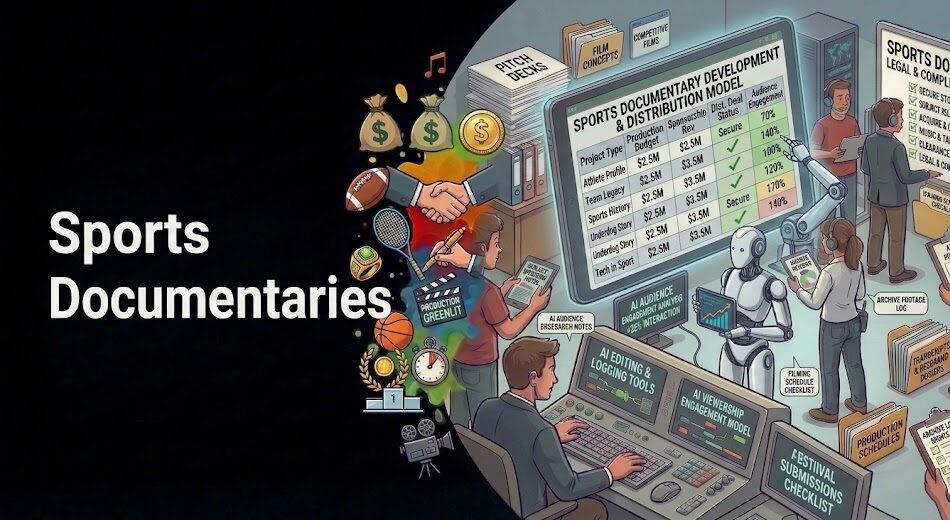
The numbers are hard to argue with. Streamers will collectively spend $14.2 billion on sports rights in 2026—a 7% increase from $13.2 billion in 2025, according to Ampere Analysis. But here’s the thing most producers are missing: the real commissioning opportunity isn’t in the live rights battle. It’s in the documentary layer sitting directly underneath it.
Sports documentaries cost $100,000 to $500,000 per episode to produce. Live sports rights for a single league deal run into the billions—Amazon’s NBA agreement costs $1.8 billion per season. That EBITDA differential is why sports documentary commissioning has become one of the most strategically rational content investments in the streaming economy. You get audience retention, subscriber acquisition, and brand-building value from a sport—at a fraction of the capital committed to live rights.
Formula 1: Drive to Survive generated over $290 million in global streaming revenue from 2020 through 2024 while expanding F1’s US fanbase and suppressing subscriber churn. That is the ROI model every platform executive is now trying to replicate—and why the commissioning environment for sports docs has been transformed, with several critical complications producers need to understand before they pitch.
What follows is the actual commissioning intelligence for sports documentaries in 2026—what platforms are paying, what they’re refusing to greenlight, where access rights have become the real bottleneck, how the equity financing layer (including Red Bull Studios and IPR VC) is changing the capital stack, and how the Fragmentation Paradox is costing producers deals they should be closing in weeks, not months.
Table of Contents
- The Economics: Why Streamers Are Going All-In on Sports Docs
- What Each Major Streamer Is Actually Commissioning—and What They Pay
- The Access Problem: League Relationships as the Real Currency
- Market Saturation: The Drive to Survive Hangover
- New Commissioning Models: Scripted Sports, Athlete IP, and the Three-Pronged Strategy
- Budget Architecture: What Sports Docs Actually Cost to Produce
- Red Bull Studios, IPR VC, and the Equity Financing Layer
- Finding the Right Buyer Before the Window Closes
- FAQ
- Conclusion
Identify Which Streamers Are Actively Commissioning Sports Docs in Your Genre—Right Now
Netflix UK accessed Vitrina intelligence in 48 hours. Ask VIQI which documentary commissioners at Netflix, Amazon, Apple TV+, and DAZN are currently acquiring in your sport—before the pitch window closes.
✔ 200 free credits | ✔ No credit card required | ✔ Full platform access
The Economics: Why Streamers Are Going All-In on Sports Docs
Let’s get specific about why this category matters now more than at any other point in streaming history. Global generalist streamers—Amazon Prime Video, Netflix, Apple TV+, Disney+, and Paramount+—will account for 44% of total streaming sports rights spend in 2026, up sharply from 31% in 2025, per Ampere Analysis. That’s a significant structural shift in a single year. And it creates a documentary commissioning flywheel that’s still accelerating.
Here’s the mechanism. When Amazon commits $1.8 billion per season to NBA rights, it needs to amortize that capital commitment across as many revenue streams as possible. Behind-the-scenes documentary series, player profiles, franchise histories, and access-based docuseries become part of the rights exploitation strategy—not separate content investments. They drive subscriber retention between live game windows, create additional advertising inventory on ad-supported tiers, and deepen emotional connection to the sport being broadcast.
Netflix has made this explicit. According to Ampere’s commissioning data, Netflix ordered 11 new scripted sports titles in H1 2025—a near-200% increase from 4 in H1 2024—representing 21% of all global scripted sports orders in that period. That’s not a trend. That’s a strategic commitment to a three-pronged sports model: live rights, unscripted documentaries, and scripted content. Each layer feeds the other. Drive to Survive built the F1 audience that motivated Netflix to pursue live F1 rights. Live rights, in turn, create the access and narrative tension that sustain the next documentary series.
But the economics aren’t uniform. And they’re not all pointing upward. There are clear fault lines—between platforms that are winning the formula and those producing expensive content that’s disappearing into an oversaturated market. You need to know which side of that divide your project sits on before you walk into a commissioning meeting. Our overview of unscripted content development in the streaming era covers the broader commissioning logic that applies across this space.
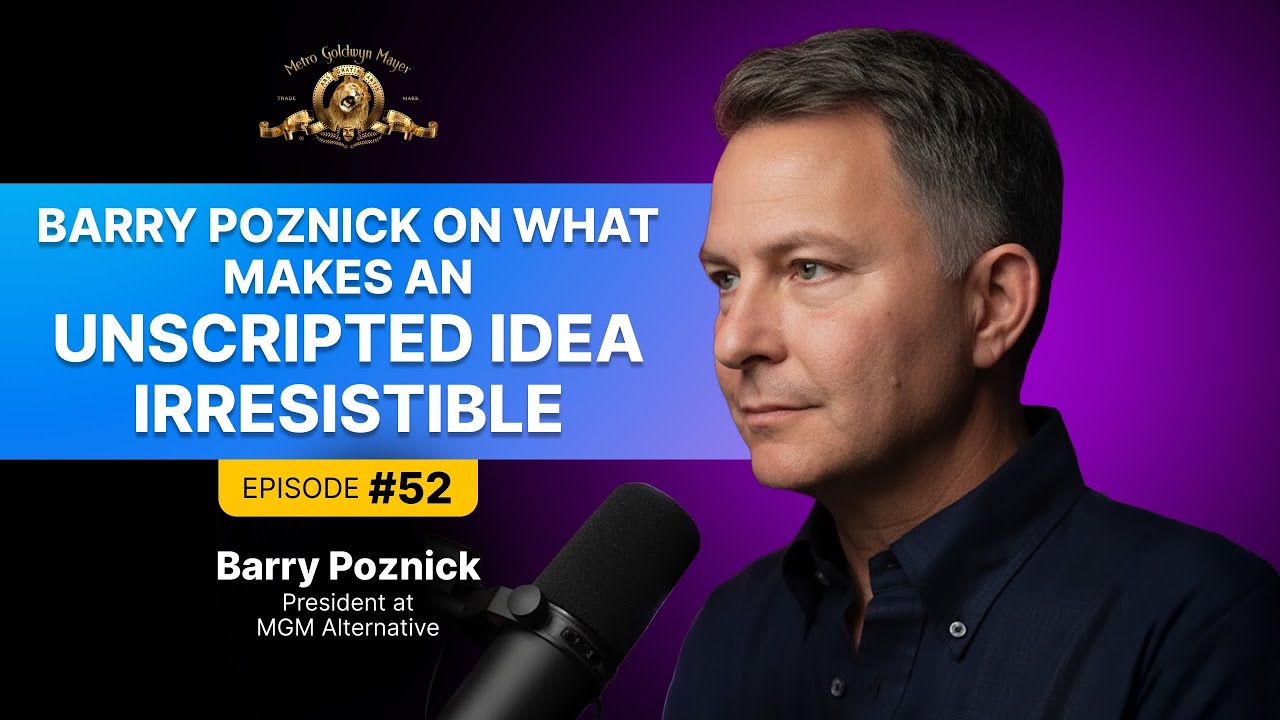
Barry Poznick (President, MGM Alternative)—the executive behind global unscripted hits including Shark Tank and Survivor—on how streaming economics have reshaped unscripted commissioning decisions and what platforms are actually prioritizing in 2026:
What Each Major Streamer Is Actually Commissioning—and What They Pay
Commissioning rates for sports documentaries vary dramatically by platform, project profile, and access quality. Here’s the intelligence that matters—platform by platform.
Netflix: The Category Architect—but Increasingly Selective
Netflix is the commissioning benchmark for the category—and the most difficult platform to crack without proven access. With a $19.8 billion content spend in 2026 (up 10% from 2025), Netflix’s commissioning philosophy for sports docs has shifted from volume to quality. The platform drove the genre’s initial boom with Drive to Survive, Full Swing, Break Point, and Untold—but it’s now actively culling underperforming access series.
Drive to Survive Season 8 launched on both Netflix and Apple TV+ simultaneously in February 2026 under an unusual simulcast arrangement—illustrating how sports documentary rights are beginning to cross traditional platform boundaries. As Deadline reported, Apple secured F1 racing rights at a value believed to be $140–$150 million annually, giving the documentary series natural cross-platform promotional logic. Netflix production fees for a Drive to Survive-scale docuseries run in the $2–4 million per episode range for fully financed originals, with license fees for independently produced access series typically landing between $500,000 and $1.5 million per episode depending on sport profile and access quality.
What Netflix is commissioning in 2026: athlete-centric retrospectives (Beckham-style biographical docs), event-anchored access series tied to live rights properties they hold, and scripted sports dramas expanding their three-pronged strategy. What’s getting harder to sell to Netflix: generic “season inside the sport” access series without a distinctive character story or a marquee athlete or franchise that’s demonstrably audience-tested.
Amazon Prime Video: The Volume Buyer Now Prioritizing Depth
Amazon is projected to be the top streaming spender on sports rights globally in 2026 at $3.8 billion—27% of total streaming sports spend—overtaking DAZN for the first time. Its NBA deal ($1.8B/season), NFL Thursday Night Football, UEFA Champions League in Germany, Italy, and the UK, and the Masters golf tournament in 2026 give Amazon the most diverse live sports portfolio in streaming. That portfolio now drives its documentary commissioning strategy directly.
Prime Video is commissioning sports documentaries that extend the IP value of its live rights holdings—NBA player profiles, behind-the-scenes access from Champions League clubs, NFL franchise histories. Production fees for independently produced sports documentaries acquired by Prime Video range from $400,000 to $1.2 million per episode for unscripted access series, with premium commissions for projects attached to marquee athletes or franchises within their live rights portfolio running higher. Amazon increasingly wants content that functions as a subscriber acquisition and retention tool around its live sports calendar, not content that exists independently of it.
Apple TV+: Premium Positioning, Selective Access Strategy
Apple’s sports documentary strategy runs through its live rights acquisitions—F1 exclusively (at $140–$150M annually), MLS via a 10-year agreement, and cricket in select markets. Make or Break (surfing), produced by Box to Box Films, was Apple’s entry into Drive to Survive-style behind-the-scenes access, though it was not renewed past two seasons. Apple’s commissioning criteria for sports docs are heavily quality-biased: the platform pays premium rates ($1.5–$3 million per episode for fully financed originals) but maintains high selectivity on sport, talent profile, and production quality. Projects that don’t align with a sport in Apple’s live rights portfolio face a significantly harder commissioning path.
DAZN: The Specialist That’s Been Outspent—but Not Irrelevant
DAZN was the top streaming sports spender every year from 2018 until 2026, when Amazon’s NBA deal pushed it to second place at 22% of total streaming sports rights spend. But DAZN remains the primary home for boxing, mixed martial arts, and European football content that generalist streamers haven’t fully colonized. Their documentary commissioning budgets are lower—$150,000 to $400,000 per episode for sports-adjacent factual content—but the access relationships with combat sports organizations, club football, and niche sports bodies are unmatched. For producers with strong boxing, MMA, or European football relationships, DAZN remains an active and accessible commissioner.
Paramount+: The UFC Platform Making Its Move
Paramount’s $1.1 billion annual UFC deal has propelled it into the top five streaming sports rights spenders in 2026 for the first time. The UFC’s most-watched exclusive event on Paramount+ at launch drew nearly 5 million views. That audience engagement creates an immediate documentary commissioning appetite around UFC fighter profiles, behind-the-scenes fight camp access, and the organizational history of one of sport’s most dramatically compelling institutions. Paramount’s budget range for sports documentary commissions—$300,000 to $700,000 per episode for independently produced projects—is more accessible than Netflix or Apple, with a commissioning focus currently concentrated on its UFC rights investment.
Track 400,000+ Projects and Identify Active Sports Doc Commissioning Windows Before Your Competition Does
Trusted by Netflix, Warner Bros, and Paramount. Join 140,000+ companies tracking commissioning signals across every major platform—with real-time intelligence on who’s buying in your sport right now.
✔ 200 free credits | ✔ No credit card required | ✔ Cancel anytime
The Access Problem: League Relationships as the Real Currency
Here’s what most sports documentary pitches fundamentally misunderstand. The commissioning decision isn’t really about your production concept. It’s about your access. Platform executives aren’t evaluating whether your pitch document is compelling—they’re evaluating whether you have, or can demonstrably get, the access that makes the documentary worth producing.
This is the central lesson of Drive to Survive, which F1 initially opposed before Formula One Group’s commercial rights holder eventually embraced. Mercedes and Ferrari refused to participate in Season 1—the documentary succeeded despite their resistance, not because of full cooperation. But that resistance also highlights the ongoing tension: without athlete buy-in, the access series model collapses. Peyton Manning was unable to get the player participation necessary for a second season of Quarterback. A surfing docuseries on Apple TV+ ran two seasons and stopped. A cycling series built around Tour de France access won’t extend beyond three seasons.
According to PwC’s 2026 sports industry analysis, creator access clauses are becoming more normalized in rights deals throughout 2026—leagues and broadcasters are increasingly building documentary and behind-the-scenes production rights directly into their media agreements. That’s good news structurally. But it also means access is increasingly controlled at the institutional level—by leagues, governing bodies, and federations—rather than accessible through individual athlete or team relationships alone.
The practical implication for producers: your pitch package needs to demonstrate access before you walk into the commissioning meeting, not promise to obtain it after greenlight. That means letters of intent from athletes, teams, or governing bodies. Existing relationship documentation. A track record of access production in the sport. Without that, you’re not pitching a sports documentary—you’re pitching a concept that needs someone else’s infrastructure to become one.
As NBA Commissioner Adam Silver has noted publicly, the league increasingly treats its content partnerships—including behind-the-scenes productions—as an extension of its media rights strategy, not a separate entertainment category. That means the decision-making about documentary access is moving to the same executives managing billion-dollar broadcast deals. You’re not pitching a documentary filmmaker anymore. You’re pitching a rights holder. Different conversation entirely. Our strategic guide on who buys documentaries and how acquisitions work covers the structural commissioning hierarchy in more depth.

Your AI Assistant, Agent, and Analyst for the Business of Entertainment
VIQI AI helps you plan content acquisitions, raise production financing, and find and connect with the right partners worldwide.
- Find active co-producers and financiers for scripted projects
- Find equity and gap financing companies in North America
- Find top film financiers in Europe
- Find production houses that can co-produce or finance unscripted series
- I am looking for production partners for a YA drama set in Brazil
- I am looking for producers with proven track record in mid-budget features
- I am looking for Turkish distributors with successful international sales
- I am looking for OTT platforms actively acquiring finished series for the LATAM region
- I am seeking localization companies offer subtitling services in multiple Asian languages
- I am seeking partners in animation production for children's content
- I am seeking USA based post-production companies with sound facilities
- I am seeking VFX partners to composite background images and AI generated content
- Show me recent drama projects available for pre-buy
- Show me Japanese Anime Distributors
- Show me true-crime buyers from Asia
- Show me documentary pre-buyers
- List the top commissioners at the BBC
- List the post-production and VFX decision-makers at Netflix
- List the development leaders at Sony Pictures
- List the scripted programming heads at HBO
- Who is backing animation projects in Europe right now
- Who is Netflix’s top production partners for Sports Docs
- Who is Commissioning factual content in the NORDICS
- Who is acquiring unscripted formats for the North American market
Market Saturation: The Drive to Survive Hangover
This is the conversation happening in every commissioning room that isn’t happening in most producer pitches. And it’s overdue.
According to Bloomberg’s business analysis from mid-2025, sports accounted for just 3% of all newly commissioned documentaries in 2019. The genre exploded post-Drive to Survive and The Last Dance—partly filling the pandemic-era content void. But by 2025, the market has reached a saturation point that’s generating clearly diminishing returns for all but the strongest properties.
The data is direct. Parrot Analytics’ Wade Payson-Denney put it plainly: “Outside of Netflix, the genre’s supply share outweighs its subscriber revenue share, suggesting it has become oversaturated.” Drive to Survive itself saw viewership decline from Season 5’s 90 million+ viewing hours in early 2024 to Season 6’s roughly 87 million hours—Max Verstappen’s dominance (winning 13 of the first 16 races in 2023) almost certainly contributed to the dramatic arc problem. A tennis docuseries ran two seasons. A cycling show around Tour de France access won’t run past season three. Even with strong access, the format is reaching audience fatigue in some sports.
But saturation isn’t uniform—and that’s the strategic intelligence producers need. The category that’s saturated is the generic “season inside the sport” docuseries format. The categories that aren’t saturated—and where platforms are actively commissioning—are far more specific:
- Event-anchored limited series: Content tied to a specific, defined moment—a World Cup cycle, an Olympic year, a championship run—performs better than open-ended annual seasons. Netflix’s Court of Gold (2024 Olympics basketball) and Under Pressure (2023 Women’s World Cup) demonstrate the model.
- Athlete biographical narratives: Individual athlete stories with clear dramatic arcs—Beckham, Mark Cavendish: Never Enough—continue to outperform institutional sports access. The character-driven model travels globally in ways that “inside Team X’s season” doesn’t.
- Women’s sports: Dramatically under-represented in a genre that’s been dominated by men’s franchise sports. Netflix’s America’s Sweethearts: Dallas Cowboys Cheerleaders found a mass audience that pure sports access docs haven’t reached in years. The commissioning window for women’s sports content is still open wide.
- Emerging sports with global expansion narratives: Pickleball, esports, padel, women’s cricket—sports undergoing rapid internationalization generate the same commissioning logic that made F1’s American story compelling in 2019. The structural conditions that produced Drive to Survive exist elsewhere.
New Commissioning Models: Scripted Sports, Athlete IP, and the Three-Pronged Strategy
Netflix’s near-200% increase in scripted sports commissions in H1 2025 isn’t just a Netflix story. It signals a structural shift in how platforms are thinking about sports content—from access-dependent documentary to narratively controlled scripted drama. And it changes the commissioning opportunity for producers who’ve been exclusively pursuing the unscripted access model.
Scripted sports content doesn’t require league cooperation for production. You don’t need athlete buy-in. You don’t need governing body approval. You need rights to the underlying story—and increasingly, that means athlete-originated IP, historical narratives, or fictionalised accounts of real sporting events. Netflix’s scripted boxing commissions (Glory and Fight to ’84) followed their live boxing success. The ’99ers and Brazil 70 – The Saga of the Tri are paired with their FIFA Women’s World Cup rights for 2027 and 2031. Scripted sports is becoming a rights exploitation strategy as much as a creative category.
The athlete IP model deserves particular attention. Religion of Sports—co-founded by Tom Brady, Michael Strahan, and filmmaker Gotham Chopra—raised $50 million in a round that signals how seriously the market now values athlete-controlled production capacity. SpringHill, LeBron James and Maverick Carter’s production company, received a minority stake valuation of $725 million in 2021. Boardwalk Pictures (behind Netflix’s Last Chance U and Race: Bubba Wallace) sold a minority stake to Shamrock Capital. Box to Box Films—the production company behind Drive to Survive and Full Swing—was projecting roughly $11 million in revenue and exploring a $30 million raise.
These aren’t coincidental transactions. Institutional capital is flowing into sports production companies specifically because the combination of live rights deals, documentary commissioning, and scripted content has created a multi-layered IP exploitation model that institutional investors understand. The production company with a sustainable slate strategy—not just a single good pitch—is what platforms and financial partners are both looking for in 2026.
As PwC’s 2026 sports industry outlook identifies, leagues are now partnering directly with athletes and creators rather than competing with them for content rights. MLB’s equity investment in Jomboy Media is one example; the Good Good Golf–branded PGA Tour event signals another. The boundaries between rights holder, content producer, and distribution platform are dissolving. Producers who position themselves at the intersection of those categories—rather than waiting to be commissioned by a single platform—are capturing the most durable economics in the category. Our guide to production financing trends and funding models covers how these capital structures translate into actual deal terms.
Budget Architecture: What Sports Docs Actually Cost to Produce
The $100,000–$500,000 per episode range for sports documentary production is accurate—but it papers over enormous variance that directly determines your financing strategy. Let’s break it down with the specificity commissioners and financiers actually need.
Tier 1: Platform-Financed Premium Access Series ($2M–$5M per episode)
These are fully commissioned platform originals where the streamer controls the production, negotiates access directly with leagues and athletes, and retains all rights. Drive to Survive-scale productions at Netflix, Apple TV+ premium sport docs, and Amazon’s NBA-adjacent originals. Box to Box Films operates in this tier. The production company is effectively a service producer with IP participation. You won’t be independently financing your way into this tier—you’ll be commissioned into it based on track record and existing platform relationships.
Tier 2: Independently Produced Acquisitions and Pre-Sales ($300K–$1.5M per episode)
This is where most independent sports documentary production actually occurs. You produce the film—sometimes with a platform pre-sale covering 40–60% of budget, sometimes with equity financing filling the gap—and sell completed or in-production content to a commissioner. Sports documentaries in this tier typically require a confirmed access agreement before a platform will commit a licence fee. Budget your completion bond at 3–6% of production budget and factor 15–22% all-in cost on any gap financing component. The capital stack architecture here looks like: platform pre-sale (40–60%) + sports organization or brand co-investment (15–25%) + tax incentive rebate (15–25% depending on territory) + gap or equity (10–20%).
Tier 3: Independently Financed Feature Sports Docs ($500K–$3M total budget)
Single feature-length sports documentaries—athlete biographies, event retrospectives, investigative sports narratives—typically in the $500,000 to $3 million total production budget range. Andrea Scarso at IPR VC explicitly notes that his firm has invested in “feature documentaries, in sports documentaries, budget very small, relatively small”—the profile that matters being the project’s ability to “deliver above its weight in terms of results and ambitions.” SVOD acquisition fees for completed feature sports docs range from $500,000 (mid-tier platform) to $3–4 million (Netflix theatrical-level acquisition). Tax incentives can cover 25–40% of production costs depending on production territory. Our guide to sports and adventure documentary production strategy covers the access and production model in practical terms.
Identify Production Companies, Co-Financiers, and Sports Doc Commissioners Across 140,000+ Verified Companies
Trusted by Netflix, Warner Bros, and Paramount. Vitrina tracks documentary commissioning signals, sports IP deal flow, and production company capabilities across 400,000+ projects—giving you the buyer intelligence you need before the pitch window opens.
✔ 200 free credits | ✔ No credit card required | ✔ Cancel anytime
Red Bull Studios, IPR VC, and the Equity Financing Layer
The financing architecture for sports documentaries has a layer most producers don’t fully weaponize: brand-originated and equity-backed capital that sits outside the traditional broadcaster/streamer commissioning model entirely.
Red Bull Studios is the most prominent example. Operating primarily in sports and sports-adjacent documentary content, Red Bull has built one of the most sophisticated brand-funded documentary production operations in the industry—producing content that distributes on its own digital channels, licenses to streamers, and functions as both marketing asset and standalone commercial IP simultaneously. IPR VC’s Andrea Scarso describes his firm’s partnership with Red Bull as their newest relationship specifically in the “sports and sports adjacent stories in the documentary space for the most part”—meaning institutional equity capital (IPR VC’s LP base of institutional investors, family offices, and insurance companies) is now co-financing Red Bull-originated sports documentary IP.
That’s a structural combination worth understanding. Red Bull provides the brand investment, distribution infrastructure, and access relationships that traditional production companies take years to build. IPR VC provides equity financing with a portfolio approach—managing risk across multiple projects rather than betting everything on a single commission. For independent sports documentary producers, the implication is that brand-financed production partnerships aren’t just marketing arrangements. They’re capitalization strategies that can replace or supplement platform commissioning entirely.
IPR VC’s broader model is instructive. Founded in Helsinki in 2014, the firm raises institutional capital—from investors that include family offices and insurance companies—to take equity positions in film and television projects. Their partner slate includes A24 (over 15 co-invested films), XYZ Films (multi-year relationship), MK2 Films, and Red Bull Studios. Scarso is explicit about their investment philosophy: “When you hit a successful IP, the upside can be greater than the overall risk you’re taking on a portfolio.” For sports documentaries, that upside model works because the asset—a compelling athlete narrative or access-driven franchise—has merchandising, licensing, and follow-on production value beyond a single platform commission.
The equity layer also matters for recoupment timing. As Scarso notes, from investment to first revenues typically runs 12–24 months for documentary content—shorter than scripted drama—because the production timeline and distribution window compress more efficiently. Sports documentaries tied to live events (Olympics, World Cups, major championships) have even tighter windows: greenlight to delivery can run 8–12 months for event-anchored content. That timeline compression is attractive to equity investors precisely because the recoupment cycle is shorter. Our documentary licensing intelligence guide on why opportunity alerts are critical for acquisitions covers how to structure your approach to these financing conversations.
Finding the Right Buyer Before the Window Closes
The Fragmentation Paradox hits sports documentary producers harder than almost any other content category—because the commissioning window for access-dependent content is genuinely time-sensitive in ways that scripted drama isn’t.
An access series tied to a specific sport’s season has a six-to-ten-week pre-season window where commissioner interest and access negotiations must converge. Miss it, and you’re waiting 12 months for the next cycle. A documentary tied to a major event (Olympics, World Cup, championship series) may have an even narrower pitch window—4–8 weeks where the commissioning executive’s acquisition budget is open and the event timing still makes a greenlight viable. But with 600,000+ companies in the global film and TV supply chain operating in opaque silos—and commissioning executives at platforms managing inbounds from hundreds of producers simultaneously—the information asymmetry is severe.
Most independent sports documentary producers are pitching based on market reputation (“Netflix buys sports docs”) rather than real-time commissioning intelligence (“Netflix’s documentary acquisitions team is actively sourcing women’s sports content for their Q2 2027 calendar and their current slate has three open slots in the access-series category”). That’s a 3–6 month deal cycle extension compared to producers who know which door to knock on before a commissioning window opens.
Smart Pairing—matching your project to an active buyer at the right moment in their commissioning cycle—is how Box to Box Films secured the Drive to Survive commission before F1’s growth story was broadly understood. It’s how Boardwalk Pictures built a Netflix relationship that’s sustained across multiple sports over several years. And it’s how producers at Religion of Sports—who have Tom Brady, Michael Strahan, and $50 million in institutional backing—still compete effectively against much larger production entities. The insider advantage isn’t their network’s size. It’s their intelligence on when and where a commissioning executive’s priorities align with their available projects. Our analysis of content financing deal-flow monitoring explains exactly how real-time intelligence translates into faster commissioning cycles for documentary producers.
Frequently Asked Questions
What are streamers paying for sports documentaries in 2026?
Rates vary significantly by platform and project tier. Netflix fully financed platform originals run $2–4 million per episode; independently produced acquisitions range from $500,000–$1.5 million per episode. Apple TV+ pays $1.5–$3 million per episode for premium projects. Amazon Prime Video’s sports documentary licence fees run $400,000–$1.2 million per episode for independently produced projects aligned with their live rights portfolio. DAZN commissions in the $150,000–$400,000 per episode range for combat sports and niche sport content. Paramount+ acquires independently produced projects at $300,000–$700,000 per episode, with a current focus on UFC-adjacent content.
How much does it cost to produce a sports documentary series?
Sports documentaries typically cost $100,000–$500,000 per episode to produce—significantly less than scripted drama or live sports rights. Premium platform-financed access series (Drive to Survive-scale) run $2–5 million per episode including platform overheads. Independently produced access docuseries typically land in the $200,000–$600,000 per episode range. Feature-length single sports documentaries run $500,000–$3 million total. Production cost drivers include access logistics (embedded crew following athletes or teams), travel, archive licensing, and talent access fees. Budget 3–6% of production cost for a completion bond, required for most independent financing arrangements.
Is the sports documentary market oversaturated in 2026?
Partially—but not uniformly. Generic “season inside the sport” access docuseries are facing audience fatigue, particularly outside Netflix. According to Parrot Analytics, the genre’s supply share already outweighs subscriber revenue share for most platforms. But specific sub-categories remain under-served and actively commissioned: women’s sports, event-anchored limited series, athlete biographical narratives, emerging sports with global expansion stories (pickleball, padel), and scripted sports drama. Netflix’s scripted sports commissions grew nearly 200% in H1 2025—that’s the genre’s growth category, not the traditional access docuseries format. Saturation is format-specific, not category-wide.
How important is league or athlete access for getting a sports documentary commissioned?
For access-based docuseries, it’s the primary commissioning criteria—not secondary to the creative pitch. Platform executives evaluate whether confirmed access exists before they assess production quality or narrative concept. Confirmed access means documented letters of intent, track record with the sport or organization, or an existing relationship with the governing body or league. PwC’s 2026 industry analysis identifies creator access clauses becoming normalized in rights deals—meaning institutional access is increasingly controlled by leagues, not individual producers. Your pitch package needs to demonstrate access before the commissioning meeting, not promise to obtain it after greenlight.
Which sports are generating the most active commissioning interest in 2026?
Based on live rights investments and commissioning patterns: NBA and NFL content on Amazon, UFC content on Paramount+, F1 and MLS content on Apple TV+, and women’s sports across multiple platforms are the highest commissioning-intent categories. Women’s sports content in particular is dramatically under-represented in a genre dominated by men’s franchise sports—platforms are actively seeking to close that gap. Emerging and challenger sports (pickleball, women’s cricket, competitive gaming, padel) represent the fastest-growing commissioning opportunity for independent producers who can secure early access relationships before the sport’s rights value escalates.
How does brand financing from companies like Red Bull change the sports documentary capital stack?
Brand-financed production partnerships—Red Bull Studios being the most developed example—provide capital, distribution infrastructure, and access relationships in combination. The Red Bull model produces sports documentary content that distributes on brand-owned digital channels, licenses to streamers as secondary distribution, and functions simultaneously as commercial IP and marketing asset. IPR VC’s equity partnership with Red Bull brings institutional capital into this model, co-financing sports documentary IP that sits outside traditional broadcaster commissioning entirely. For independent producers, brand co-production arrangements can replace 15–30% of a project’s budget while providing access infrastructure that would otherwise require years of relationship-building.
What’s the capital stack for independently produced sports documentaries?
A typical independently financed sports documentary capital stack in 2026 includes: platform pre-sale or licence fee (40–60% of budget, requires confirmed access), sports organization or brand co-investment (15–25%, increasingly common as leagues monetize documentary access), tax incentive rebate (15–30% depending on production territory—UK 25.5%, Australia 40%, various jurisdictions), and gap financing or equity (10–20% to close). Total effective cost for debt/gap financing runs 15–22% all-in. Completion bonds at 3–6% of budget are mandatory for most lenders. The minimum budget threshold for most gap financing arrangements is $500,000 for documentary projects.
What’s driving Netflix’s move into scripted sports content?
According to Ampere Analysis, Netflix ordered 11 new scripted sports titles in H1 2025—a near-200% increase from H1 2024. The strategy is driven by three converging factors. First, scripted sports content doesn’t require league cooperation or athlete access—removing the main commissioning bottleneck for access-dependent documentary series. Second, scripted content allows narrative control that extends season by season without dependence on real-world sporting outcomes (Verstappen’s dominance limiting Drive to Survive drama being the cautionary example). Third, Netflix is pairing scripted sports commissions directly with its live rights investments—scripted boxing commissions following live boxing, World Cup-themed scripted series aligned with FIFA Women’s World Cup rights purchases—as a deliberate IP exploitation strategy to amortize its live sports rights spend across multiple content layers.
Conclusion: The Commissioning Window Is Real—but So Is the Intelligence Gap
Streamers spending $14.2 billion on sports rights in 2026 while sports documentary production costs run at $100,000–$500,000 per episode isn’t just a favourable unit economics story. It’s the structural rationale for why platforms are committed to this category—and why the commissioning opportunity for producers with the right access, the right project profile, and the right timing intelligence is genuinely significant.
But “sports documentary” isn’t a commissioning category anymore. It’s five distinct sub-categories with different access requirements, different platform fits, different budget architectures, and different saturation levels. Knowing which one you’re actually in determines everything about your commissioning strategy.
Key Takeaways:
- $14.2B sports rights spend creates a documentary flywheel: Amazon ($3.8B), DAZN ($3.1B), YouTube TV ($2B), Paramount ($1.1B UFC), Netflix ($700M+) are all commissioning documentary content to amortize their live rights investments. Your project’s alignment with a platform’s live sports portfolio is now the primary commissioning criteria.
- Access beats concept, every time: Platform executives evaluate documented access before they evaluate production quality or narrative arc. Letters of intent from leagues, teams, or athletes belong in your pitch package—not in your post-greenlight production plan.
- Generic access series are saturated; specific categories aren’t: Women’s sports, event-anchored limited series, athlete biographical narratives, emerging sports with global expansion stories, and scripted sports drama are all under-supplied relative to platform demand.
- The equity layer is underutilized: Brand partnerships (Red Bull Studios model) and equity financing (IPR VC’s sports documentary investment via institutional LP capital) represent capital sources that bypass traditional commissioning bottlenecks—and can finance projects that platforms aren’t yet ready to commission directly.
- The Fragmentation Paradox costs producers months, not days: With 600,000+ companies in the global supply chain operating in opaque silos, pitching based on platform reputation rather than real-time commissioning intelligence extends deal cycles by 3–6 months. Smart Pairing your project to an active buyer at the right moment in their commissioning cycle is the single highest-leverage variable in the sports documentary pitching process.
Get Direct Introductions to Sports Documentary Commissioners and Co-Financing Partners
Trusted by Netflix, Warner Bros, and Paramount. Vitrina’s Concierge Service delivers verified introductions to commissioning executives actively acquiring sports documentaries—matched to your project profile, access level, and budget range. No cold pitches. No missed windows.
✔ Verified introductions | ✔ 140,000+ companies tracked | ✔ Real-time acquisition intelligence
Or start free: Get 200 free credits—no credit card required →
Find Film+TV Projects, Partners, and Deals – Fast.
VIQI matches you with the right financiers, producers, streamers, and buyers – globally.
Producers Seeking Financing, Co-Pros, or Pre-Buys?
Vitrina Concierge helps producers reach the right financiers, commissioners, distributors, and co-production partners — with precision outreach, not cold pitching.
Join Industry Briefings Trusted by Leaders
Streamers – Netflix vs. Amazon – The 2026 Strategy
How Netflix and Amazon’s content and revenue strategies are diverging ahead of 2026.

Format Adaptations: Global Trends
Where formats are traveling, which adaptations are breaking out, and how streamers are backing remakes in 2025–2026.

Books, Novels & Comics Adaptations: Global Trends
Books, webtoons, and manga driving the next global screen hits. Discover how in this webinar.

Micro-Dramas & Mobile-First Storytelling
Micro-dramas are building real audiences and revenue. Understand the platforms, buyers, and economics behind the growth.