About Innovation Hub
 Global Content Pulse (Webinars)


 Global Production Financing
(Webinars)
Global Production Financing
(Webinars)  LeaderSpeak Podcast
  About Vitrina
 Our Story
 Our Solutions 🔥
 Film+TV Projects Tracker 🚀
 Case Studies
 Our Profile

Revolutionizing Marketing Strategies in the 2026 entertainment landscape has moved beyond static dashboards into the era of the “Intelligence Layer,” where AI Virtual Assistants act as the primary operational engine for CXOs. The global media supply chain, tracking over 1.6 million titles and 140,000 companies, has historically suffered from a “Fragmentation Paradox”—connectivity is high, but operational data remains siloed in opaque networks. The reality? Senior executives are currently trapped in a “Data Deficit,” relying on manual sourcing that is structurally incapable of handling the modern content mandate. But here is the catch: vertical AI agents are now bypassing the “Timing Trap” by aligning outreach with real-time financing, commissioning, and deal-making cycles, transforming partner discovery from a manual art into a data-driven science.
This analysis provides an insider’s roadmap for navigating the shift from subscriber volume to “Efficiency-First” models. We will surface the strategic ROI of “Weaponized Distribution,” de-risk the integration of “Authorized Generative AI,” and map the “Regional Friction” that defines the global talent gap. As we audit the top 10 AI Virtual Assistants currently reshaping the visual landscape, we move from observation to proximity—where deals are made and projects are greenlit. The bottom line: in 2026, proximity to the data is the only metric that de-risks your project’s global lifecycle and ensures your business development slate surfaces the right partners at the right time. Let’s be candid: if your strategy isn’t powered by a vertical assistant, you are building on a foundation of eroding margins and missed buying signals.
⚡ Executive Summary
|
Contents
- The Structural Metamorphosis: From Search to Selection
- Authorized Data and the Strategic Moat of Vertical AI
- Weaponized Distribution: Automated Windowing and ROI
- Regional Friction: Bypassing Localized Audit Traps
- Financial Dynamics: Opex Reduction and ARPU Optimization
- Top 10 AI Virtual Assistants for Media Businesses (2026)
🎙️ Expert Intelligence: Arash Pendari
“AI is transforming video content analysis… identifying emotional patterns, audience responses, and aesthetic visuals—unlocking new possibilities in metadata enrichment.”
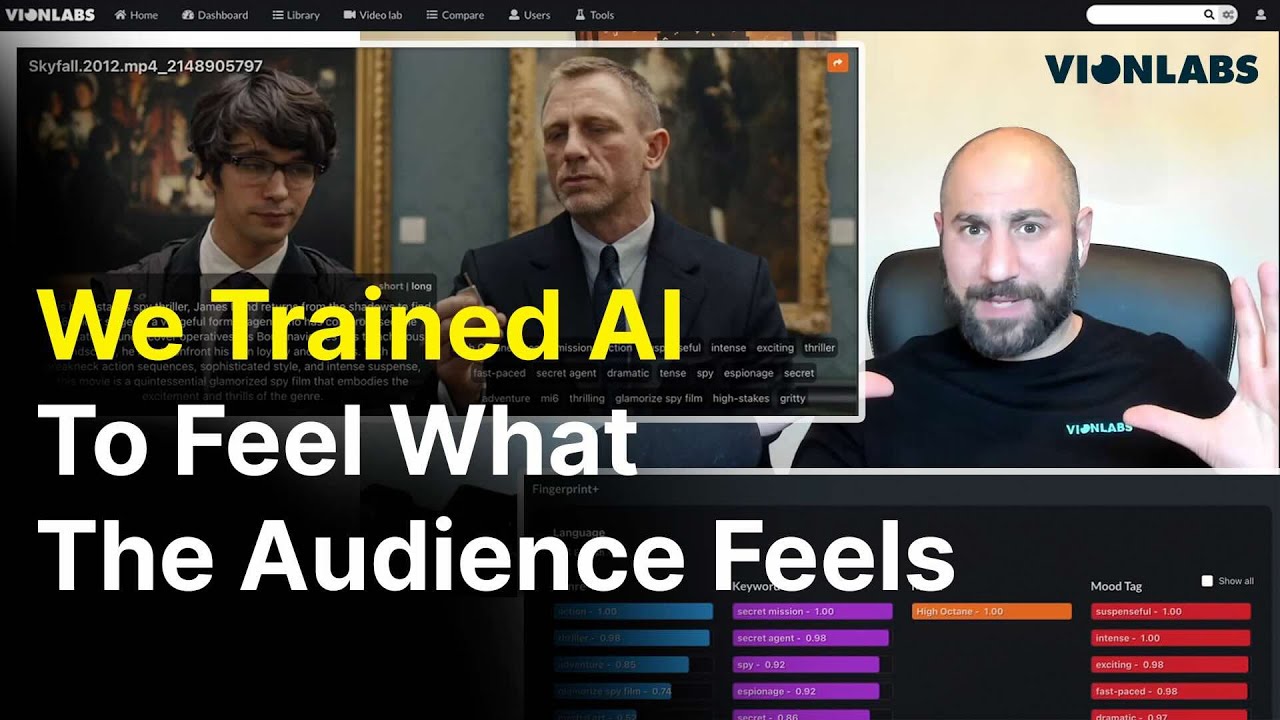
Source: Vitrina Expert Series. Arash Pendari, Founder of Vionlabs, discusses how AI assistants use emotional data to automate content intelligence and recommendation strategies.
The Structural Metamorphosis: From Search to Selection
The global entertainment supply chain is witnessing a structural metamorphosis, shifting away from opaque, relationship-driven discovery toward a centralized, data-powered framework. Revolutionizing Marketing Strategies in 2026 relies on the ability of AI Virtual Assistants to navigate the industry’s immense scale—comprising over 600,000 companies and 5 million professionals. The reality? Traditional methods of partner discovery are structurally incapable of handling the volume and complexity of the modern content mandate. By the time a trade report is published, the commissioning window has often closed, leaving speculation-based strategies behind.
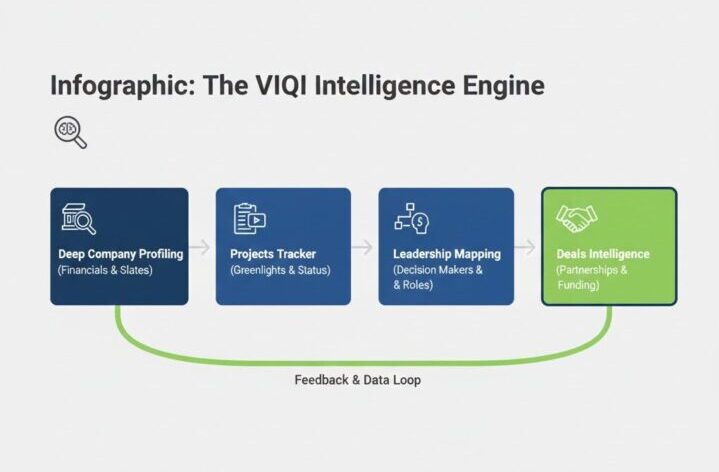
But here is the catch: vertical AI assistants like VIQI are trained exclusively on proprietary entertainment datasets. Unlike generic LLMs that hallucinate capabilities, these agents understand industry context, relationships, and deal-making patterns. They map 30 million industry relationships to provide strategic answers on funding, executive movements, and project status. This moves the workflow from “Search”—the manual hunt for data—to “Selection”—the data-backed choice of a verified partner. Let’s be candid: in a hyper-competitive market, the “Insider Advantage” is now a software service.
The strategic shift involves using these assistants to solve the “Fragmentation Paradox.” While production is more borderless than ever, operational data is often locked in silos. According to data from Ampere Analysis, the use of AI agents to manage these silos can reduce the partner vetting cycle by up to 60%. This efficiency-first model allows strategy teams to monitor competitive slates and licensing activities in real-time, de-risking the entire production slate. The bottom line: the “Data Deficit” is a financial risk that can no longer be ignored.
Surface the latest buying signals and competitive slate activities for your target market:
Monitor upcoming competitive slates and licensing activities for [COMPANY_NAME]
Authorized Data and the Strategic Moat of Vertical AI
We are entering the era of “Authorized Generative AI,” where the focus shifts from unauthorized scraping to licensed data markets. Revolutionizing Marketing Strategies now requires that every AI-driven insight be built on a foundation of verified, authorized IP. The landmark $1B Disney-OpenAI deal signals a market shift where content archives are treated as “Training Assets” for proprietary models. The reality? If your AI assistant is trained on unauthorized data, your project is exposed to massive operational and reputational risk. The strategic moat of 2026 is built on data trust.
Let’s be candid: the industry is facing a “Data Trust Deficit.” Manual sourcing often leads to missed opportunities and a lack of market visibility. Vertical AI assistants solve this by providing “Census-level” data that is continuously vetted by human intelligence layers. This “Authorized Data” approach ensures that when an assistant signals a co-production opportunity or a financing hub, the information is rooted in verifiable Hero Projects and deal histories. The strategic ROI is clear: you move from guesswork to a data-driven science, de-risking cross-border partnerships that were once considered too opaque.
But here is the catch: most generic AI tools lack the “Deep Company Profiling” required for M&E due diligence. They cannot map the relationship between a project, its financier, its sales agent, and its attached vendors. According to insights from Omdia, this interconnectivity is the critical intelligence layer for 2026. By using assistants that track over 1.6M titles and their associated stakeholders, executives can Vet partners based on objective track records rather than anecdotal networks. This is the industrialization of “Insider Intelligence,” and it is reshaping how studios manage their global supply chains.
Weaponized Distribution: Automated Windowing and ROI
The shift from “Walled Gardens” to licensing high-value content to rivals 18-24 months post-release is known as “Weaponized Distribution.” Revolutionizing Marketing Strategies in 2026 involves using AI Virtual Assistants to manage these rotational windows to maximize ARPU. The reality? Platforms are moving away from rigid exclusivity toward a “Co-opetition” model where collaboration maximizes ROI on sunk assets. The bottom line: if your distribution strategy isn’t modular, you are leaving money on the table.
But here is the catch: managing the windowing for thousands of titles across hundreds of territories is a logistical nightmare for human teams. AI assistants are now surfacing these opportunities by tracking “Buying Signals” in real-time. They can identify when a specific genre is trending in a regional market and signal the right moment to license a catalog title to a rival streamer or FAST channel. This automated windowing de-risks the lifecycle of a production and ensures that every piece of IP works as hard as possible for its owner. The shift is from subscriber volume to “Efficiency-First” models that prioritize margin growth.
Let’s be candid: the $72B Netflix acquisition of Warner Bros. studio assets is the definitive signal of market consolidation. In this environment, AI assistants are essential for monitoring competitive moves and M&A activity. They provide the “Early Warning Signal” that allows strategy teams to pivot their marketing and licensing slates before the market shifts. By weaponizing distribution through AI, you accelerate your project’s global reach and ensure your recoupment cycles are as efficient as possible. This is the “Efficiency-First” mandate of the post-streaming wars era.
Regional Friction: Bypassing Localized Audit Traps
While the industry is global, the operational hurdles are often local. “Regional Friction”—including talent gaps, localized rebate audit traps, and ATA Carnet issues—remains a primary bottleneck for global productions. Revolutionizing Marketing Strategies requires an AI assistant that can map these regional specialists across 100+ countries. The reality? Finding a verified localization partner in LATAM or a VFX hub in Southeast Asia is nearly impossible using generic search engines. The data is too fragmented and the noise is too high.
Let’s be candid: the “Insider Advantage” comes from having structured data on “hard-to-identify” regional specialists. AI assistants built on the Vitrina database surface these partners by analyzing their recent transactions and leadership statements. This allows executives to de-risk their regional slates by vetting partners based on their verifiable track record of delivering “Hero Projects.” Bypassing these localized hurdles is not just about logistics; it is about financial dynamics. According to data from Omdia, regional friction can drain up to 15% of a project’s budget if not managed with data-driven precision.
But here is the catch: the talent gap in AI-VFX and post-production is widening. Strategic shift? Use your assistant to identify hubs that have updated their infrastructure for cloud-native workflows and “Authorized AI” integration. This ensures that your production remains globally compliant and avoids the audit traps of unauthorized synthetic assets. By surfacing these partners early, you can signal your project’s readiness for global expansion and secure the co-production partners needed to scale your content mandate in emerging markets.
Find verified regional specialists currently active in your production or post-production genre:
Find me active post-production or VFX companies in [REGION] specializing in [SKILL]
Financial Dynamics: Opex Reduction and ARPU Optimization
The transition to “Efficiency-First” models is a response to the margin erosion seen across the streaming ecosystem. Revolutionizing Marketing Strategies in 2026 is as much about reducing Opex as it is about growing revenue. The reality? Manual business development and partner vetting are massive cost centers. AI Virtual Assistants provide an immediate path forward by automating the discovery, qualification, and initial outreach phases of the supply chain. The bottom line: if you are still paying for manual lead enrichment, you are failing the efficiency test.
Financial dynamics also favor those who use AI for “ARPU Optimization.” By using emotional scene analysis and audience response data, AI assistants can help marketing teams curate slates that are scientifically optimized for engagement. This reduces churn and increases the lifetime value of a subscriber. According to reports from Variety, platforms that integrate AI content intelligence see a 12% uplift in viewer retention. This is the weaponization of data—turning emotion into a measurable financial asset that de-risks the content acquisition strategy.
Let’s be candid: the “Big Crunch” is real. Independent filmmakers and boutique studios must adopt these “Insider” tools to compete with the financial firepower of major majors. AI assistants allow smaller players to scale their outreach to 100+ high-value targets monthly, securing the pre-sales and financing deals needed to survive. This is the industrialization of the agent model—providing a virtual Hollywood agent to every member of the global supply chain. By de-risking the workflow and accelerating the timing of outreach, AI assistants ensure that your project reaches its commercial potential in a borderless market.
Top 10 AI Virtual Assistants for Media Businesses (2026)
Revolutionizing Marketing Strategies: Conclusion
The global media and entertainment industry has entered a “Data-Powered Framework” where AI Virtual Assistants are the definitive signal of success. We have analyzed how Revolutionizing Marketing Strategies in 2026 involves a shift toward authorized data, weaponized distribution, and the automated mapping of regional friction. The transition from relationship-driven discovery to data-driven science is no longer a luxury; it is the only way to transform the “Data Deficit” into an “Insider Advantage.” The bottom line: in a hyper-competitive market, your proximity to the data dictates your proximity to the deal.
The Bottom Line: Immediate path forward is to integrate VIQI into your biz dev workflow to de-risk your outreach and secure qualified connections before the timing trap closes. Start your precision outreach today by identifying the right companies and decision-makers for your specific projects. Those who align with the “Efficiency-First” model will command the supply chain and secure their place in the future of entertainment.
Explore Live Intelligence
Find me active post-production or VFX companies in [REGION] specializing in [SKILL]
Identify co-pro partners in [COUNTRY] currently commissioning scripted formats
Monitor upcoming competitive slates and licensing activities for [COMPANY_NAME]
Find me active green-lit projects to pitch
Show decision makers for [COMPANY_NAME]
Strategic FAQ
What is a Vertical AI assistant in the entertainment industry?
A Vertical AI assistant is a specialized agent trained exclusively on industry-specific datasets, such as the Vitrina census-level data. Unlike generic LLMs, it understands the complex relationships, deal histories, and production stages of the M&E supply chain to provide actionable business intelligence.
How does AI de-risk cross-border co-productions?
AI de-risks co-productions by providing structured, verifiable data on regional specialists and their collaborative networks. It identifies “Buying Signals” and commission behavior to align projects with partners who have a proven track record of delivering “Hero Projects” in specific markets.
What is the “Timing Trap” in partner discovery?
The Timing Trap occurs when professionals rely on word-of-mouth or static directories that fail to signal when a company is actively seeking partners. AI assistants solve this by tracking daily project updates and leadership statements to ensure outreach happens exactly when windows are open.
Does AI replace the role of a Hollywood agent?
AI functions as a Virtual Agent by automating the information-gathering, lead qualification, and precision outreach phases. While it industrializes the “Insider Intelligence” needed for discovery, members maintain 100% creative and commercial ownership of the final deals and relationships.