About Innovation Hub
 Global Content Pulse (Webinars)


 Global Production Financing
(Webinars)
Global Production Financing
(Webinars)  LeaderSpeak Podcast
  About Vitrina
 Our Story
 Our Solutions 🔥
 Film+TV Projects Tracker 🚀
 Case Studies
 Our Profile
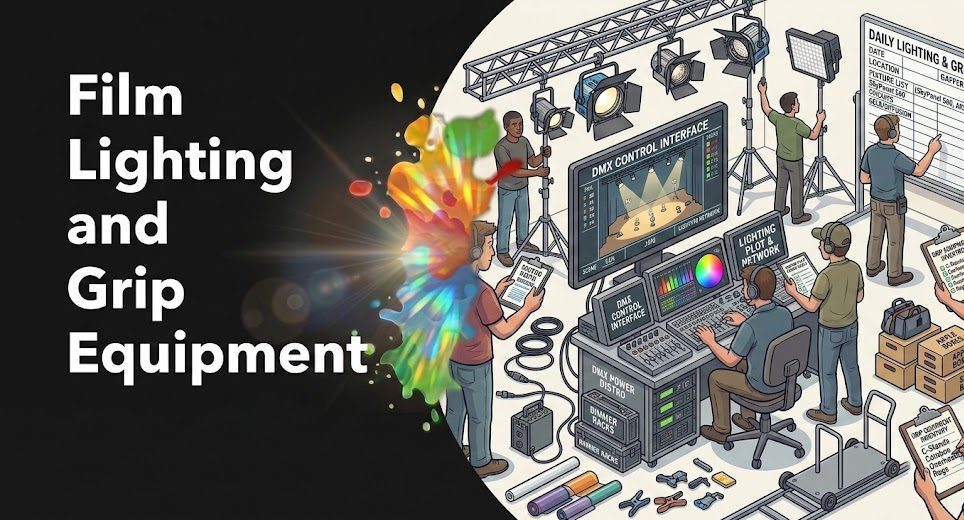
Los Angeles is the most densely supplied production market on earth—and that’s both its advantage and its trap. You’ve got access to the deepest inventory of film lighting and grip equipment rental anywhere in the world. But the Fragmentation Paradox™ applies here as sharply as anywhere else in the supply chain: more suppliers doesn’t automatically mean better decisions, faster deals, or the right package for your specific production context.
The LA grip and electric rental market has around a dozen major players and a long tail of smaller specialty houses—each with different inventory depth, rate structures, and service models. Knowing which house to call for a studio-scale Arri SkyPanel order is not the same knowledge as knowing who’ll actually deliver a 5-ton grip truck to a Topanga Canyon location at 5am without drama. Getting the wrong rental house in the wrong production context costs you time, costs you money, and sometimes costs you the shot.
This guide gives you the practical breakdown of where to rent film lighting and grip equipment in Los Angeles—organized by production tier, with the contextual detail you actually need to make the call.
In This Guide
- The LA Lighting and Grip Market: What You Need to Know First
- Major Rental Houses: Studio-Scale and Mid-Budget Productions
- Indie and Mid-Tier Rental Houses: $500K–$3M Productions
- Micro-Budget Options: Under $300K
- Union vs. Non-Union: IATSE Local 728 and Local 80
- Timing and Availability: When the LA Market Gets Tight
- Rate Benchmarks: What Lighting and Grip Packages Actually Cost
- How to Vet a Rental House Before You Sign
- FAQ: Film Lighting and Grip Equipment Rental in LA
Ask VIQI: Find Verified Lighting and Grip Rental Companies in LA
VIQI is Vitrina’s AI assistant—trained on 1.6 million titles, 360,000 companies, and 5 million entertainment professionals. Ask it to surface verified lighting equipment and grip rental companies matched to your shoot territory, project type, and production tier.
✓ 200 free credits | ✓ No credit card needed
The LA Lighting and Grip Market: What You Need to Know First
Los Angeles is home to more than 600 active production companies competing for the same grip trucks, the same SkyPanel inventory, and the same crew on any given shoot day. That supply pressure shapes the market in ways that producers—especially those coming from other markets—consistently underestimate.
A few things that are true about the LA lighting and grip rental market that aren’t obvious from the outside:
- Inventory availability is not guaranteed, even from major houses. Large rental companies like Cinelease and Illumination Dynamics carry deep inventory—but multiple concurrent studio productions can clear a significant portion of any rental house’s large-format fixture stock. Arri SkyPanel S360s, large HMIs, and high-end LED soft sources get booked weeks in advance during peak season. Don’t assume availability; confirm it.
- Relationships drive rate negotiation. Published day rates are a starting point. Rental houses extend preferred rates to production companies with track records—repeat business, on-time returns, and clean damage histories. Your first rental with a new house will be at or near list price. Your fifth won’t be.
- Delivery logistics matter as much as inventory. A rental house with a Hollywood facility is fine if you’re shooting on a lot. If you’re shooting practical locations in the Valley or on the coast, you want a house that has trucks available and experience with location delivery logistics. Ask about delivery range, truck availability, and prep turnaround before you commit.
- Your gaffer drives this decision, not you. The most important input into your lighting rental decision is your gaffer’s recommendation. They have working relationships with specific rental houses, they know which inventory is well-maintained, and they’ll be the one troubleshooting on the day if something fails. Override their rental house preference only if there’s a compelling financial or logistical reason. The friction cost of a gaffer working with unfamiliar gear or an unfamiliar house almost always exceeds whatever you saved on the rate.
Major Rental Houses: Studio-Scale and Mid-Budget Productions
These are the houses running the deepest inventory in Los Angeles—the ones supplying Netflix originals, network drama, and major studio features. If your BTL is above $2M and your G&E package runs $3,000 or more per day, these are your primary contacts.
Cinelease Studios
Cinelease is the largest studio-scale lighting rental operation in North America, with a major Los Angeles presence in Hollywood. They carry inventory at a scale that virtually no other independent rental house can match—thousands of fixtures across tungsten, HMI, LED, and specialty lighting categories, plus grip inventory and truck fleets. If you’re running a multi-camera studio production or a large-format episodic series requiring consistent week-over-week inventory, Cinelease is the first call. Their account management infrastructure for ongoing productions is genuinely strong—dedicated account reps, pre-production walkthrough services, and package-rate negotiations for longer-term engagements. But they’re not set up to be nimble for short-notice micro-budget inquiries. Go in with a detailed package list and a clear schedule; they work well with producers who know what they need.
Illumination Dynamics
Illumination Dynamics (Chatsworth, CA) specializes in large-format lighting solutions—particularly big-ticket exterior and large-interior lighting setups that require Musco-style tower rigs, balloon lights, condors, and high-output HMI packages. They’re the house that major features and large network productions call when the DP needs to light a city block or flood-light an exterior night scene. Their inventory depth in large HMIs (18K, 12K, 6K) and high-output LED panels competes with anyone in the market. For a feature or commercial production requiring significant practical lighting on exterior locations, they’re a primary option alongside Cinelease.
Luminys Systems (Formerly Mole-Richardson)
Mole-Richardson—now operating under the Luminys Systems umbrella for their LED line—is Hollywood’s oldest lighting manufacturer, based in Hollywood since 1927. They’ve been manufacturing and renting lighting equipment continuously for nearly a century, which means their rental stock spans classic tungsten fixtures that period productions need alongside their modern LED Soft Bank and Tener series. Productions shooting period content, vintage aesthetics, or anything requiring authentic tungsten color rendering will find inventory here that’s simply not available elsewhere. Their newer LED panels have also carved out real market share with gaffers who want consistent, well-maintained stock with strong manufacturer support.
Discover Verified Lighting and Grip Equipment Partners on Vitrina
Trusted by Netflix, Warner Bros, and Paramount. Join 140,000+ companies using Vitrina to surface verified production equipment rental partners—filterable by territory, inventory type, and production scale.
✓ 200 free credits | ✓ No credit card required
4 Wall Entertainment
4 Wall Entertainment operates nationally with a strong Los Angeles presence, and their particular strength is in LED and intelligent lighting systems—which makes them the preferred house for commercial productions, music videos, and branded content where LED wall integration, moving lights, and pixel-mapped rigs are part of the technical brief. They’re less focused on traditional film narrative packages and more on the event-scale, commercial, and digital content production market. If your project has a significant practical lighting design component or live entertainment crossover, they’re worth a conversation.
Hollywood Rentals
Hollywood Rentals (Burbank) is a full-service production equipment house covering cameras, lighting, grip, and production support. They’re not the deepest inventory in any single category, but their value is breadth—a production that needs camera package, lighting, and grip from a single vendor to simplify production accounting and logistics will find Hollywood Rentals useful. Their truck and trailer fleet is particularly well-regarded. They’re realistic about their positioning: a strong one-stop option for mid-range indie productions that value operational simplicity over absolute inventory depth.

Your AI Assistant, Agent, and Analyst for the Business of Entertainment
VIQI AI helps you plan content acquisitions, raise production financing, and find and connect with the right partners worldwide.
- Find active co-producers and financiers for scripted projects
- Find equity and gap financing companies in North America
- Find top film financiers in Europe
- Find production houses that can co-produce or finance unscripted series
- I am looking for production partners for a YA drama set in Brazil
- I am looking for producers with proven track record in mid-budget features
- I am looking for Turkish distributors with successful international sales
- I am looking for OTT platforms actively acquiring finished series for the LATAM region
- I am seeking localization companies offer subtitling services in multiple Asian languages
- I am seeking partners in animation production for children's content
- I am seeking USA based post-production companies with sound facilities
- I am seeking VFX partners to composite background images and AI generated content
- Show me recent drama projects available for pre-buy
- Show me Japanese Anime Distributors
- Show me true-crime buyers from Asia
- Show me documentary pre-buyers
- List the top commissioners at the BBC
- List the post-production and VFX decision-makers at Netflix
- List the development leaders at Sony Pictures
- List the scripted programming heads at HBO
- Who is backing animation projects in Europe right now
- Who is Netflix’s top production partners for Sports Docs
- Who is Commissioning factual content in the NORDICS
- Who is acquiring unscripted formats for the North American market
Indie and Mid-Tier Rental Houses: $500K–$3M Productions
This is where the LA market gets interesting for independent producers. You don’t need Cinelease-scale inventory for a 20-day indie feature. What you need is a rental house that’s responsive, flexible on package customization, and not going to invoice you for damaged gear that went out damaged in the first place.
General Production Rentals (GPR)
General Production Rentals (GPR) based in Burbank has built a strong reputation specifically in the indie film and television market. They carry solid LED and HMI lighting inventory alongside full grip packages, and their customer service model is built around producers who need flexibility—package modifications during production, short-notice additions, and crew-friendly prep processes. They’re not the cheapest option, but they’re consistently recommended by independent producers and UPMs for their operational reliability. If your gaffer has worked with them before, that’s a strong signal. If they haven’t, ask GPR for references from comparable productions.
Grip House
Grip House (Sun Valley) specializes exclusively in grip equipment—the dollies, cranes, jibs, stands, flags, rags, and expendables that your grip department runs. The dedicated-grip model means their inventory maintenance is focused and their staff genuinely knows the equipment. For productions splitting their lighting and grip sourcing—which many experienced production managers do when it results in better pricing or inventory availability—Grip House is a primary option for the grip side of the split. Their camera car inventory and remote head systems are also worth asking about if you have vehicular or complex camera movement requirements.
Stalker
Stalker (Burbank) runs both G&E and grip inventory and has positioned itself as the practical independent production option in the mid-budget tier. They’re known in the production coordinator community for being straightforward to work with—clear invoicing, responsive communication, and realistic availability information upfront rather than surprises at pickup. Their package pricing for weekly-rate indie features is competitive, and their Burbank location keeps delivery logistics manageable for most LA shoot zones.
Micro-Budget Options: Under $300K
Here’s the honest reality for sub-$300K productions in LA: your BTL allocation for the lighting and grip package is probably $300–$700 per day at the outside, and no major rental house is prioritizing your account over a $10,000-per-day studio package. That’s not a criticism—it’s a market reality that shapes your sourcing strategy.
Your actual options at this tier:
- Gaffer-owned packages. Many LA-based gaffers own their own lighting packages—typically LED kits (Aputure, Nanlite, ARRI SkyPanel S60s), stands, and basic grip. Hiring a gaffer who brings their own package in their rate is the most cost-effective route at this tier. You’re typically paying $600–$1,000/day for the gaffer plus their package, which delivers more value than renting a poorly specified package from a rental house and paying a separate gaffer rate on top. Your production coordinator should ask about kit rental during the gaffer interview, not as an afterthought.
- Smaller specialty houses. Los Angeles has a long tail of smaller, often-unadvertised rental operations. Bel Air Camera carries some lighting alongside their camera inventory. Samy’s Camera has basic production lighting for commercial and branded content. Production Facebook groups and the LA 411 directory surface smaller operators who specifically serve micro-budget productions. These won’t be the same inventory depth or condition as a major rental house—but for a controlled two-week indie, they can be perfectly adequate if you’re specific about what you need.
- Owner-operator grip trucks. Key grips who own their own grip truck and package are the grip equivalent of the gaffer-owned-package option. A Key Grip with a 5-ton loaded with their own gear can be negotiated as an all-in day rate that covers crew and equipment simultaneously. For a micro-budget feature where the grip department is two people, this is frequently the most economical and operationally reliable option.
Our guide to balancing cost and quality when hiring creative services covers the broader framework for these BTL allocation decisions—particularly how to identify where quality investment pays back and where it doesn’t.
Union vs. Non-Union: IATSE Local 728 and Local 80
If you’re shooting a SAG-AFTRA production in Los Angeles, you need to understand the union landscape for your G&E department—because it directly affects which rental houses and crew configurations are viable for your production.
IATSE Local 728 covers Studio Electrical Lighting Technicians in Southern California—that’s your gaffer, best boy electric, and the electric crew on studio and network productions. IATSE Local 80 covers Grips. Both unions have tiered agreement structures that include provisions for lower-budget productions—the IATSE Tier Zero, Tier One, and other modified low-budget agreements set rates that are meaningfully below full studio scale, specifically to keep union-affiliated crew accessible to independent productions.
What this means practically: if your SAG production qualifies under a low-budget IATSE agreement, you can access union-experienced G&E crew at modified rates without carrying full studio-scale labor costs. The rental house question is separate from the union crew question—rental houses don’t care about your production’s union status, only your credit and deposit arrangement. But your gaffer and key grip absolutely need to know your union status before you get into rate negotiations.
For the full crew hiring framework beyond G&E, our guide to hiring film production crew and professional services walks through the union and non-union decision logic by department.
Timing and Availability: When the LA Market Gets Tight
Timing your rental inquiry correctly is one of the most underestimated production decisions in the lighting and grip category. The LA market has two distinct production peaks—and booking inside those peaks without advance notice will cost you either availability, money, or both.
Pilot season runs roughly January through April—the period when networks and streamers are greenlit and executing their annual pilot orders simultaneously. During this window, large SkyPanel orders, 5-ton grip trucks, and high-output HMI packages get committed weeks in advance. Productions that come in with 2-week booking windows during pilot season will often find their first or second-choice rental house is already committed on their dates for key fixtures.
The late summer to fall push (August through October) sees similar pressure as fall season television resumes simultaneously with a wave of independent features rushing to use California’s tax incentive before fiscal year-end. But this window is 6–10 weeks earlier than most indie producers start their equipment planning. Insiders recognize that booking a major G&E package 6–8 weeks before your prep week is the right discipline. Booking 2 weeks out in September is gambling with your production schedule.
The practical booking timeline: confirm your rental house and get a package quote at the same time you’re locking your gaffer—typically 8–10 weeks before your first day of principal photography for any production with a significant lighting package. Get written confirmation on fixture availability, not just a verbal.
Find Verified LA Production Equipment Partners—Fast
A LA-based producer connected with Netflix UK, Fifth Season, and Fox Entertainment in 48 hours through Vitrina. Join 140,000+ companies using Vitrina to discover verified production equipment and service partners in Los Angeles and globally.
✓ 200 free credits | ✓ No credit card required
Rate Benchmarks: What Lighting and Grip Packages Actually Cost
What does a G&E rental package actually cost in Los Angeles in 2026? Here’s the practical breakdown by production tier—these are all-in package estimates for the equipment only, excluding crew.
The weekly rate convention in LA is typically 3x the day rate, which implies three days free across a 6-day week—standard practice for narrative productions. Productions running 4+ weeks can often negotiate a 10-day rate (effectively 10 days for the price of 8–9) on a 20-day shoot. Don’t leave this negotiation to the last minute. It’s most effective during pre-production when you’re still packaging the deal, not after you’ve already picked up. For a deeper look at how to evaluate vendor rates and avoid margin leakage on production services, see our guide to equipment rental services for producers.
How to Vet a Rental House Before You Sign
Not all rental houses are equal on the things that matter most during production—equipment condition, responsiveness when something fails, and damage dispute resolution. Here’s the vetting framework that experienced UPMs run before committing to a rental house on a new production:
- Inventory condition verification. Ask specifically about the age and condition of the SkyPanel or HMI fixtures you’re renting. Older inventory from high-traffic rental houses can have accumulated wear—LED panels that don’t color-match across units, HMI ballasts with inconsistent arc starts. A reputable house will give you honest answers. If they won’t, that tells you something.
- Prep day access. Confirm that your gaffer and best boy get a prep day to check out the package before it goes on a truck. Any reputable rental house accommodates this. If a house is reluctant to allow prep day access, walk away.
- Damage policy clarity. Get the damage policy in writing before you sign. Understand what’s covered by the rental company’s own insurance, what falls to your production’s certificate of insurance, and what the deductible structures look like. Grey-area language in damage clauses is where productions get surprised at wrap.
- References from similar productions. Ask for references from indie productions at a comparable budget tier that the rental house has supplied in the past 18 months. Call them. A two-minute conversation with a UPM who used the same house on a comparable shoot will tell you more than any sales conversation.
- Emergency response protocol. Ask directly: “If a fixture fails on a Sunday at 6am, who do I call and what’s the response time?” The answer to this question separates houses that are built for production reality from those that look good in a quote.
FAQ: Film Lighting and Grip Equipment Rental in Los Angeles
Conclusion: The Right Rental House Starts with the Right Framework
Renting film lighting and grip equipment in Los Angeles isn’t complicated—but it requires a producer-level understanding of how the market actually works: which houses serve which production tiers, when inventory gets tight, and why your gaffer’s recommendation is your most valuable input into the sourcing decision.
Don’t delegate this decision entirely to your production coordinator and then be surprised when availability or rates don’t match your budget assumptions. The G&E rental conversation belongs in pre-production—alongside your camera package decision, your crew rate negotiations, and your location agreements. Get written confirmation on fixtures early, understand the rate negotiation levers, and vet the house on the things that actually matter during production: equipment condition, prep day access, damage policy, and emergency response.
Key Takeaways:
- Cinelease and Illumination Dynamics for studio-scale and mid-budget productions needing deep inventory and major fixture availability.
- Luminys/Mole-Richardson for period productions, tungsten inventory, and productions wanting strong manufacturer-backed LED support.
- GPR and Stalker (both Burbank) for indie features in the $300K–$2M tier—operationally reliable, indie-friendly service models.
- Gaffer-owned packages and owner-operator key grips are the most cost-effective route for sub-$300K micro-budget productions.
- Book 8–10 weeks out during pilot season and late summer—LA inventory gets committed faster than most producers expect.
- Weekly rate is 3x day rate by convention—negotiate a 10-day rate on 20-day shoots and get all damage policy terms in writing before you sign.
Find Verified LA Lighting and Grip Partners on Vitrina—Start Free
Join 140,000+ companies on Vitrina, trusted by Netflix, Warner Bros, and Paramount. Discover verified lighting equipment rental houses, grip suppliers, and production service companies in Los Angeles and globally—filterable by territory, inventory type, and production scale.
✓ 200 free credits | ✓ No credit card required | ✓ Cancel anytime
Need Production Equipment Partners Quickly? We’ll Connect You Directly.
Vitrina Concierge is your Virtual Agent. We make warm introductions to verified lighting rental companies, grip suppliers, and production service partners actively working at your budget tier—not a list, but real connections with real context about your project.
Find Film+TV Projects, Partners, and Deals – Fast.
VIQI matches you with the right financiers, producers, streamers, and buyers – globally.
Producers Seeking Financing, Co-Pros, or Pre-Buys?
Vitrina Concierge helps producers reach the right financiers, commissioners, distributors, and co-production partners — with precision outreach, not cold pitching.
Join Industry Briefings Trusted by Leaders

Format Adaptations: Global Trends
Where formats are traveling, which adaptations are breaking out, and how streamers are backing remakes in 2025–2026.

Books, Novels & Comics Adaptations: Global Trends
Books, webtoons, and manga driving the next global screen hits. Discover how in this webinar.

Micro-Dramas & Mobile-First Storytelling
Micro-dramas are building real audiences and revenue. Understand the platforms, buyers, and economics behind the growth.

Navigating Global Content Licensing Trends
How global content licensing is shifting beyond flat fees to flexible, deal-driven models.