About Innovation Hub
 Global Content Pulse (Webinars)


 Global Production Financing
(Webinars)
Global Production Financing
(Webinars)  LeaderSpeak Podcast
  About Vitrina
 Our Story
 Our Solutions 🔥
 Film+TV Projects Tracker 🚀
 Case Studies
 Our Profile
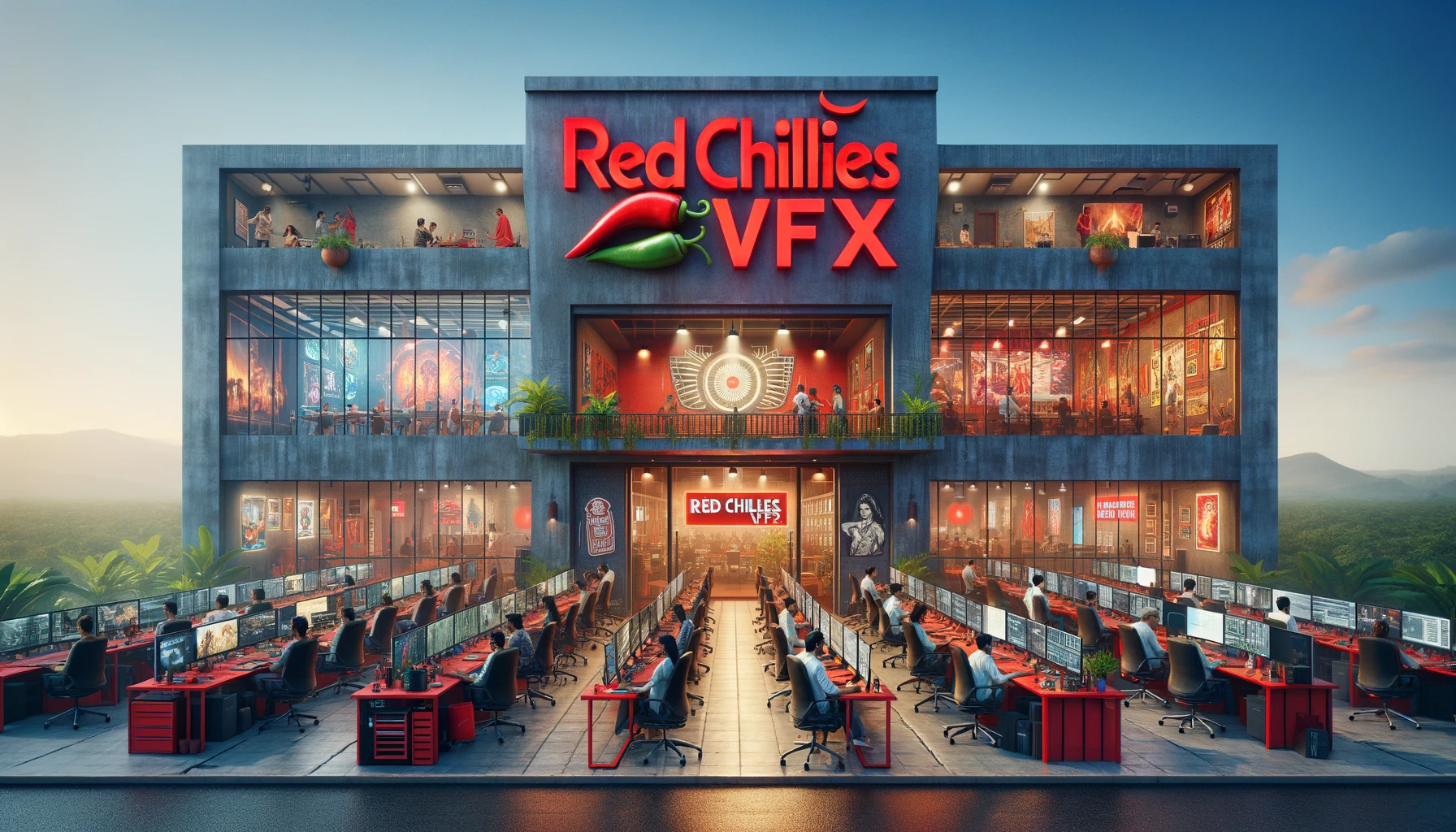
When Red Chilies VFX was founded in 2002 by Shah Rukh Khan and Gauri Khan, Bollywood’s VFX landscape looked nothing like what it does today. Most studios were sending effects work overseas, paying premium rates to international vendors, and watching production budgets balloon with every sequence that required a digital sky replacement or crowd augmentation. Red Chillies changed the equation—not with a manifesto, but by simply doing the work in-house and proving Indian talent could deliver at international spec.
If you’re sourcing VFX production partners in India or trying to understand where the Indian market sits relative to global standards, Red Chilies VFX is the benchmark you need to understand. It’s the studio that forced an entire industry to raise its floor.
In This Article
Discover Top VFX Studios in India—Before Your Competitors Do
Ask VIQI, Vitrina’s AI intelligence layer, to surface verified VFX vendors in India filtered by capability, project history, and budget range. Netflix, Warner Bros, and 140,000+ global companies already use the platform.
Ask VIQI Now — 200 Free Credits
No credit card required. Instant access.
From Zero to Ra.One: How Red Chilies Built Its Foundation
Most Indian production companies had post-production arms. Red Chilies built something different—a studio that could own the full VFX pipeline from previs through final delivery. That distinction matters more than it sounds.
Here’s the thing: when you control previs in-house, you make better decisions on set. You don’t shoot angles that won’t composite cleanly. You don’t discover in the grade that your plate has a flaw that costs ₹30 lakh to fix. Red Chilies VFX understood that visual effects aren’t a post-production add-on—they’re a production design discipline that starts months before principal photography.
Ra.One (2011) was the moment the industry had to pay attention. The film deployed over 2,800 VFX shots—a volume that, at the time, was unprecedented for an Indian production. Shah Rukh Khan reportedly invested upwards of ₹100 crore specifically in VFX across the project. The result wasn’t perfect by Hollywood blockbuster standards, but that wasn’t the point. The point was that an Indian studio had demonstrated the capacity—pipeline, personnel, render capacity, compositing depth—to deliver a superhero film. That benchmark shifted what producers and commissioners believed was possible domestically.
And it wasn’t a one-off. The Ra.One investment forced Red Chilies to build infrastructure that outlasted the film. Talent trained, pipelines tested, vendor relationships forged. Every subsequent project—Chennai Express, Happy New Year, Fan, Jawan—benefited from that foundational R&D spend.
As we’ve covered in our analysis of the top VFX companies pioneering Indian visual storytelling, this kind of vertical investment—owning capability rather than contracting it—creates ROI that compounds across a slate, not just a single title.

Your AI Assistant, Agent, and Analyst for the Business of Entertainment
VIQI AI helps you plan content acquisitions, raise production financing, and find and connect with the right partners worldwide.
- Find active co-producers and financiers for scripted projects
- Find equity and gap financing companies in North America
- Find top film financiers in Europe
- Find production houses that can co-produce or finance unscripted series
- I am looking for production partners for a YA drama set in Brazil
- I am looking for producers with proven track record in mid-budget features
- I am looking for Turkish distributors with successful international sales
- I am looking for OTT platforms actively acquiring finished series for the LATAM region
- I am seeking localization companies offer subtitling services in multiple Asian languages
- I am seeking partners in animation production for children's content
- I am seeking USA based post-production companies with sound facilities
- I am seeking VFX partners to composite background images and AI generated content
- Show me recent drama projects available for pre-buy
- Show me Japanese Anime Distributors
- Show me true-crime buyers from Asia
- Show me documentary pre-buyers
- List the top commissioners at the BBC
- List the post-production and VFX decision-makers at Netflix
- List the development leaders at Sony Pictures
- List the scripted programming heads at HBO
- Who is backing animation projects in Europe right now
- Who is Netflix’s top production partners for Sports Docs
- Who is Commissioning factual content in the NORDICS
- Who is acquiring unscripted formats for the North American market
Technical Capabilities That Set Red Chilies VFX Apart
What does Red Chilies actually do well? Let’s be specific, because “full-service VFX studio” tells you nothing useful when you’re making a vendor decision.
Compositing and environment work is core. The studio has built an extensive library of digital environments—particularly urban Indian cityscapes—that make large-scale action sequences economically viable. Shooting a practical crowd of 200 and augmenting to 20,000 through digital doubles costs a fraction of what it would through an international vendor who’d have to model those environments from scratch.
De-aging and character VFX is where the newer work gets interesting. The Pathaan (2023) and Jawan (2023) projects required significant character work—both de-aging sequences and action enhancement that demanded precise roto, clean plates, and photo-realistic CG integration. The output holds up on theatrical screens at full resolution. That’s a meaningful technical threshold.
But here’s what insiders recognize that press coverage tends to miss: Red Chilies’ real competitive advantage is the production liaison model. Because the studio sits inside the Shah Rukh Khan production ecosystem, VFX supervisors are embedded in production from day one—not brought in at the back half when problems are already baked in. That’s a workflow structure that international vendors struggle to replicate unless you’re doing a very large contract with them.
Industry veteran Joseph Bell, with over two decades of VFX experience including roles at Industrial Light & Magic (ILM), notes that pipeline integration between production and post is the defining variable in budget performance across modern VFX-heavy projects—an insight that reinforces exactly what Red Chilies built by design.
Joseph Bell, industry veteran and former ILM specialist, shares his analysis of VFX landscape dynamics and what separates high-performance studios from the rest:

Key Projects: What Red Chilies Has Actually Delivered
Let’s run through the project record—because reputation in this business is built on delivery, not press releases.
Ra.One (2011) — The benchmark project. 2,800+ VFX shots, India’s first superhero franchise attempt at this scale. Budget allocation to VFX was unprecedented at the time for a domestic production. Pipeline stress-tested under real theatrical conditions.
Fan (2016) — The de-aging work here was critically significant. Shah Rukh Khan played both a younger version of himself and a doppelgänger fan—requiring continuous performance-matched CG face replacement across the runtime. The work received attention in international VFX trade coverage as an example of Indian studios executing character-level digital work without routing it through LA or London vendors.
Zero (2018) — Scale and continuity work across an ensemble with specific physical requirements. Technically demanding compositing on a tight Bollywood production calendar.
Pathaan (2023) and Jawan (2023) — Back-to-back blockbusters that collectively grossed over ₹2,500 crore domestically. Both relied heavily on Red Chilies VFX for action enhancement, environment work, and sequence finishing. The commercial performance of these films isn’t just a revenue story—it validates that technically ambitious Indian productions can deliver ROI at scale.
As Variety has tracked in its coverage of Indian cinema’s global expansion, the consistent VFX quality across these titles has repositioned Bollywood blockbusters as credible theatrical events in markets well beyond the diaspora—a dynamic that changes distribution economics and pre-sale valuations. That’s the downstream financial consequence of what Red Chilies built technically.
Track Every VFX Project in India Before It Goes to Market
Vitrina tracks 400,000+ active projects globally—including Bollywood productions in pre-production and principal photography. Know which VFX-intensive projects are spinning up before they’re announced. Join 140,000+ companies already using the platform.
Start Tracking Projects — 200 Free Credits
No credit card required. Cancel anytime.
Red Chilies in India’s Broader VFX Market
The Fragmentation Paradox™ applies here as much as anywhere in the global supply chain. India has hundreds of VFX vendors—but the quality distribution is steep. You’ve got a handful of studios operating at international spec, a wider mid-tier doing competent compositing work, and a long tail of smaller outfits that work well for specific deliverables but can’t carry a full post-production pipeline.
Red Chilies sits at the top of that curve—alongside studios like Prime Focus, VFX Pick, and PhantomFX. But what distinguishes Red Chilies is the combination of ownership structure (production-embedded, not pure-play vendor) and demonstrated track record on theatrical releases that have been stress-tested in global markets.
India’s broader M&E sector—valued at over ₹2.5 lakh crore and growing at approximately 8-9% annually according to industry body FICCI—is generating increasing demand for domestic VFX capacity. The streaming boom accelerated this: Netflix, Amazon Prime Video, and Disney+ Hotstar all commission India-originals with VFX requirements that didn’t exist five years ago. Local studios are being asked to deliver at streaming spec (which differs meaningfully from theatrical in terms of colorimetry, compression artefact management, and IMF deliverable standards).
What’s actually happening—and what most market overviews miss—is that the gap between Indian VFX capability and international expectation is closing faster than the headline cost differential would suggest. Red Chilies is part of that convergence. But it’s not converging through cost competition alone; it’s converging through technical investment and pipeline sophistication.
For international co-producers and distributors looking at Indian content, this matters. A project that’s VFX-heavy isn’t automatically routed to London or LA anymore. As reported by The Hollywood Reporter, Indian productions are increasingly structured with domestic VFX from studios like Red Chilies handling the bulk of effects work—a shift that improves margin structure and shortens the feedback loop between production and post.
For a deeper look at how Indian studios compare across the full production stack, see our analysis of Prime Focus VFX and its global positioning—another Indian-origin studio that’s navigated the same evolution on a different trajectory.
How to Find and Vet VFX Partners in India Beyond Red Chilies
Not every project has the scale or the existing relationship to work directly with Red Chilies VFX. And frankly—for certain project types—it’s not the right vendor anyway. Here’s how strategic players actually approach India VFX sourcing.
Step one is defining your deliverable spec precisely. “VFX work” tells a vendor nothing useful. You need shot count, effect type (environment, character, cleanup, simulation), delivery format (IMF, ProRes, DCP), and timeline. India has strong capacity in crowd augmentation, background replacement, and cleanup work—those are areas where you get genuine cost advantage without quality compromise. Photorealistic creature work at full theatrical spec? The pool of qualified vendors narrows considerably.
Step two is verifying the track record against theatrical delivery specifically. Showreels are marketing material. You want delivery credits on titles you can verify—theatrical releases with known VFX shot counts, confirmed by the production. That’s a different standard than “we’ve done work for streaming.”
Step three is pipeline audit. Can they accept your plate format? What render infrastructure are they running? How do they handle version control across 500+ shots? The logistics of a VFX pipeline break down at scale if the vendor’s systems aren’t built for it. Red Chilies VFX’s advantage isn’t just talent—it’s the infrastructure built on the back of Ra.One and subsequent projects. Not every Indian VFX vendor has invested at that level.
Vitrina’s global VFX studio directory lets you filter specifically by capability type, delivery track record, and project history—so you’re not starting from a Google search or a festival contact. The platform surfaces verified studios with actual project credits, which de-risks the vendor selection process considerably.
Need a Curated VFX Vendor List for Your Indian Production?
Vitrina’s concierge team assembles verified shortlists of Indian VFX studios matched to your project spec—shot count, budget, timeline, capability type. Used by production executives at Netflix, Paramount, and independent producers across 60+ countries.
Request a VFX Vendor Shortlist
No commitment required. Typical turnaround: 48 hours.
Frequently Asked Questions About Red Chilies VFX
Conclusion: What Red Chilies VFX Tells You About Indian Cinema’s Trajectory
Red Chilies VFX is more than a studio biography. It’s a case study in what happens when production capital is deployed strategically—not just to make one film look better, but to build institutional capability that compounds across a slate. That’s the infrastructure play that separates a production company from a production ecosystem.
For producers, distributors, and commissioners assessing India as a VFX sourcing hub or co-production market, Red Chilies is the clearest evidence that the capability gap with Western studios has narrowed significantly. It hasn’t closed everywhere—photorealistic creature work at full Marvel spec is still a different conversation—but the floor is much higher than most international buyers appreciate until they dig into actual delivery credits.
Strategic players understand this is a window. As Indian productions continue to perform in global markets and streaming demand keeps rising, the premium VFX capacity in Mumbai will price accordingly. The cost advantage narrows when talent commands international rates—and the best Indian VFX talent increasingly does.
Key Takeaways
- Founded 2002: Red Chilies VFX was established by Shah Rukh Khan and Gauri Khan as a production-embedded studio, not a pure-play vendor—a structural decision that shaped its competitive advantage.
- Ra.One as inflection point: The 2011 film’s 2,800+ VFX shots and ₹100 crore VFX investment forced the entire Indian industry to recalibrate its capacity expectations.
- Pipeline integration is the real differentiator: Embedding VFX supervision from previs through delivery—not treating it as a post-production service—is what separates top-tier Indian studios from the mid-tier.
- Market context matters: India’s VFX market is growing 8-9% annually, driven by streaming demand from Netflix, Amazon, and Disney+ Hotstar—not just theatrical Bollywood production.
- Vetting requires specificity: Evaluating Indian VFX vendors—Red Chilies included—demands verified theatrical credits and pipeline audits, not just showreels or cost comparisons.
Find Your Ideal VFX Partner in India—In Under 48 Hours
Vitrina’s platform gives you direct access to verified Indian VFX studios with searchable project histories, capability filters, and executive contacts. Netflix, Warner Bros, and indie producers across 60+ countries use it to source partners before deals are announced.
No credit card required. 14-day free trial available.
Find Film+TV Projects, Partners, and Deals – Fast.
VIQI matches you with the right financiers, producers, streamers, and buyers – globally.
Producers Seeking Financing, Co-Pros, or Pre-Buys?
Vitrina Concierge helps producers reach the right financiers, commissioners, distributors, and co-production partners — with precision outreach, not cold pitching.
Join Industry Briefings Trusted by Leaders
Streamers – Netflix vs. Amazon – The 2026 Strategy
How Netflix and Amazon’s content and revenue strategies are diverging ahead of 2026.

Format Adaptations: Global Trends
Where formats are traveling, which adaptations are breaking out, and how streamers are backing remakes in 2025–2026.

Books, Novels & Comics Adaptations: Global Trends
Books, webtoons, and manga driving the next global screen hits. Discover how in this webinar.

Micro-Dramas & Mobile-First Storytelling
Micro-dramas are building real audiences and revenue. Understand the platforms, buyers, and economics behind the growth.