About Innovation Hub
 Global Content Pulse (Webinars)


 Global Production Financing
(Webinars)
Global Production Financing
(Webinars)  LeaderSpeak Podcast
  About Vitrina
 Our Story
 Our Solutions 🔥
 Film+TV Projects Tracker 🚀
 Case Studies
 Our Profile

If you’re trying to navigate the world of reality TV show production companies—whether you’re pitching a format, sourcing a co-production partner, or evaluating acquisition targets—the landscape is more complex and more lucrative than it’s ever been. Unscripted television isn’t the cheap filler it was once dismissed as. It’s a multi-billion-dollar format economy that’s driving some of streaming’s biggest engagement wins, and the production companies behind it operate with deal structures, IP strategies, and global distribution models that rival any scripted studio.
This guide gives you the insider view. You’ll get a clear picture of how reality TV production companies actually work—their business models, how they develop and license formats, what streaming has done to their economics, and how to identify the right partner for your specific project or acquisition goal. No vague category overviews. Just the intelligence you need to move faster than the room.
Table of Contents
- What a Reality TV Show Production Company Actually Does
- The Major Players Dominating Unscripted Globally
- How the Business Model Actually Works
- How Streaming Rewrote the Unscripted Rulebook
- Format Licensing: Where the Real IP Money Lives
- How to Find and Partner with the Right Reality TV Production Company
- Frequently Asked Questions
- Conclusion
Ask VIQI: Which Reality TV Production Companies Are Actively Seeking Format Partners Right Now?
VIQI is Vitrina’s AI assistant—trained on 1.6 million titles, 360,000 companies, and 5 million entertainment professionals. Get real-time intelligence on unscripted production partnerships before your next pitch.
✓ Included with 200 free credits | ✓ No credit card needed
What a Reality TV Show Production Company Actually Does
Let’s cut through the surface-level answer. A reality TV show production company doesn’t just film people in unusual situations and hope for the best. It’s a format development studio, a rights management entity, a co-production platform, and a distribution vehicle—all in one structure. The best ones in the business have built recurring revenue engines that operate independently of whether any single show is a hit.
Here’s what the core functions actually look like in practice:
- Format Development: Creating the original concept, structure, and production bible that defines the show. This is the IP. Every element—the casting process, the competition mechanics, the episode arc—gets documented in a format bible that’s the foundation for licensing deals across territories.
- Development Financing: Pitching to networks and streamers for greenlight. The negotiation at this stage determines who owns what—rights, territories, sequel rights, format licensing rights. Getting this wrong costs you years of upside.
- Production Execution: Running the actual shoot—casting, location, crew, on-camera talent, legal clearances. Reality productions are operationally intensive in ways scripted productions often aren’t—you’re managing unpredictable human behavior at scale, often across multiple markets simultaneously.
- Format Licensing: Selling the rights to produce a local version of your format in other territories. This is where the recurring income lives. A format that’s licensed in 20+ territories generates fees and co-production income every time a new version goes into production—without the production company having to make anything new.
- Post-Production Oversight: Editing, music clearances, deliverables—often managed in-house or through preferred vendor relationships that affect the economics at the margins.
And that’s before you get to the international sales layer—where finished episodes are sold to broadcasters and platforms that didn’t commission the original. As we’ve covered in our unscripted content development guide, the most successful companies treat format ownership as a capital asset—not a creative afterthought.
The Major Players Dominating Unscripted Television Globally
A handful of companies have built the infrastructure to create, license, and distribute unscripted content at genuine global scale. These aren’t just production shops—they’re format empires with recurring IP revenue and broadcaster relationships that span dozens of territories.
MGM Alternative
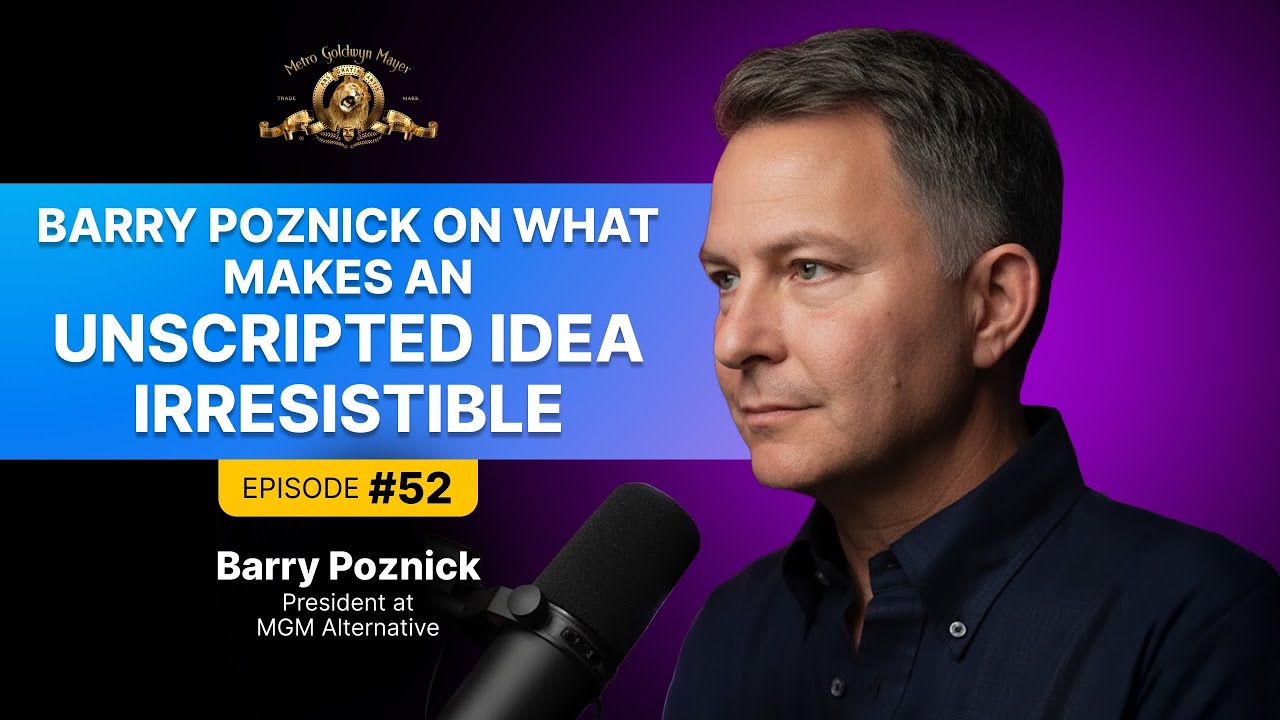
MGM Alternative is one of the most important unscripted production companies operating today. Under the leadership of Barry Poznick, President of MGM Alternative, the company manages a slate of 35+ shows worldwide—including genre-defining formats like Shark Tank and Survivor. In a recent Vitrina LeaderSpeak interview, Poznick walked through how MGM Alternative approaches the evolution of unscripted for the streaming era: the changing economics, the format development pipeline, and what it actually takes to build a format that travels across territories. The company’s model is a masterclass in what scalable reality TV production infrastructure looks like.
Barry Poznick (President, MGM Alternative) on reinventing reality TV production for streaming platforms and global markets:
Fremantle
Fremantle is the format powerhouse behind American Idol, The X Factor, Family Feud, and The Price Is Right. Owned by RTL Group, its global reach is staggering—it operates in 30+ countries, with both a centralised format licensing operation and local production arms that execute territory-specific versions at scale. Fremantle’s model demonstrates the compounding economics of format IP: a show licensed across three decades in dozens of markets generates royalties that dwarf the original production budget.
ITV Studios
ITV Studios is Europe’s largest commercial production company and one of the world’s premier format exporters. Its catalogue includes Love Island, Hell’s Kitchen, and The Voice—formats that have been licensed, produced, and broadcast across more than 60 territories. ITV Studios operates through a network of local production companies that handle each territory’s version, generating licensing fees and format royalties on every production. For executives evaluating co-production or format acquisition, ITV Studios represents what best-in-market format management infrastructure actually looks like at scale.
Banijay Group
Banijay Group is now arguably the world’s largest independent content producer and distributor—overseeing more than 120 production labels across 22 countries. Its format catalogue runs to thousands of titles, and its acquisition of Endemol Shine gave it Survivor, Big Brother, MasterChef, and Deal or No Deal in a single move. Banijay’s structure is deliberately decentralised: local labels retain creative autonomy while the central entity handles format rights management, international sales, and distribution. That’s the template that makes format IP scale without homogenisation.
All3Media
All3Media—majority-owned by Amazon and Warner Bros. Discovery—runs a similar multi-label model, with production companies like Objective Media Group and Studio Lambert operating as distinct creative entities under shared commercial infrastructure. Its unscripted portfolio includes The Great British Bake Off and Gogglebox, formats that have proven remarkable international stickiness. But here’s what matters most for format buyers and co-production partners: All3Media’s Amazon connection gives its content a privileged pathway to Prime Video slots that independent producers simply don’t have access to on the same terms.
Track Every Reality TV Production Company’s Active Projects in Real Time
Trusted by Netflix, Warner Bros, and Paramount. Join 140,000+ companies using Vitrina to monitor format development pipelines, greenlit unscripted projects, and co-production opportunities before they hit the trades.
✓ 200 free credits | ✓ No credit card required | ✓ Full platform access
How the Reality TV Production Business Model Actually Works
The economics of a reality TV show production company look very different depending on whether you’re a network-owned studio, an independent with format rights, or an indie producer working on a commission-only basis. And knowing which model you’re dealing with changes everything—what rights you can acquire, what co-production terms are realistic, and where the profit participation actually sits.
The Commission Model
Most independent production companies get started here. A broadcaster or streamer commissions you to produce a show—they pay the production budget, you produce the episodes, they own or co-own the finished content. Your margin is the production fee, typically 10-15% of the agreed budget. It’s a business—but it’s not a format business. The IP stays with the commissioning platform unless you’ve negotiated otherwise upfront. Most producers don’t negotiate otherwise upfront. That’s expensive.
The Format Ownership Model
This is where the real value compounds. If you own your format IP, you license the right to produce local versions in each territory—collecting format fees, participation in local production budgets, and ongoing royalties per episode produced. A format licensed at $50,000-$200,000 per territory per series across 15 markets generates recurring revenue without incremental production risk on your end. Shawn Moffatt, co-founder and CEO of My Entertainment—a company operating nine media entities across the independent production space—has spoken publicly about the strategic shift toward format ownership as the core value driver in independent production. Co-productions and strategic acquisitions built around owned IP is how independent operators scale without becoming dependent on any single commissioning relationship.
The Co-Production Model
Increasingly dominant—particularly as production costs have risen and individual buyers have pulled back from bearing 100% of commission costs. Co-production structures split the budget and rights between two or more partners, typically across different territories. A UK production company co-produces with a German broadcaster; each takes their domestic rights; international rights are handled through a shared sales arrangement. The capital stack matters here: who’s putting in what, which territories are pre-sold, and how the waterfall distributes revenue once the show is selling. Our unscripted TV formats guide breaks down how format rights get structured across co-production deals in detail.
How Streaming Platforms Rewrote the Unscripted Rulebook
Here’s the reality that anyone pitching unscripted content in 2026 needs to understand: streaming didn’t just add a new buyer to the room. It restructured the entire economics of what makes a reality TV show valuable, what formats get greenlit, and who ends up owning what after the deal closes.
Netflix’s investment in unscripted has been substantial—shows like The Circle, Love Is Blind, and Squid Game: The Challenge demonstrate a genuine strategic commitment to format-driven reality, not just cheap content fill. But Netflix’s deal terms are structurally different from traditional broadcaster commissions. Netflix typically seeks global rights—not just domestic, not just first window. That’s a significant rights erosion for a production company that built its model around territory-by-territory licensing. As reported by Variety, the negotiation over format ownership versus global acquisition rights is now one of the central friction points in every unscripted greenlight discussion.
Amazon Prime Video has leaned into the same space—particularly for competition formats that generate social conversation. But Amazon’s commissioning model varies significantly by territory: direct commissions in the US and UK operate differently from its approach in India or LATAM, where local production infrastructure and audience preferences drive different format choices.
What does this mean practically? It means that if you’re a reality TV production company—or you’re looking to partner with or acquire one—you need to understand which platforms a company is aligned with and what rights they’ve already signed away. A company that’s done three global-rights deals with Netflix has a very different future format licensing revenue profile than a company that’s retained territorial rights across its entire slate. The former may look impressive on a greenlit-show count; the latter is actually worth more.
And then there’s the Sovereign Hub dynamic. Saudi Arabia, South Korea, and India are all building serious unscripted production infrastructure—not just for domestic consumption but for export. South Korea’s track record speaks for itself: formats adapted from Korean originals have now found audiences across Asia, the Middle East, and Western streaming platforms. The differences between unscripted and scripted formats in terms of how they travel internationally is a critical strategic distinction—and one that’s becoming more important as these hubs accelerate their content export ambitions.
Format Licensing: Where the Real IP Money Lives in Reality TV
If you take one strategic insight from this entire guide, make it this: the difference between a good reality TV production company and a great one isn’t the quality of its productions. It’s the quality of its format ownership. Format IP is the annuity. Production is the day job.
A format that’s been licensed in 20 territories generates format fees every time a new season gets commissioned in any of those markets—without the production company having to take on any new creative or operational risk. A top-tier format like Who Wants to Be a Millionaire has been produced in over 100 countries since its 1998 UK premiere. The format fees from that kind of reach compound over decades into revenue that dwarfs the original production economics.
Format protection is where a lot of independent companies fall down. The FRAPA (Format Recognition and Protection Association) framework provides a baseline for format rights documentation—but it’s not legally enforceable in every territory. Smart companies build their format protection through:
- Comprehensive format bibles — detailed documentation of every element that makes the format distinctive, timestamped and registered
- Trademark registration — across primary markets before pitching internationally
- Contractual protection — non-disclosure agreements and format licence agreements that define what’s licensed and what’s retained
- Production presence — sending a “flying producer” from the originating company to oversee local versions, which both protects the format and generates additional revenue
Our guide to the 20 most in-demand unscripted TV formats is worth reading alongside this section—it maps the formats that are actively generating licensing conversations across markets right now, which is useful context for any executive evaluating a production company’s format catalogue.
Need to Find the Right Reality TV Co-Production Partner? We’ll Make the Introduction.
Vitrina Concierge doesn’t give you a list—we make warm introductions directly to unscripted production executives actively seeking your type of format or co-production partner.
- Korean animation studio → Netflix Adult Animation (week one)
- LA producer → Netflix UK, Fifth Season, Fox Entertainment (48 hours)
- Middle Eastern studio → Legendary Pictures (direct access)
How to Find and Partner with the Right Reality TV Production Company
Whether you’re a broadcaster sourcing content, a platform seeking format acquisitions, or a producer looking for co-production infrastructure—finding the right reality TV production company is a sourcing challenge that the Fragmentation Paradox makes genuinely hard. There are thousands of active unscripted production companies globally. Most trade directories are out of date. Most relationship networks are limited by geography and who you already know. And the formats that are available now aren’t the same as what was available six months ago when the last market catalog was published.
Here’s how to approach this systematically:
Define What You Actually Need Before You Start Looking
Format buyer or co-production partner? Those are very different conversations requiring very different types of companies. A format buyer needs a company with proven international IP—documented format bibles, prior licensed versions, clear rights ownership. A co-production partner needs a company with local production infrastructure, broadcaster relationships, and a capital structure that can absorb shared budget risk. Conflating these needs in your outreach wastes everyone’s time and signals to the market that you don’t know what you want.
Genre Specialisation Matters More Than You’d Think
A company that has delivered 10 seasons of competition format television is not the right partner for a relationship reality format—even if both are technically “unscripted.” The casting pipelines, on-camera talent management, production rhythms, and editorial instincts are genuinely different. Producers who’ve built their track record in talent competition bring different skills to the room than those who’ve built it in docu-soap or social experiment formats. Vet the back catalogue. Not just what they’ve made—but how those shows actually performed.
Check Who Already Has the Rights You Need
This sounds obvious. It’s routinely skipped. Before you enter serious discussions with any production company about format acquisition or co-production, run a rights check—what territories has this company already licensed? What options has it signed? What platform output deals might restrict where the format can go? According to The Hollywood Reporter, rights conflicts are one of the primary causes of deal collapse in unscripted acquisitions—particularly when global streaming platforms have been given first-look or ROFR provisions that weren’t disclosed upfront.
Use Real-Time Intelligence to Find Active Opportunities
The smartest operators in this space aren’t waiting for film markets and format licensing expos to surface new opportunities. They’re using platforms like Vitrina to track which production companies have formats in active development, which unscripted shows are in pre-production right now, and which co-production conversations are already happening in markets they care about—before the trades pick it up. Our TV show production finding tool guide walks through how to operationalise this kind of intelligence-driven sourcing approach.
Vitrina’s 140,000+ active company database includes verified production company profiles with genre specialisations, current project status, past format track records, and key executive contacts. When a producer told us they needed to identify active co-production partners for a competition format targeting streaming platforms, they went from no active conversations to introductions with decision-makers at Netflix UK, Fifth Season, and Fox Entertainment within 48 hours. That’s not luck—it’s intelligence-driven targeting.
Conclusion: Reality TV Production Is an IP Business First
The reality TV show production companies that are building durable, scalable businesses in 2026 aren’t just making good television—they’re building format IP portfolios, protecting their rights across territories, and structuring co-production partnerships that give them upside beyond the original commission. The ones doing this well will look like very different businesses in five years than the ones who treated unscripted as commission-only work.
Key Takeaways:
- Format IP is the real asset: Production fees are a margin business. Format licensing across 20+ territories is a recurring revenue engine that compounds across decades.
- Streaming rights negotiation is now critical: Global-rights deals with Netflix or Amazon can permanently erode your format licensing upside. Structure these terms before greenlight, not after.
- Banijay, Fremantle, ITV Studios, and MGM Alternative set the benchmark: Their multi-territory, multi-label structures reveal what scalable unscripted production infrastructure actually looks like—and what to emulate or partner with.
- The Fragmentation Paradox is acute in unscripted: Thousands of production companies globally mean the best format partnerships aren’t findable through market attendance alone—real-time intelligence closes the gap.
- Sovereign Hubs are the next format export wave: South Korean, Saudi, and Indian production companies are building international format capability fast—the next licensing conversations you’re not tracking yet are probably already happening.
The producers who navigate 2026 successfully won’t be the ones with the most creative ideas—they’ll be the ones who knew which production company had the right format, the right rights structure, and the right platform relationships before everyone else did. That’s an intelligence advantage. And it’s available now.
Frequently Asked Questions
What does a reality TV show production company do?
A reality TV show production company handles every stage of unscripted content creation—concept and format development, production financing, shoot execution, post-production, and international format licensing. The most successful companies also manage ongoing format rights, licensing local versions to broadcasters and streamers in different territories, generating recurring revenue long after the original production is complete. Major operators like Banijay Group and Fremantle run hundreds of format licences simultaneously across dozens of territories.
How do reality TV production companies make money?
Revenue streams vary by business model. Commission-based producers earn a production fee—typically 10-15% of the agreed production budget—but retain limited rights. Format-owning companies earn format licensing fees ($50,000–$200,000+ per territory per series), flying producer fees for overseeing local versions, and profit participation from international finished-episode sales. The highest-value operators combine all three streams, with format licensing being the highest-margin, lowest-risk component.
What is a TV format and why does it matter for production companies?
A TV format is the blueprint of a show—its structure, mechanics, production elements, and presentation style, documented in a format bible that can be licensed to produce local versions in other territories. It’s the core IP asset. A format like Survivor has been licensed in 60+ countries, generating licensing fees and participation income across every production. For a reality TV production company, owning strong formats transforms the business from a service provider into an IP licensor—a fundamentally different, higher-margin model.
How has Netflix changed the reality TV production landscape?
Netflix has become one of the most active commissioners of unscripted content globally—but its deal terms typically include global rights acquisitions rather than territory-by-territory licensing. This fundamentally changes the format licensing economics for production companies: accepting a Netflix global deal can foreclose future territory-based licensing revenue. Smart production companies are negotiating hard to retain format rights—particularly for non-English-speaking markets—even when accepting Netflix commissions for original episodes.
Which are the biggest reality TV production companies in the world?
The largest players by catalogue size and territorial reach include Banijay Group (120+ production labels, Survivor, MasterChef, Big Brother), Fremantle (American Idol, The X Factor, Family Feud—operating in 30+ countries), ITV Studios (Love Island, Hell’s Kitchen, The Voice—licensed in 60+ territories), MGM Alternative (Shark Tank, Survivor—35+ shows worldwide), and All3Media (Great British Bake Off, Gogglebox). Banijay’s 2020 acquisition of Endemol Shine created the single largest independent production and distribution entity in the world.
What is a co-production model in reality TV?
A co-production splits both the budget and the rights between two or more production partners, typically across different territories. Each partner contributes funding and receives rights to their domestic market, with international rights managed through a shared arrangement. This model has grown substantially as rising production costs have made 100% single-buyer commissions less common. It allows smaller production companies to access projects at budget levels they couldn’t sustain alone, while giving larger partners local production capability they’d otherwise need to build from scratch.
How do I find a reality TV production company to partner with?
Traditional approaches include attending format markets (MIPTV, MIPCOM, LA Screenings), working through format agents, and leveraging existing broadcaster relationships. But these methods operate on 3-6 month information lags—you’re seeing what’s available based on what was in development months ago. Platforms like Vitrina enable real-time sourcing: filtering 140,000+ verified companies by genre specialisation, territory focus, active project status, and past format track record. A producer can identify and open conversations with relevant co-production partners in 48 hours rather than waiting for the next market.
What genres of reality TV are most in demand from streamers in 2026?
Competition formats with social engagement hooks (dating, survival, talent, game shows) continue to dominate streaming commissioning. True crime docuseries remain strong for broadcast platforms with international licensing appetite. Social experiment formats—pioneered by shows like Love Is Blind—have proven their ability to drive subscription behaviour and create water-cooler moments. Additionally, local-language competition formats from South Korea and India are showing strong international licensing traction, indicating that format quality rather than English-language origin is increasingly the primary commissioning criterion.
Discover Every Active Unscripted Production Company Before Your Next Format Pitch
Trusted by Netflix, Warner Bros, Paramount, and Google TV. Track 400,000+ projects. Access 3 million verified executives. Find the right reality TV co-production partner in 48 hours—not 6 months.
✓ 200 free credits | ✓ No credit card required | ✓ Cancel anytime
Need direct introductions to production partners? Explore Concierge Service →
Find Film+TV Projects, Partners, and Deals – Fast.
VIQI matches you with the right financiers, producers, streamers, and buyers – globally.
Producers Seeking Financing, Co-Pros, or Pre-Buys?
Vitrina Concierge helps producers reach the right financiers, commissioners, distributors, and co-production partners — with precision outreach, not cold pitching.
Join Industry Briefings Trusted by Leaders

Format Adaptations: Global Trends
Where formats are traveling, which adaptations are breaking out, and how streamers are backing remakes in 2025–2026.

Books, Novels & Comics Adaptations: Global Trends
Books, webtoons, and manga driving the next global screen hits. Discover how in this webinar.

Micro-Dramas & Mobile-First Storytelling
Micro-dramas are building real audiences and revenue. Understand the platforms, buyers, and economics behind the growth.

Navigating Global Content Licensing Trends
How global content licensing is shifting beyond flat fees to flexible, deal-driven models.