About Innovation Hub
 Global Content Pulse (Webinars)


 Global Production Financing
(Webinars)
Global Production Financing
(Webinars)  LeaderSpeak Podcast
  About Vitrina
 Our Story
 Our Solutions 🔥
 Film+TV Projects Tracker 🚀
 Case Studies
 Our Profile
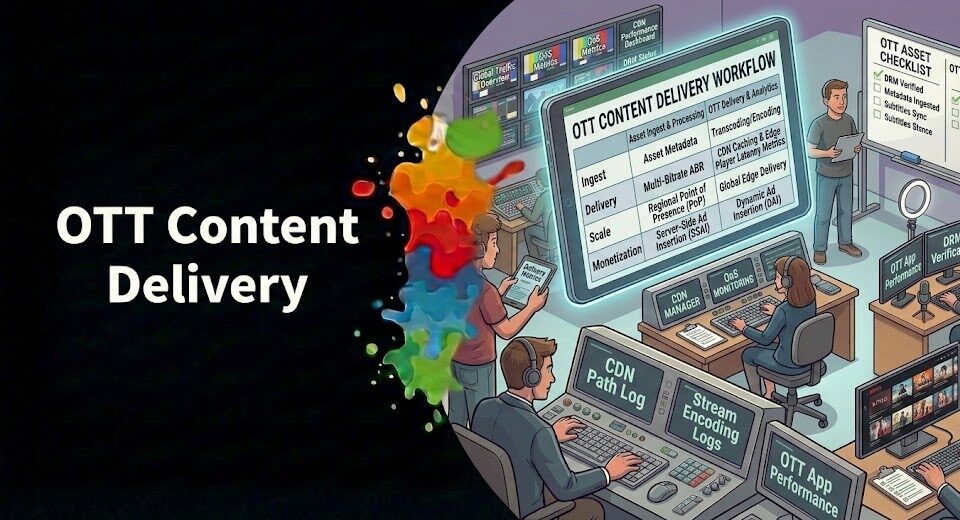
Your project is locked, colored, and mixed. You’ve got a distribution deal. And then you get the delivery spec sheet from the platform—and suddenly you’re staring at a 47-page document full of IMF packages, Dolby Vision metadata trim passes, LKFS loudness requirements, and subtitle file formats you’ve never heard of. Miss one line item and your content gets rejected. Expedited re-encoding costs you weeks and a budget hit you didn’t plan for.
Here’s what most producers don’t realize: OTT content delivery specifications in 2026 are not standardized across platforms. Netflix won’t accept what Amazon accepts. Apple TV+ has requirements that differ from both. And the Fragmentation Paradox that defines the broader entertainment supply chain hits hardest in post-production—where over 10,000 VFX and post companies globally operate to wildly divergent technical standards, making verified vendor selection a mission-critical step before you start your finishing workflow.
This guide cuts through the complexity. You’ll get the current platform-by-platform requirements, the delivery formats that actually matter, the localization specs you can’t skip, and a clear framework for building a post-production workflow that won’t blow up at delivery.
In This Guide
Why OTT Delivery Specs Have Changed Dramatically Since 2022
Three forces have reshaped what platforms now demand from producers. First, the global rollout of 4K HDR capable televisions means platforms can no longer treat premium picture quality as a feature—it’s table stakes for audience retention. Second, AI-powered localization now allows platforms to spin up dubbed and subtitled versions of content at a speed that was impossible five years ago. But doing that at scale requires source assets built with localization in mind from the start. And third, the MovieLabs 2030 Vision—the roadmap for cloud-native production adopted by major studios including Disney, Warner Bros, Sony, Paramount, and Universal—is driving a structural shift from file-based finishing to cloud-native workflows with real-time iteration.
What this means for producers is straightforward: your delivery checklist isn’t just a technical formality. It directly determines how quickly your content goes live, how many territories you can serve, and whether the platform’s localization pipeline can run at all. Get the specs wrong—even on metadata—and your content sits in a rejection queue while your launch date slips.
The real dynamic here is that platforms have quietly raised their baseline requirements while producers are still building finishing workflows designed for a 2019 delivery environment. The gap is costing independent producers real money and time.
Find Verified Post-Production Partners With the Right OTT Delivery Capabilities
VIQI is Vitrina’s AI intelligence engine—trained on 1.6 million titles, 360,000 companies, and 5 million entertainment professionals. Ask it which post-production facilities have verified IMF packaging, Dolby Vision grading, and platform-approved delivery workflows.
✓ Included with 200 free credits | ✓ No credit card needed
Video Format Requirements by Platform: What Actually Differs
The honest starting point: there is no single universal delivery format. Platforms have converged on 4K UHD as the production standard for originals, but the HDR format requirements diverge sharply—and that divergence has significant cost implications for your finishing workflow.
Netflix
Netflix only accepts Dolby Vision-graded content—HDR10 is not accepted for new originals. This is a hard requirement, not a preference. Your colorist needs to be working in a Dolby Vision-calibrated environment, and your deliverable must include either embedded Dolby Vision metadata or a sidecar metadata asset. The delivery format for Netflix originals is IMF (Interoperable Master Format)—ProRes is accepted for certain legacy deliveries but IMF is the default for 4K HDR content. Frame rate support covers 23.976, 24, 25, and 30fps. Get your finishing timeline right: Netflix expects IMF assets 4–6 weeks before your launch date. Miss that window and you’re paying for expedited encoding.
Amazon Prime Video
Amazon supports both HDR10+ and Dolby Vision—a more flexible baseline than Netflix but with its own complexity. HDR10+ is the default on Samsung TVs; Dolby Vision applies on LG, Sony, and select other manufacturers. For audio, Amazon uses AAC for stereo and Dolby Digital Plus (E-AC-3) for surround, with Dolby Atmos available on select titles. Unlike Netflix, Amazon relies primarily on H.264 and VP9 codecs—Netflix has adopted AV1 for compression efficiency, which delivers roughly 30% better compression than VP9 but requires encode workflows capable of handling it.
Apple TV+
Apple mandates 4K HDR with Dolby Vision on virtually all originals—one of the stricter baseline requirements in the streaming landscape. Delivery uses Apple’s own asset pipeline via Transporter (the command-line delivery tool), with video assets packaged as .itmsp files including a metadata.xml descriptor. Apple also requires what it calls an Ambient Video Asset—a looping background video for the platform UI, delivered in multiple aspect ratios including vertical orientation for iPhone. It’s a spec most producers forget about until the delivery package gets kicked back.
The Pragmatic Default
For SDR HD content or productions that don’t have 4K HDR finishing budgets, Apple ProRes 422 HQ remains the most widely accepted mezzanine format across platforms. It’s supported by Netflix, Amazon, and most mid-tier OTT buyers as a delivery or mezzanine option, and reduces encoding errors in automated ingest pipelines. But for anything being positioned at premium tiers—originals, co-productions, flagship titles—IMF is where the industry is heading.

Your AI Assistant, Agent, and Analyst for the Business of Entertainment
VIQI AI helps you plan content acquisitions, raise production financing, and find and connect with the right partners worldwide.
- Find active co-producers and financiers for scripted projects
- Find equity and gap financing companies in North America
- Find top film financiers in Europe
- Find production houses that can co-produce or finance unscripted series
- I am looking for production partners for a YA drama set in Brazil
- I am looking for producers with proven track record in mid-budget features
- I am looking for Turkish distributors with successful international sales
- I am looking for OTT platforms actively acquiring finished series for the LATAM region
- I am seeking localization companies offer subtitling services in multiple Asian languages
- I am seeking partners in animation production for children's content
- I am seeking USA based post-production companies with sound facilities
- I am seeking VFX partners to composite background images and AI generated content
- Show me recent drama projects available for pre-buy
- Show me Japanese Anime Distributors
- Show me true-crime buyers from Asia
- Show me documentary pre-buyers
- List the top commissioners at the BBC
- List the post-production and VFX decision-makers at Netflix
- List the development leaders at Sony Pictures
- List the scripted programming heads at HBO
- Who is backing animation projects in Europe right now
- Who is Netflix’s top production partners for Sports Docs
- Who is Commissioning factual content in the NORDICS
- Who is acquiring unscripted formats for the North American market
Audio Specifications: Dolby Atmos, Loudness Standards, and Stems
Audio rejections are the most common—and most expensive—delivery failure. Here’s what you need to nail.
Loudness. Netflix’s loudness spec is -27 LKFS (+/- 2 LU), dialog-gated, measured via ITU-R BS.1770-1. True-peak must not exceed -2dBFS. This is measured on a 5.1 rerender—not on the Atmos mix directly. Get your mix engineer to set true-peak limiters on all beds and objects at -2.3 or lower to maintain headroom. Miss this and the platform’s QC flags it automatically.
Dolby Atmos delivery. For Atmos mixes delivered in IMF, the supported frame rates are 23.976, 24, 25, and 30fps. Your mix must be done in a 7.1.4 room at minimum—Dolby certification for the room is not required, but the technical environment matters. Deliver as a Dolby Atmos BWAV ADM file. For Netflix originals, delivering a 5.1 rerender is required alongside Atmos; 2.0 stereo is optional. All mixes must be delivered at 48k/24-bit sample rate and bit depth.
Stems and M&E tracks. Platforms with international distribution ambitions—which is most of them—require full M&E (Music and Effects) stems delivered alongside the mix master. These stems enable foreign language dubbing without re-mixing from scratch. For Netflix, the 5.1 Dialog, Music, and Effects stems must sum to equal the 5.1 mix when combined. And if you’re working with the AI dubbing pipeline—companies like Deepdub or Papercup are now integrated into several platform localization workflows—clean, separated stems are what makes that pipeline viable at all. Deliver messy stems and you’re creating a localization bottleneck that costs you territories.
Find Dolby Atmos-Capable Post Facilities Approved by Netflix, Apple TV+, and Amazon
Trusted by Netflix, Warner Bros, Paramount, and Google TV. Join 140,000+ companies tracking verified post-production capabilities across the global supply chain on Vitrina.
✓ 200 free credits | ✓ No credit card required | ✓ Full platform access
IMF—The Format That Changes Everything About Delivery Economics
If you’re still building your post-production workflow around individual platform deliverables—one encode for Netflix, another for Amazon, a separate one for Apple—you’re building the wrong way. IMF (Interoperable Master Format) is the industry’s answer to that inefficiency, and in 2026 it’s no longer an advanced technique. It’s the standard for premium multi-platform distribution.
Here’s the core idea. IMF acts as a single master from which multiple deliverables are derived, with the requirements for each platform governed by what are called CPLs—Composition Playlists. If the assets are the ingredients, the CPL is the recipe. One IMF package. Multiple platform outputs. One quality control pass. The “create once, publish many” model is the only rational approach to multi-platform delivery at the premium tier.
But IMF isn’t magic—it requires your post pipeline to be built correctly from the start. Your finishing facility needs to be working in an IMF-capable environment, your colorist needs to deliver the Dolby Vision metadata in the right format, and your audio deliverables need to be structured to slot cleanly into the IMF package. This is where post-production workflow planning becomes a distribution strategy conversation—not just a technical one.
Ramy Katrib, CEO of DigitalFilm Tree, has been explicit about this through the Global Post Network: the future of post is data-first and collaboration-first, with cloud infrastructure enabling the kind of real-time verification and hand-off that IMF packaging requires across distributed teams. The finishing facility you choose needs to have proven IMF capability—not just the software installed, but verified hero projects delivered to major platforms through that workflow.
And that’s where the Fragmentation Paradox becomes operationally dangerous. With over 10,000 VFX and post-production companies globally, most producers are sourcing their finishing partners from a network of 4–5 known relationships. The market has 100x more qualified options—including specialized IMF packaging facilities in the UK, Eastern Europe, and APAC that run at significantly lower cost than premium LA and London boutiques. But without verified capability intelligence, producers default to whoever they know and pay the markup.
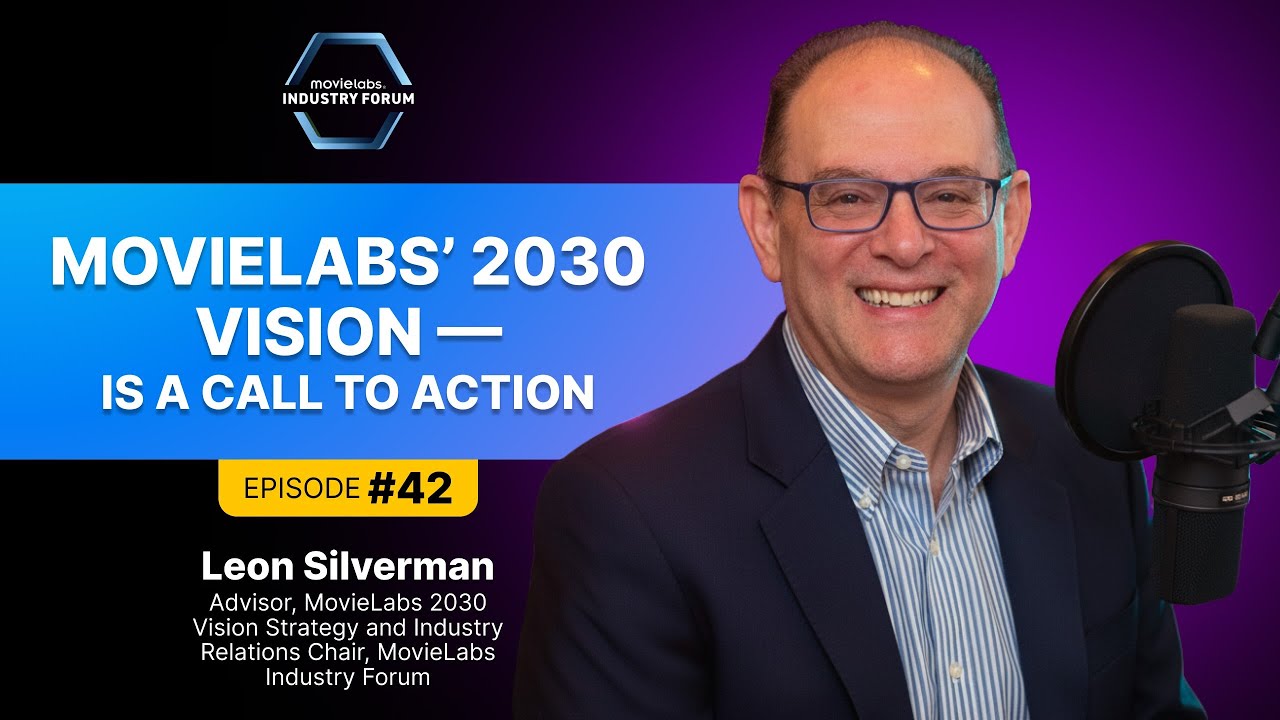
Leon Silverman (Chair, MovieLabs; former Disney and Netflix exec) breaks down the 2030 Vision for cloud-native workflows and what it means for how producers should be building their delivery pipelines today:
Localization and Metadata: The Hidden Rejection Risk Most Producers Ignore
Here’s a stat worth internalizing: the video localization market is valued at $6.5 billion, driven almost entirely by media and entertainment. And it’s growing—because every platform with global distribution ambitions is localizing faster than ever, with AI dubbing pipelines that can generate multiple language versions simultaneously. But those pipelines depend entirely on what you deliver in your source package.
Subtitles. Deliver subtitles as VTT (WebVTT) files—this is the format most widely compatible across OTT ingest systems. Netflix additionally accepts PAC, DFXP, and STL format for approved subtitle deliveries. Do not burn in subtitles. If you’ve burned forced narrative text (foreign language inserts, title cards) into the picture, you need to also deliver a textless version of those shots so they can be localized. This is non-negotiable for any title destined for multi-territory distribution.
Fonts. List all fonts used in on-screen typography. If you’re using proprietary fonts, those licenses don’t transfer to the platform—the platform’s localization team must purchase their own copy. Not declaring this upfront is a common source of delivery delays that has nothing to do with picture or audio quality.
Metadata. This is where automated ingest pipelines either fly or die. Your metadata.xml must accurately describe every asset in the delivery package—content IDs, language codes, audio track types, subtitle associations, ratings classification by territory. For Apple TV+, content IDs are permanent—they cannot be changed once assigned. Get them wrong and you’re rebuilding the delivery package from scratch. As The Broadcast Bridge’s production delivery reference notes, meeting spec accurately on first delivery is “an increasingly critical business objective” as platform ingest pipelines become more automated and less tolerant of manual correction.
Per the AI localization guide we’ve published elsewhere, the AI dubbing breakthrough has collapsed what used to be a multi-month localization timeline into weeks. But that speed only works if your source M&E stems, textless elements, and subtitle files are delivered correctly from the start. Source asset quality is now the bottleneck in localization—not the technology.
Building a Cloud-Native OTT Delivery Workflow for 2026
The MovieLabs 2030 Vision isn’t a distant roadmap anymore. It’s the operating architecture being adopted by major studios and cascading into requirements for independent producers supplying those studios. The core principles—Zero Trust security, cloud-native workflows, real-time collaboration, and standardized digital distribution—translate into specific infrastructure decisions for producers delivering to premium OTT platforms.
What does this actually mean in practice? Four things:
- Work in the cloud from finishing — Don’t move assets physically between facilities. Cloud-based finishing (via services like Sohonet’s networking infrastructure or CREE8’s cloud workflow platform) eliminates the file transfer delays and version control problems that create delivery errors
- QC continuously, not at the end — Platform ingest QC is automated and unforgiving. Build QC checkpoints into your post workflow at picture lock, at color, and at audio, not just at final delivery packaging
- Build your IMF package first — Design your finishing workflow with IMF as the output target, then derive platform-specific deliverables. Don’t create individual deliverables and try to reverse-engineer an IMF package afterwards
- Verify your vendor’s platform credentials — Not all post-production facilities claiming IMF capability are equal. Ask for specific hero projects delivered to Netflix, Apple TV+, or Amazon through their IMF pipeline—with version history you can verify
This last point is where Vitrina’s vendor qualification intelligence provides real operational value. The difference between a facility that says it can deliver IMF and one that has delivered verified, accepted IMF packages to Netflix across 10+ titles is a difference that doesn’t show up in any sales deck. It shows up in production intelligence—and that’s exactly what Vitrina’s platform surfaces across the 10,000+ post and VFX companies it tracks globally.
Insiders recognize that the biggest cost driver in delivery failure isn’t the re-encode itself—it’s the 3–6 weeks of schedule compression that follows. Your distribution window slips. Your marketing spend loses its anchor. Your talent’s availability for press gets thrown off. The downstream cost of a rejected delivery package, for a title with significant P&A investment behind it, dwarfs whatever you saved by going with an unverified finishing facility.
Need a Verified IMF-Capable Post Facility? We’ll Connect You Directly.
Vitrina Concierge is your Virtual Agent. We don’t give you a list—we make warm introductions directly to verified post-production companies with proven delivery credentials for your target platforms.
- Korean animation studio → Netflix Adult Animation workflow (week one)
- LA producer → Netflix UK, Fifth Season, Fox Entertainment (48 hours)
- Middle Eastern studio → Legendary Pictures (direct access)
Frequently Asked Questions
What is the standard OTT content delivery format in 2026?
IMF (Interoperable Master Format) is the de facto standard for premium OTT delivery, particularly for 4K HDR originals on Netflix, Apple TV+, and Amazon Prime Video. For HD SDR content, Apple ProRes 422 HQ remains the most widely accepted mezzanine format across platforms. IMF enables “create once, publish many” delivery—one master package with Composition Playlists (CPLs) governing platform-specific outputs—making it the most economical approach for multi-platform distribution.
Does Netflix accept HDR10 content for delivery?
No. Netflix only accepts Dolby Vision-graded content for originals—HDR10 is not accepted. Content must be graded in a Dolby Vision-calibrated environment, with either embedded Dolby Vision metadata or a sidecar metadata asset delivered with the IMF package. This is a hard technical requirement that affects your colorist selection, your finishing facility, and your overall post-production budget. Producers planning Netflix delivery should confirm Dolby Vision capability with their post facility before committing to a workflow.
What are Netflix’s loudness specifications for audio delivery?
Netflix requires audio mixed to -27 LKFS (+/- 2 LU), dialog-gated, measured via ITU-R BS.1770-1. True-peak must not exceed -2dBFS, with true-peak limiters recommended at -2.3 or lower on all beds and objects. Loudness is measured via a 5.1 rerender of the Atmos mix. All audio must be delivered at 48kHz/24-bit. Missing loudness compliance is among the most common causes of QC rejection—build loudness checks into your mix workflow, not just your final delivery QC.
What subtitle format do OTT platforms require for delivery?
WebVTT (.vtt) files are the most widely accepted subtitle format across OTT platforms. Netflix additionally accepts PAC, DFXP, and STL formats. Do not burn subtitles into your picture—deliver them as separate sidecar files. If you have burned-in forced narratives (foreign language inserts, title cards), you must also deliver a textless version of those shots to enable localization. This is a non-negotiable requirement for any title targeting multi-territory distribution.
How far in advance must producers deliver content to Netflix?
Netflix expects IMF assets 4–6 weeks before your launch date. This timeline exists because Netflix’s ingest pipeline includes automated QC, encoding, regional versioning, and localization processing—all of which happen after delivery, before content goes live. Producers who miss this window often face expedited encoding costs and scheduling pressure that cascades into marketing timelines. Build your post-production schedule backwards from the Netflix delivery deadline, not forwards from picture lock.
What codec does Netflix use for streaming vs. what producers need to deliver?
Netflix has adopted AV1 for streaming delivery to viewers—a next-generation royalty-free codec offering roughly 30% better compression than VP9. But this is Netflix’s encoding decision, not yours. Producers deliver in IMF or ProRes; Netflix handles the transcode to AV1 for streaming. Amazon continues to use H.264 and VP9 for most streaming, with limited AV1 testing on Fire TV devices. You don’t need to encode in AV1—you need to deliver a clean, spec-compliant mezzanine asset that the platform’s encoding pipeline can work from.
Why does Apple TV+ require an Ambient Video Asset and what is it?
Apple TV+ calls it an Ambient Video Asset—a looping background video used in the platform’s user interface when a viewer is browsing a title’s description. It must be delivered in multiple aspect ratios and orientations, including vertical format for iPhone. It’s a platform-specific UI requirement rather than a technical quality spec, but failure to include it results in delivery rejection. Apple requires assets in an .itmsp package with a metadata.xml file, delivered via Transporter (Apple’s command-line tool).
How does the MovieLabs 2030 Vision affect OTT content delivery requirements?
The MovieLabs 2030 Vision—a roadmap for cloud-native production adopted by Disney, Warner Bros, Sony, Paramount, and Universal—is driving the industry toward cloud-based finishing workflows, Zero Trust security, and standardized digital distribution that eliminates redundant encoding and manual file transfer. For producers, this means building finishing pipelines around IMF and cloud delivery from the start—not retrofitting traditional file-based workflows. Producers whose post-production infrastructure aligns with the 2030 Vision principles will increasingly find it easier to meet platform delivery requirements and faster to respond to spec changes as platforms update their pipelines.
Conclusion: Delivery Specs Are Now a Distribution Strategy Decision
OTT content delivery specifications in 2026 are not a post-production afterthought—they’re a distribution strategy constraint that you need to build backwards from at the start of your finishing workflow. Platform rejections don’t just cost you re-encode fees. They cost you launch windows, marketing alignment, and territory optionality. And with the Fragmentation Paradox making it genuinely hard to identify which of the 10,000+ global post-production companies can actually deliver verified, accepted IMF packages to your target platforms, vendor selection becomes as strategically important as your cut.
Key Takeaways:
- IMF is the Premium Standard: For 4K HDR originals on Netflix, Apple TV+, and Amazon, IMF is the expected delivery format—one master, multiple platform outputs via CPLs. ProRes 422 HQ remains the default for HD SDR.
- Netflix Requires Dolby Vision Only: HDR10 is not accepted. Your finishing facility must be Dolby Vision-calibrated. Netflix expects IMF delivery 4–6 weeks before launch—plan your post schedule backwards from that date.
- Audio Loudness Is Auto-QC’d: Hit -27 LKFS (+/- 2 LU) with true-peak at -2dBFS for Netflix delivery. Deliver Atmos as a Dolby Atmos BWAV ADM file with 5.1 rerender, at 48kHz/24-bit. Build loudness checks into your mix workflow, not just final delivery QC.
- Localization Assets Are Not Optional: Clean M&E stems, VTT subtitle files, and textless elements for any burned-in foreign language text are the foundation of the AI localization pipeline that platforms now run at scale. Deliver them wrong and you’re blocking your own territory expansion.
- Verify Your Post Vendor’s Actual Credentials: The gap between a facility claiming IMF capability and one with verified accepted deliveries to Netflix is real—and costly if you choose wrong. Real-time intelligence on post-production company track records eliminates that 15–20% margin risk before it hits your budget.
The producers who are going to win at delivery in 2026 are the ones who’ve already built their post pipeline with IMF at the center, verified their vendors against real platform credentials, and treated their localization assets as first-class deliverables from picture lock. The others are going to learn these lessons on their next rejected package—at a cost they didn’t budget for.
Find Verified Post-Production Partners for Your OTT Delivery—Start Free
Trusted by Netflix, Warner Bros, Paramount, and Google TV. Track 400,000+ projects. Access 3 million verified executives. Ask VIQI to identify IMF-capable, platform-approved facilities for your budget and timeline.
✓ 200 free credits | ✓ No credit card required | ✓ Cancel anytime
Find Film+TV Projects, Partners, and Deals – Fast.
VIQI matches you with the right financiers, producers, streamers, and buyers – globally.
Producers Seeking Financing, Co-Pros, or Pre-Buys?
Vitrina Concierge helps producers reach the right financiers, commissioners, distributors, and co-production partners — with precision outreach, not cold pitching.
Join Industry Briefings Trusted by Leaders
Streamers – Netflix vs. Amazon – The 2026 Strategy
How Netflix and Amazon’s content and revenue strategies are diverging ahead of 2026.

Format Adaptations: Global Trends
Where formats are traveling, which adaptations are breaking out, and how streamers are backing remakes in 2025–2026.

Books, Novels & Comics Adaptations: Global Trends
Books, webtoons, and manga driving the next global screen hits. Discover how in this webinar.

Micro-Dramas & Mobile-First Storytelling
Micro-dramas are building real audiences and revenue. Understand the platforms, buyers, and economics behind the growth.