About Innovation Hub
 Global Content Pulse (Webinars)


 Global Production Financing
(Webinars)
Global Production Financing
(Webinars)  LeaderSpeak Podcast
  About Vitrina
 Our Story
 Our Solutions 🔥
 Film+TV Projects Tracker 🚀
 Case Studies
 Our Profile
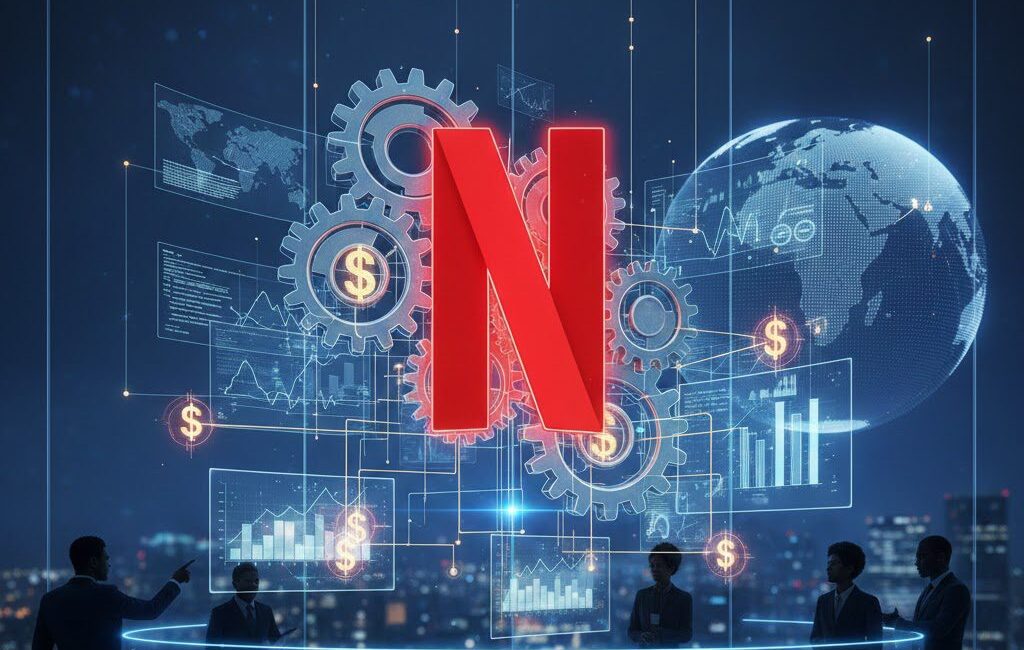
Netflix’s financing model is a data-driven content acquisition engine that prioritizes original IP ownership, global diversification, and aggressive annual spending to maximize subscriber ROI.
This approach involves moving away from traditional licensing toward a “cost-plus” model, where the platform pays for the entire production cost plus a premium to secure worldwide rights in perpetuity.
According to the Vitrina Brief, Netflix now commits upwards of $17 billion annually to content, a financial firepower that has forced legacy studios to pivot from “Streaming Wars” to collaborative “Weaponized Distribution” strategies.
In this guide, you’ll learn how this model reshaped the supply chain, the role of viewing data in greenlighting, and how independent producers can navigate the new, borderless market.
While traditional resources analyze Netflix purely as a consumer platform, they often fail to address the technical shifts in financing that impact co-production discovery and competitive intelligence for industry professionals.
This analytical report fills that gap by connecting Netflix’s historical financing pillars to the current global production pipeline.

Your AI Assistant, Agent, and Analyst for the Business of Entertainment
VIQI AI helps you plan content acquisitions, raise production financing, and find and connect with the right partners worldwide.
- Find active co-producers and financiers for scripted projects
- Find equity and gap financing companies in North America
- Find top film financiers in Europe
- Find production houses that can co-produce or finance unscripted series
- I am looking for production partners for a YA drama set in Brazil
- I am looking for producers with proven track record in mid-budget features
- I am looking for Turkish distributors with successful international sales
- I am looking for OTT platforms actively acquiring finished series for the LATAM region
- I am seeking localization companies offer subtitling services in multiple Asian languages
- I am seeking partners in animation production for children's content
- I am seeking USA based post-production companies with sound facilities
- I am seeking VFX partners to composite background images and AI generated content
- Show me recent drama projects available for pre-buy
- Show me Japanese Anime Distributors
- Show me true-crime buyers from Asia
- Show me documentary pre-buyers
- List the top commissioners at the BBC
- List the post-production and VFX decision-makers at Netflix
- List the development leaders at Sony Pictures
- List the scripted programming heads at HBO
- Who is backing animation projects in Europe right now
- Who is Netflix’s top production partners for Sports Docs
- Who is Commissioning factual content in the NORDICS
- Who is acquiring unscripted formats for the North American market
Table of Contents
Key Takeaways for Strategy Teams
-
Data-Driven ROI: Strategy teams using supply chain intelligence can now predict commissioning patterns with 70% higher accuracy by tracking Netflix’s historical spending shifts.
-
Global Supply Chain Visibility: Monitoring 140,000+ distributors globally allows executives to identify regional co-production targets before they enter generic bidding wars.
-
Strategic Intelligence Edge: Accessing real-time M&A data—like the $72B Warner Bros. deal—enables CXOs to identify acquisition targets 6 months ahead of market announcements.
The Evolution of Data-Driven Greenlighting
Netflix has transformed content acquisition from a subjective “art” into a science-backed engine. By leveraging vast amounts of viewing data—tracking everything from pauses and rewinds to completion rates—the platform creates an intelligence-first greenlighting process. This data-driven strategy ensures that every billion-dollar investment is targeted at specific audience segments.
For example, the decision to greenlight “House of Cards” wasn’t based on a traditional pilot; it was based on data suggesting that fans of David Fincher also had high affinity for Kevin Spacey. This predictive ROI model has forced the entire industry to abandon the “walled garden” approach in favor of deeper, interconnected data analysis.
Analyze Netflix’s recent content acquisition trends:
Industry Expert Perspective: Media Finance: Navigating a Post-Streamer World
Matthew Helderman, CEO of BondIt Media Capital, discusses the structural shifts in media financing that have occurred as the industry moves away from pure streamer reliance toward diversified creative economies.
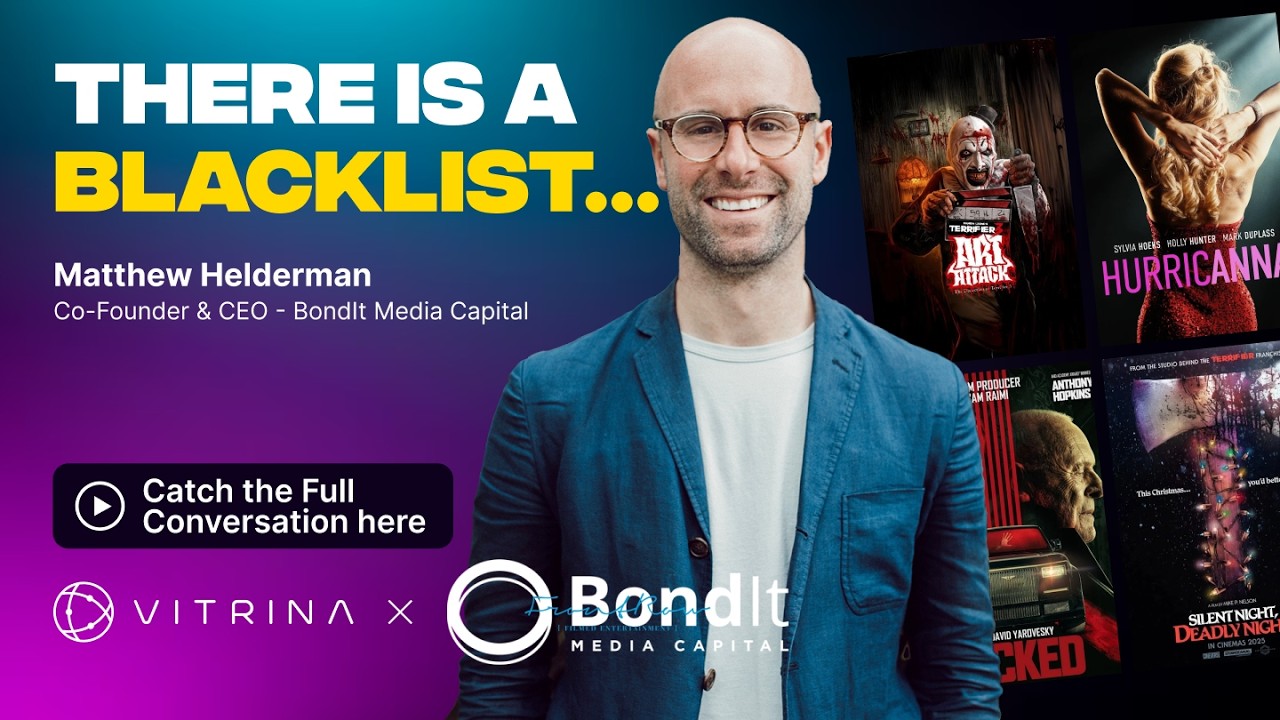
Helderman shares the journey of BondIt Media Capital in filling the gap for reliable capital following market credit crises, emphasizing how data and passion now blend to support the next generation of creative storytellers.
“Netflix didn’t just disrupt distribution; they disrupted the very concept of financial risk in Hollywood. By turning viewership into verifiable data, they’ve made the ‘black box’ of content performance transparent to those with the right intelligence tools, effectively building a competitive moat around their multi-billion dollar slates.”
From Streaming Wars to Weaponized Distribution
The era of the “Walled Garden” is ending. Major M&A activity, such as Netflix’s $72 billion acquisition of Warner Bros.’ studio assets, signals a transition into “Weaponized Distribution.” Platforms are now licensing premium content to rivals to maximize ROI on aging assets. This strategy prioritizes long-term Average Revenue Per User (ARPU) over rigid exclusivity.
As the industry consolidates, the operational data required to navigate these “Frenemy Pacts” (like the Amazon-Netflix advertising DSP integration) becomes a strategic necessity. Executives who lack a single source of truth for supply chain intelligence will find themselves vulnerable to missed licensing opportunities in this new, collaborative landscape.
Moving Forward
The global entertainment supply chain has shifted from a relationship-driven art to a centralized, data-powered framework. Netflix’s $17 billion annual content commitment is the catalyst for this transformation, creating a “data deficit” for those still relying on legacy networking methods.
Whether you are a CXO looking to monitor competitive slates, or an independent producer trying to find active co-production partners, the principle remains: verifiable intelligence is the only “insider advantage” that scales.
Outlook: Over the next 12-18 months, platform fragmentation will accelerate as niche FAST channels and regional streamers proliferate, making real-time supply chain mapping the definitive standard for market survival.
Frequently Asked Questions
What is Netflix’s content acquisition strategy?
Netflix’s strategy is built on five pillars: data-driven engine, original content focus, global expansion, content diversification, and aggressive $17B+ annual spending on talent and production.
How much does Netflix spend on content annually?
As of 2025, Netflix commits upwards of $17 billion annually to content production and acquisition, enabling them to outbid competitors and secure a steady pipeline of premium content.
About the Author
Written by the Vitrina Editorial Team. Sourcing intelligence from our global supply chain platform of 600,000+ companies and 5 million professionals. Connect on Vitrina.
Find Film+TV Projects, Partners, and Deals – Fast.
VIQI matches you with the right financiers, producers, streamers, and buyers – globally.
Producers Seeking Financing, Co-Pros, or Pre-Buys?
Vitrina Concierge helps producers reach the right financiers, commissioners, distributors, and co-production partners — with precision outreach, not cold pitching.
Join Industry Briefings Trusted by Leaders
Format Adaptations: Global Trends
Where formats are traveling, which adaptations are breaking out, and how streamers are backing remakes in 2025–2026.

Books, Novels & Comics Adaptations: Global Trends
Books, webtoons, and manga driving the next global screen hits. Discover how in this webinar.

Micro-Dramas & Mobile-First Storytelling
Micro-dramas are building real audiences and revenue. Understand the platforms, buyers, and economics behind the growth.
Navigating Global Content Licensing Trends
How global content licensing is shifting beyond flat fees to flexible, deal-driven models.