About Innovation Hub
 Global Content Pulse (Webinars)


 Global Production Financing
(Webinars)
Global Production Financing
(Webinars)  LeaderSpeak Podcast
  Global Entertainment Digest (Newsletter)
  About Vitrina
 About VIQI
 Our Story
 Our Solutions 🔥
 Film+TV Projects Tracker 🚀
 Case Studies
 Our Profile

Partnering with localization services is the strategic process of aligning with specialized vendors to adapt film and television content for diverse linguistic and cultural markets.
This involves identifying qualified dubbing, subtitling, and cultural adaptation partners to ensure content resonates with global audiences while maintaining intellectual property integrity.
According to Vitrina AI market data, the global entertainment supply chain now includes over 140,000 companies, with a significant surge in demand for regional localization specialty hubs.
In this guide, you will learn proven frameworks for vendor vetting, AI integration strategies, and methods to compress partner discovery timelines from months to days.
While legacy resources focus on large-scale post-production houses, they often fail to address the nuance of regional specialty vendors or the technical shift toward AI-enhanced workflows.
This analysis fills those gaps by providing a data-driven roadmap for acquisition leads navigating a fragmented global marketplace.

Your AI Assistant, Agent, and Analyst for the Business of Entertainment
VIQI AI helps you plan content acquisitions, raise production financing, and find and connect with the right partners worldwide.
- Find active co-producers and financiers for scripted projects
- Find equity and gap financing companies in North America
- Find top film financiers in Europe
- Find production houses that can co-produce or finance unscripted series
- I am looking for production partners for a YA drama set in Brazil
- I am looking for producers with proven track record in mid-budget features
- I am looking for Turkish distributors with successful international sales
- I am looking for OTT platforms actively acquiring finished series for the LATAM region
- I am seeking localization companies offer subtitling services in multiple Asian languages
- I am seeking partners in animation production for children's content
- I am seeking USA based post-production companies with sound facilities
- I am seeking VFX partners to composite background images and AI generated content
- Show me recent drama projects available for pre-buy
- Show me Japanese Anime Distributors
- Show me true-crime buyers from Asia
- Show me documentary pre-buyers
- List the top commissioners at the BBC
- List the post-production and VFX decision-makers at Netflix
- List the development leaders at Sony Pictures
- List the scripted programming heads at HBO
- Who is backing animation projects in Europe right now
- Who is Netflix’s top production partners for Sports Docs
- Who is Commissioning factual content in the NORDICS
- Who is acquiring unscripted formats for the North American market
Table of Contents
Key Takeaways for Acquisition Leads
-
Data-Driven Vetting: Professional buyers replace manual vendor research with supply chain intelligence, identifying regional localization hubs in under 24 hours.
-
Regional Specialty Hubs: Targeting niche vendors in Southeast Asia or the Middle East through verified profiles provides better cultural nuance than generic global firms.
-
AI ROI Integration: Incorporating AI dubbing and emotional voice stacks can reduce localization costs by 40 percent while maintaining theatrical quality.
What is Strategic Localization Partnering?
Strategic localization partnering goes beyond simple translation services to encompass a deep integration between content owners and technical service vendors. In today’s globalized market, where regional hits like Squid Game become international phenomena, localization is no longer a post-production afterthought. It is a core driver of content monetization and territorial expansion.
For acquisition leads, this partnership involves vetting vendors who understand cultural nuance, technical compliance for various streaming platforms, and the security protocols required to handle unreleased intellectual property. The complexity of the modern supply chain, with over 5 million professionals tracked by Vitrina, requires a systematic approach to identifying the right partner for each specific genre and region.
Find verified localization vendors in Europe:
Finding Regional Localization Specialists
One of the primary market gaps in localization content is the over-reliance on large, generic post-production houses. While these giants offer scale, they often lack the linguistic precision required for high-stakes regional launches. Finding regional specialists in markets like the Middle East or Southeast Asia provides a competitive edge through authentic cultural adaptation.
Industry leaders now use the Vitrina Global Projects Tracker to monitor where content is being adapted and which vendors are handling high-profile regional slates. This real-time visibility allows acquisition leads to identify vendors who have a proven track record with similar content types, ensuring a higher quality of service and faster turnaround times for territorial launches.
Industry Expert Perspective: Micro Series and Macro Trends: TransPerfect’s Take on Localization
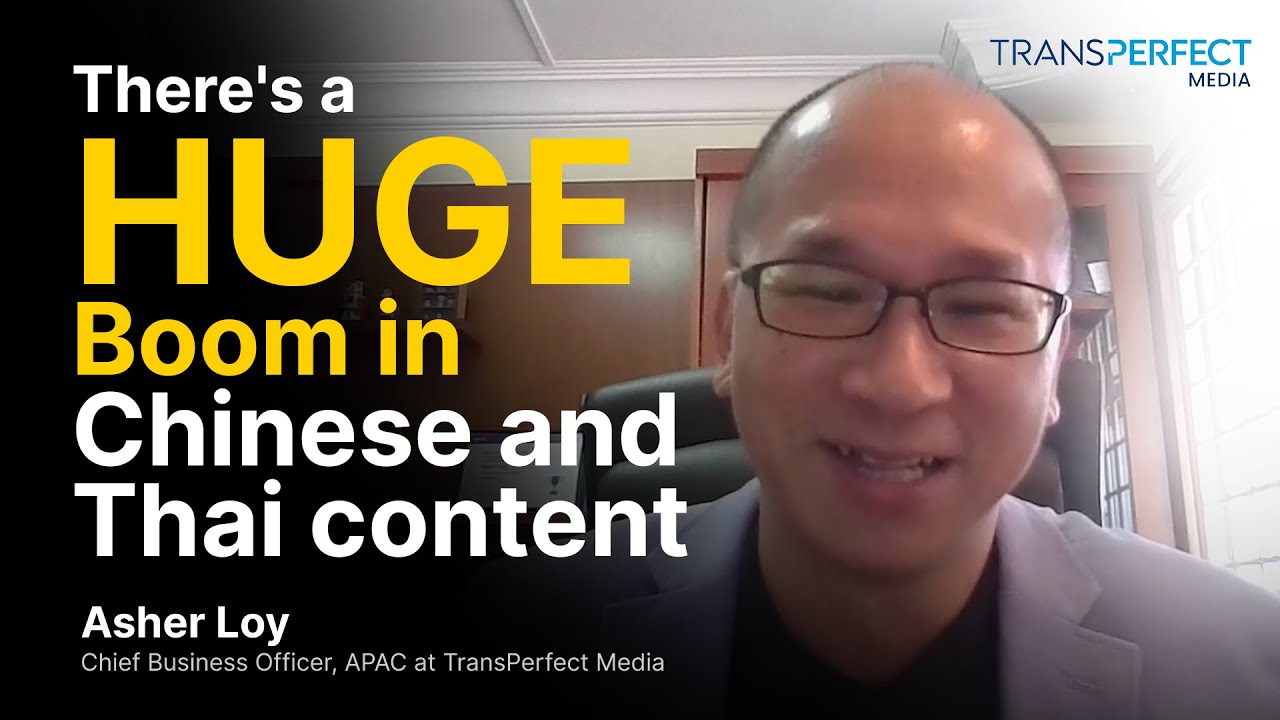
In this deep dive, Asher Loy from TransPerfect explores how localization is evolving alongside industry trends like micro-series and the integration of AI dubbing. This perspective is vital for buyers looking to understand the future of global content delivery.
Key Insights
Join us as Asher Loy, Chief Business Officer at TransPerfect APAC, delves into localization’s evolution in the media industry. Explore AI’s transformative role, cultural nuances in streaming content, and trends like micro-series across Asia’s dynamic markets.
The ROI of AI-Enhanced Localization
Artificial Intelligence is fundamentally shifting the unit economics of localization. While traditional dubbing can be cost-prohibitive for smaller territories or catalog content, AI-driven voice technology allows for high-quality adaptation at a fraction of the cost. This creates a “Weaponized Distribution” opportunity, where legacy content can be localized and licensed to FAST channels or regional streamers post-release to maximize ROI.
Tools like VIQI AI Assistant allow buyers to query the market for vendors who utilize specific AI stacks, such as emotional voice replication or deepfake lip-syncing. By identifying these partners, content owners can reduce localization timelines by up to 60 percent, allowing for day-and-date global releases that were previously impossible for independent productions.
Analyze AI dubbing vendor capabilities:
A Data-Driven Vendor Vetting Framework
To avoid the “data trust deficit,” acquisition leads must move beyond subjective recommendations to objective vetting frameworks. This requires verifying a vendor’s specialization, deal history, and relationship scores. Partnering with localization services should follow a four-stage process: discovery, verification, relationship mapping, and capability assessment.
- Discovery: Identify vendors in the target territory using vertical AI tools to bypass social media noise.
- Verification: Review verified profiles that list real-world projects, such as those adapted for Netflix or HBO Max.
- Relationship Mapping: Use Vitrina’s 30 million industry relationships to see which studios and distributors have previously trusted the vendor.
- Capability Assessment: Verify technical compliance with TPN (Trusted Partner Network) and specific platform delivery requirements.
Case Study: Streamlining Acquisition at SBT Brazil
SBT Brazil serves as a primary example of how broadcasters are transforming their acquisition and localization workflows. By leveraging custom data solutions, SBT was able to streamline the acquisition of international content, curating a library of acclaimed films and series for the Brazilian market. This involved not only identifying trending IP but also ensuring that localization partners were ready to adapt content for local audiences with speed and precision.
The result was a more efficient content lifecycle, where international deals were closed and localized content was on-air faster than through legacy manual discovery methods. For SBT, data-driven intelligence became the “digital lighthouse” that allowed them to navigate the complex global supply chain and secure high-value partnerships without the traditional risks of opaque personal networks.
Discover regional distributors and vendors:
Integrating Localization into the Supply Chain
The final step in successful partnering is technical integration into the existing supply chain. This involves using API-ready data feeds to enrich internal CRM systems like Salesforce or HubSpot with vendor metadata. When a localization partner is qualified, their performance metrics should be tracked in real-time to inform future acquisition decisions.
By moving from a relationship-driven model to a data-powered framework, acquisition teams can eliminate the “data deficit” and ensure that their content has the best possible chance of success in international markets. Strategic localization partnering is no longer just a service—it is a competitive advantage in the authorized data era.
Moving Forward
The transformation of the localization landscape from an opaque network to a data-driven science addresses the critical gaps in vendor visibility and technical ROI. By leveraging supply chain intelligence, content buyers can compress months of manual research into a streamlined, high-probability partnership strategy.
Whether you are an acquisition lead looking to enter Southeast Asian markets, or a sales agent trying to maximize catalog ROI through AI dubbing, the principle remains: actionable intelligence drives territorial expansion.
Outlook: Over the next 12 to 18 months, the rise of “Authorized Data” and vertical AI will make real-time vendor vetting a standard requirement for all major content transactions.
Frequently Asked Questions
Quick answers to common queries regarding localization partnerships.
How do I find localization vendors for emerging markets?
What is the benefit of AI dubbing versus traditional methods?
How can I verify a localization partner’s track record?
What security protocols should localization partners follow?
Can AI localization handle cultural nuances?
Is localization necessary for FAST channels?
How long does content localization typically take?
What is the role of metadata in localization?
“The localization model that worked five years ago—manual translation followed by generic studio recording—is being replaced by an AI-first framework. Buyers who leverage supply chain intelligence to identify regional specialists with AI capabilities are securing territorial launches sixty percent faster than those using legacy methods.”
About the Author
Created by the Vitrina Editorial Team, specializing in entertainment supply chain intelligence and market transformation. Our analysts track 1.6 million titles and 140,000+ companies to provide verified insights for M&E professionals. Connect on Vitrina.
Find Film+TV Projects, Partners, and Deals – Fast.
VIQI matches you with the right financiers, producers, streamers, and buyers – globally.
Producers Seeking Financing, Co-Pros, or Pre-Buys?
Vitrina Concierge helps producers reach the right financiers, commissioners, distributors, and co-production partners — with precision outreach, not cold pitching.
Join Industry Briefings Trusted by Leaders

Micro-Dramas & Mobile-First Storytelling
Micro-dramas are building real audiences and revenue. Understand the platforms, buyers, and economics behind the growth.

Navigating Global Content Licensing Trends
How global content licensing is shifting beyond flat fees to flexible, deal-driven models.

Film & TV Production Financing: 2026 Trends
Production financing conditions are changing quickly. Understanding where money is moving and what buyers are backing is key to getting projects approved and funded in 2026.

Unreleased Film+TV Projects: Opportunities & Showcase
A curated view of unreleased Film and TV projects open for financing and collaboration