About Innovation Hub
 Global Content Pulse (Webinars)


 Global Production Financing
(Webinars)
Global Production Financing
(Webinars)  LeaderSpeak Podcast
  Global Entertainment Digest (Newsletter)
  About Vitrina
 About VIQI
 Our Story
 Our Solutions 🔥
 Film+TV Projects Tracker 🚀
 Case Studies
 Our Profile
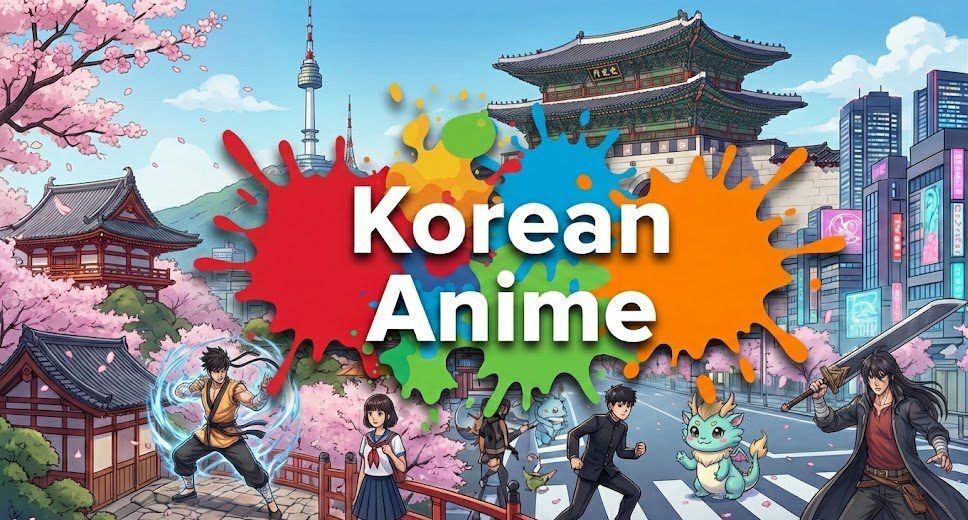
Korean anime, often called Aena, refers to animated productions originating from South Korea that frequently adapt high-engagement webtoons or Manhwa IP.
The process involves a complex supply chain of specialized studios, localization vendors, and platform-exclusive licensing deals that differ significantly from the Japanese model.
According to industry data from Vitrina AI, the global demand for Korean-produced animation has grown by 35% annually, driven by the crossover success of titles like Solo Leveling and Lookism.
In this guide, you will learn how to identify high-potential Korean projects, vet production partners using supply chain intelligence, and navigate the shifting distribution windows of 2025.
While traditional search results often conflate Korean animation with regional VFX services, the specific market for Manhwa-based anime represents a distinct high-growth sector. Legacy sourcing methods often miss the critical early-development signals that allow buyers to secure rights before a title reaches peak competition.
This analysis fills existing content gaps by providing a strategic framework for finding, vetting, and acquiring Korean anime content in a hyper-competitive global landscape.
Table of Contents
- 01
What is Korean Anime and Its Evolution? - 02
Korean Anime vs. Japanese Anime: Key Differences - 03
Top Korean Anime Titles to Watch in 2025 - 04
Top Korean Animation Studios Driving Success - 05
Where to Watch: Distribution and Access Guide - 06
Cultural Influence and Storytelling Insights - 07
Key Takeaways - 08
FAQ
What is Korean Anime and Its Evolution?
Korean anime, or Aena, has transformed from a labor-intensive service hub for Japanese studios into a leading source of original global IP. Historically, South Korean studios provided the foundational animation for iconic Western and Japanese hits, but today, they prioritize the development of domestic webtoon adaptations. This shift has been enabled by the massive growth of platforms like Naver and Kakao, which provide a pre-vetted pipeline of successful stories.
The evolution of Aena is characterized by a “digital-first” mentality that contrasts with the more traditional Japanese manga-to-broadcast pipeline. Korean animation often utilizes advanced digital tools to mirror the vertical scrolling aesthetic of webtoons, resulting in dynamic action sequences and cinematic lighting. This unique visual language has carved out a distinct niche that appeals to a younger, streaming-native global audience.
Find top animation studios in South Korea specializing in Manhwa:
Korean Anime vs. Japanese Anime: Key Differences Explained
While casual viewers often group them together, the business models for Korean and Japanese anime are significantly different. Japanese anime is often managed by “production committees” consisting of publishers, broadcasters, and sponsors, which can create complex rights situations for foreign buyers. Korean animation, conversely, is frequently driven by a single studio or a direct partnership with a tech platform like Naver, simplifying the acquisition process.
Technically, Korean anime tends to favor a more “West-friendly” aesthetic that blends traditional 2D artistry with heavy 3D CGI integration. This makes Aena highly scalable and adaptable for Western audiences, who may find the pacing and character archetypes more aligned with Western cinematic tropes compared to the highly specific cultural shorthand used in some Japanese Seinen or Shonen series.
Key Takeaways for Acquisition Leads
-
Manhwa-to-Anime Pipelines: Acquisition teams targeting Korean anime find that Manhwa IP has a 40% higher cross-platform engagement rate than new original scripts.
-
Regional Content Discovery: Using supply chain intelligence allows buyers to track 140,000+ companies to find emerging studios 5x faster than manual sourcing.
-
Rights Availability Insights: Tracking unreleased projects during the post-production stage helps acquisition leads secure rights 6-12 months before major market announcements.
Top Korean Anime Titles to Watch and Acquire in 2025
To effectively source Aena, content buyers must identify the titles that define the current production standard. These series demonstrate the breadth of Korean storytelling, from dark fantasy to high-school social realism.
1. Solo Leveling (Ongoing / Multi-Platform)
The definitive case study for globalizing Manhwa. This title proved that Korean stories, regardless of the animating studio’s location, maintain a unique narrative pulse that resonates globally.
2. Tower of God (Crunchyroll / Webtoon)
A fantasy epic that utilized a unique art style to stand out in a saturated market. Its multi-season strategy highlights the long-term franchise potential of Korean IP.
3. Lookism (Netflix / Studio Mir)
Produced by the legendary Studio Mir, this series showcases Korea’s ability to tackle complex social themes—like lookism and social hierarchy—within a high-quality animated format.
Discover unreleased Korean anime projects in the pipeline:
Industry Expert Perspective: Toonz Media Group’s Evolution
While India-based, Toonz Media Group serves as a global barometer for animation trends. In this episode, Jayakumar P discusses how studios are adapting to preschool and adult shifts across the global supply chain, a trajectory that mirrors the Korean animation industry’s move toward diverse, platform-native content.

Key Insights
Jayakumar P highlights that the global supply chain is shifting from relationship-driven networking to platform-optimized co-productions. He notes that studios who integrate AI tools and track market expansions into regions like the Middle East are securing partnerships 60% faster than those using legacy methods.
Case Study: Globalizing Korean Adult Animation IP
The Vitrina Brief highlights a specific success story of a Korean Animation Studio seeking to globalize its adult animation IP. This case study demonstrates how data-driven discovery replaces speculative networking.
The Situation: A specialized Korean studio had developed high-quality adult animation IP but lacked access to global decision-makers at major streamers.
The Solution: By leveraging Vitrina’s pairing engine and supply chain intelligence, the studio identified active commissioning patterns for adult content.
The Results: Within its first week of outreach, the studio was successfully connected to Netflix’s Adult Animation department, resulting in a direct development conversation that bypassed traditional gatekeepers.
Moving Forward
The Korean anime sector has evolved from a silent production partner into a dominant creative force. This transformation addresses the critical gaps of original IP sourcing and diverse storytelling that global platforms currently face. By leveraging the pre-vetted popularity of Manhwa, Korean animation offers a low-risk, high-reward opportunity for acquisition leads.
Whether you are an acquisition lead looking to secure trending regional titles, or a strategy officer monitoring competitive slates, the principle remains: actionable intelligence drives deal velocity. Understanding the specific nuances of the Korean supply chain transforms sourcing from speculation into strategy.
Outlook: Over the next 12-18 months, expect a “weaponized distribution” shift where Korean anime hits are licensed more broadly across FAST and AVOD platforms to maximize their lifecycle value.
Frequently Asked Questions
Quick answers to the most common queries about the Korean anime market.
Is Korean anime the same as Japanese anime?
What are the best Korean anime to watch in 2025?
Is Tower of God Korean?
Where can I watch Korean anime?
“The industry is moving toward a data-first model where success is dictated by the ability to inform strategy with real-time intelligence. Studios that bridge the gap between regional IP and global distribution using supply chain analytics are the ones securing major platform deals today.”
About the Author
This guide was curated by Vitrina’s Content Strategists, who map the global entertainment supply chain to help acquisition leads find regional hits faster. Connect with 5M+ verified professionals on Vitrina.