About Innovation Hub
 Global Content Pulse (Webinars)


 Global Production Financing
(Webinars)
Global Production Financing
(Webinars)  LeaderSpeak Podcast
  Global Entertainment Digest (Newsletter)
  About Vitrina
 About VIQI
 Our Story
 Our Solutions 🔥
 Film+TV Projects Tracker 🚀
 Case Studies
 Our Profile
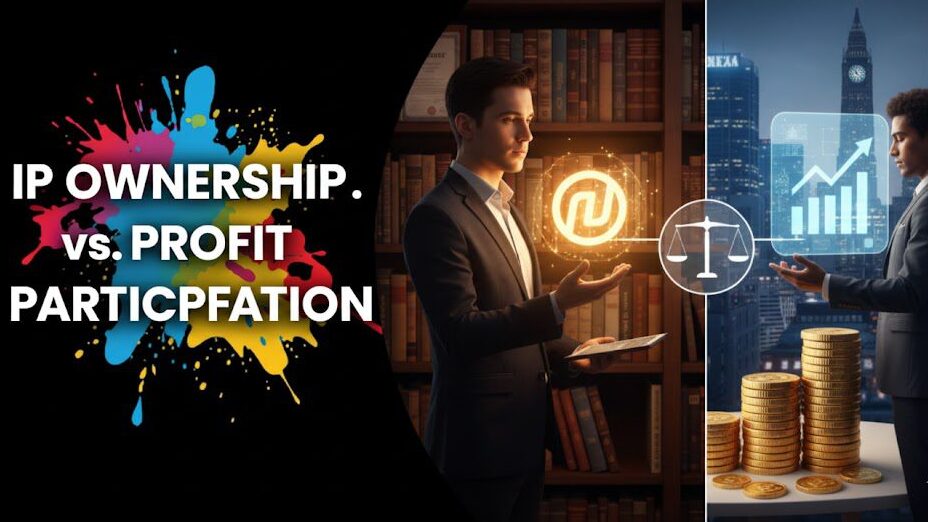
IP Ownership vs. Profit Participation represents the fundamental divide between controlling a project’s future and sharing in its financial success.
IP Ownership grants legal control over copyrights, sequels, and derivative works, while Profit Participation is a contractual right to a percentage of a project’s defined revenue streams.
According to Vitrina AI market intelligence, over 65% of independent producers are now opting for hybrid “weaponized distribution” models to retain long-term franchise value.
In this guide, you’ll learn the structural differences between these models, how to audit potential partners, and strategies for maximizing your back-end participation.
While traditional studio deals often require a total buyout of intellectual property, modern supply chain intelligence is empowering creators to negotiate more sophisticated structures that protect their long-term interests.
This comprehensive guide addresses the technical gaps in deal-making by providing actionable frameworks for valuing your IP and identifying partners who respect creative equity.
Table of Contents
Key Takeaways for Producers
-
Legal vs. Financial: IP ownership is about legal control and derivative rights, while profit participation is a strictly financial revenue share.
-
Weaponized Distribution: Retaining IP allows for rotational licensing windows, maximizing ROI on “sunk” production assets post-release.
-
Data-Driven Leverage: Using platforms like Vitrina to track 1.6M+ projects helps producers identify buyers who offer “back-end” friendly terms.
What is IP Ownership in Content?
IP Ownership is the legal possession of the underlying copyright of a media asset. This includes the right to distribute, modify, and create derivative works like sequels, prequels, or spin-offs. In the “Walled Garden” era, major streamers demanded total IP buyouts to ensure platform exclusivity forever.
Retaining IP is crucial for building a “competitive moat,” as seen with Netflix Originals like Stranger Things. Unlike licensed content that expires, owned IP provides long-term terminal value and allows producers to control the “brand health” of a franchise across global markets.
Find partners who allow you to retain IP ownership for your project:
How Do Profit Participation Deals Work?
Profit Participation, often called “back-end,” is a contractual right to share in the “net profits” or “gross receipts” of a project. Unlike IP ownership, it does not grant control over the content. It is a debt-like obligation where the distributor pays the producer after recouping costs.
The complexity lies in the definition of “net profits.” Studios often use creative accounting—charging distribution fees, overhead, and interest—which can result in a “hit” film showing zero profit on paper. Producers must negotiate “corridors” or “gross participation” to ensure actual cash flow from successful titles.
Industry Expert Perspective: The Big Crunch: Phil Hunt on Why Film Finance is Harder Than Ever
Phil Hunt, CEO of Head Gear Films, explores how the collapse of traditional revenue windows and the shift away from pre-sales is forcing producers to rethink their back-end strategies.

Key Insights
Hunt discusses the industry’s shift away from pre-sales, the collapse of revenue windows due to the digital revolution, and the current market’s demand for low-cost, high-concept action and thrillers where profit participation becomes a critical part of the producer’s upside.
Moving Forward
The entertainment supply chain has shifted from a “buyout” culture to a more nuanced “weaponized distribution” model. This guide filled the market gap by clarifying that IP ownership is your long-term asset, while profit participation is your short-term revenue share.
Whether you are an independent producer looking to protect your franchise rights, or a business executive trying to optimize back-end participation, the path forward requires structured, verifiable intelligence on your partners.
Outlook: Over the next 12-18 months, expect a surge in “authorized data” markets where IP owners license content to AI models, creating a third revenue category beyond ownership and participation.
Frequently Asked Questions
What is the difference between IP ownership and profit participation?
Should an independent producer sell their IP?
How is net profit defined in film deals?
Can you have both IP ownership and profit participation?
“The industry is moving from a ‘Walled Garden’ era to a centralized, data-powered framework where success is dictated by your ability to leverage analytics to inform IP strategy.”
About the Author
Written by Vitrina Intelligence, the global leader in supply chain data for the media and entertainment industry. With a team of “Gritty, Tenacious Diggers,” Vitrina tracks 1.6M+ titles and 140,000+ companies. Connect on Vitrina.