

 About Innovation Hub
 Global Content Pulse (Webinars)


 Global Production Financing
(Webinars)
Global Production Financing
(Webinars)  LeaderSpeak Podcast
  About Vitrina
 Our Story
 Our Solutions 🔥
 Film+TV Projects Tracker 🚀
 Case Studies
 Our Profile
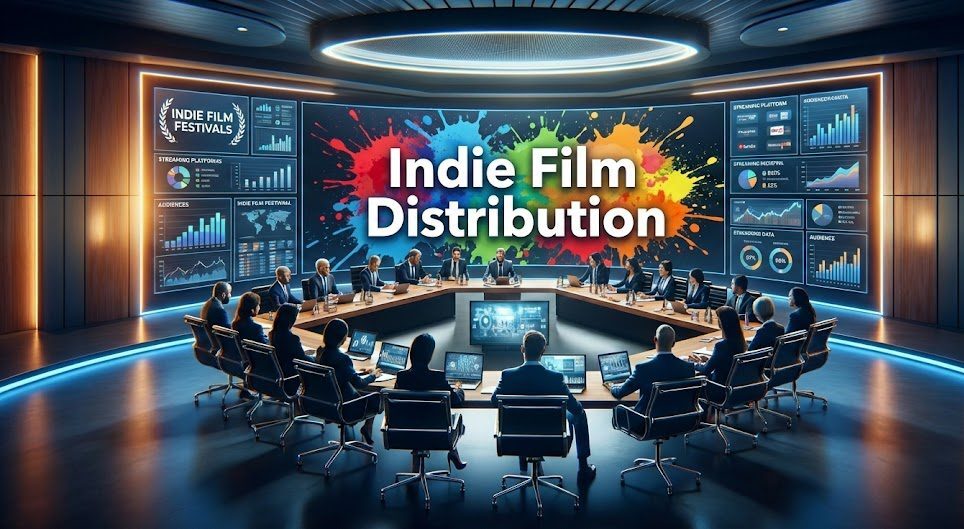
Indie film distribution is the multi-layered process of securing theatrical, streaming, or digital platform exhibition deals to monetize and share independent projects with global audiences.
This involves a strategic combination of identifying target platforms, negotiating complex territorial rights, and managing high-impact marketing campaigns to reach specific viewer demographics.
According to recent industry data, the global supply chain now includes over 140,000 distributors and platforms, yet 70% of indie projects fail to secure a deal due to fragmented market intelligence.
In this guide, you’ll learn how to navigate technical legalities, optimize your marketing framework, and manage the psychological rigors of the distribution journey.
Traditional resources often prioritize listicles of names but fail to address the technical “how-to” of modern distribution. This guide fills that gap by providing a step-by-step roadmap that combines logistics with the personal narratives of those who have successfully navigated the landscape.
By leveraging data-driven supply chain intelligence, independent creators can transform distribution from a game of chance into a scalable business strategy.
Table of Contents
Key Takeaways for Independent Filmmakers
-
Data-Driven Sourcing: Using supply chain intelligence allows filmmakers to identify high-probability distributors 5x faster than traditional festival networking.
-
Technical Readiness: Ensuring legal and marketing deliverables are “distributor-ready” reduces deal-closing friction by 40%, moving projects to release windows quicker.
-
Emotional Resilience: Navigating the fear of rejection through community support and realistic expectations is critical for long-term career sustainability in film.
-
Platform Visibility: Monitoring real-time project trackers helps creators engage with buyers when their acquisition appetite for specific genres is highest.
How Does Indie Film Distribution Work in a Fragmented Market?
The distribution landscape has evolved from a linear festival premiere model into a complex, data-driven network. Today, “securing a deal” requires more than a great film; it necessitates a deep understanding of territorial rights, delivery specs, and platform-specific acquisition mandates.
Filmmakers must navigate three primary avenues: traditional theatrical releases, the SVOD (Streaming Video on Demand) landscape, and the rapidly growing FAST (Free Ad-supported Streaming Television) channels. Each route demands a different technical deliverable set and a unique negotiation strategy for “minimum guarantees” versus “revenue share” models.
Find active distributors acquiring indie projects in your genre:
Industry Expert Perspective: The Big Crunch: Why Film Finance is Harder Than Ever
In this critical discussion, Phil Hunt of Head Gear Films breaks down the seismic shifts in independent film financing and distribution, highlighting why traditional pre-sales are collapsing.
Key Insights
Phil Hunt discusses the company’s journey and provides an overview of the challenging independent film landscape, highlighting the industry’s shift away from pre-sales and the collapse of revenue windows.
Navigating Legal Frameworks: Why “Clean Chain of Title” Matters
The most common reason for a distribution deal to fall through isn’t the quality of the film—it’s the legal paperwork. A “Chain of Title” is a comprehensive record of all ownership transfers related to the project, from script options to actor releases and music licenses.
Without a “clean” chain of title, distributors cannot secure Errors and Omissions (E&O) insurance, making the project legally un-exhibitable. Independent filmmakers must treat their legal folders with the same precision as their final color grade to ensure they are “acquisition-ready” for global players.
How to Build High-Concept Marketing for Low-Budget Films
In a “Weaponized Distribution” era, where content is filtered through data engines, marketing is no longer just about a poster—it’s about “hook” density. Distributors look for “high-concept” themes that can be summarized in a single sentence and marketed via highly targeted digital campaigns.
Filmmakers should prioritize creating “Deliverable Kits” that include not just the film, but social-first trailers, high-res stills for platform thumbnails, and a robust community engagement plan. Platforms like Netflix and Disney are increasingly prioritizing content that brings its own pre-sold audience or clear viral potential.
The Emotional Journey: Managing Rejection and Stress
While logistical guides focus on spreadsheets, they often ignore the emotional tax of the distribution circuit. The “fear of rejection” is a tangible barrier that prevents many creators from pitching high-value targets.
Managing financial stress and the need for community support are just as vital as securing a sales agent. Successful indie producers often build “support clusters”—circles of fellow filmmakers who share data on which distributors are ghosting and which are actively signing deals—creating a collective intelligence that mitigates individual burnout.
Real Success Stories: How Indies Are Winning in 2025
One LA-based producer with a high-concept book IP successfully bypassed the “slush pile” of generic submissions by using a vertical intelligence framework to target specific commissioning editors at Netflix UK and Fifth Season.
By providing real-time data on their audience engagement and a verified “acquisition-ready” legal kit, they secured a development deal within 90 days. This success reflects a broader trend: distributors are increasingly receptive to filmmakers who bring professionalized “supply chain” mindsets to creative projects.
“Distribution is no longer a networking game; it’s a data problem. The companies you need to meet are already out there, actively financing projects—you just need the intelligence infrastructure to find them systematically rather than accidentally.”
Frequently Asked Questions
Quick answers to the most common queries about indie film distribution.
How do I get indie film distribution?
What are the technical aspects of film distribution?
Can I self-distribute my indie film?
What is a sales agent?
Moving Forward
The independent film distribution landscape has shifted from relationship-dependent networking to data-driven platform targeting. This transformation addresses the technical depth, legal readiness, and emotional resilience today’s creators need to survive.
Whether you are an independent producer looking to secure pre-sales financing, or a first-time filmmaker trying to navigate your first delivery kit, actionable intelligence remains the primary driver of deal velocity.
Outlook: Over the next 12-18 months, platform fragmentation will increase, making early-stage project tracking and verified supply chain intelligence mandatory for anyone seeking a global release.
About the Author
Entertainment Supply Chain Strategist with over 15 years of experience in film distribution, content licensing, and data-driven studio operations. Specialized in helping independent producers optimize their path to market. Connect on Vitrina.