About Innovation Hub
 Global Content Pulse (Webinars)


 Global Production Financing
(Webinars)
Global Production Financing
(Webinars)  LeaderSpeak Podcast
  About Vitrina
 Our Story
 Our Solutions 🔥
 Film+TV Projects Tracker 🚀
 Case Studies
 Our Profile
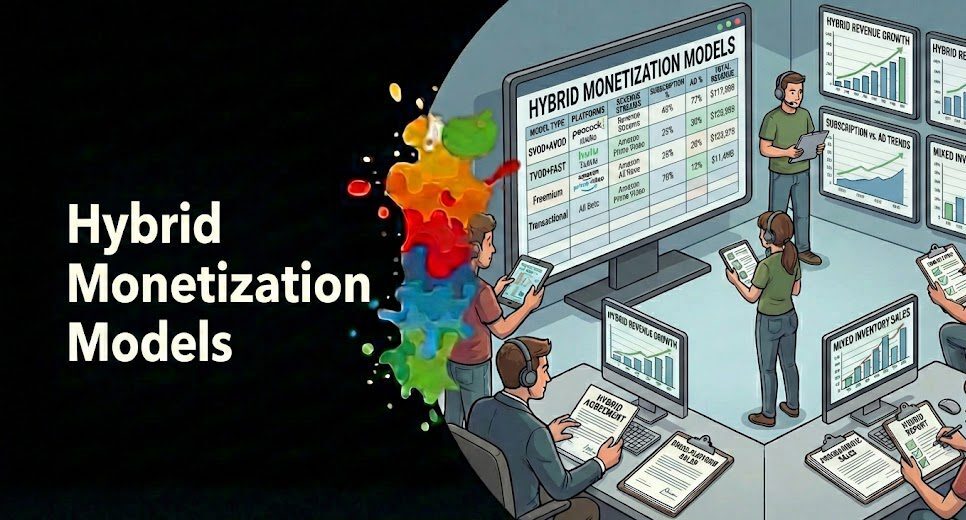
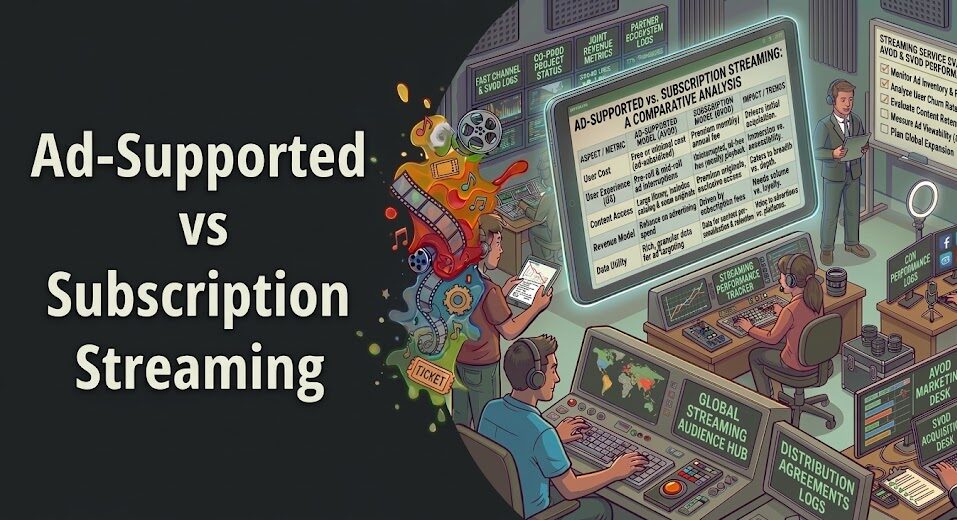
Hybrid monetization models are the strategic blending of SVOD, AVOD, FAST, and commerce—a shift that became the industry standard in 2026 as the pure subscription engine hit its ceiling. By offering tiered pricing that trades ad-exposure for lower monthly fees, platforms can finally combat subscription fatigue and capture value across the entire consumer demand curve.
Look, the “Streaming Wars” didn’t end with a winner—they ended with a business model reset. For years, the industry chased subscriber counts at any cost, often burning billions in capital to secure a recurring $15 monthly payment. But by early 2026, the math stopped working. High-intent users were already locked in, while cost-sensitive audiences began cycling through “cancel-and-churn” loops. To survive, major platforms had to evolve.
Table of Contents
Stop Guessing Who’s Financing. Get Targeted Outreach.
Stop searching and start getting funded. We identify the exact decision-makers currently backing projects like yours, turning raw data into risk-aligned capital partnerships.
Major Studios
Scouting early stage projects, IP, and Regional partners for global studio pipelines.
IP Owners & Leads
Connecting creative leads with qualified financiers and major streaming platforms.
Streamers
Securing high-value pre-buy content and discovering early-stage global IP for platforms.
Indie Producers
Bridging the gap for indie filmmakers to reach executive production partners and capital.
Global Financing Ecosystems
Mapping complex markets and pairing projects with disciplined, risk-aligned capital across global territories worldwide.
The 2026 Breaking Point: Why Subscription Fatigue Won
Behind closed doors, studio executives recognized the “breaking point” as early as 2024, but the public reckoning happened in 2026. Consumers reached a threshold of “monthly bill overwhelm.” When your bank statement reads like a hostage letter—Netflix, Adobe, Disney+, Spotify, and even that local note-taking app all demanding their cut—the loudest question becomes: “Do I actually need this?”
The traditional binary choice—subscribed or canceled—simply wasn’t flexible enough for a global audience with varying purchasing power. Industry insiders saw a massive shift in subscriber sentiment. Customers weren’t just looking to quit; they were looking for an off-ramp that didn’t involve losing access to content entirely. This demand for flexibility is what birthed the hybrid era.
Producers and rights holders can explore global licensing opportunities across these new hybrid platforms on Vitrina, filtered by territory and monetization type.
The Vitrina Demand Curve Framework™
To understand why hybrid monetization models work, you have to look at the demand curve. A single subscription price point under-monetizes your superfans and alienates your casual viewers. The Vitrina Demand Curve Framework™ illustrates how top platforms now capture value across the entire spectrum:
| Viewer Segment | Monetization Lever | Strategic Goal |
|---|---|---|
| Casual / Mass Reach | AVOD / FAST | Audience aggregation & ad revenue |
| Standard Consumer | Hybrid (Ad-Light) | Lower churn & stable recurring revenue |
| Loyalist / Premium | SVOD (Ad-Free) | High LTV & exclusivity |
| The Superfan | TVOD / Commerce | Direct spend & merch integration |
The Pillars of Hybrid Monetization
1. AVOD and the “Ad-Light” Revolution
Advertising is no longer the “budget option.” In 2026, it became the primary revenue engine. Media analyst Evan Shapiro famously noted that by summer 2026, FAST (Free Ad-supported Streaming TV) would put Netflix in its rearview mirror for total viewing time. Why? Because advertisers now pay significantly more for targeted OTT ads than traditional linear TV.
2. FAST Channels: The New Broadcast
FAST channels replicate the linear “lean-back” experience but operate entirely digitally. It solves the fragmentation paradox by aggregating content into themed streams—classic TV, live sports, or regional niches—without a subscription barrier.
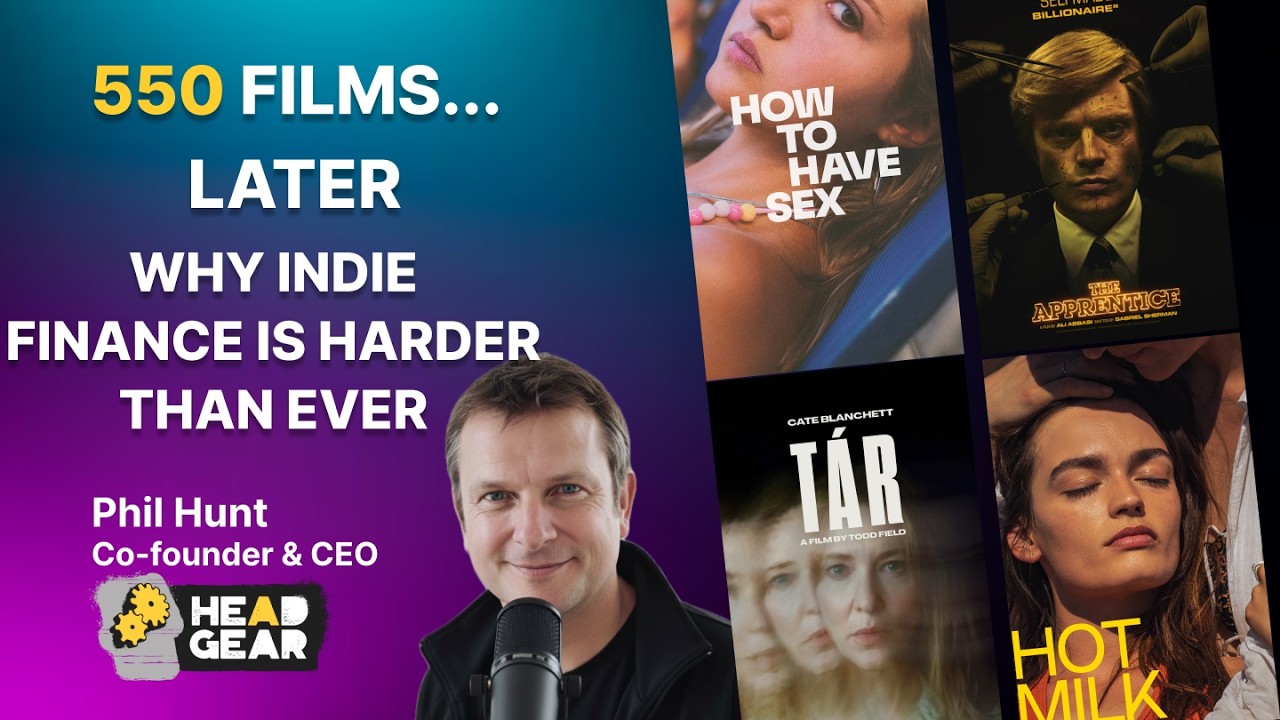
Phil Hunt, CEO of Head Gear Films, explains the shift in film financing and monetization:
3. Commerce and Interactive Shopping
What happens when you merge catalog depth with live engagement? You get shoppertainment. In 2026, interactive ad formats allow viewers to buy the protagonist’s outfit or order ingredients from a cooking show without leaving the app. This commerce integration adds a high-margin transactional layer to the standard subscription stack.
How AI De-Risks the Hybrid Shift
Transitioning from a simple monthly fee to a complex hybrid model is risky—unless you have the data to back it up. AI has evolved from a simple recommendation engine into a predictive system. It understands not just what users watch, but why and when they prefer to engage.
Strategic players understand that the capital reality has changed. You can’t treat delivery and monetization as separate tracks anymore. AI tools now optimize color grading and VFX in post-production, but they also inform executives which story arcs will resonate in specific markets to maximize ad-supported revenue. This is Authorized AI™ in action—recovering margins that were previously lost to manual friction.
“Want to see how AI is impacting your specific sector? Ask VIQI for a personalized supply chain analysis.”
Find the Financiers Backing Your Genre
Stop searching and start getting funded. We identify the exact decision-makers currently backing projects like yours, turning raw data into risk-aligned capital partnerships.
How Vitrina Helps with Hybrid Monetization
Navigating the 2026 market requires more than just high-level reports. You need surgical precision into who is buying, who is licensing, and how they are making money. Vitrina weaponizes census-level data of 150,000+ companies to map the global supply chain in real-time.
- Identify Hybrid Buyers: Find platforms actively expanding their AVOD and FAST tiers across 100+ countries.
- Partner Verification: Vet the track record of production partners and distributors before committing capital.
- Market Intelligence: Track unreleased projects to identify licensing windows before they expire.
Frequently Asked Questions
What are hybrid monetization models in streaming?
Hybrid monetization models combine multiple revenue streams—typically subscription (SVOD), advertising (AVOD/FAST), and transactional (TVOD/Commerce)—on a single platform. This allows services to capture revenue from both budget-conscious viewers and premium subscribers simultaneously.
Why did subscription-only models end in 2026?
The shift was driven by “subscription fatigue.” By 2026, consumers reached a spending limit for recurring fees. Platforms needed more flexible pricing tiers to retain churn-prone users and expand in price-sensitive developing markets.
How does FAST differ from AVOD?
FAST (Free Ad-supported Streaming TV) is linear, providing a scheduled channel experience similar to traditional broadcast. AVOD (Advertising Video on Demand) allows users to choose specific content with ad breaks. Successful 2026 platforms usually bundle both.
The Bottom Line
The era of chasing “growth at all costs” through pure subscriptions is over. The 2026 standard is efficiency, and that requires hybrid monetization models that respect the consumer’s wallet and the platform’s margins. Don’t leave revenue on the table by sticking to outdated binary models.
Ready to optimize your monetization strategy? Vitrina’s Concierge team can connect you with the platforms and partners driving the next wave of industry growth.
Find Film+TV Projects, Partners, and Deals – Fast.
VIQI matches you with the right financiers, producers, streamers, and buyers – globally.
Producers Seeking Financing, Co-Pros, or Pre-Buys?
Vitrina Concierge helps producers reach the right financiers, commissioners, distributors, and co-production partners — with precision outreach, not cold pitching.
Join Industry Briefings Trusted by Leaders
Format Adaptations: Global Trends
Where formats are traveling, which adaptations are breaking out, and how streamers are backing remakes in 2025–2026.

Books, Novels & Comics Adaptations: Global Trends
Books, webtoons, and manga driving the next global screen hits. Discover how in this webinar.

Micro-Dramas & Mobile-First Storytelling
Micro-dramas are building real audiences and revenue. Understand the platforms, buyers, and economics behind the growth.

Navigating Global Content Licensing Trends
How global content licensing is shifting beyond flat fees to flexible, deal-driven models.