

 About Innovation Hub
 Global Content Pulse (Webinars)


 Global Production Financing
(Webinars)
Global Production Financing
(Webinars)  LeaderSpeak Podcast
  About Vitrina
 Our Story
 Our Solutions 🔥
 Film+TV Projects Tracker 🚀
 Case Studies
 Our Profile
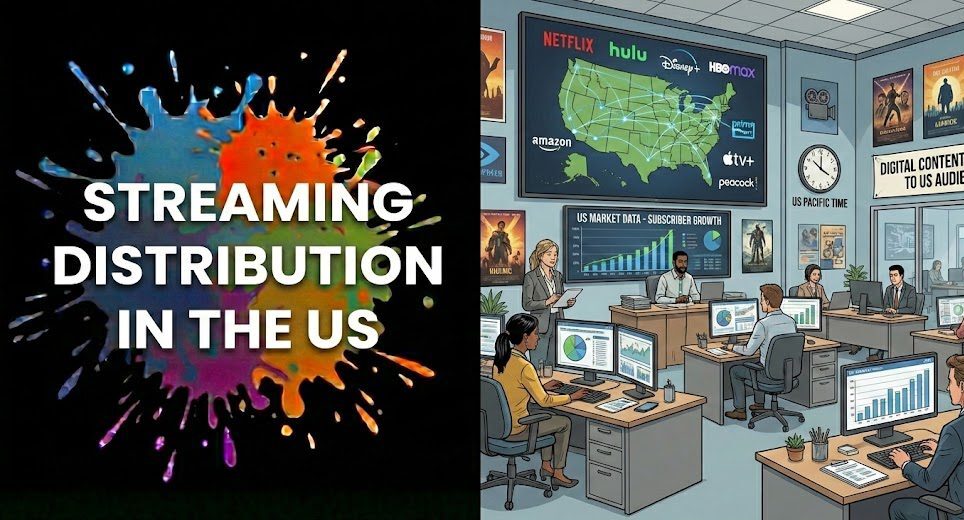
Licensing a film for streaming distribution in the US is the strategic process of granting SVOD, AVOD, or FAST platforms the legal right to exhibit your content in exchange for licensing fees or revenue shares.
This involves identifying the right platform fit, negotiating territory-specific rights, and selecting between exclusive “walled garden” models or non-exclusive rotational windows.
According to industry reports, the US streaming market has transitioned toward “Weaponized Distribution,” where premium content is increasingly licensed to rival platforms 18-24 months post-release to maximize ROI.
In this guide, you’ll learn actionable steps for platform identification, cost breakdown structures, and the nuances of rights negotiation to secure your next deal.
Traditional resources often focus on theatrical models, failing to address the practical complexities of the current streaming-first environment. Producers frequently struggle with navigating fragmented platform requirements and understanding the financial implications of modern licensing agreements.
This comprehensive guide bridges that intelligence gap, providing a step-by-step framework to transition from a finished project to a signed distribution agreement in the competitive US market.
Table of Contents
Key Takeaways for Independent Producers
-
Data-Driven Sourcing: Using supply chain intelligence platforms allows producers to identify active acquisition leads 70% faster than traditional networking.
-
Rights Granularity: Technical success depends on defining territorial streaming rights specifically, avoiding broad grants that limit future revenue windows.
-
FAST Channel Opportunities: Beyond major SVODs, FAST channels provide immediate monetization pathways for catalog titles through revenue-sharing models.
What is Film Licensing for Streaming Platforms?
Film licensing is the legal mechanism that allows content owners to monetize their intellectual property by granting specific rights to exhibitors. In the context of US streaming, this process has moved beyond simple territorial rights to include complex windowing strategies and technical delivery standards.
The “Weaponized Distribution” era means that major players like Warner Bros. Discovery and Netflix now license content to one another to maximize subscriber engagement and ROI. For independent creators, this shift creates a more fluid market where content can live across multiple platforms through rotational windows rather than being locked in a single ecosystem indefinitely.
Identify US streaming platforms acquiring your genre:
Exclusive vs. Non-Exclusive Streaming Rights: Which Is Right for You?
Choosing between exclusive and non-exclusive rights is the most critical financial decision in the licensing process. Exclusive rights often command a higher upfront minimum guarantee (MG) but prevent you from placing the film on other platforms, whereas non-exclusive deals allow for a broader footprint.
- Exclusive Deals: Usually involve a flat fee or high MG. The platform (e.g., Netflix Original) becomes the sole home for the content for a specified period, often 18-36 months.
- Non-Exclusive Deals: Common in AVOD and FAST channels (e.g., Tubi, Pluto TV). These allow the film to be distributed across multiple services simultaneously, often working on a revenue-share basis.
According to industry expert Phil Hunt, the market is shifting away from traditional pre-sales toward post-completion licensing, where streamers prefer to evaluate finished content before committing to long-term exclusive holds.
Industry Expert Perspective: The Big Crunch: Why Film Finance is Harder Than Ever
Phil Hunt, CEO of Head Gear Films, provides critical insights into the collapsing revenue windows and how independent producers must adapt to the new digital distribution landscape to remain financially sustainable.
The episode explores the industry shift away from pre-sales, the collapse of revenue windows due to digital disruption, and the current market’s demand for high-concept, low-cost genres like thriller and horror.
How to License Your Film: A Step-by-Step Strategic Framework
Success in the US streaming market requires a transition from general outreach to technical precision. Follow this framework to navigate the deal cycle:
1. Platform Identification & Sourcing
Use supply chain intelligence to identify which platforms are currently active in your specific genre and budget tier. Avoid generic mass emails; instead, use tools like VIQI to find commissioning editors who have recently acquired similar titles.
2. Prepare a Tech-Ready Delivery Package
Major streamers like Netflix or Amazon require high-spec masters, specific metadata files, and localization (dubbing/subtitling). Ensuring your package meets these standards early can prevent deal delays.
3. Negotiate the License Fee & Windows
Focus on “License Period” and “Holdbacks.” A 24-month license with a 12-month SVOD holdback allows you to move content to AVOD or FAST channels later, maximizing the “long tail” of revenue.
Find active content buyers at US streaming platforms:
Real Success Stories: Secured Deals via Data Intelligence
Vitrina AI has consistently enabled independent creators to bypass traditional gatekeepers and secure direct engagement with major platforms.
The LA-based Producer: An independent producer with an IP-based thriller struggled to find the right contacts within major US streamers. By utilizing Vitrina’s Global Projects Tracker and Concierge service, they identified 25 active acquisition leads with a verified appetite for the genre. Within four weeks, they secured direct meetings with Netflix UK and Fox Entertainment, eventually signing a licensing deal that included both a minimum guarantee and a performance bonus.
This case study highlights that partnership discovery is no longer a networking game; it’s a data problem. The platforms you need to meet are already out there—you just need the intelligence infrastructure to find them systematically.
Frequently Asked Questions
Quick answers to common queries about US film licensing for streaming.
What is the typical license fee for a film on US streaming platforms?
How long do streaming licensing deals typically last?
Can I license my film to multiple streaming services at once?
What are the technical requirements for US streaming delivery?
Moving Forward
The independent film licensing landscape has shifted from relationship-dependent networking to data-driven platform targeting. By understanding the technical nuances of streaming rights and the strategic benefits of non-exclusive windows, you can secure more sustainable deals.
Whether you are a first-time producer looking to secure your first SVOD deal, or a seasoned distributor trying to navigate the emerging FAST channel market, supply chain intelligence is your most valuable asset.
Outlook: Over the next 12-18 months, platform fragmentation will accelerate, creating more buyers for niche content—but only for creators who can provide the data and technical quality these streamers demand.
“The distribution model that worked five years ago—relying purely on film festivals followed by traditional sales representation—no longer serves independent creators in the direct-to-platform era. Producers who leverage data intelligence to identify and engage the right buyers at the right moment are securing deals 60-90 days faster than their peers.”
About the Author
Written by the Vitrina Editorial Team, specialists in global entertainment supply chain intelligence. Our team maps over 600,000 companies and 5 million professionals to provide data-driven insights for the M&E industry. Connect on Vitrina.