About Innovation Hub
 Global Content Pulse (Webinars)


 Global Production Financing
(Webinars)
Global Production Financing
(Webinars)  LeaderSpeak Podcast
  Global Entertainment Digest (Newsletter)
  About Vitrina
 About VIQI
 Our Story
 Our Solutions 🔥
 Film+TV Projects Tracker 🚀
 Case Studies
 Our Profile
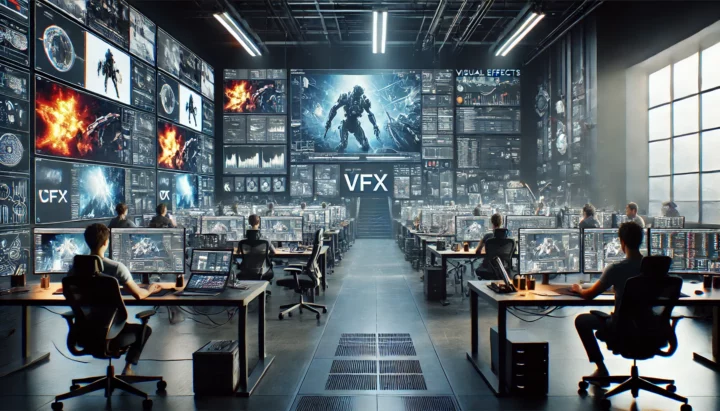
Green screen and special effects in TV refers to the integrated use of chroma keying and digital visual effects (VFX) to create immersive environments and cinematic sequences within episodic budgets.
This involves a complex interplay between on-set practical effects and post-production digital compositing to achieve high-fidelity results.
According to industry reports, the global VFX market reached $18.2 billion in 2024, with demand increasingly concentrated in high-end episodic streaming content.
In this guide, you’ll learn how technical service providers are navigating this landscape—including frameworks for identifying active productions and leveraging supply chain intelligence to increase win rates.
While traditional VFX resources focus on software tutorials, they often ignore the critical business gap: how studios actually discover and qualify the projects that require these advanced special effects.
This analysis fills that gap by providing a data-driven roadmap for VFX studios to target productions during active bidding windows.

Your AI Assistant, Agent, and Analyst for the Business of Entertainment
VIQI AI helps you plan content acquisitions, raise production financing, and find and connect with the right partners worldwide.
- Find active co-producers and financiers for scripted projects
- Find equity and gap financing companies in North America
- Find top film financiers in Europe
- Find production houses that can co-produce or finance unscripted series
- I am looking for production partners for a YA drama set in Brazil
- I am looking for producers with proven track record in mid-budget features
- I am looking for Turkish distributors with successful international sales
- I am looking for OTT platforms actively acquiring finished series for the LATAM region
- I am seeking localization companies offer subtitling services in multiple Asian languages
- I am seeking partners in animation production for children's content
- I am seeking USA based post-production companies with sound facilities
- I am seeking VFX partners to composite background images and AI generated content
- Show me recent drama projects available for pre-buy
- Show me Japanese Anime Distributors
- Show me true-crime buyers from Asia
- Show me documentary pre-buyers
- List the top commissioners at the BBC
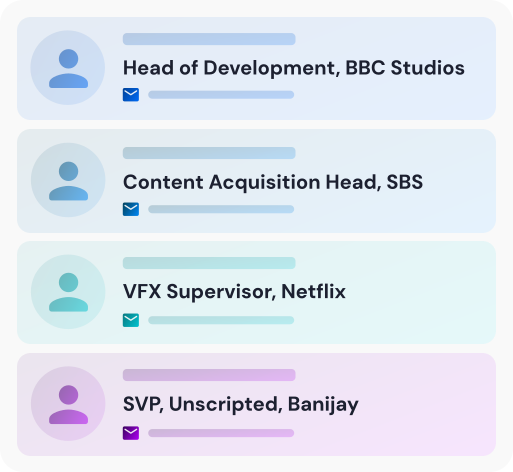
- List the post-production and VFX decision-makers at Netflix
- List the development leaders at Sony Pictures
- List the scripted programming heads at HBO
- Who is backing animation projects in Europe right now
- Who is Netflix’s top production partners for Sports Docs
- Who is Commissioning factual content in the NORDICS
- Who is acquiring unscripted formats for the North American market
Table of Contents
Key Takeaways for VFX Studios
-
Pipeline Visibility Advantage: Studios monitoring real-time project data identify episodic productions 3-6 months before trade announcements, ensuring they hit bidding windows.
-
Data-Driven Lead Qualification: Using supply chain intelligence allows vendors to qualify leads based on a production’s historical VFX spend and preferred vendor networks.
-
Regional Hub Expansion: Studios can identify emerging production hubs in tax-incentivized regions using Global Film+TV Project Trackers.
What is Green Screen and Special Effects in Modern TV?
Green screen and special effects in TV represent the technological backbone of modern episodic storytelling. Unlike the localized, one-off effects of the past, today’s TV productions utilize integrated “VFX-first” strategies to build entire worlds within studio environments. This approach allows showrunners to maintain high production value while managing the compressed timelines and budgets typical of episodic content.
The core mechanism involves chroma keying—where actors perform in front of a green background—which is then replaced with photorealistic digital environments during post-production. This is often augmented by practical special effects (SFX) on set, such as pyrotechnics or atmospheric elements, to ensure a seamless blend between the physical and digital.
Identify episodic productions currently in pre-production:
How Do Special Effects Pipelines Work for Episodic Series?
Episodic VFX pipelines are defined by their industrial scale. Unlike feature film workflows that might spend years on a single project, TV pipelines must process thousands of shots across multiple episodes simultaneously. This requires a highly structured hand-off between production and the VFX house.
The process typically begins with pre-visualization (previz), where the VFX studio helps plan the green screen layouts to ensure camera angles align with digital backgrounds. Once shooting is complete, the data—including high-resolution plates and camera tracking information—is ingested into the post-production pipeline for rotoscoping, keying, and final compositing.
Industry Expert Perspective: Spotlight on VFX Trends: Insights from Industry Veteran Joseph Bell
In this deep dive, veteran Joseph Bell explores the evolving dynamics of the visual effects landscape, offering crucial insights into how studios can adapt to the rapid technological shifts in the entertainment supply chain.

Key Insights
Joseph Bell, with over two decades of experience from ILM to scaling startups, discusses the current VFX trends and unparalleled insights into the evolving dynamics and future of visual effects.
Identifying Active Productions Needing Special Effects
The biggest challenge for mid-tier VFX studios is not technical capability, but pipeline visibility. Traditional bidding relies on existing relationships, which limits a studio’s growth potential. By leveraging the **Global Film+TV Projects Tracker**, studios can gain an “early-warning signal” for unreleased projects across four stages: In-Development, In-Production, Post-Production, and Release.
Tracking titles from early development allows VFX sales teams to engage with financiers and producers before vendors are locked in. This data-driven approach replaces manual research across fragmented databases with a single source of truth that tracks 1.6 million titles and 140,000+ companies globally.
Target active projects in major animation and VFX hubs:
Emerging VFX Trends and Virtual Production Shifts
The integration of virtual production (using LED volumes instead of traditional green screens) is the most significant shift in the VFX landscape. This technology allows for “final-pixel” results on set, reducing the reliance on traditional post-production compositing while requiring VFX studios to be involved much earlier in the production cycle.
Furthermore, the rise of “Authorized Generative AI”—as seen in Disney’s $1B deal with OpenAI—is creating a new market for AI-enhanced visual effects. Studios that can combine traditional green screen techniques with authorized AI training data will position themselves as high-value partners in a market increasingly focused on IP protection and brand safety.
“The transition from relationship-dependent bidding to data-driven discovery is the single most important shift for mid-tier VFX studios today. Those who can identify productions 6-12 months before they enter post-production are the ones securing the most sustainable growth.”
Frequently Asked Questions
Quick answers to the most common queries about TV special effects and VFX discovery.
What is the difference between green screen and blue screen?
How do VFX studios find TV projects?
What is virtual production?
Why is episodic VFX harder than film VFX?
Moving Forward
The landscape of green screen and special effects in TV is transitioning from an artisanal craft to an industrial science. This guide has explored how technical service providers can fill the critical gap in project discovery by leveraging real-time supply chain intelligence.
Whether you are a boutique VFX studio looking to break into episodic series, or an established post-production house targeting regional hubs like Vancouver or London, data-driven lead qualification is your most powerful tool for sustainable growth.
Outlook: Over the next 18 months, the integration of authorized AI and virtual production will redefine the bidding cycle, favoring studios that engage during the early development phase.
About the Author
Vitrina AI’s editorial team comprises industry veterans specializing in entertainment supply chain intelligence. With decades of experience at major networks and data platforms, they provide the insights needed to navigate a rapidly transforming global market. Connect on Vitrina.
Find Film+TV Projects, Partners, and Deals – Fast.
VIQI matches you with the right financiers, producers, streamers, and buyers – globally.
Producers Seeking Financing, Co-Pros, or Pre-Buys?
Vitrina Concierge helps producers reach the right financiers, commissioners, distributors, and co-production partners — with precision outreach, not cold pitching.
Join Industry Briefings Trusted by Leaders

Books, Novels & Comics Adaptations: Global Trends
Books, webtoons, and manga driving the next global screen hits. Discover how in this webinar.

Micro-Dramas & Mobile-First Storytelling
Micro-dramas are building real audiences and revenue. Understand the platforms, buyers, and economics behind the growth.

Navigating Global Content Licensing Trends
How global content licensing is shifting beyond flat fees to flexible, deal-driven models.