About Innovation Hub
 Global Content Pulse (Webinars)


 Global Production Financing
(Webinars)
Global Production Financing
(Webinars)  LeaderSpeak Podcast
  About Vitrina
 Our Story
 Our Solutions 🔥
 Film+TV Projects Tracker 🚀
 Case Studies
 Our Profile
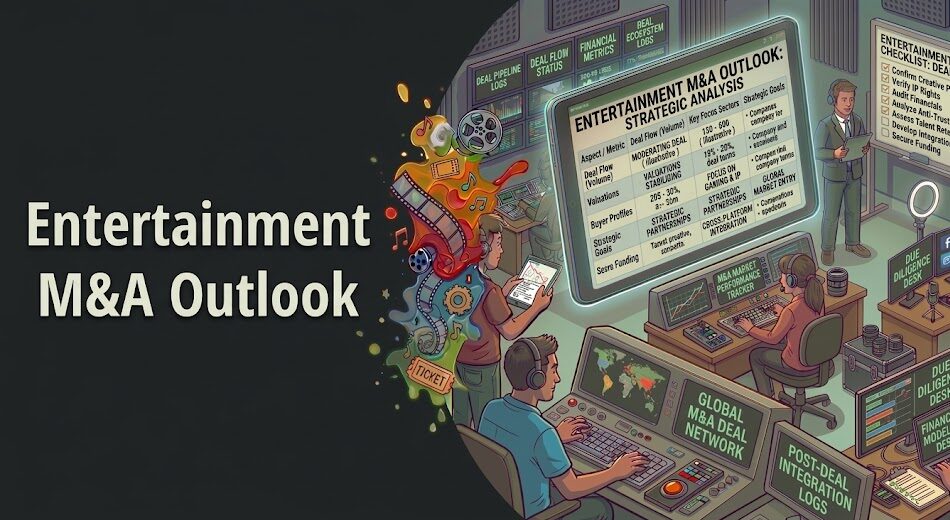
When Netflix and Warner Bros. Discovery closed their $72 billion multi-year licensing deal, most of the trade coverage focused on what it meant for David Zaslav’s debt load and Ted Sarandos’s content pipeline. Fair enough. But here’s the question that landed on almost zero front pages: what does a $72 billion co-opetition deal between two of the world’s largest media companies mean for the independent producers who’ve been navigating the space between them for the last decade?
The answer is complicated—and for most indie producers, it’s not the disaster it might initially appear to be. Yes, consolidation compresses the number of greenlight decision-makers. Yes, the post-COVID production financing crunch is real and it’s not reversing quickly. But the same structural forces driving mega-deals at the studio level are simultaneously creating genuine opportunity lower down the food chain—in gap financing, in Sovereign Hub co-production, and in the private capital market that’s actively filling the space commercial banks have vacated. The entertainment M&A outlook for 2026 is one of the most consequential strategic environments independent producers have faced since the streaming wars began.
You need to understand it on its own terms. Not as a threat to absorb, but as a map to navigate.
Table of Contents
- The Netflix-WBD Deal, Decoded: What Actually Changed
- The 2026 M&A Consolidation Map: Who’s Buying What
- The Independent Financing Crunch: Real Signals from the Marketplace
- Private Capital Is Filling the Gap Banks Left Behind
- Sovereign Hubs: The Co-Production Opportunity Most Indies Are Missing
- Weaponized Distribution: How Indie Producers Can Use Consolidation
- What the M&A Era Means for Your Slate Strategy Right Now
- FAQ
- Conclusion
Ask VIQI: How Does the Netflix-WBD Era Change Your Financing Options?
VIQI is Vitrina’s AI assistant—trained on 1.6 million titles, 360,000 companies, and 5 million entertainment professionals. Get real-time intelligence on which financiers are actively backing independent projects in your genre, territory, and budget range—right now.
✓ Included with 200 free credits | ✓ No credit card needed
The Netflix-WBD Deal, Decoded: What Actually Changed
Let’s start with what the Netflix-WBD $72 billion deal actually is—and isn’t. This isn’t a traditional acquisition where one company absorbs another and eliminates a buyer from the market. It’s a licensing arrangement. WBD licenses HBO’s premium library content—The Sopranos, Game of Thrones, Succession, The Wire—to Netflix. Competitors become customers. That’s Weaponized Distribution in its purest form.
For WBD, this deal accomplishes something critical: it accelerates debt recoupment without liquidating assets. Warner Bros. Discovery carried roughly $43 billion in debt following the 2022 Discovery-AT&T WarnerMedia merger. Licensing the HBO library to Netflix generates revenue at near-zero marginal cost—the content’s already made, the distribution infrastructure’s already built. That’s an extraordinarily capital-efficient way to service debt while retaining IP ownership for future platform use.
For Netflix, the deal solves a different problem. Netflix generates roughly $25 billion annually but faces a structural challenge: its most-watched content is aging, and original content production is a capital-intensive, hit-or-miss business. Licensing HBO’s prestige archive fills the catalog gap while Netflix builds its next wave of originals. It’s also cheaper—acquiring rights to an established title with proven audience data is significantly less risky than financing a new commission from scratch.
But here’s what this deal signals about the broader market structure, and this is what independent producers need to internalize: content ownership is now definitively worth more than platform exclusivity. The studios that once insisted on exclusive platform walls are now licensing to competitors. That philosophical shift—content as financial instrument rather than platform moat—has cascading implications all the way down the supply chain. As our analysis of the Netflix-WBD merger as a supply chain reset explores, this is a structural change—not a one-off transaction.

Your AI Assistant, Agent, and Analyst for the Business of Entertainment
VIQI AI helps you plan content acquisitions, raise production financing, and find and connect with the right partners worldwide.
- Find active co-producers and financiers for scripted projects
- Find equity and gap financing companies in North America
- Find top film financiers in Europe
- Find production houses that can co-produce or finance unscripted series
- I am looking for production partners for a YA drama set in Brazil
- I am looking for producers with proven track record in mid-budget features
- I am looking for Turkish distributors with successful international sales
- I am looking for OTT platforms actively acquiring finished series for the LATAM region
- I am seeking localization companies offer subtitling services in multiple Asian languages
- I am seeking partners in animation production for children's content
- I am seeking USA based post-production companies with sound facilities
- I am seeking VFX partners to composite background images and AI generated content
- Show me recent drama projects available for pre-buy
- Show me Japanese Anime Distributors
- Show me true-crime buyers from Asia
- Show me documentary pre-buyers
- List the top commissioners at the BBC
- List the post-production and VFX decision-makers at Netflix
- List the development leaders at Sony Pictures
- List the scripted programming heads at HBO
- Who is backing animation projects in Europe right now
- Who is Netflix’s top production partners for Sports Docs
- Who is Commissioning factual content in the NORDICS
- Who is acquiring unscripted formats for the North American market
The 2026 M&A Consolidation Map: Who’s Buying What
Netflix-WBD isn’t operating in isolation. The entertainment M&A landscape in 2026 is the busiest it’s been since the first streaming wave triggered the major studio consolidation cycle in the mid-2010s. Let’s map what’s actually moving.
Skydance/Paramount is the clearest example of private capital absorbing a legacy studio under financial pressure. Larry Ellison’s team now controls Paramount—one of the major Hollywood studios—through Skydance. That’s not a streaming company acquiring a studio. That’s technology-adjacent private capital taking a strategic position in a content library and studio infrastructure play. The Paramount acquisition creates a production and distribution machine with access to private capital that isn’t subject to the quarterly earnings pressure that has historically constrained studio commissioning decisions.
Sony meanwhile acquired a stake in Bandai Namco, accelerating its IP-gaming-entertainment convergence strategy. MUBI secured $100 million in Series C investment from Sequoia Capital, valuing the indie streaming platform at $1 billion—a clear signal that there’s institutional appetite for curated alternative distribution at scale. Disney’s $1 billion OpenAI partnership indicates where the next layer of content infrastructure investment is heading: AI-assisted production and distribution intelligence.
And regionally: JioCinema and Disney+ Hotstar merged in India, creating a platform with access to over 500 million potential subscribers—the largest single streaming market by addressable user base anywhere on earth. Canal+ and Netflix announced a distribution partnership covering Africa. MBC Group struck a strategic MENA streaming partnership with Netflix, formalizing a relationship that had been operating informally for years.
What does this map tell you? Three things. First, consolidation is happening simultaneously at the global studio level (Netflix-WBD, Skydance-Paramount) and the regional platform level (JioCinema-Disney, Canal-Netflix-Africa). Second, private capital is entering content at a structural level—not just as project finance but as studio ownership. Third, the regional markets are consolidating around two or three dominant platforms per territory, compressing the number of active buyers in each market even as the total volume of content they need to fill increases.
The Independent Financing Crunch: Real Signals from the Marketplace
The production financing market for independent films is genuinely harder in 2026 than it was in 2022. That’s not anecdote—it’s confirmed by the operators at the center of the market. Phil Hunt, Founder and CEO of Head Gear Films—which has financed over 550 films and runs at 35-40 projects per year, more annual volume than any Hollywood studio—has been direct about this. “The whole industry has become much, much harder in terms of getting movies off the ground and getting movies sold,” Hunt told the Vitrina podcast in October 2025. His analysis: post-COVID “revenge production” created a temporary capital glut that the market has now corrected, leaving producers who became accustomed to favorable conditions navigating a significantly tighter environment.
Phil Hunt (Founder & CEO, Head Gear Films) discusses the post-COVID production crunch and what independent producers need to navigate the current financing landscape:

The structural cause isn’t hard to identify. During 2020-2022, every major streamer was in aggressive content acquisition mode. Budgets were loose, pre-sales were available, and MGs were competitive. That environment trained a generation of producers to expect deal terms that the current market simply won’t support. Now—with Netflix, Disney+, and Amazon all shifting toward profitability optimization over subscriber growth—the commissioning windows have tightened and the volume of available deals per territory has compressed.
But there’s a second, less-discussed pressure: the commercial banking retreat from entertainment lending. City National Bank—historically one of the most active entertainment finance lenders—significantly retracted its strategic focus in the space. That exit didn’t go unnoticed. Joshua Harris, President and Managing Partner of Peachtree Media Partners, has described it plainly: “City National lost their strategic focus… that created an enormous gap in the marketplace.” Commercial banks that were advancing against pre-sales and tax incentives as a matter of routine are now applying far tighter underwriting criteria—leaving producers who previously relied on that capital scrambling for alternatives.
The net result: independent producers in 2026 are navigating a market where fewer institutional lenders are active, platform MGs have compressed, and the competition for the deals that are available has intensified. That’s the honest read. And it’s the context you need before any of the opportunity framing in this article makes sense.
Find Active Financiers for Your Project Before Your Competitors Do
Trusted by Netflix, Warner Bros, and Paramount. Join 140,000+ companies using Vitrina to track active commissioning windows, deal terms, and financier activity across 400,000+ live projects—before the deals get announced.
✓ 200 free credits | ✓ No credit card required | ✓ Full platform access
Private Capital Is Filling the Gap Banks Left Behind
Here’s the counterbalancing dynamic—and it’s genuinely significant for your capital stack planning in 2026. The retreat of traditional commercial banks from entertainment lending hasn’t left a vacuum. It’s left an opportunity that private capital has moved aggressively to fill. And private capital—structured film lenders, PE-backed entertainment vehicles, and family office investment arms—is operating in a producer-friendlier way than commercial banks typically did.
Peachtree Media Partners is a clear illustration. Joshua Harris describes a model that lends against film IP collateral—pre-sales, distribution agreements, tax incentives—but goes a step further than traditional gap lending by advancing against future territory value before distribution deals are even executed. That removes the sequential bottleneck that kills indie timelines: the wait for a distribution agreement to be formally in place before capital can be advanced. Harris notes that this approach “enables the filmmaker and the producers to maintain control over the project, the creative aspect, and maintain upside”—which is the critical difference between debt structures that work for independent producers and those that don’t.
Peachtree is raising a fund scaling from $50 million to $100 million—but through a back-leverage structure with a commercial banking partner, that $100 million deploys as approximately $500 million worth of film production. That’s a meaningful supply of private capital entering the indie space at a time when commercial banks are pulling back. And Peachtree isn’t unique: Domain Capital (whose logo you’ll see at the front of major studio productions like Wonka), Redbird Capital, and other PE-entertainment crossover vehicles are all deploying capital in similar structures.
The strategic lesson: the capital market for independent film hasn’t contracted—it’s restructured. The old model of commercial bank gap loans against pre-sales to established distributors is harder to execute than it was in 2021. But the alternative structures—collateralized private lending, sovereign fund co-production, equity from VC-backed entertainment vehicles like IPR VC (which backs projects from A24, MK2, XYZ Films, and Red Bull Studios), and regional incentive stacking—are increasingly viable and in some cases more flexible than anything the commercial banks were offering. As our guide to future streaming platform consolidation and financing details, independent operators who’ve diversified their capital relationships are outperforming those who relied on a single source.
Sovereign Hubs: The Co-Production Opportunity Most Indies Are Missing
While the Hollywood consolidation cycle plays out, a parallel story is developing in the regions—and it’s generating real, deployable capital for co-production partnerships with independent producers who know how to access it. These are Sovereign Content Hubs: territories where government-backed capital is building vertically integrated production ecosystems designed to compete with—not just service—Western production centers.
Saudi Arabia has committed $71.2 billion to entertainment under Vision 2030, with $4 billion+ specifically for film. The country went from a 35-year cinema ban to 630+ cinema screens, 65+ registered production companies, and a 40% cash rebate—all since 2018. That’s not an emerging market. That’s an operational production center with government-backed capital that isn’t subject to quarterly earnings pressure. Saudi Arabia’s Riviera Content Fund has deployed $100 million. The Cultural Development Fund has deployed across culture and content. Saudi’s first film, “Norah,” made it to Cannes Un Certain Regard in 2024—its first year eligible to compete.
UAE has raised its cash rebate to 50%—the highest single incentive rate anywhere in the world—with 0% taxation for 50 years in its free zones. That’s not a temporary incentive designed to attract a handful of international productions. That’s a structural market condition designed to make the UAE a permanent part of global production infrastructure. For producers building co-production structures in 2026, UAE’s capital stack mathematics—50% rebate on qualifying spend, 0% tax in free zones, established MG relationships with MENA distributors—should be part of every project’s pre-greenlight financial analysis.
South Korea runs a fully operational export-oriented content ecosystem: government-backed via KOFIC, Netflix committed to $2.5 billion of Korean content over a multi-year period, and Hallyu Wave IP now trading globally with franchise upside. India remains the world’s largest film output market, with multiple language markets each operating at a scale that dwarfs most Western national industries. Qatar’s incentive rate now stands at 50% for qualifying projects, with Doha Film Institute co-production financing available for the right content partners.
The calculus for independent producers is straightforward. In markets where you can stack a 40-50% regional cash rebate against soft money from a Sovereign Hub co-production fund, your effective budget exposure drops dramatically. Combine UAE’s 50% rebate with a co-production treaty partner and private gap financing from a lender like Peachtree or Head Gear Films, and it’s possible to structure a project where 60-80% of the budget is covered by non-equity capital—protecting your investors’ downside while preserving production quality. That capital stack optimization isn’t theoretical. It’s the model that serious independent producers are deploying right now.
Weaponized Distribution: How Indie Producers Can Use Consolidation
The Netflix-WBD deal teaches independent producers something important: content ownership beats platform exclusivity when you structure your deals correctly from the start. That principle scales down the capital stack. If WBD can license HBO’s library to its primary competitor and generate cash without surrendering ownership, independent producers can run the same playbook in their territory negotiations—retaining underlying IP while licensing rights window by window, platform by platform.
But execution requires intelligence. Knowing which platform has an open acquisition window in which territory—and what their current commissioning priorities actually are, not what they said at the last market—is the difference between a deal that closes in six weeks and one that dies in development. As reported by Deadline, the consolidation wave has made acquisition teams leaner and their commissioning criteria more specific. You can’t afford to pitch the wrong project to the wrong buyer at the wrong time.
Here’s the practical framework for applying Weaponized Distribution logic as an independent producer in 2026. First, retain underlying IP at all costs. Do not grant all-rights deals to a single platform unless the MG genuinely compensates for the loss of secondary window value across your expected title lifespan. Second, window your rights deliberately: theatrical (if applicable), then premium SVOD, then AVOD or FAST, then library. Each window extracts value from a different audience segment and revenue source. Third, use territory segmentation strategically—different regional buyers value different content types differently, and a title that commands a modest MG from a UK streamer might command three times the rate from a MENA platform hungry for the same genre.
The Fragmentation Paradox works against you here. With 600,000+ companies operating in opaque silos across the global entertainment supply chain, identifying which buyer is actively in-market for your specific content type—at what budget level, in which territories, in which window—is a research and intelligence challenge that 3-6 months of manual relationship-building used to be the only answer to. The producers consistently outperforming on distribution terms in 2026 are those who’ve De-risked that process with real-time market intelligence, closing deals that would have taken a calendar year in the old relationship-dependency model in a matter of weeks. A Korean animation studio used Vitrina to connect with Netflix Adult Animation within a single week; a LA producer connected with Netflix UK, Fifth Season, and Fox Entertainment within 48 hours. That deal velocity compounds over a slate.
For deeper analysis of how the Goldfinch model—one of the most studied independent producer frameworks in the current market—approaches IP ownership and multi-market distribution, our exploration of the Goldfinch strategy for independent film financing goes deep on the mechanics.
What the M&A Era Means for Your Slate Strategy Right Now
Let’s be direct. The entertainment M&A consolidation cycle isn’t going to slow down in 2026—and independent producers who wait for the market to stabilize before building their financing infrastructure are making a structural error. The market has already stabilized around its new normal. This is the normal.
Four strategic adjustments deserve immediate execution. First, diversify your capital relationships now, not after your next project needs financing. The producers navigating the current crunch most effectively are those who built relationships with private lending vehicles—Gap lenders like Head Gear Films, structured lenders like Peachtree Media Partners, equity vehicles like IPR VC—before they needed them urgently. Urgent capital need collapses your negotiating leverage. Build the relationships when you don’t need them.
Second, understand your project’s Sovereign Hub angle before you finalize your budget. Saudi Arabia’s 40% rebate, UAE’s 50% rebate, and Korea’s KOFIC grants are not afterthoughts to be optimized in post-production. They’re structural capital stack components that should be embedded in your greenlight analysis from day one. A project that’s marginally viable at full budget may be aggressively bankable once you’ve incorporated regional incentive stacking. But you only capture that value if you’ve identified the right structure before you lock your financing plan.
Third, treat the M&A consolidation as a content curation signal, not just a structural warning. When platforms consolidate, their content strategies sharpen. The merged JioCinema-Disney+ Hotstar in India isn’t going to maintain two separate acquisition philosophies—it’ll consolidate around a single content strategy, and that strategy will be definable and trackable. The same applies to every platform consolidation on the map. Concentration creates clarity about what buyers want. Your job is to identify that clarity before it becomes obvious to everyone else—6 weeks ahead of it hitting the trades, not 6 weeks after.
Fourth: IP retention is non-negotiable for independent producer long-term viability. The Netflix-WBD deal is a multi-billion dollar proof of concept for what happens when you own your content library over time. WBD’s ability to license HBO’s archive to its primary competitor without surrendering a single title is the direct result of decades of IP ownership discipline. As Variety has noted, the studios currently holding the most leverage in deal negotiations are the ones with premium owned IP—not the ones with the largest platforms or the deepest commissioning budgets. That principle applies at every level of the market.
Need Direct Introductions to Financiers in the Post-Consolidation Market?
Vitrina Concierge doesn’t give you a list—it makes warm introductions directly to decision-makers actively seeking your type of content.
- Korean animation studio → Netflix Adult Animation (week one)
- LA producer → Netflix UK, Fifth Season, Fox Entertainment (48 hours)
- Middle Eastern studio → Legendary Pictures (direct access)
Frequently Asked Questions
What is the Netflix-WBD deal and why does it matter for the entertainment M&A outlook?
The Netflix-WBD agreement is a $72 billion multi-year licensing deal in which Warner Bros. Discovery licenses its premium HBO library content—including The Sopranos, Game of Thrones, Succession—to Netflix. It matters because it represents Weaponized Distribution at full scale: competitors becoming customers to accelerate debt recoupment without surrendering IP ownership. The deal signals that content ownership now definitively outweighs platform exclusivity as a long-term strategic asset—a principle that applies all the way down to independent producer deal structures.
How has entertainment M&A in 2026 changed the landscape for independent producers?
In three primary ways. First, platform consolidation has compressed the number of active buyers per territory—fewer decision-makers, tighter commissioning criteria. Second, the post-COVID production financing crunch has made commercial bank lending harder to access, with City National’s retreat creating a significant gap in traditional entertainment lending infrastructure. Third, and as a counterbalance, the emergence of private capital vehicles (PE-backed entertainment lenders, structured debt funds) and Sovereign Hub co-production financing has created genuinely new capital sources that operate on more producer-friendly terms than traditional institutional lenders.
What are the biggest entertainment M&A deals in 2026?
Beyond the Netflix-WBD $72 billion licensing deal, key consolidation moves include: Skydance acquiring Paramount (bringing Larry Ellison’s private capital into Hollywood’s major studio infrastructure); Sony’s stake acquisition in Bandai Namco (IP-gaming convergence); MUBI’s $100 million Sequoia investment at a $1 billion valuation (indie streaming scale play); JioCinema-Disney+ Hotstar merger in India (access to 500M+ potential subscribers); Disney’s $1 billion OpenAI content partnership; Canal+/Netflix Africa distribution partnership; and MBC Group’s MENA streaming partnership with Netflix.
What are Sovereign Content Hubs and how can independent producers access them?
Sovereign Content Hubs are territories where government-backed capital creates vertically integrated production ecosystems. The primary hubs are Saudi Arabia ($71.2B entertainment allocation, 40% cash rebate), UAE (up to 50% cash rebate, 0% tax in free zones), South Korea (KOFIC grants, Netflix $2.5B content commitment), and Qatar (50% incentive rate, Doha Film Institute co-production funding). Independent producers access these hubs through co-production agreements, co-financing deals with government-backed funds, and tax incentive structures that reduce effective budget exposure by 40-60% on qualifying spend.
Is the independent film financing market getting harder in 2026?
Yes, relative to the exceptional conditions of 2020-2022. Phil Hunt of Head Gear Films—which has financed 550+ films at 35-40 per year—has noted clearly that “the whole industry has become much, much harder in terms of getting movies off the ground and getting movies sold.” Platform MGs have compressed, commercial bank lending is tighter, and competition for available deals is more intense. But this doesn’t mean capital has disappeared—it means the capital sources have shifted from institutional bank lending toward private capital vehicles, structured lending funds, and Sovereign Hub co-production partnerships that weren’t available at scale three years ago.
What is Weaponized Distribution and how can independent producers apply it?
Weaponized Distribution means strategically licensing owned IP to competitor platforms to maximize recoupment and financial returns. The WBD-Netflix deal is the macro-level example: WBD licenses HBO content to Netflix to generate revenue without surrendering ownership. For independent producers, the principle translates to: retain underlying IP rights, window content deliberately across SVOD/AVOD/FAST in sequence, and negotiate territory-by-territory to extract maximum value from each regional buyer. Content ownership over any 10-year window compounds significantly; all-rights platform deals in exchange for a higher upfront MG typically surrender far more long-term value than they return.
How is private capital replacing commercial bank lending in independent film finance?
Private lending vehicles like Peachtree Media Partners, IPR VC, and Goldfinch have stepped into the gap created by commercial bank retreat. Peachtree’s model is instructive: they lend against film IP collateral (pre-sales, distribution agreements, tax incentives) but also advance against future territory value before formal distribution deals are executed. Their $100M fund deploys as approximately $500M in production through commercial bank back-leverage. IPR VC takes equity positions in projects from companies including A24, MK2, and XYZ Films. These vehicles operate on more flexible terms than commercial banks, often structure deals to preserve producer IP control and upside, and are actively raising capital to scale their deployment.
What does the Skydance-Paramount merger mean for independent producers?
Skydance’s acquisition of Paramount places one of Hollywood’s five major studios under the control of private capital backed by Larry Ellison. The strategic implication: Paramount’s commissioning decisions are now less constrained by the quarterly earnings pressure that has historically driven major studio content strategies toward safe franchise sequels and away from original independent co-productions. Private capital typically operates on longer investment horizons, which can translate to more flexible deal structures for independent producers with projects that need longer recoupment windows. However, integration and consolidation periods also typically create commissioning freezes, so the near-term impact may be restrictive even if the medium-term outlook is more flexible.
Conclusion: Consolidation Concentrates Power—But It Also Creates Gaps Worth Moving Into
The entertainment M&A outlook for 2026 compresses power at the top and opens cracks in the middle. The Netflix-WBD era confirms that content ownership—not platform control—is the dominant long-term value driver. Private capital is filling the institutional lending gap at a scale that wasn’t available three years ago. And Sovereign Hubs are deploying billions of patient, government-backed capital into co-production structures that independent producers who know how to navigate them can genuinely access.
Key Takeaways:
- The Netflix-WBD deal is a strategic proof of concept: Content ownership beats platform exclusivity at every level of the market. WBD’s $72 billion licensing deal generates revenue without surrendering a single title—a model independent producers should replicate through deliberate windowing and IP retention.
- The financing crunch is real but misread: Commercial bank lending has tightened since City National’s strategic retreat, but private capital vehicles—Peachtree, IPR VC, Domain Capital, Redbird—are deploying capital in more producer-friendly structures than traditional institutional lenders offered.
- Sovereign Hubs represent the biggest untapped co-production opportunity: Saudi Arabia’s $71.2B entertainment allocation (40% rebate), UAE’s 50% rebate, and Korea’s Netflix-backed $2.5B content commitment create co-production capital that most independent producers haven’t yet built the relationships to access.
- Platform consolidation sharpens—not obscures—buyer priorities: Fewer buyers with clearer strategies means more precisely targetable acquisition windows, if you have real-time intelligence on who’s in-market and for what. Deal velocity is now a competitive advantage in itself.
- The Fragmentation Paradox still costs 15-20% margin: With 600,000+ companies in the supply chain operating in opaque silos, producers without real-time market intelligence are leaving margin on the table and 3-6 months on the table in deal closure time—in a market where timing is everything.
The independent producers who Accelerate their slate velocity in the current environment are the ones treating market intelligence as infrastructure—not as an optional research step. The deals are there. The capital is there. The platforms are buying. What separates the producers getting financed from those waiting for the market to stabilize is knowing where to look—and being there six weeks before it hits the trades.
Navigate the Post-Consolidation Market With Real-Time Intelligence
Trusted by Netflix, Warner Bros, Paramount, and Google TV. Track 400,000+ projects. Access 3 million verified executives. Know which financiers and platforms are active before the market does.
✓ 200 free credits | ✓ No credit card required | ✓ Cancel anytime
Need warm introductions directly to financiers? Explore Concierge Service →
Find Film+TV Projects, Partners, and Deals – Fast.
VIQI matches you with the right financiers, producers, streamers, and buyers – globally.
Producers Seeking Financing, Co-Pros, or Pre-Buys?
Vitrina Concierge helps producers reach the right financiers, commissioners, distributors, and co-production partners — with precision outreach, not cold pitching.
Join Industry Briefings Trusted by Leaders
Format Adaptations: Global Trends
Where formats are traveling, which adaptations are breaking out, and how streamers are backing remakes in 2025–2026.

Books, Novels & Comics Adaptations: Global Trends
Books, webtoons, and manga driving the next global screen hits. Discover how in this webinar.

Micro-Dramas & Mobile-First Storytelling
Micro-dramas are building real audiences and revenue. Understand the platforms, buyers, and economics behind the growth.

Navigating Global Content Licensing Trends
How global content licensing is shifting beyond flat fees to flexible, deal-driven models.