About Innovation Hub
 Global Content Pulse (Webinars)


 Global Production Financing
(Webinars)
Global Production Financing
(Webinars)  LeaderSpeak Podcast
  Global Entertainment Digest (Newsletter)
  About Vitrina
 About VIQI
 Our Story
 Our Solutions 🔥
 Film+TV Projects Tracker 🚀
 Case Studies
 Our Profile
The best streaming companies worldwide don’t look anything like they did two years ago. And if you’re navigating content acquisition, licensing, or co-production decisions based on a 2024 mental model of this landscape, you’re already behind.
The platforms that matter in 2026 have reshuffled around three seismic changes: a landmark $72 billion WBD-Netflix content licensing deal that rewrote the rules of platform competition, the accelerating collapse of the subscriber-only EBITDA model, and the rise of genuine Sovereign Content Hubs that are turning regional streaming giants into global players.
This isn’t a list of streaming platforms with subscriber counts. That’s a Wikipedia page. What you’ll find here is a strategic ranking of the world’s most consequential streaming companies in 2026—evaluated on content investment scale, global distribution reach, acquisition appetite, and their actual impact on what gets greenlit and why. Whether you’re a distributor, producer, or content acquisition executive, knowing who’s spending what and where is the intelligence that moves deals.
Here are the rankings—with no diplomatic hedging about which platforms are actually setting the pace.
💡 Vitrina Analyst Note
From our analysis, most content sellers still approach streaming with a 2024 playbook. The WBD-Netflix deal alone changed the rules. What we track on Vitrina confirms that regional platforms like OSN Plus and JioCinema are now primary acquisition targets for the right content. This guide is essential reading before your next platform conversation.
Table of Contents
- How We Ranked the Best Streaming Companies in 2026
- Tier 1: The Platform Giants (Global Dominance)
- Tier 2: The Serious Challengers
- Tier 3: The Regional Heavyweights
- The Rising Power: FAST and AVOD Platforms Reshaping the Bottom of the Stack
- What the 2026 Rankings Mean for Content Sellers and Producers
- FAQ
- Conclusion
Ask VIQI: Which Streaming Platforms Are Actively Acquiring Content in Your Genre Right Now?
VIQI is Vitrina’s AI assistant—trained on 1.6 million titles, 360,000 companies, and 5 million entertainment professionals. Ask it which platforms are buying, what they’re commissioning, and who the right acquisition contact is at each streamer.
✓ Included with 200 free credits | ✓ No credit card needed
How We Ranked the Best Streaming Companies in 2026
Subscriber counts are a lagging indicator. They tell you where a platform was—not where it’s going and definitely not how aggressively it’s buying content right now. So we ranked these platforms on five dimensions that actually matter for content professionals:
- Content investment scale: Annual content spend—including originals, licensed acquisitions, and co-productions.
- Global distribution reach: Number of countries, language support, and genuine localization depth.
- Acquisition appetite: Are they actively buying? What genres, budgets, and territories are they prioritizing?
- Strategic trajectory: Is this platform gaining or losing ground in 2026? EBITDA trend matters more than raw subscriber count.
- Supply chain impact: How much do their decisions move the market for producers, distributors, and service providers globally?
With that framework in mind—here’s where the power actually sits in 2026.

Your AI Assistant, Agent, and Analyst for the Business of Entertainment
VIQI AI helps you plan content acquisitions, raise production financing, and find and connect with the right partners worldwide.
- Find active co-producers and financiers for scripted projects
- Find equity and gap financing companies in North America
- Find top film financiers in Europe
- Find production houses that can co-produce or finance unscripted series
- I am looking for production partners for a YA drama set in Brazil
- I am looking for producers with proven track record in mid-budget features
- I am looking for Turkish distributors with successful international sales
- I am looking for OTT platforms actively acquiring finished series for the LATAM region
- I am seeking localization companies offer subtitling services in multiple Asian languages
- I am seeking partners in animation production for children's content
- I am seeking USA based post-production companies with sound facilities
- I am seeking VFX partners to composite background images and AI generated content
- Show me recent drama projects available for pre-buy
- Show me Japanese Anime Distributors
- Show me true-crime buyers from Asia
- Show me documentary pre-buyers
- List the top commissioners at the BBC
- List the post-production and VFX decision-makers at Netflix
- List the development leaders at Sony Pictures
- List the scripted programming heads at HBO
- Who is backing animation projects in Europe right now
- Who is Netflix’s top production partners for Sports Docs
- Who is Commissioning factual content in the NORDICS
- Who is acquiring unscripted formats for the North American market
Tier 1: The Platform Giants (Global Dominance)
Tier 1 isn’t just about size. It’s about the ability to greenlight a $200M original series, distribute it in 190+ countries simultaneously, and still have the balance sheet to do it again next month. Three companies sit here—and each has done something in the last 18 months that fundamentally changed how the rest of the industry operates.
Netflix: Still the Benchmark, Differently Than Before
Netflix leads this ranking not because it has the most subscribers—though it does, with over 300 million paid memberships globally—but because its strategic moves in 2025-2026 repositioned it from “biggest streamer” to “essential infrastructure.” The WBD-Netflix content licensing deal, valued at approximately $72 billion, was the clearest signal: Netflix isn’t just producing original content anymore. It’s becoming the distribution default for premium IP that even competitors need to monetize. That’s a structural advantage that compounds.
Content spend remains enormous—approximately $17 billion annually—and the acquisition strategy has matured. Netflix is no longer spraying broad and canceling fast. They’ve moved toward fewer, bigger bets with genuine franchise potential: multi-season commitments, live sports (Formula 1 exclusivity secured), and gaming integrations that create platform stickiness beyond passive viewing. For content sellers, the most important shift is this: Netflix is now a serious pre-buy partner for international productions, not just a post-completion acquirer. If you can attach Netflix early in your capital stack, you’re de-risking the whole project.
As our detailed look at Netflix’s content acquisition strategy shows, their appetite for premium international content—particularly from India, South Korea, and MENA—has only accelerated heading into 2026.
Amazon Prime Video: Quieter Than Netflix, Smarter Than You Think
Amazon Prime Video doesn’t shout about its streaming strategy. But it’s writing the largest individual production checks in the industry—$1 billion+ per season on Lord of the Rings: The Rings of Power established that. And the underlying business model is structurally different from every other streamer: Prime Video is a retention mechanism for Amazon Prime subscriptions, which means EBITDA pressure is diffused across the entire Amazon ecosystem. They can absorb streaming losses that would sink a standalone platform.
What that means practically: Amazon’s content acquisition team has enormous flexibility on deal structure. They’ll do pre-buys, co-productions, output deals, and exclusive first-look arrangements simultaneously. Their international content push—particularly in India (where Prime Video was an early aggressive mover in regional language content), the UK, and Germany—represents one of the most significant acquisition pipelines for independent producers globally. Don’t underestimate them because they’re quieter than Netflix. The Q3 2025 Prime Video earnings showed strong engagement growth that surprised even internal projections.
Disney+/Hulu Bundle: The IP Fortress
Disney doesn’t compete on content volume. It competes on IP depth—and that remains an unassailable advantage in 2026. Marvel, Star Wars, Pixar, National Geographic, ESPN, and the combined Disney/Hulu catalog give the bundle a content breadth that no independent streamer can replicate. The bundling strategy—offering Disney+, Hulu, and ESPN+ together—has meaningfully reduced churn and improved ARPU (average revenue per user), which is the EBITDA metric that actually matters in streaming now that the subscriber growth era is over.
For content sellers, Disney’s acquisition appetite outside its own IP ecosystem is genuinely limited. They’re not the buyer for your independent drama. But if you’re working with IP that has franchise potential, or if you’re in a territory where Disney has local content mandates to fulfill (their international originals slate is growing), then the conversation is worth having. The JioCinema-Disney merger in India—creating one of the world’s most powerful combined streaming platforms in the world’s largest film market—is the 2026 deal that most content professionals haven’t fully processed yet.
Track What These Streamers Are Greenlighting—Before It Hits the Trades
Trusted by Netflix, Warner Bros, and Paramount. Join 140,000+ companies monitoring the global entertainment supply chain—filter acquisition activity by platform, genre, territory, and budget range.
✓ 200 free credits | ✓ No credit card required | ✓ Full platform access
Tier 2: The Serious Challengers
Tier 2 is where things get genuinely interesting. These are platforms with real scale, specific strategic advantages, and—crucially—acquisition teams that are often easier to access than Netflix’s crowded inbox.
Max (Warner Bros. Discovery): The Weaponized Distribution Play
Max—the rebrand of HBO Max—carries the most critically acclaimed content library in streaming. HBO’s brand equity is genuinely irreplaceable: The White Lotus, Succession, The Last of Us, House of the Dragon. These aren’t just popular shows. They’re prestige anchors that justify premium subscription pricing in a way that few other platforms can match.
But the most strategically consequential thing WBD did in 2025 was license that HBO library to Netflix rather than try to out-distribute them globally. That’s Weaponized Distribution™ in action—turning a competitor into a customer, accelerating debt recoupment, and freeing capital for selective new production bets. It was counterintuitive. It was also exactly right. For content sellers, it signals that WBD’s Max is prioritizing depth over breadth—fewer, bigger acquisitions with genuine prestige positioning, not volume plays. They’ve expanded to 65+ countries but they’re selective about what carries the Max brand globally.
Apple TV+: Small Slate, Outsized Ambition
Apple TV+ is the most interesting anomaly in streaming. No library. A deliberately small original slate. And yet it keeps landing prestige projects—Severance, Slow Horses, The Morning Show, Shrinking—that punch far above their production count. And now, with Formula 1 exclusive rights secured and a growing sports strategy, Apple is clearly building a hybrid content model that its hardware and services ecosystem makes uniquely viable.
Apple writes big checks for the right projects. But “right” is narrow: premium, prestige, creator-driven, with genuine awards potential. If your project doesn’t fit that positioning, don’t waste time in their queue. If it does, they’re one of the most lucrative buyers in the market—with production budgets per episode that rival theatrical features. The Apple TV+ and Peacock bundle in the US market is also generating interesting subscriber behavior that will reshape how both platforms approach acquisition in 2026.
Paramount+/Pluto TV: The Dual-Model Experiment
Paramount Global is executing a strategy no other major studio has tried at this scale: running a premium SVOD (Paramount+) and a large FAST (Pluto TV) operation simultaneously—using their library to monetize across both models. Pluto TV alone has over 80 million monthly active users, making it one of the largest free streaming platforms globally. That’s an enormous distribution footprint for content that the premium tier doesn’t prioritize.
For content sellers, this dual model creates two distinct acquisition conversations with one company: premium original co-productions for Paramount+ (they’re actively building their international originals slate), and library licensing deals for Pluto that can be significant volume plays. Know which conversation you’re having before you walk in the door—the acquisition logic is completely different.
Peacock (NBCUniversal): Sports as the Moat
Peacock grew subscriber numbers significantly on the back of live sports—NFL exclusive games, Premier League, Olympics coverage. That’s smart positioning in a world where sports rights are becoming the single most reliable subscriber retention tool in streaming. The entertainment programming is solid without being exceptional. But the sports anchor creates a subscriber base that’s genuinely sticky in a way pure entertainment platforms aren’t. Don’t dismiss Peacock; their content acquisition team is active, and their Comcast backing ensures they’re not going anywhere.
Tier 3: The Regional Heavyweights Rewriting Local Markets
Here’s what most Western-centric streaming rankings miss entirely: the platforms that matter most to content sellers outside North America and the UK aren’t Netflix or Disney. They’re regional players with deep cultural intelligence, massive local audiences, and acquisition budgets that rival some Tier 2 global platforms.
OSN Plus — The MENA Premium Standard-Bearer
OSN—the premium pay TV and streaming platform formed from the 2008 merger of Orbit Network and Showtime Arabia—covers 23 countries across the Middle East and North Africa from its Dubai headquarters. Rolla Karam, OSN’s Senior Vice President of Content Acquisition, describes the current strategic moment plainly: “We’re in the middle of the shift” from linear OSN TV to streaming-first OSN Plus.
Rolla Karam (SVP Content Acquisition, OSN) breaks down OSN’s 23-country platform strategy and the shift from linear to streaming in the MENA market:
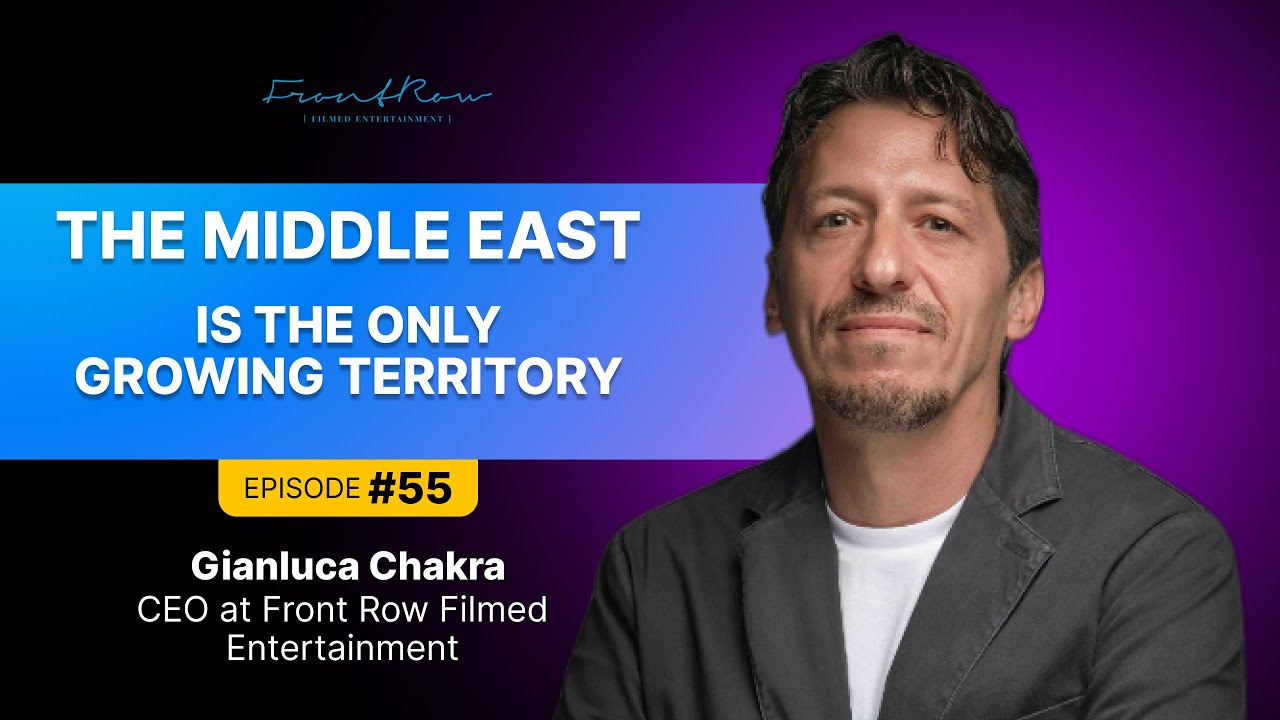
OSN Plus currently carries approximately 90% Western content, with the remaining 10-15% a mix of Arabic and Turkish programming—and that balance is shifting deliberately. “From the region, for the region” is OSN’s stated content strategy: building out an Arabic-language catalog that reflects and serves a region whose Saudi Arabia core market has been one of the fastest-growing entertainment economies in the world. Turkish content, Karam notes, “does amazingly well” on the platform—a signal to any Turkish producer that OSN should be in your distribution plan.
For content sellers targeting MENA, OSN Plus is the premium positioning play—alongside OSN TV’s linear network, they’re the most credible buyer for Western and regional co-productions in the territory. Their window is typically 6-9 months post-theatrical for major studio content, though they’re actively pushing to compress that.
JioCinema / JioHotstar — India’s New Streaming Colossus
The merger of JioCinema and Disney+ Hotstar created a platform that, by subscriber reach, rivals Netflix globally—with a combined potential audience of over 500 million in India alone. JioCinema’s IPL cricket streaming (which hit record numbers in 2024) plus Disney’s international content library plus Hotstar’s established subscriber base creates a multi-genre, multi-language platform that any serious content seller targeting the Indian market can’t ignore. The integrated Jio Studios co-financing arm gives this platform a production capability that most standalone streamers don’t have. It’s not just a distributor—it’s a financier, a producer, and a platform simultaneously. That’s a different negotiation.
Tencent Video — China’s Dominant Force
Tencent Video operates in a market with its own unique dynamics—but with over 100 million subscribers and the full Tencent ecosystem (WeChat, gaming, music) as distribution infrastructure, it’s one of the most powerful streaming entities on earth that Western content professionals least engage with. If you have content that works in China, or if you’re pursuing a co-production structure that includes Chinese financing, Tencent Video is the most serious conversation in that territory. Their appetite for format adaptations and co-productions with Western IP holders has grown significantly in the last two years. Refer to our broader analysis of streaming distribution models for 2026 for how Chinese platform deals structure differently from Western acquisitions.
MUBI — The Prestige Outlier
MUBI deserves specific mention because its trajectory is genuinely unusual. Sequoia Capital’s $100 million investment in 2024 valued it at $1 billion—making it the first purely curated film platform to reach unicorn status. MUBI doesn’t compete on volume. It competes on curation credibility with the global cinephile audience that’s increasingly willing to pay a premium for quality over quantity. For independent filmmakers and arthouse distributors, MUBI’s acquisition team is one of the most meaningful relationships in the business. Their theatrical partnerships have also become a meaningful new revenue stream for the platform.
The Rising Power: FAST and AVOD Platforms Reshaping the Bottom of the Stack
There’s a tier below premium SVOD that most content strategy conversations still undervalue. Free, ad-supported streaming television—FAST and AVOD—has become a significant monetization layer for library content, and the platforms operating here are writing real acquisition checks.
Tubi (Fox) has crossed 80+ million monthly active users and is now commissioning original films through deals like its partnership with Hartbeat. The Roku Channel, Pluto TV, and Freevee (Amazon) collectively represent a massive distribution surface for content that doesn’t command premium SVOD pricing. The key insight for content sellers: don’t treat FAST as a last resort. Treat it as a parallel distribution strategy that captures advertising revenue during a window that would otherwise generate zero income. The Fragmentation Paradox applies here too—there are dozens of FAST channels you’ve never heard of that are actively acquiring specific genres. Vitrina tracks them all.
What the 2026 Rankings Mean for Content Sellers and Producers
Rankings without strategic implications are just lists. So what does the 2026 streaming power map actually mean for how you approach content sales and co-production?
First: the platforms at the top of this list are no longer just buyers—they’re co-production partners. Netflix, Amazon, and Apple are all willing to step into a capital stack early if the project fits their mandate. That changes your financing strategy. An early streaming attachment can unlock gap financing, satisfy pre-sale requirements, and substantially reduce equity risk. But you need to know their mandate before you approach them—what they’re buying now, not what they bought 18 months ago.
Second: regional platforms matter more than most international content strategies account for. OSN Plus in MENA, JioCinema in India, Tencent Video in China—these aren’t consolation prizes when the big streamers pass. They’re primary acquisition targets for content built for those audiences. And unlike Netflix’s centralized acquisition process, regional platforms often move faster and with more cultural specificity about what they actually need.
Third: the FAST layer is real money now. If your content has a secondary licensing window—and almost everything does—a FAST distribution strategy on top of your SVOD deal meaningfully improves your total recoupment position. That’s EBITDA protection in action.
Fourth: the Fragmentation Paradox makes discovery genuinely hard. There are over 600,000 companies in the global entertainment supply chain and tracking which streamers are actively acquiring what, in which territories, at which budget levels, is nearly impossible from static databases or six-month-old trade coverage. The data deficit is real—and costly. Our guide to global content acquisition strategy for 2026 outlines how to de-risk your platform approach with real-time intelligence rather than assumption.
The producers and distributors who will close the best streaming deals in 2026 aren’t the ones with the best relationships. They’re the ones with the best intelligence—who walk into the first meeting already knowing the buyer’s mandate, their recent acquisition patterns, and the budget range where they’re actively moving. That’s how you accelerate from introduction to greenlight. It doesn’t happen on instinct or reputation alone.
Need Direct Introductions to Streaming Platform Acquisition Teams? We’ll Get You There.
Vitrina Concierge is your Virtual Agent. We don’t give you a list—we make warm introductions directly to acquisition executives at the platforms actively seeking your type of content.
- LA producer → Netflix UK, Fifth Season, Fox Entertainment (48 hours)
- Korean animation studio → Netflix Adult Animation (week one)
- Middle Eastern studio → Legendary Pictures (direct access)
Frequently Asked Questions
What is the best streaming company worldwide in 2026?
Netflix remains the benchmark global streaming company in 2026, with over 300 million paid subscribers, approximately $17 billion in annual content spend, and a landmark $72 billion content licensing deal with WBD that repositioned it as essential distribution infrastructure. But “best” depends on your perspective: for prestige content, HBO Max is the standard; for MENA, OSN Plus; for India, JioCinema. The best streaming company for your content is the one whose mandate matches what you’re selling.
How do streaming companies acquire content in 2026?
The acquisition model has matured significantly. Major streamers like Netflix and Amazon Prime Video now operate as early-stage co-production partners—stepping into the capital stack before production begins—in addition to licensing completed content. Pre-buys, output deals, and first-look arrangements are standard. Regional platforms like OSN Plus acquire through multi-territory licensing deals negotiated with studios and distributors. FAST platforms like Tubi primarily license library content but are now commissioning originals too.
Which streaming platforms are best for international content sellers?
For global reach: Netflix (190+ countries), Amazon Prime Video, and Apple TV+. For MENA: OSN Plus (23 countries) and Shahid. For India: JioCinema and Amazon Prime Video. For China: Tencent Video. For art-house and independent film: MUBI. The most important thing is matching your content type and territory strategy to the right platform’s actual acquisition mandate—not approaching every streamer with the same pitch.
What is the WBD-Netflix $72 billion streaming deal and why does it matter?
The WBD-Netflix content licensing deal—approximately $72 billion in value—involves Warner Bros. Discovery licensing its HBO content library to Netflix rather than competing directly on distribution. It’s a Weaponized Distribution™ strategy: WBD uses its owned IP as a financial instrument against competitors, accelerating debt recoupment while Netflix fills content gaps. For the industry, it signals that content ownership matters more than platform exclusivity—and that the era of binary “we stream it here or nowhere” thinking is over.
Are FAST platforms worth pitching for content distribution?
Yes—and significantly more than most content strategies account for. Tubi alone has over 80 million monthly active users and is now commissioning original films. Pluto TV, The Roku Channel, and Freevee collectively represent enormous distribution footprint for library content. The key is treating FAST as a parallel revenue layer—not a fallback when premium platforms pass. Advertising revenue from well-performing FAST placements can materially improve your total recoupment position over a content’s lifetime.
How should producers approach streaming companies for co-production deals?
Walk in with intelligence, not just enthusiasm. Know the platform’s current acquisition mandate—what genres they’re prioritizing, what budget range they’re working in, what territories they need content for. Have your capital stack partially assembled before the meeting; streamers who co-finance want to see you’ve already de-risked the project. Named executives, territory revenue projections, and a clear recoupment waterfall are expected. The producers who close co-production deals in 2026 come prepared with data, not just a pitch deck.
What makes OSN Plus different from Netflix in MENA?
OSN Plus is a 23-country premium platform headquartered in Dubai with deep cultural intelligence in the MENA region that Netflix is still building. While Netflix offers broader global reach, OSN’s positioning as a premium regional player—with dedicated offices in Saudi Arabia, Egypt, Kuwait, and Lebanon—gives it distribution nuance that a global algorithm can’t replicate. Its dual product (OSN TV linear plus OSN Plus streaming) means content gets multi-window exposure across the region. For content specifically targeting MENA audiences, OSN is the more natural conversation.
How do I find which streaming companies are actively buying content right now?
Static industry databases are typically 6-12 months behind actual acquisition activity. Vitrina’s platform tracks real-time deal flow across 140,000+ companies in the entertainment supply chain—including which streaming platforms are actively acquiring, in what genres and territories, at what budget levels. VIQI, Vitrina’s AI assistant trained on 1.6 million titles and 5 million professionals, can answer specific strategic questions about platform acquisition mandates in seconds. That’s the Insider Advantage: real-time intelligence where the data deficit is costing your competition margin and time.
Conclusion: The Streaming Map Has Redrawn. Work With the New One.
The best streaming companies worldwide in 2026 aren’t competing on subscriber count alone—they’re competing on content ownership, strategic licensing flexibility, and the ability to serve audiences that older distribution models ignored entirely. The WBD-Netflix deal, the JioCinema merger, OSN’s streaming pivot, MUBI’s unicorn valuation—these aren’t isolated news items. They’re data points in a single, coherent story: the streaming market has structurally matured, and the winners are the ones who treat content as a long-term financial asset, not a short-term platform differentiator.
Key Takeaways:
- Netflix leads, but differently: Its $72B licensing deal with WBD and $17B annual content spend make it the distribution default for premium IP globally—but it’s also now a serious early-stage co-production partner for international productions.
- Regional platforms are underutilized by most content sellers: OSN Plus (23 MENA countries), JioCinema (India), and Tencent Video (China) represent primary acquisition targets—not consolation prizes—for the right content.
- Weaponized Distribution™ is the new normal: WBD licensing HBO to Netflix proved that content ownership beats platform exclusivity as a long-term value strategy. Content IP is the real asset.
- FAST/AVOD is a parallel revenue layer, not a fallback: Tubi’s 80M+ monthly users and growing commissioning slate make FAST a legitimate acquisition conversation for library and original content alike.
- Intelligence beats relationships in 2026: The Fragmentation Paradox across 600,000+ global companies means static databases are costing producers real margin. Real-time acquisition intelligence—knowing who’s buying what, now—is the genuine competitive edge.
The streamers that matter most to your specific content aren’t always the ones with the biggest headlines. But finding the right match—at the right moment, with the right package—is what separates a deal from a development limbo. Start with data. Move fast when it’s right.
Discover Which Streaming Companies Are Actively Acquiring Your Type of Content—Right Now
Trusted by Netflix, Warner Bros, Paramount, and Google TV. Track 400,000+ projects. Access 3 million verified executives. Ask VIQI strategic questions about platform acquisition mandates in real time.
✓ 200 free credits | ✓ No credit card required | ✓ Cancel anytime
Need warm introductions to acquisition executives at the platforms that matter? Explore Concierge Service →
Find Film+TV Projects, Partners, and Deals – Fast.
VIQI matches you with the right financiers, producers, streamers, and buyers – globally.
Producers Seeking Financing, Co-Pros, or Pre-Buys?
Vitrina Concierge helps producers reach the right financiers, commissioners, distributors, and co-production partners — with precision outreach, not cold pitching.
Join Industry Briefings Trusted by Leaders

Format Adaptations: Global Trends
Where formats are traveling, which adaptations are breaking out, and how streamers are backing remakes in 2025–2026.

Books, Novels & Comics Adaptations: Global Trends
Books, webtoons, and manga driving the next global screen hits. Discover how in this webinar.

Micro-Dramas & Mobile-First Storytelling
Micro-dramas are building real audiences and revenue. Understand the platforms, buyers, and economics behind the growth.

Navigating Global Content Licensing Trends
How global content licensing is shifting beyond flat fees to flexible, deal-driven models.