About Innovation Hub
 Global Content Pulse (Webinars)


 Global Production Financing
(Webinars)
Global Production Financing
(Webinars)  LeaderSpeak Podcast
  Global Entertainment Digest (Newsletter)
  About Vitrina
 About VIQI
 Our Story
 Our Solutions 🔥
 Film+TV Projects Tracker 🚀
 Case Studies
 Our Profile

| Executive Summary: Arkansas Production Intelligence | |
|---|---|
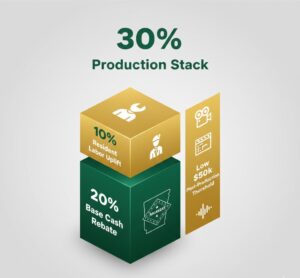
| The 30% Ceiling | Producers can reach a 30% total rebate by combining the 20% base with a 10% uplift for Arkansas-resident labor and veteran hiring. |
| Post-Production Edge | Standalone post-production qualifies for the rebate with a significantly lower entry threshold of $50,000 compared to $200,000 for principal photography. |
| Operational Mandate | Expenditures must be incurred through Arkansas-registered entities and paid through local banking channels to satisfy the audit criteria. |
| Vitrina Relevance | Vitrina maps the verified ‘Hero Project’ credits of Arkansas-based studios and fixers to ensure regulatory compliance and production reliability. |
Strategic Roadmap

Your AI Assistant, Agent, and Analyst for the Business of Entertainment
VIQI AI helps you plan content acquisitions, raise production financing, and find and connect with the right partners worldwide.
- Find active co-producers and financiers for scripted projects
- Find equity and gap financing companies in North America
- Find top film financiers in Europe
- Find production houses that can co-produce or finance unscripted series
- I am looking for production partners for a YA drama set in Brazil
- I am looking for producers with proven track record in mid-budget features
- I am looking for Turkish distributors with successful international sales
- I am looking for OTT platforms actively acquiring finished series for the LATAM region
- I am seeking localization companies offer subtitling services in multiple Asian languages
- I am seeking partners in animation production for children's content
- I am seeking USA based post-production companies with sound facilities
- I am seeking VFX partners to composite background images and AI generated content
- Show me recent drama projects available for pre-buy
- Show me Japanese Anime Distributors
- Show me true-crime buyers from Asia
- Show me documentary pre-buyers
- List the top commissioners at the BBC
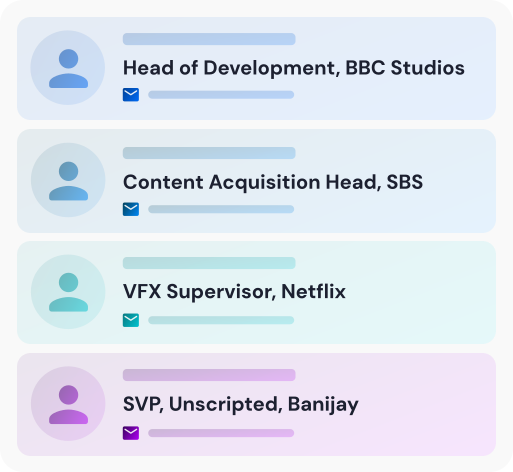
- List the post-production and VFX decision-makers at Netflix
- List the development leaders at Sony Pictures
- List the scripted programming heads at HBO
- Who is backing animation projects in Europe right now
- Who is Netflix’s top production partners for Sports Docs
- Who is Commissioning factual content in the NORDICS
- Who is acquiring unscripted formats for the North American market
Rebate Mechanics: Navigating the 20% Baseline and 10% Uplift
The Arkansas Movie Production Development Act functions as a cash rebate, providing a direct reimbursement rather than a tax credit that requires secondary market liquidation. The base incentive is a 20% rebate on all qualified expenditures for productions with a minimum local spend of $200,000. For an executive, this baseline signals a competitive entry point, but the real strategic value is found in the “Resident Labor Uplift.” By prioritizing Arkansas-resident cast and crew, producers can trigger an additional 10% rebate on those specific payroll costs, effectively reaching a 30% incentive on the project’s most significant cost center.
According to data from the Arkansas Economic Development Commission (AEDC), the state has processed over $100 million in direct production impact over the last five years, largely through this tiered rebate structure. The stability of the program is its primary de-risking factor; unlike territories that frequently exhaust their annual caps, Arkansas has maintained a consistent funding posture for mid-range slates. This consistency allows for accurate bridge financing forecasts, as the 20% base remains an “always-on” asset for projects that meet the audit requirements.
The bottom line is that Arkansas rewards production density. Projects that integrate with the local Fayetteville and Little Rock supply chains—sourcing equipment, catering, and office overhead through resident vendors—unlock a smoother audit path. Every dollar spent on an Arkansas-registered vendor is a dollar that counts toward the $200,000 threshold, allowing producers to capitalize on the lower cost of local procurement while simultaneously securing the state’s financial backing.
Strategic Post-Production: Unlocking the $50k Entry Threshold
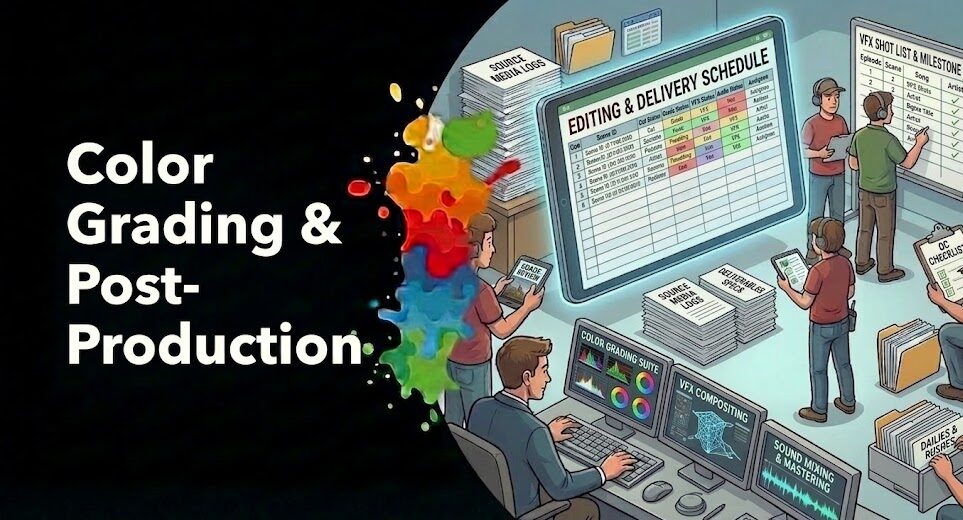
For the C-suite, the Arkansas post-production credit is perhaps the most underutilized lever for margin expansion in the South. While principal photography requires a $200,000 spend, a standalone post-production project—including visual effects (VFX), color grading, and sound—can qualify for the rebate with a minimum spend of only $50,000. This low entry threshold allows producers to “finish” their projects in Arkansas, capturing the 20% rebate on finishing costs even if the project shot in a non-incentive state or international territory.
The strategic shift here is to move the editorial and sound finishing into the growing tech hubs of Northwest Arkansas. By utilizing local boutiques for VFX or sound testing, producers can effectively reduce their finishing burn-rate by nearly a quarter. This post-production incentive is not just for features; it extends to high-end commercial work and animation, allowing agencies and brands to recapture 20% of their BTL finishing spend. In an era where post-production often accounts for 30% of the total budget, this specific Arkansas credit reshapes the project’s final liquidity.
Talent and Labor Logistics: Mastering the Resident Bonus
The 10% labor bonus is the primary operational target for Arkansas-based productions. To qualify for the full 30% on payroll, cast and crew must be verified Arkansas residents. This necessitates an early-stage crewing strategy that identifies local department heads who can pull from a vetted resident base. The AEDC enforces a strict audit of residency documents, requiring valid Arkansas state IDs or driver’s licenses for every person included in the bonus calculation. For an executive, failure to document this correctly can result in a significant “rebate haircut,” dropping the incentive back to the 20% baseline.
Moreover, the Arkansas program offers a specific uplift for “Below the Line” (BTL) veterans. By hiring Arkansas-resident veterans, producers can ensure those payroll costs contribute toward the higher rebate tier. This cultural alignment de-risks the production’s standing within the state, signaling a commitment to local workforce development that often accelerates the permitting process on public lands. The residency mandate is not a hurdle; it is a financial incentive to build a sustainable local crew ecosystem that rewards long-term partnerships over fly-in labor.
Market Discovery: Leading Arkansas Service Partners
To secure the 30% stack, producers must align with verified local vendors. Vitrina’s discovery protocol has identified the following leaders in the Arkansas supply chain who maintain the “Hero Project” status required for strategic compliance.
Waymack & Crew
Based in Little Rock, Waymack & Crew is the dominant force in Arkansas commercial and episodic production services. They provide the BTL infrastructure and local crew vetting required to trigger the 30% resident labor uplift.
Verdict: Their extensive work on Regional and National Commercial Campaigns (2024) proves their capacity to manage multi-unit logistics while ensuring every dollar meets the state’s rebate criteria.
Muddy Fork Visuals
Specializing in feature-length cinematography and documentary-style narratives, Muddy Fork Visuals is a key partner for projects seeking the visual authenticity of the Ozarks and the Delta.
Verdict: Their cinematography on The Natural State Documentary Series (2024) showcased their ability to handle remote locations while maintaining the rigorous documentation required for AEDC compliance.
Arkansas Production Alliance
Functioning as a central hub for resource mapping, the Alliance connects international producers with vetted local freelancers, equipment houses, and scouting services across the state.
Verdict: Their support on Verified Indie Feature Slates (2024) confirms their status as a critical node for producers looking to bridge the $200,000 spend threshold with local expertise.
Operational Precision: How Vitrina Accelerates Arkansas Entry
The challenge of filming in Arkansas isn’t the availability of the 30% stack; it’s the precision of the residency execution. To capture the full value, every vendor must be a verified resident, and every contract must be structured to meet AEDC audit criteria. Vitrina de-risks this process by providing a “census-level” view of the Arkansas supply chain, allowing executives to pre-vet partners based on their historical involvement in incentivized projects. Through VIQI, our AI-powered business development agent, producers can instantly surface the right decision-makers at the Arkansas Film Commission and local post-production houses.
Whether you are looking for a co-production partner to satisfy the $200,000 threshold or a VFX house to capture the post-production credit, Vitrina provides the verified contacts and deal-analysis required to ensure your Arkansas entry is not just cost-effective, but operationally seamless. In an industry where a single residency documentation error can destroy a project’s margin, Vitrina surfaces the hidden signals of the global supply chain.
Optimize Your Arkansas Strategy with VIQI
Unlock the full potential of the Arkansas incentive stack with precision-matched service providers and real-time project intelligence.
Strategic Conclusion
The Arkansas film landscape offers a unique fiscal proposition for the executive persona: a production hub that provides both the stability of a 20% cash rebate and the surgical precision of 10% residency uplifts. By anchoring a project in the state, producers can eliminate up to 30% of their financial exposure while leveraging a versatile topography and a growing tech infrastructure. The success of this model depends on the integrity of the local supply chain. Selecting vendors who understand the intricacies of AEDC audit requirements—and who can effectively manage the residency documentation from day one—is the primary differentiator between an efficient shoot and a fiscal bottleneck.
Moving forward, Arkansas will continue to signal its relevance in the mid-market production space by expanding its support for post-production and digital media. As the $50,000 threshold becomes a more widely recognized entry point for finishing work, the state will remain a Tier-1 choice for productions requiring high visual impact and aggressive fiscal de-risking. Utilizing the Vitrina platform and the VIQI assistant ensures that your Arkansas strategy is backed by the industry’s most robust data engine. The opportunity in the South is clear; the next step is to activate the local supply chain with surgical precision.
Strategic FAQ
What is the minimum spend required to qualify for the Arkansas film rebate?
For principal photography, the minimum qualified expenditure is $200,000 within a 6-month period. However, standalone post-production projects qualify with a significantly lower threshold of only $50,000.
How does a production reach the 30% maximum rebate in Arkansas?
A production starts with a 20% base rebate. It can reach 30% by applying a 10% uplift on payroll for Arkansas-resident labor, including cast, crew, and specialized veterans.
Are there any annual caps on the Arkansas film incentive fund?
Arkansas typically operates with a consistent annual allocation that has historically supported mid-market slates without the frequent exhaustion seen in higher-volume states, though producers are encouraged to apply early in the pre-production phase.
Can post-production rebates be combined with shooting in other states?
Yes. Producers can shoot in any territory and move the editorial and finishing work to Arkansas to capture the 20% cash rebate on those specific post-production expenditures, provided they meet the $50,000 local spend minimum.
Find Film+TV Projects, Partners, and Deals – Fast.
VIQI matches you with the right financiers, producers, streamers, and buyers – globally.
Producers Seeking Financing & Partnerships?
Book Your Free Concierge Outreach Consultation
(To know more about Vitrina Concierge Outreach Solutions click here)
Producers Seeking Financing, Co-Pros, or Pre-Buys?
Vitrina Concierge helps producers reach the right financiers, commissioners, distributors, and co-production partners — with precision outreach, not cold pitching.
Join Industry Briefings Trusted by Leaders

Format Adaptations: Global Trends
Where formats are traveling, which adaptations are breaking out, and how streamers are backing remakes in 2025–2026.

Books, Novels & Comics Adaptations: Global Trends
Books, webtoons, and manga driving the next global screen hits. Discover how in this webinar.

Micro-Dramas & Mobile-First Storytelling
Micro-dramas are building real audiences and revenue. Understand the platforms, buyers, and economics behind the growth.

Navigating Global Content Licensing Trends
How global content licensing is shifting beyond flat fees to flexible, deal-driven models.