About Innovation Hub
 Global Content Pulse (Webinars)


 Global Production Financing
(Webinars)
Global Production Financing
(Webinars)  LeaderSpeak Podcast
  About Vitrina
 Our Story
 Our Solutions 🔥
 Film+TV Projects Tracker 🚀
 Case Studies
 Our Profile
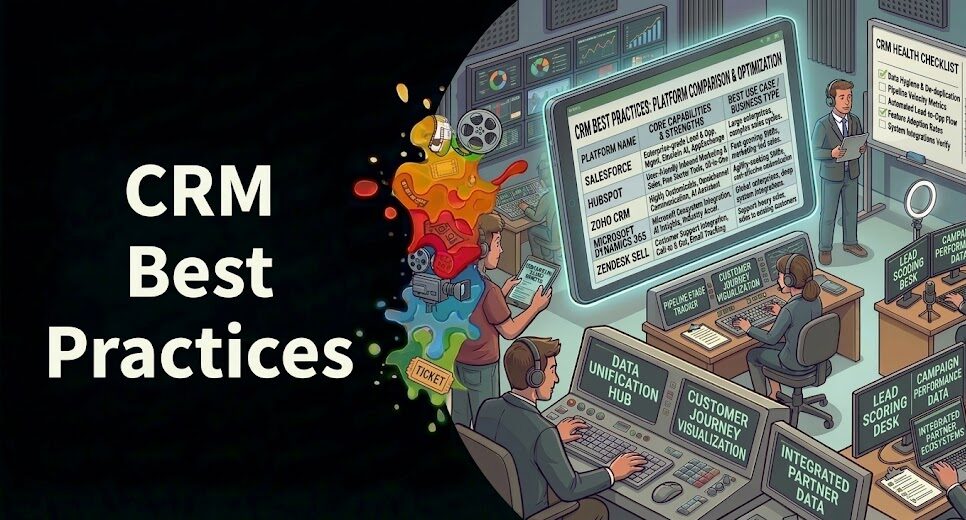
There’s a particular kind of pain that every business development executive in entertainment knows but rarely admits openly: your CRM is technically full—contacts logged, deals staged, follow-up tasks scheduled—and yet your pipeline still moves at the speed of a handshake-and-wait culture that hasn’t fundamentally changed since the fax machine. The tool isn’t the problem. The data feeding it is.
In 2026, CRM best practices for entertainment aren’t about which Salesforce module you’re licensed for or whether HubSpot integrates with your email. They’re about whether the intelligence layer beneath your CRM is actually alive—updated in real time, reflecting current project status, current buying mandates, and current decision-maker roles—or whether you’re building outreach sequences on top of data that was stale before you even imported it. The gap between those two realities is where most entertainment BD pipelines leak their ROI.
This guide is for the VP of Business Development at a production company, the head of content sales at a regional distributor, the BD lead at a VFX studio trying to land streamer clients. You already know how a CRM works. What you need is a framework for making it work specifically for entertainment—where deals don’t close in 30-day cycles, relationships span decades, and the difference between a warm intro and a cold email is everything.
Table of Contents
- Why Standard CRM Practices Fail in Entertainment
- The Intelligence Layer: What Your CRM Data Actually Needs
- Pipeline Architecture for Entertainment Deal Cycles
- Project-Triggered Outreach: The 2026 BD Playbook
- Contact Hygiene at Scale: Verified Data vs. Self-Reported Profiles
- How Vitrina Accelerates Your CRM Intelligence Stack
- The CRM Metrics That Actually Predict Deal Closure
- Frequently Asked Questions
- Conclusion
Ask VIQI: Which decision-makers at my target accounts are actively commissioning right now?
VIQI is Vitrina’s AI assistant—trained on 1.6 million titles, 360,000 companies, and 5 million entertainment professionals. Get deal-stage intelligence before you open Salesforce.
✓ Included with 200 free credits | ✓ No credit card needed
Why Standard CRM Practices Fail in Entertainment
Let’s be direct: generic CRM frameworks were built for SaaS sales cycles—30, 60, 90 days from first touch to close. Entertainment doesn’t work that way. A content sales relationship might sit dormant for 14 months and then convert the moment a buyer’s commissioning mandate opens up. A co-production conversation can run for 2 years before a financing structure closes. A vendor relationship lives or dies based on whether your BD contact knows the project is entering pre-production before the competition does.
The result? Most entertainment CRMs degrade into expensive contact directories. Executives update deals when they feel like it—which isn’t often. Data goes stale within 6 weeks of import. And the “pipeline” ends up being a vanity dashboard rather than a predictive instrument. James Burstall, CEO of Argonon Group—which operates 7 production companies across documentary, reality, and entertainment formats—has been vocal about how critical it is to understand international market dynamics before approaching buyers. But that intelligence has to be live, not historical.
Here’s what actually breaks standard CRM practices in this industry:
- Role churn: SVPs of content acquisitions move between Netflix, Apple TV+, and production companies at a pace that makes most imported contact lists wrong within 90 days
- Project-dependent relevance: A buyer who turned down your documentary pitch last quarter may be actively commissioning exactly that genre this quarter—but your CRM doesn’t know they greenlit a new slate
- Relationship depth vs. volume: 200 warm industry relationships beat 2,000 cold contacts every time—but most CRM reporting incentivises volume over quality
- No trigger layer: Generic CRMs don’t monitor for the events that actually matter—a commissioning exec’s mandate expansion, a production company’s first-look deal expiry, a streamer’s public commitment to a specific genre
And it’s not just a tools problem. It’s a workflow problem. Fix the workflow—specifically, how intelligence feeds into your CRM—and you fix the pipeline. That’s what this guide is actually about.
The Intelligence Layer: What Your CRM Data Actually Needs
Think of your CRM as the house and your intelligence infrastructure as the foundation. You can decorate the house however you want—workflows, automations, pipeline stages—but if the foundation is cracked, nothing stays level. In entertainment business development, that foundation is real-time project and company intelligence.
What does a solid intelligence layer actually contain? Four things, specifically.
First: current project status across your target accounts. Not what a company announced at MIPCOM 2024. What’s in development, pre-production, or post-production right now, because that’s when they need partners, vendors, and co-producers—not six months after the greenlight press release hits Deadline. According to analysis from Vitrina’s early warning systems research, companies that time outreach to actual project triggers—not generic relationship maintenance—close deals at 3-4x the rate of those relying on scheduled touchpoints alone.
Second: verified decision-maker data. Not the name. The current role, the current mandate, the current buying authority. Shawn Moffatt, co-founder and CEO of My Entertainment—whose portfolio spans 9 media companies—has described data-driven decisions as central to how his team navigates co-production and acquisition. But he’s not working from LinkedIn profiles that haven’t been updated since 2022. Verified means confirmed against active project involvement, not self-reported title fields.
Third: company capability context. What has this production company actually delivered in the last 18 months? What budget ranges? What genres? What platforms? Hero project history—not company website copy—tells you whether a potential partner’s stated capabilities match their track record. This is the due diligence layer that most CRMs completely ignore.
Fourth: market pricing benchmarks. If you’re a VFX vendor and your BD team is entering accounts without knowing what comparable studios charged on similar projects, you’re walking into every conversation with a negotiating disadvantage. The Fragmentation Paradox—600,000+ companies operating in opaque silos—means pricing opacity is the default state. Weaponize transparency. Know the benchmarks before the meeting starts.
Track 400,000+ Active Projects—Before Your Competitors Do
Trusted by Netflix, Warner Bros, and Paramount. Join 140,000+ companies tracking the global entertainment supply chain in real time.
✓ 200 free credits | ✓ No credit card required | ✓ Full platform access
Pipeline Architecture for Entertainment Deal Cycles
Entertainment deal cycles are non-linear. Any pipeline architecture that assumes a contact moves cleanly from “Prospect → Qualified → Proposal → Close” is going to produce dashboards that look reasonable and pipelines that don’t. Here’s what actually works.
Replace Linear Stages with Project-State Triggers
Instead of moving a contact through a sales funnel, track them against project milestones at their company. A broadcaster you’ve been cultivating for 18 months isn’t “stage 3 qualified”—they’re a pending trigger. The moment their commissioning window opens or a greenlit project enters post-production, that’s your entry point. Build your pipeline stages around project states: Development, Pre-Production, Production, Post, Distribution. Your best BD moments happen at transitions between those states—not on calendar-based follow-up schedules.
Score Accounts on Capacity, Not Just Intent
Traditional lead scoring weights intent signals—email opens, web visits, content downloads. Fine for SaaS. But in entertainment, capacity signals matter just as much. A production company that has just secured financing for 3 new projects is in a completely different buying posture than one that closed the books on its slate last month. Your CRM scoring model needs to incorporate real-time project load data from outside the CRM itself. This is where a platform like Vitrina—which tracks 400,000+ projects globally in real time—feeds scoring logic that generic CRMs can’t generate internally.
Segment by Relationship Depth, Not Just Account Size
A tier-1 account where you have one cold contact is worth less operationally than a tier-3 account where you have direct access to the commissioning editor. Segment your pipeline by relationship depth: Warm Intro (known decision-maker, verified mandate), Acquaintance (met at market, no active project context), and Cold Identified (right company, no existing relationship). Outreach strategy differs radically across these three—and conflating them is how BD budgets get wasted on spray-and-pray sequences that alienate exactly the people you need to reach.
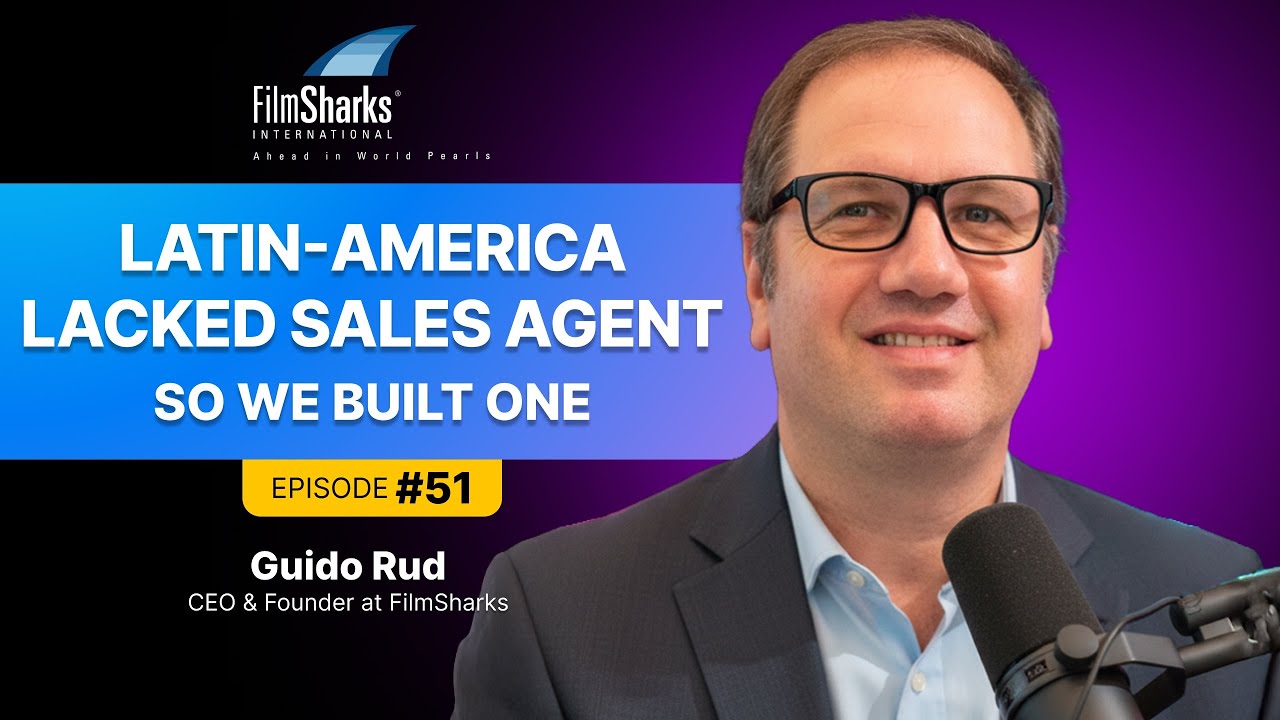
Guido Rud (Founder & CEO, FilmSharks International) on building deal pipelines across world sales, remake rights, and production—and why market relationships are structured, not accidental:
Project-Triggered Outreach: The 2026 BD Playbook
The best outreach in entertainment has always been timed to something the recipient cares about right now. In 2026, that timing is no longer just art—it’s architecture. Here’s how to build it.
Step 1: Set project status alerts on priority accounts. Your top 50 target companies should have monitoring in place for development announcements, greenlight news, and production stage transitions. When a commissioning editor at a major broadcaster publicly announces a new unscripted slate, your BD team should have a tailored outreach ready within 72 hours—not 3 weeks after you catch the Variety headline. That’s 6 weeks ahead of the typical response window, when the opportunity is still genuinely open.
Step 2: Map your service offer to project stage, not company profile. A production company in pre-production needs vendors—VFX, localization, line producers. The same company 6 months later, in distribution mode, needs licensing partners and SVOD contacts. Your outreach message for the same account should change completely depending on where they are in their project cycle. Most BD teams don’t make this adjustment—they send the same capabilities deck regardless of project stage, and wonder why response rates plateau.
Step 3: Use deal flow monitoring to find buyers before they post RFPs. By the time a formal brief or RFP reaches your team, 3-5 competitors have already had informal conversations with the buyer. The Insider Advantage isn’t about having a bigger CRM—it’s about seeing the signals 4-6 weeks earlier. Platforms like Vitrina track active deal flow across 140,000+ companies globally, surfacing commissioning activity before it goes public. That’s your window. And it compresses deal cycles by 80-90% compared to reactive outreach.
Step 4: Document relationship context, not just activity. “Sent email 14 March” is not a CRM note. “Decision-maker confirmed thrillers only, no reality formats, currently commissioning for Q1 2027 window” is. The difference between a useful CRM and a dead one is the quality of context notes, not the number of touchpoints logged. Make contextual intelligence capture—not activity logging—the team discipline you actually enforce.

Your AI Assistant, Agent, and Analyst for the Business of Entertainment
VIQI AI helps you plan content acquisitions, raise production financing, and find and connect with the right partners worldwide.
- Find active co-producers and financiers for scripted projects
- Find equity and gap financing companies in North America
- Find top film financiers in Europe
- Find production houses that can co-produce or finance unscripted series
- I am looking for production partners for a YA drama set in Brazil
- I am looking for producers with proven track record in mid-budget features
- I am looking for Turkish distributors with successful international sales
- I am looking for OTT platforms actively acquiring finished series for the LATAM region
- I am seeking localization companies offer subtitling services in multiple Asian languages
- I am seeking partners in animation production for children's content
- I am seeking USA based post-production companies with sound facilities
- I am seeking VFX partners to composite background images and AI generated content
- Show me recent drama projects available for pre-buy
- Show me Japanese Anime Distributors
- Show me true-crime buyers from Asia
- Show me documentary pre-buyers
- List the top commissioners at the BBC
- List the post-production and VFX decision-makers at Netflix
- List the development leaders at Sony Pictures
- List the scripted programming heads at HBO
- Who is backing animation projects in Europe right now
- Who is Netflix’s top production partners for Sports Docs
- Who is Commissioning factual content in the NORDICS
- Who is acquiring unscripted formats for the North American market
Contact Hygiene at Scale: Verified Data vs. Self-Reported Profiles
Here’s an uncomfortable number: according to industry research cited in Vitrina’s contact verification analysis, entertainment executive contact data degrades at roughly 30% per year due to role changes, company restructurings, and the ongoing consolidation and fragmentation of streaming players. If you imported a contact list in January 2024 and haven’t verified it against live project activity since, roughly a third of those contacts are now wrong—wrong role, wrong company, wrong mandate, or simply gone.
Self-reported data—LinkedIn titles, company website bios, conference programme speaker blurbs—is the dominant source for most entertainment CRMs. But it’s inherently backward-looking. People update their LinkedIn profile weeks or months after a role change. Company websites list executives who left 6 months ago. Conference bios are often 18 months out of date by publication.
What does verified actually mean in this context? Three things. First, the contact’s current role is cross-referenced against an active project they’re known to be involved in. Second, their buying mandate is confirmed against recent commissioning activity or public deal announcements—not just their title. Third, their contact details have been validated against outreach response data, not just stored as-imported.
Vitrina’s platform gives you access to 3 million verified entertainment professionals mapped against active projects and deal flow—which is a fundamentally different data quality than a static contact import. For high-volume BD operations, the ROI on verified data versus degraded data is direct: fewer bounced emails, fewer “I’m no longer in that role” responses, and more conversations that actually start from a relevant context. Don’t underestimate this. Clean data is the cheapest efficiency gain in your whole BD operation.
Need Direct Introductions to Decision-Makers? We’ll Make Them.
Vitrina Concierge is your Virtual Agent. We don’t hand you a list—we make warm introductions directly to executives with active mandates that match your content or services.
- Korean animation studio → Netflix Adult Animation (week one)
- LA producer → Netflix UK, Fifth Season, Fox Entertainment (48 hours)
- Middle Eastern studio → Legendary Pictures (direct access)
How Vitrina Accelerates Your CRM Intelligence Stack
The honest framing here: Vitrina isn’t a CRM replacement. It’s the intelligence layer that makes your existing CRM—whether Salesforce, HubSpot, Pipedrive, or a custom-built system—actually function for entertainment-specific BD workflows.
Here’s specifically where it plugs in. You’re running outreach to 40 target production companies in South Korea—a Sovereign Content Hub that’s been accelerating deal flow rapidly since major streaming platforms doubled down on K-drama and thriller formats. Your CRM has company names and some contacts. But it doesn’t know which of those 40 companies is currently in active development on a project that needs your specific service—localization, VFX, post-production, or co-production financing. Vitrina does. And it surfaces that intelligence in days, not weeks.
Or you’re a sales agent trying to identify which European broadcasters are currently commissioning unscripted formats in your genre. VIQI—Vitrina’s AI research assistant trained on 1.6 million titles and 5 million entertainment professionals—answers that as a strategic query, not a search result. You get a qualified shortlist with mandate context. Your BD team enters those conversations knowing exactly what the buyer needs, when they need it, and what comparable deals looked like.
The Vitrina API also supports direct CRM enrichment—appending live project status, executive role verification, and company capability data to records you already hold. That means the intelligence layer isn’t a separate research workflow; it becomes part of your CRM’s native data environment. And your outreach automation capabilities become genuinely contextual rather than schedule-driven. No more “Just checking in”—every touchpoint is triggered by something real happening at the account.
The CRM Metrics That Actually Predict Deal Closure in Entertainment
Let’s talk about measurement—because most entertainment BD teams are tracking the wrong numbers. High email open rates don’t predict deals. High meeting counts don’t predict deals. Here’s what does.
Time-to-Trigger Response
How quickly does your team respond to a qualifying project trigger—a greenlight announcement, a commissioning mandate expansion, a talent attachment at a target account? Teams that respond within 72 hours of a trigger consistently outperform those responding in 2+ weeks. Track this. It’s a more predictive metric than meeting-to-close ratio.
Relationship Depth Score
Build a simple scoring system—not lead scoring—that measures how deeply embedded your team is within a target account. Dimensions: number of verified decision-maker contacts, recency of substantive interaction (not email blast), project-level knowledge (do you know what they’re currently commissioning?), and referral network overlap (do you know someone who knows the key person?). Accounts with high relationship depth scores close at significantly higher rates than accounts with high traditional lead scores.
Pipeline Velocity by Deal Type
Segment your pipeline by deal type—licensing, co-production, vendor services, content acquisition—and track average days from first meaningful conversation to signed term sheet for each. You’ll likely find significant velocity differences between deal types. That’s not just interesting data; it’s your resource allocation guide. Double the BD headcount on deal types where you have strong velocity. De-prioritise or restructure outreach for deal types where cycles are consistently long and conversion is low.
Intelligence Utilisation Rate
This one’s new—but it matters. What percentage of your outreach is triggered by real intelligence (project status changes, mandate updates, commissioning announcements) versus scheduled follow-ups or instinct? Teams with high intelligence utilisation rates—say, above 60% of touchpoints triggered by real signals—consistently outperform teams relying on calendar-based sequences. Track it. Then use it to retrain how your team thinks about outreach timing.
Frequently Asked Questions
What are the most important CRM best practices specific to entertainment industry business development?
The most critical shift is moving from calendar-triggered outreach to project-triggered outreach. Entertainment deal cycles don’t follow 30/60/90-day SaaS logic—they follow project state transitions. Your CRM should track target accounts against active project milestones (development, pre-production, production, post, distribution) and trigger outreach based on those milestones, not scheduled follow-up sequences. Pair this with verified decision-maker data from Vitrina’s platform—3 million entertainment professionals mapped against active projects—and your response rates transform.
How often does entertainment executive contact data actually go stale?
Faster than most teams realise. Entertainment executive contact data degrades at roughly 30% per year due to role changes, studio restructurings, and ongoing consolidation across streaming platforms and production companies. A contact list imported in early 2024 without active verification is likely wrong on nearly a third of its entries today. This is why verified intelligence platforms matter—they cross-reference contact roles against active project involvement rather than relying on self-reported LinkedIn titles that may not have been updated for months.
Which CRM system works best for entertainment business development teams?
The honest answer: the specific CRM matters far less than the intelligence layer feeding it. Salesforce, HubSpot, and Pipedrive all work adequately as pipeline containers for entertainment BD. What differentiates high-performing teams isn’t the CRM tool—it’s whether they’ve integrated real-time project intelligence (Vitrina), verified contact data, and project-state triggers into their CRM workflow. A Salesforce instance fed with live entertainment intelligence consistently outperforms a purpose-built entertainment CRM running on stale data.
How can entertainment BD teams identify the right moment to reach out to a buyer or partner?
The right moment is defined by project state, not calendar proximity to your last touchpoint. Specifically, you want to reach out when a target account transitions between project stages—when a greenlit project enters pre-production (vendor window), when a completed project enters distribution (licensing window), or when a commissioning mandate publicly expands into a new genre. Teams that set Vitrina project alerts on priority accounts and respond within 72 hours of a trigger consistently outperform those relying on scheduled sequences. That 72-hour window is often 4-6 weeks ahead of when a formal brief reaches the broader market.
What’s the biggest mistake entertainment BD teams make with their CRM?
Optimising for activity volume rather than contextual intelligence. When CRM reporting rewards the number of emails sent, calls logged, or meetings booked, teams optimise for those metrics—which have weak predictive power for deal closure in entertainment. The more costly mistake is treating CRM as a record-keeping tool rather than a decision-support system. When your CRM notes say “sent email March 14” rather than “buyer confirmed thriller mandate only, commissioning Q1 2027, prefers co-production with European broadcaster attached,” you’ve failed the most important function: capturing intelligence that makes the next conversation smarter.
How does the Fragmentation Paradox affect entertainment CRM performance?
Directly. The Fragmentation Paradox—600,000+ companies operating in opaque silos with no centralised intelligence—means most entertainment CRMs are populated with a fraction of the accounts they should be tracking, and the contacts they do hold are often wrong. Your BD team’s addressable universe is far larger than what you can discover through festival networking and trade press alone. Platforms like Vitrina resolve this by mapping 140,000+ active suppliers globally, surfacing accounts your team has never encountered and enriching existing accounts with verified capability data. The result: you stop missing opportunities that exist outside your relationship network.
Should entertainment companies invest in a specialised CRM or adapt a generic platform?
Adapt a generic platform with purpose-built intelligence enrichment—don’t wait for a perfect entertainment-native CRM. The real gap isn’t CRM features; it’s the data model underneath. Generic CRMs like Salesforce and HubSpot are flexible enough to accommodate entertainment-specific pipeline stages, relationship depth scoring, and project-state triggers if configured properly. What they can’t generate internally is real-time project intelligence, verified capability data, or deal flow monitoring across the global supply chain. That’s where Vitrina’s API integration and VIQI intelligence layer fill the gap—turning a generic CRM into a purpose-built entertainment business development engine.
Conclusion: Your CRM Is Only as Smart as the Intelligence Feeding It
The entertainment industry’s BD challenge isn’t a tools problem—it’s an intelligence problem dressed up as a tools problem. You can’t buy your way out of it with a better CRM subscription. You can solve it by fundamentally upgrading the data, timing, and context that your CRM is working with. Project-triggered outreach over schedule-driven sequences. Verified decision-maker data over self-reported contact imports. Real-time capacity signals over static company profiles. When you fix the intelligence layer, the CRM becomes what it was always supposed to be: a decision-support instrument, not a glorified address book.
Key Takeaways:
- Project-triggered beats calendar-triggered: Outreach timed to project state transitions closes at 3-4x the rate of scheduled follow-up sequences.
- Contact data degrades at 30% per year: Entertainment executive lists imported without ongoing verification against live project activity lose a third of their accuracy within 12 months.
- Capacity signals matter as much as intent signals: Scoring accounts on their active project load—not just email opens—predicts BD timing far more accurately than traditional lead scoring.
- 72-hour trigger response is the competitive edge: Teams that respond within 72 hours of a qualifying project trigger reach buyers 4-6 weeks ahead of the broader market.
- Vitrina’s intelligence layer resolves the Fragmentation Paradox: Access to 140,000+ verified suppliers, 400,000+ active projects, and 3 million entertainment professionals turns generic CRM infrastructure into purpose-built BD intelligence.
The BD teams winning the most deals in 2026 aren’t working harder—they’re working with better information, earlier. Start with 200 free credits and experience what real-time entertainment intelligence actually does to your pipeline velocity.
Build a BD Pipeline That Moves at the Speed of Real Intelligence
Trusted by Netflix, Warner Bros, Paramount, and Google TV. Track 400,000+ projects. Access 3 million verified executives. Ask VIQI strategic questions about your target market—before your next BD call.
✓ 200 free credits | ✓ No credit card required | ✓ Cancel anytime
Need warm introductions to active buyers and decision-makers now? Explore Concierge Service →
–>
Find Film+TV Projects, Partners, and Deals – Fast.
VIQI matches you with the right financiers, producers, streamers, and buyers – globally.
Producers Seeking Financing, Co-Pros, or Pre-Buys?
Vitrina Concierge helps producers reach the right financiers, commissioners, distributors, and co-production partners — with precision outreach, not cold pitching.
Join Industry Briefings Trusted by Leaders

Format Adaptations: Global Trends
Where formats are traveling, which adaptations are breaking out, and how streamers are backing remakes in 2025–2026.

Books, Novels & Comics Adaptations: Global Trends
Books, webtoons, and manga driving the next global screen hits. Discover how in this webinar.

Micro-Dramas & Mobile-First Storytelling
Micro-dramas are building real audiences and revenue. Understand the platforms, buyers, and economics behind the growth.

Navigating Global Content Licensing Trends
How global content licensing is shifting beyond flat fees to flexible, deal-driven models.