About Innovation Hub
 Global Content Pulse (Webinars)


 Global Production Financing
(Webinars)
Global Production Financing
(Webinars)  LeaderSpeak Podcast
  About Vitrina
 Our Story
 Our Solutions 🔥
 Film+TV Projects Tracker 🚀
 Case Studies
 Our Profile

Content Financing Strategy in 2025 has split into two dominant philosophies: the “Vertical Moat” pioneered by Disney and the “Weaponized Distribution” model adopted by Warner Bros. Discovery (HBO Max).
Disney+ focuses on massive investment in owned IP and “Authorized AI” data markets, while HBO Max prioritizes rotational licensing and “Co-opetition” to maximize ROI on sunk assets.
According to Vitrina AI intelligence, the industry has shifted from a $17 billion annual content arms race to a localized, data-powered framework tracking 1.6 million titles globally.
In this analysis, you will learn the mechanics of weaponized distribution, the rise of the authorized data market, and how supply chain intelligence bridges the intelligence gap for modern executives.
While traditional reports focus on subscriber numbers, they often ignore the underlying supply chain metamorphosis—where major M&A activity, like Netflix’s $72 billion acquisition of Warner Bros. assets, fundamentally changes how projects are greenlit and monetized.
This strategic deep-dive fills the current analytical gap by providing a data-driven comparison of these two titans, utilizing real-time supply chain metrics to reveal the future of media profitability.

Your AI Assistant, Agent, and Analyst for the Business of Entertainment
VIQI AI helps you plan content acquisitions, raise production financing, and find and connect with the right partners worldwide.
- Find active co-producers and financiers for scripted projects
- Find equity and gap financing companies in North America
- Find top film financiers in Europe
- Find production houses that can co-produce or finance unscripted series
- I am looking for production partners for a YA drama set in Brazil
- I am looking for producers with proven track record in mid-budget features
- I am looking for Turkish distributors with successful international sales
- I am looking for OTT platforms actively acquiring finished series for the LATAM region
- I am seeking localization companies offer subtitling services in multiple Asian languages
- I am seeking partners in animation production for children's content
- I am seeking USA based post-production companies with sound facilities
- I am seeking VFX partners to composite background images and AI generated content
- Show me recent drama projects available for pre-buy
- Show me Japanese Anime Distributors
- Show me true-crime buyers from Asia
- Show me documentary pre-buyers
- List the top commissioners at the BBC
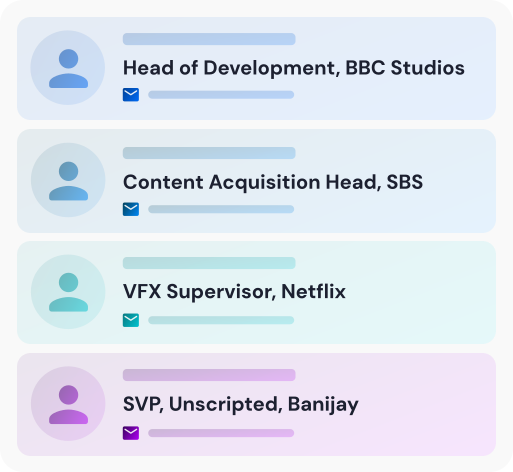
- List the post-production and VFX decision-makers at Netflix
- List the development leaders at Sony Pictures
- List the scripted programming heads at HBO
- Who is backing animation projects in Europe right now
- Who is Netflix’s top production partners for Sports Docs
- Who is Commissioning factual content in the NORDICS
- Who is acquiring unscripted formats for the North American market
Table of Contents
Key Takeaways for Strategy Officers
-
Weaponized Distribution Edge: Strategy teams are licensing content to rivals post-release to maximize ARPU, shifting from exclusivity to rotational windowing strategies.
-
Authorized AI Financing: Disney’s $1B OpenAI deal creates a new revenue stream through “Authorized Data” licensing, setting a blueprint for IP protection in AI training.
-
Data Trust Deficit: Legacy discovery methods are structurally incapable of tracking 600,000+ companies; data-driven supply chain platforms are now a competitive imperative.
How Does Disney’s Vertical Integration Strategy Influence Content Financing?
Disney’s content financing strategy is rooted in “Vertical Integration,” a model where every dollar spent on production serves multiple revenue silos including streaming, theatrical, theme parks, and merchandise. This “Walled Garden” approach ensures that intellectual property (IP) from Marvel, Pixar, and Star Wars remains under strict control, creating a competitive moat that rivals cannot easily replicate. By controlling the entire supply chain—from creation to exhibition—Disney minimizes external licensing friction and maximizes the long-term lifetime value of every project.
However, this model requires massive upfront capital and continuous reinvestment in talent and technology. To offset these costs, Disney has begun formalizing the “Authorized Data” market, exemplified by its $1 billion investment in OpenAI. This allows the studio to monetize its vast archives by licensing props, environments, and characters for AI training in a controlled, brand-safe environment. For strategy leads, this signifies a shift from purely creative output to “Intelligence-as-a-Service,” where archival data becomes a high-margin financing tool.
Analyze competitor content acquisition and licensing trends:
What is Weaponized Distribution in the HBO Max Model?
Under the leadership of Warner Bros. Discovery (WBD), HBO Max has pivoted toward a strategy dubbed “Weaponized Distribution.” This model abandons the “Streaming Wars” era of total exclusivity in favor of “Co-opetition.” By licensing high-value original content to rival platforms like Netflix or Amazon MGM Studios 18-24 months post-release, WBD can generate immediate cash flow and recoup production costs on “sunk” assets. This rotational windowing strategy prioritizes return on investment (ROI) over rigid platform loyalty.
The $72 billion Netflix-WBD deal exemplifies this shift, signaling the end of the “Walled Garden” for many major studios. For CXOs, weaponized distribution offers a blueprint for financial sustainability in a post-streamer world where subscription growth has plateaued. Instead of hoarding IP, platforms are now strategically using their libraries to “weaponize” their reach across the entire global supply chain, essentially acting as both a platform owner and a top-tier arms dealer in the content market.
Industry Expert Perspective: Media Finance: Navigating a Post-Streamer World – BondIt Media Capital
In this conversation, Matthew Helderman, CEO of BondIt Media Capital, discusses the shift from the streamer-led “spending spree” to a more disciplined, ROI-focused financing environment. This perspective is critical for understanding the transition from Disney’s expansion phase to WBD’s consolidation and “weaponized” windowing.
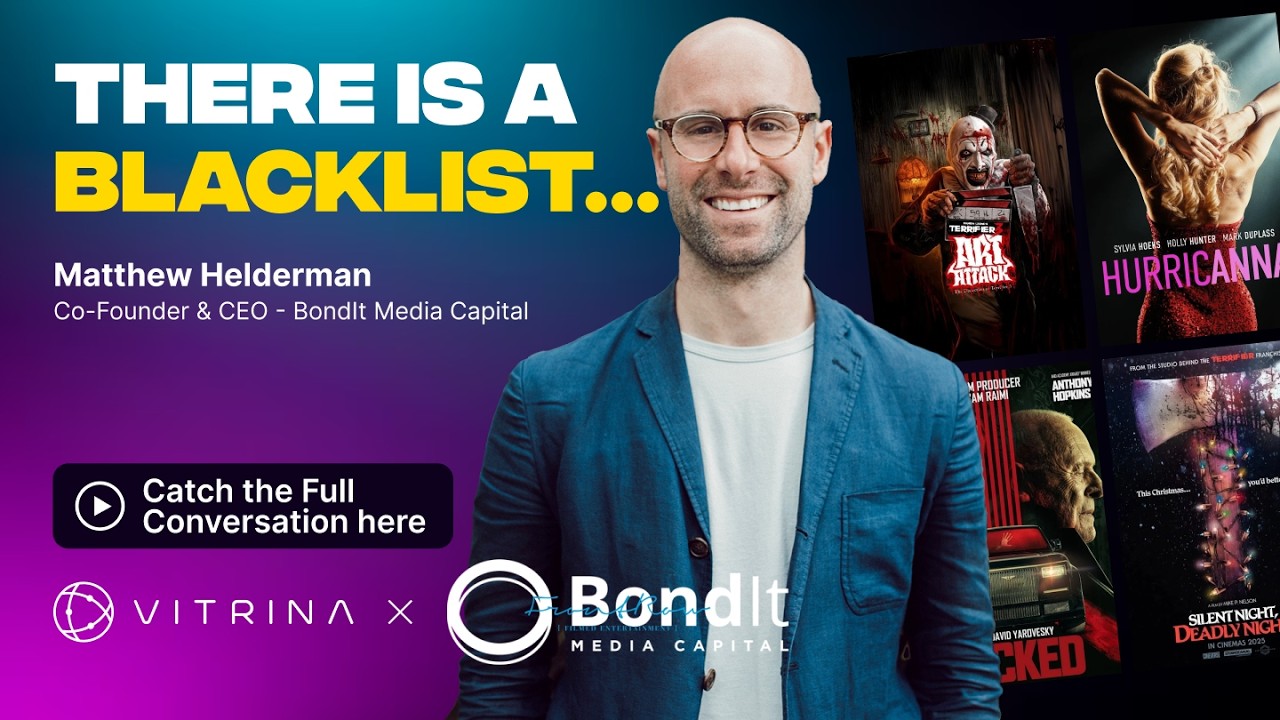
Matthew Helderman shares BondIt Media Capital’s journey from a production firm to a major player in media financing, filling the gap for capital post-credit crises. He explores how financial acumen is now the primary driver of project greenlighting in the modern supply chain.
Why is the “Authorized Data” Market Reshaping Content ROI?
The entertainment industry is transitioning from an opaque ecosystem to a data-powered framework. Disney’s recent legal actions against Google for unauthorized IP usage in training Gemini and Veo highlight the strategic importance of the “Authorized Data” market. Instead of allowing tech giants to scrape content for free, studios are establishing licensing environments where AI models are trained only on authorized datasets. This creates a new “Data-Driven Decisions” pillar for ROI, where historical content libraries act as foundational assets for future generative AI tools.
For strategy leads, this means the supply chain now extends into the tech-stack itself. Disney’s deal with OpenAI excludes talent likenesses and voices, focusing on environmental data—a clear signal that IP protection is the new baseline for content financing agreements. As AI formalization continues, the ability to track which IP is authorized for which platform becomes a critical intelligence requirement for any global distributor or studio lead.
Access strategic intelligence on global IP licensing trends:
How Do Strategy Teams Solve the M&E Data Deficit?
The core challenge for modern executives is the “Fragmentation Paradox”: while global production is more connected, the operational data required to navigate it remains siloed. Traditional databases like IMDbPro provide credits but fail to track the early-stage financing and supply-chain relationships required for strategic planning. Vitrina AI solves this “Data Deficit” by tracking over 140,000 companies and 5 million professionals, mapping the 30 million relationships that drive the industry forward.
By utilizing a global supply chain platform, strategy teams can discover co-production partners, vet vendor track records, and monitor competitive slates in real-time. This transforms partner discovery from a manual networking exercise into a data-driven science. Whether identifying indie studios for acquisition or monitoring the state of global productions for board updates, centralized intelligence is the “digital lighthouse” allowing players to navigate a hyper-competitive, borderless market safely.
“The industry is transitioning from an opaque, relationship-driven ecosystem to a centralized, data-powered framework. Executives who fail to address the ‘data deficit’ are leaving themselves vulnerable to missed opportunities and significant financial risk in this new era of weaponized distribution.”
Moving Forward
The divergence between Disney’s vertical IP moat and WBD’s weaponized distribution illustrates a market that has matured beyond the “Streaming Wars.” This transformation addresses the critical gap in industry intelligence: the move from anecdotal networking to verifiable, data-driven strategy.
Whether you are a Strategy Officer looking to identify acquisition targets, or an M&A Lead trying to vet international production hubs, the requirement remains a “single source of truth” that connects projects, partners, and financing.
Outlook: Over the next 12-18 months, “Weaponized Distribution” will become the standard for all non-vertically integrated players, while the “Authorized Data” market will redefine the valuation of content libraries for AI training.
Frequently Asked Questions
What is the difference between Disney+ and HBO Max content strategy?
How much does Disney spend on content compared to HBO Max?
What is an “Authorized Data” market in entertainment?
How does Vitrina AI help strategy officers?
About the Author
Lead Content Strategist at Vitrina AI, with 15+ years of experience in entertainment supply chain intelligence and market transformation. Connect on Vitrina.
Find Film+TV Projects, Partners, and Deals – Fast.
VIQI matches you with the right financiers, producers, streamers, and buyers – globally.
Producers Seeking Financing, Co-Pros, or Pre-Buys?
Vitrina Concierge helps producers reach the right financiers, commissioners, distributors, and co-production partners — with precision outreach, not cold pitching.
Join Industry Briefings Trusted by Leaders
Format Adaptations: Global Trends
Where formats are traveling, which adaptations are breaking out, and how streamers are backing remakes in 2025–2026.
Books, Novels & Comics Adaptations: Global Trends
Books, webtoons, and manga driving the next global screen hits. Discover how in this webinar.

Micro-Dramas & Mobile-First Storytelling
Micro-dramas are building real audiences and revenue. Understand the platforms, buyers, and economics behind the growth.

Navigating Global Content Licensing Trends
How global content licensing is shifting beyond flat fees to flexible, deal-driven models.