About Innovation Hub
 Global Content Pulse (Webinars)


 Global Production Financing
(Webinars)
Global Production Financing
(Webinars)  LeaderSpeak Podcast
  About Vitrina
 Our Story
 Our Solutions 🔥
 Film+TV Projects Tracker 🚀
 Case Studies
 Our Profile
Content acquisition is the strategic process of identifying, evaluating, and securing exhibition rights for film, television, and digital media across various platforms.
This involves a complex lifecycle of sourcing, vetting regional intellectual property (IP), and negotiating multi-territorial licensing agreements.
According to industry reports, the global media market is shifting toward “Weaponized Distribution,” where companies like Netflix are spending $17 billion annually to secure a mix of originals and licensed regional hits.
In this guide, you’ll learn the core frameworks for content sourcing, the tools used by industry leaders to discover rights 5x faster, and the evolving career path of the modern acquisition executive.
Current market resources often confuse content creation with acquisition, or worse, fail to provide a strategic roadmap for the licensing professionals navigating today’s fragmented supply chain.
This pillar page addresses these gaps by providing a centralized intelligence hub—covering everything from OTT strategies to the advanced supply chain tools required to scale global libraries.
Table of Contents
What is Content Acquisition in the Modern Entertainment Supply Chain?
In a market defined by over 600,000 companies and 5 million professionals, content acquisition has evolved from a relationship-driven art into a data-driven science. It is the lifeblood of OTT platforms, FAST channels, and traditional broadcasters, ensuring a constant flow of fresh IP to combat subscriber churn.
Unlike content creation, which focuses on the production process, acquisition is about the strategic sourcing of existing or upcoming titles. This includes theatrical films, episodic TV, and digital-first content. Successful acquisition teams use supply chain intelligence to identify “rotational window” opportunities—licensing high-value content post-release to maximize ROI on sunk assets.
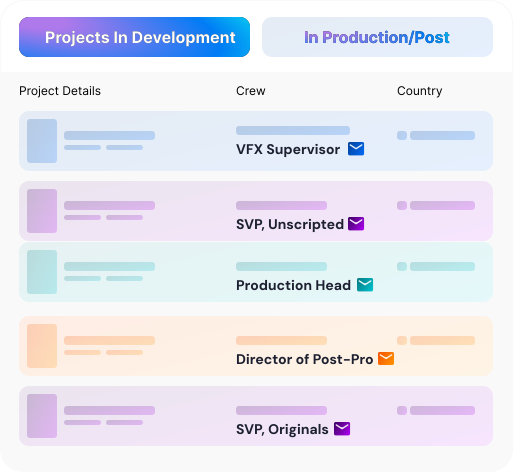
Discover trending regional content with available rights:
Acquisition Strategies for OTT, FAST, and Traditional Media
Acquisition looks different across the media landscape. For OTT giants like Netflix, it’s about a global-first model—turning regional hits like Squid Game into international phenomena. For FAST (Free Ad-supported Streaming TV) channels, the focus is on high-volume catalog acquisition to fill ad inventory.
$72B
The value of Netflix’s acquisition of Warner Bros.’ studio assets, signaling the end of platform exclusivity.
Source: Vitrina Market Intelligence
Traditional broadcasters are also adapting, shifting from rigid territorial exclusivity to more flexible co-production and licensing deals. This hybrid approach allows legacy players to compete with digital natives by diversifying their content libraries and sharing financial risks with international partners.
Industry Expert Perspective: Globo Unveiled: Mastering Productions & Global Alliances
Global content acquisition requires a deep understanding of licensing, distribution, and international partnerships. Angela Colla of Globo explains how one of Brazil’s largest networks navigates the global supply chain to maximize reach.
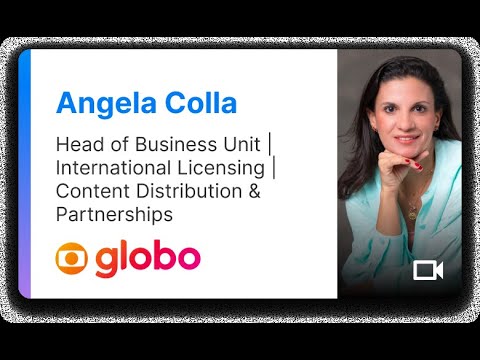
Learn how global alliances and international licensing are critical to scaling content libraries in a competitive SVOD market.
The 5-Step Strategic Framework for Content Licensing
Successful acquisition teams don’t just react to trade announcements; they anticipate them. Legacy sourcing methods provide surface-level data, creating friction for buyers seeking regional hits. A robust acquisition strategy follows a structured lifecycle.
-
1. Market Scouting & Sourcing
Using vertical AI to scan over 1.6 million titles for upcoming projects in early development or post-production.
-
2. Rights Verification & Vetting
Confirming territorial availability and mapping historical collaborations through verified professional networks (5M+ pros).
-
3. ROI & Audience Analysis
Evaluating viewing data and emotional scene analysis (AI-powered) to predict content performance within specific markets.
-
4. Deal Structuring & Negotiation
Defining revenue share, minimum guarantees, and rotational window periods for “weaponized” asset distribution.
-
5. Post-Acquisition Management
Tracking performance metrics and coordinating release strategies across theatrical and digital windows.
Essential Tools for Modern Media Buyers
Without real-time project tracking, acquisition leads face 6-8 weeks of lag in identifying active productions. This results in missed pitch windows and lost competitive advantage. Modern media buyers rely on “digital lighthouses” to navigate the fragmented sea of global data.
✓ The Sourcing Tool: Vitrina’s Global Film+TV Projects Tracker (1.6M+ titles).
✓ The Intelligence Tool: VIQI AI Assistant for answering strategic questions on commissioning behavior.
✓ The Verification Tool: Company Intelligence mapping 30 million relationships for partner due diligence.
These tools allow teams to compressed months of manual research into strategic, targeted outreach that yields results. By monitoring real-time project data, acquisition teams engage productions during active bidding windows, increasing their success rate by up to 40%.
Analyze competitor content acquisition trends:
The Evolution of the Content Acquisition Manager Role
The modern Content Acquisition Manager is as much a data analyst as they are a dealmaker. In an era of “authorized data” markets and AI-driven curation, professionals must master everything from metadata enrichment to cross-border legal nuances.
Key skills for 2025 include proficiency in supply chain intelligence platforms, an understanding of “authorized AI” licensing, and the ability to leverage real-time market trends to inform board-level updates. This role is increasingly central to a studio’s strategic planning, shifting from a back-office function to a primary revenue driver.
Key Takeaways for Acquisition Leads
-
Data Over Instinct: Teams using supply chain intelligence identify trending regional content 5x faster than those relying on manual sourcing or traditional networks.
-
Rotational Window Mastery: Strategic leaders are adopting a “weaponized distribution” model, licensing high-value assets to competitors to maximize long-term ROI.
-
Verified Due Diligence: Access to verified profiles for 140,000+ companies reduces operational risk in cross-border partnerships by vetting track records systematically.
Moving Forward
The content acquisition landscape has shifted from speculation to strategic intelligence. This transformation addresses the critical gaps this guide explored: clear definitions, industry-specific frameworks, and advanced toolsets for modern buyers.
Whether you are an acquisition lead looking to discover trending regional hits, or a strategy executive monitoring competitor moves, data-driven sourcing is the key to maintaining a competitive edge in a hyper-fragmented market.
Outlook: Over the next 18 months, the rise of “Authorized AI” licensing will create a new asset class for acquisition teams, further diversifying content revenue streams.
Frequently Asked Questions
What is content acquisition?
Content acquisition is the process of securing exhibition rights for finished or upcoming media assets for distribution across platforms. This involves identifying potential hits, vetting rights availability, and negotiating licensing agreements. It is a core strategic function for streaming and broadcast companies.
How do OTT platforms acquire content?
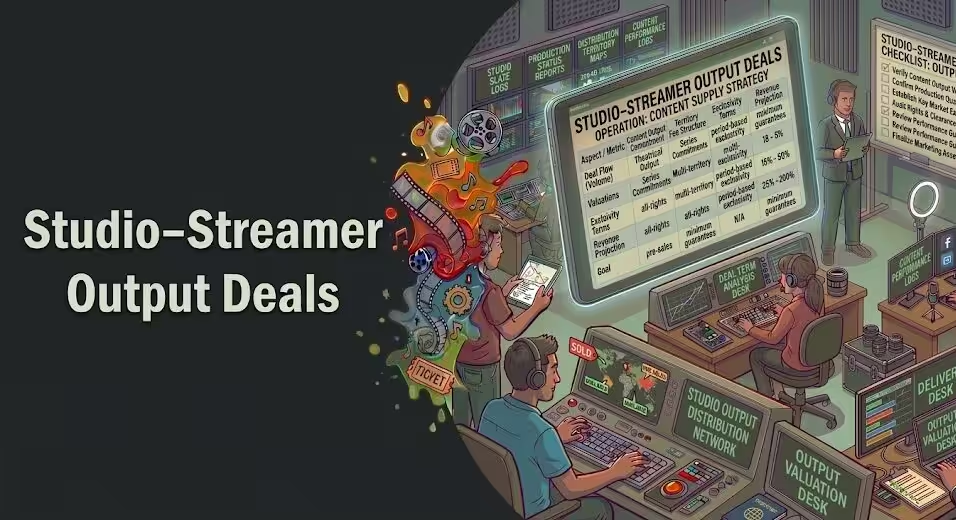
OTT platforms acquire content through a mix of direct licensing deals, co-production partnerships, and long-term studio output agreements. This works by analyzing viewing data to identify genre appetite and then sourcing matching titles from global distributors. The goal is to build a diverse library that minimizes churn.
What tools are used for content acquisition?
Modern acquisition teams use supply chain intelligence platforms like Vitrina to track global production pipelines in real-time. These tools provide visibility into unreleased titles, rights availability, and verified company profiles. This replaces manual research across fragmented databases with a single, verifiable source of truth.
What is weaponized distribution?
Weaponized distribution is a strategic licensing model where a platform licenses its premium content to rivals post-release. This involves creating “rotational windows” to generate high-margin licensing revenue and maximize ROI on established IP. It signals a shift from rigid platform exclusivity to a co-opetition model.
About the Author
Authored by the Vitrina Content Architecture team, experts in media supply chain digital transformation and global content dynamics. Connect with us on Vitrina.