About Innovation Hub
 Global Content Pulse (Webinars)


 Global Production Financing
(Webinars)
Global Production Financing
(Webinars)  LeaderSpeak Podcast
  About Vitrina
 Our Story
 Our Solutions 🔥
 Film+TV Projects Tracker 🚀
 Case Studies
 Our Profile
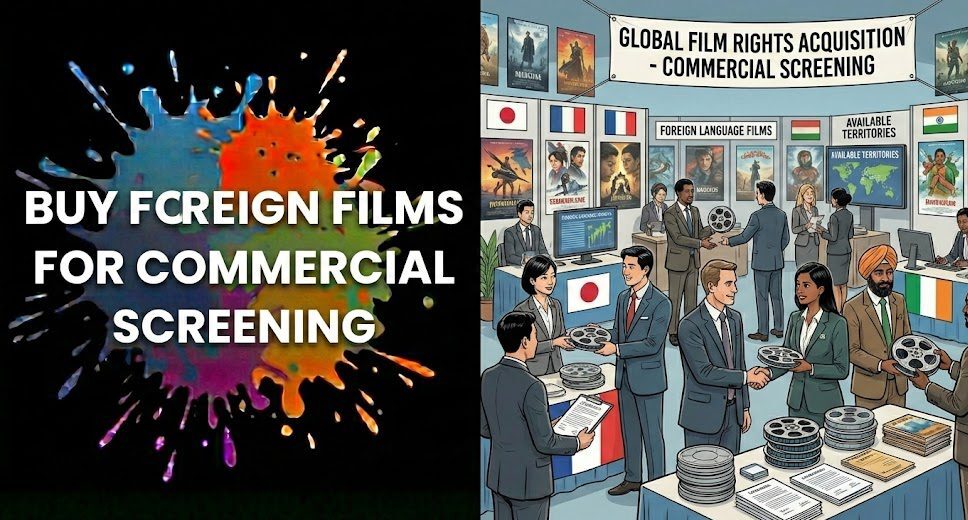
To buy foreign films for commercial screening, you must secure “Public Performance Rights” (PPR) or Theatrical Distribution Rights from the film’s authorized sales agent or regional distributor.
This process involves identifying the rights holder for your specific territory, negotiating a licensing fee (often against a box-office percentage), and executing a legal agreement that defines the screening window and venue type.
According to industry data, the global M&E supply chain now encompasses over 140,000 distributors, making verified data intelligence essential for navigating cross-border legalities.
In this guide, you’ll learn the step-by-step legal requirements, negotiation tactics, and how to use supply chain intelligence to find reputable international partners.
While many online resources provide shallow lists of films, they often ignore the critical legal nuances—such as the difference between educational and commercial licenses—that can protect exhibitors from significant financial risk.
This comprehensive guide addresses those gaps by providing a legal roadmap for acquiring international content while leveraging data to verify partner track records.
Table of Contents
Key Takeaways for Acquisition Leads
-
Rights Identification Is Critical: Successfully buying foreign films requires identifying the specific territorial rights holder, a process simplified by tracking 1.6 million titles on global intelligence platforms.
-
Verify Licensing nuances: Commercial screenings require theatrical or PPR licenses; using educational licenses for ticketed public events constitutes a legal breach with severe penalties.
What are Commercial Screening Rights for Foreign Films?
Commercial screening rights are legal authorizations that allow an individual or entity to show a film to a public audience for profit or business purposes. Unlike a private home viewing, a commercial screening involves “Public Performance,” which is a distinct right under international copyright law. This is particularly complex with foreign films, where rights are often carved out by territory and medium.
When you seek to buy a foreign film for screening, you aren’t purchasing a physical file or disc; you are licensing the right to exhibit the content. This license specifies the number of screenings, the venue, the duration of the “window,” and whether you can charge admission. Failing to secure the correct tier of rights can lead to “cease and desist” orders or heavy fines from international rights protection bodies.
Identify current rights holders for foreign film titles:
The Step-by-Step Guide to Identifying Global Rights Holders
The biggest hurdle in buying foreign films for commercial screening is the “information gap”—knowing exactly who owns the rights for your region. The rights landscape is highly fragmented. A French film might be owned by a studio in Paris, but the North American theatrical rights could be sold to a boutique distributor in New York.
To navigate this, acquisition leads should follow this 3-step protocol:
- Consult Global Databases: Use platforms that track unreleased and released projects globally. Vitrina’s database, for instance, maps 30 million industry relationships, helping you trace a project from its production company to its current sales agent.
- Verify “Available Rights”: Many films are already under exclusive contracts. You must confirm that “Theatrical” or “Non-Theatrical Commercial” rights are available for your specific country.
- Perform Due Diligence: Verify the distributor’s track record. Dealing with unverified entities can lead to “double-licensing” scams where multiple people claim to own the same rights.
Industry Expert Perspective: Inside FilmSharks International: World Sales & Remakes
Understanding how international sales agents operate is crucial for any acquisition lead. In this session, Guido Rud, CEO of FilmSharks, explains the mechanics of world sales and how rights are distributed across global territories.
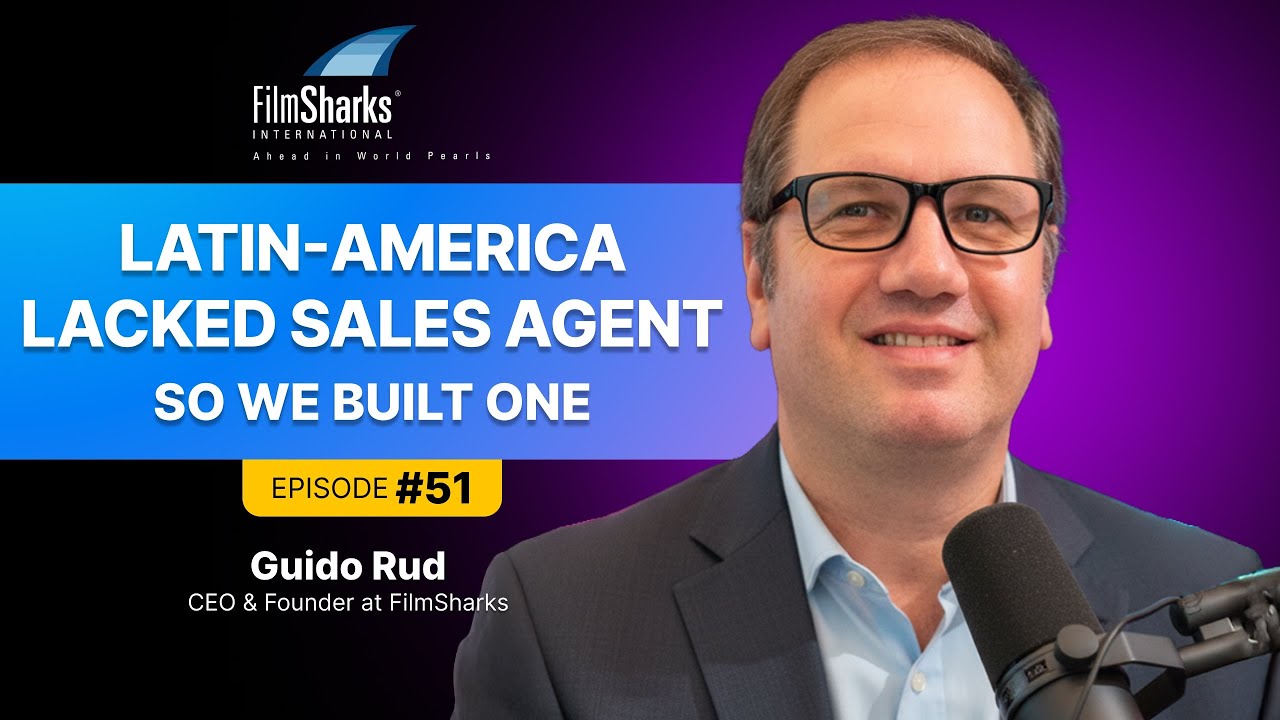
Guido Rud discusses the three main business models for international content: world sales, remake distribution, and production. For those looking to buy foreign films, understanding these “carve-outs” is the difference between a successful screening and a legal headache.
Educational vs. Commercial Licenses: Avoid These Costly Mistakes
A common pitfall for smaller exhibitors is confusing “Educational PPR” with “Commercial Theatrical” rights. Educational licenses are typically restricted to “face-to-face” teaching in non-profit institutions. If you charge a ticket fee or even offer a “suggested donation” at a public venue, the educational license is void.
To legally buy a foreign film for a standard commercial screening, you need a Theatrical License. This agreement usually involves a “Minimum Guarantee” (MG)—an upfront payment to the distributor—plus a percentage of the box office receipts (the “overages”). For smaller, non-theatrical commercial venues (like a rooftop cinema), you can often negotiate a “flat fee” license, but this must be explicitly stated in the contract to avoid backend royalty disputes.
Access a list of reputable foreign film distributors by genre:
Moving Forward
The shift toward “Weaponized Distribution” and fragmented windows means that buying foreign films for commercial screening is no longer just about content selection—it’s about data-driven rights management. By mastering the legal tiers of licensing and leveraging supply chain intelligence, exhibitors can secure premium international content with confidence.
Whether you are an acquisition lead looking to expand a regional streaming library, or a cinema programmer trying to source high-concept horror from South America, the path to success lies in verified partner data and precision outreach.
Outlook: Over the next 12-18 months, we expect a surge in “Authorized Data” marketplaces and a further shift toward rotational window strategies, making real-time project tracking a non-negotiable tool for the modern film buyer.
Frequently Asked Questions
Quick answers to the most common queries about buying and screening foreign films.
Can I screen a foreign film from a DVD or streaming service commercially?
How much does it cost to buy foreign film screening rights?
What is the difference between a sales agent and a distributor?
About the Author
The Vitrina Intelligence Team specializes in mapping the global entertainment supply chain. With decades of combined experience in content acquisition and distribution, we provide data-driven insights to help M&E professionals navigate the evolving market landscape. Connect on Vitrina.