

 About Innovation Hub
 Global Content Pulse (Webinars)


 Global Production Financing
(Webinars)
Global Production Financing
(Webinars)  LeaderSpeak Podcast
  About Vitrina
 Our Story
 Our Solutions 🔥
 Film+TV Projects Tracker 🚀
 Case Studies
 Our Profile

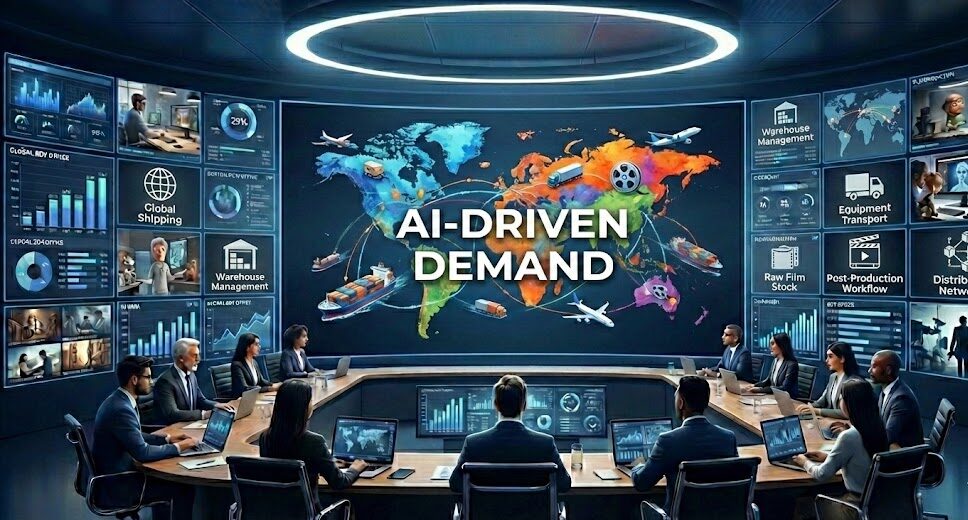
Broadcasting services today are no longer defined by satellite footprints but by the structural orchestration of a global entertainment supply chain powered by real-time data and vertical AI.
In a market encompassing 600,000 companies and 5 million professionals, legacy methods relying on personal networks are structurally incapable of bridging the “data deficit” inherent in global expansion.
Modern broadcasters are now adopting “Weaponized Distribution” frameworks, where premium content is strategically windowed across rival platforms to maximize ROI and reach audiences at every touchpoint.
By utilizing centralized intelligence platforms that track 1.6 million titles and map 30 million relationships, industry leaders can transform their broadcast operations into a precise, data-driven science.
This guide moves beyond the technicalities of transmission to provide a roadmap for navigating the “Fragmentation Paradox”—the condition where production is globalized but critical partner data remains siloed and opaque.
Article Navigation
Key Takeaways for Strategic Broadcasters
-
Data-First Partnering: Broadcasters are replacing anecdotal discovery with verified reputation scores for 140,000+ companies to ensure international deal reliability.
-
Weaponized Distribution: Strategic sub-licensing to rival platforms 18-24 months post-launch is now a primary tool for maximizing IP liquidity.
-
Vertical AI Implementation: Mapping 30 million industry relationships via AI allows CXOs to identify commissioning gaps 6-12 months before major market shifts.
Broadcasting Services: Moving from Infrastructure to Intelligence
The global media and entertainment (M&E) industry is undergoing a structural metamorphosis. For decades, broadcasting services were viewed through the lens of technical infrastructure—transmitters, satellites, and cable networks. Today, the focus has shifted to the centralized, data-powered orchestration of the content supply chain.
Senior executives are currently grappling with a “data deficit” that leaves them vulnerable to missed opportunities. Legacy methods that rely on fragmented trade data and personal “Hollywood handshake” networks are no longer sufficient to manage a globalized ecosystem of 600,000 companies. This shift requires a transition to verifiable, real-time intelligence.
Analyze global market trends and top broadcast partners for your genre:
Navigating the Fragmentation Paradox in Audience Reach
The “Fragmentation Paradox” is the defining challenge of the borderless market: while production has globalized, the visibility of the supply chain remains isolated in local siloes. Broadcasters often struggle to find verified international partners because the sheer volume of 1.6 million content titles worldwide creates a noise level that manual discovery cannot cut through.
To overcome this, platforms like Vitrina AI provide deep, verified profiles for over 140,000 companies. This allows strategic leads to qualify partners based on specialization, deal history, and reputation scores rather than anecdotal referrals. Centralizing this data ensures that cross-border projects are backed by verifiable supply chain intelligence.
Identify verified broadcasting partners in emerging markets:
Expert Perspective: Automating the Supply Chain for Global Distribution
Reaching audiences everywhere requires more than just transmission; it requires a rigorously automated backend. Ramki Sankaranarayanan, CEO of Prime Focus Technologies, explains how AI and the CLEAR platform are revolutionizing the broadcasting supply chain through end-to-end automation.
Sankaranarayanan explores how AI-enhanced metadata and cloud-native infrastructure enable broadcasters to manage complex global slates while ensuring high-quality delivery across diverse territorial standards.
Broadcasting as “Weaponized Distribution”
The maturity of the “Streaming Wars” has led to a strategic pivot known as “Weaponized Distribution.” This strategy prioritizes capital efficiency and audience reach over rigid exclusivity. Broadcasters are no longer hoarding premium IP in walled gardens; instead, they are strategically licensing content to rival platforms 18-24 months post-release.
This co-opetition model allows broadcasters to optimize the lifecycle of an asset by reaching entirely new audience segments on competitive services like Netflix or Amazon. Success in this era requires deep visibility into competitive slates and rights availability to identify the precise moment an asset should be “weaponized” through external licensing.
Track recent sub-licensing and co-opetition deals:
Scaling Reach with Vertical AI and Supply Chain Automation
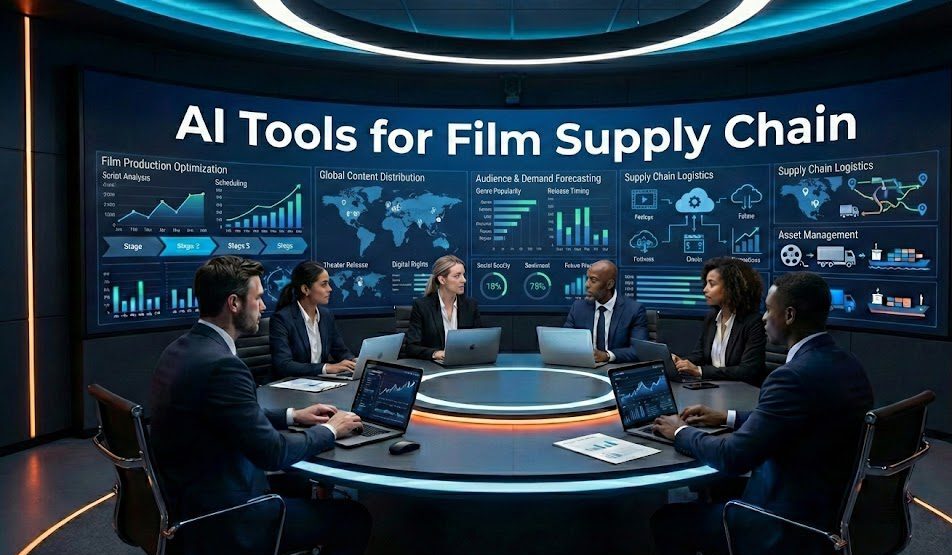
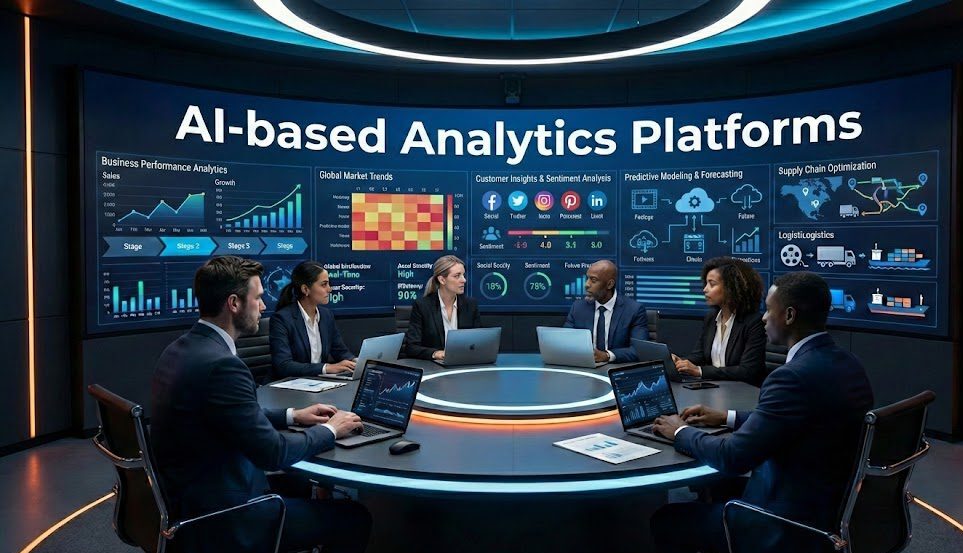
The complexity of the modern broadcast landscape has rendered generic AI tools insufficient. Industry leaders are now turning to “Vertical AI”—specialized systems like VIQI that are trained exclusively on proprietary entertainment datasets. This allows broadcasters to map 30 million relationships and executive movements to pinpoint exactly where global reach can be expanded.
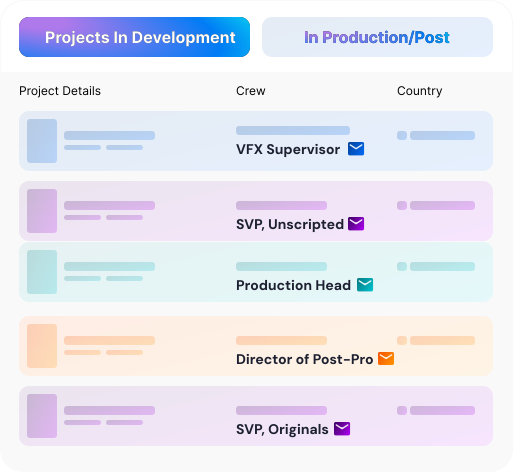
Furthermore, “Global Project Trackers” monitor 1.6 million titles across development and production stages. This real-time visibility enables broadcasting sales teams to identify high-potential unreleased projects months before they are announced in trades, ensuring a first-mover advantage in acquiring the next global breakout hit.
Identify active unreleased projects in the global pipeline:
Moving Forward: The Future of Global Reach
Reaching audiences everywhere is no longer a challenge of satellite availability, but a challenge of supply chain visibility. By bridging the “data deficit” and navigating the “fragmentation paradox,” strategic broadcasters can now execute expansion with surgical precision.
As the industry adopts “Authorized Data” for AI and transitions to high-velocity licensing models, the only true competitive moat will be actionable intelligence. Broadcasters who integrate centralized intelligence platforms today will define the audience reach of tomorrow.
Broadcasting Services FAQ
What are modern broadcasting services?
What is the “Fragmentation Paradox”?
How many companies are in the global entertainment supply chain?
What is “Weaponized Distribution” in broadcasting?
What is Vertical AI (VIQI)?
How many titles does Vitrina AI track?
What are Reputation Scores for partners?
What is the “data deficit” in broadcasting?
“The industry is moving from an anecdotal art to a data-driven science. Finding the right broadcasting partner today requires a digital lighthouse that can cut through the fog of fragmented networks.”
About the Author
Content Strategist specializing in global media distribution and supply chain intelligence. Helping industry leaders navigate market transformation through verified intelligence and AI-driven insights. Connect on Vitrina AI.